


 Preview
 Send
Send Share
Share
 Details

 Download
 Similars
 X-Ray
X-Ray Diaporama
 Stats
StatsCardplayers at a Large Table
 Etching
- 18th Century Bourgeoisie
 1786
1786 114.0 x 117.0 cm
 Hermitage Museum
 Read More
Purchase a high-resolution, enhanced digital image, far superior to the online preview.
Each file is meticulously prepared by our in-house specialists using advanced tools and expert manual retouching. We ensure every image has exceptional clarity, precise color accuracy, and fine detail.
The final file is delivered via email within 72 hours, optimized for immediate use in professional, editorial, and print environments. This is the same quality trusted by top-tier design studios, publishers, and galleries.
Digital Image
Download a high-resolution file for personal display, printing, and creative projects. ( Switch to Print Buy Hand Made Painting)
Included in Every Digital Image Order
Expert Digital Delivery, Guaranteed
When you choose ArtsDot.com, you're not just getting an image - you're receiving a professionally enhanced digital artwork, crafted with precision and backed by a satisfaction guarantee. Here's everything that comes with your order, automatically:

Fast Email Delivery
Your high-resolution digital image file will be emailed to you within 72 hours of ordering - ready for immediate use.

AI-Enhanced Digital File
Your artwork is professionally optimized using advanced AI tools and manual editing, ensuring maximum detail, clarity, and color accuracy.

Free Lifetime Re-Delivery
Accidentally deleted or lost your file? No worries - we'll resend it to you anytime, free of charge.

No Import Fees - Ever
Enjoy your artwork instantly with zero customs, duties, or delivery fees - digital downloads are always tax-free.

Color Accuracy Guarantee
We ensure your digital image reflects the original colors as closely as possible using professional tools and color management.

100-Day Satisfaction Guarantee
If you're not satisfied with your digital image, we'll revise it or refund 100% within 100 days - no questions asked.

100% Money-Back Guarantee
Not satisfied? Get a full refund within 100 days of receiving your digital file - no questions asked.

Bulk Order Discounts
Buy 3 images, save 10% - Buy 5, save 15% - Buy 10+, save 20%. Great for creative projects, galleries, and agencies.
Daniel Nikolaus Chodowiecki’s “Cardplayers at a Large Table”: A Window into 18th-Century Bohemian Life
Daniel Nikolaus Chodowiecki's "Cardplayers at a Large Table," painted in 1786, is more than just a depiction of a game; it’s a meticulously observed snapshot of bourgeois society in late 18th-century Berlin. This etching, rendered with remarkable detail and a subtle sense of intimacy, offers a rare glimpse into the leisure activities and social dynamics of a burgeoning urban culture. Chodowiecki, born in Gdańsk (Danice) but largely associated with Berlin, was a master of capturing the nuances of everyday life – from bustling marketplaces to intimate salon scenes – and his work is characterized by a distinctive “Zopfstil,” a style emphasizing intricate lines and a focus on texture and detail reminiscent of tightly braided hair. The piece isn’t merely about gambling; it's about the rituals, the unspoken rules, and the quiet dramas that unfold within these social gatherings.
The composition itself is deceptively simple yet profoundly effective. Three figures dominate the scene, seated around a table that occupies nearly the entire frame, immediately drawing the viewer into their world. The arrangement suggests a degree of familiarity – perhaps friends or acquaintances – and the lighting, predominantly dark with subtle highlights, creates an atmosphere of subdued intimacy. Notice how Chodowiecki uses light to sculpt the forms of the players, emphasizing their faces and hands as they engage in the game. The inclusion of various objects—a vase, a book, a bowl—adds layers of visual interest and hints at the broader context of the scene: a comfortable, well-appointed room reflecting the prosperity of its occupants.
Technique and Style: The Zopfstil in Action
Chodowiecki’s mastery lies in his meticulous rendering of texture and detail. The etching technique itself—a process involving transferring an image onto metal plate and then using acid to create lines—allowed him incredible precision, particularly evident in the depiction of fabrics, clothing, and even the individual strands of hair. This is where the “Zopfstil” truly shines; the intricate lines mimic the texture of woven materials, creating a remarkably tactile effect. The artist’s use of cross-hatching – layering intersecting lines to create tonal variations—is particularly noteworthy, contributing significantly to the sense of depth and realism within the scene. The subtle gradations of gray demonstrate Chodowiecki's ability to convey mood and atmosphere through careful manipulation of line weight and density.
Furthermore, observe how he employs a limited color palette – primarily shades of brown, black, and white—to create a sense of realism and drama. The absence of bright colors reinforces the scene’s intimate setting and emphasizes the importance of detail. The artist's attention to capturing the subtle nuances of light and shadow is remarkable, lending the etching a three-dimensional quality that draws the viewer in.
Historical Context: Berlin’s Bohemian Scene
To fully appreciate “Cardplayers at a Large Table,” it’s essential to understand the social context in which it was created. 18th-century Berlin, particularly during Chodowiecki's time, was a vibrant hub of artistic and intellectual activity, attracting artists, writers, musicians, and intellectuals from across Europe – including a significant population of Huguenot refugees who brought with them their skills and traditions. This influx of diverse influences fostered a thriving bohemian scene characterized by salons, gambling dens, and lively social gatherings. Chodowiecki himself was deeply embedded in this community, documenting its customs and characters with remarkable sensitivity.
The game depicted is likely a form of backgammon or perhaps even dice – games that were immensely popular among the upper classes during this period. These activities provided opportunities for social interaction, strategic thinking, and friendly competition. The scene captures not just the act of playing but also the atmosphere of camaraderie and shared experience that characterized these gatherings.
Symbolism and Emotional Resonance
Beyond its realistic depiction of a social game, “Cardplayers at a Large Table” carries subtle symbolic weight. The large table itself can be interpreted as a metaphor for the complexities of human relationships – a space where alliances are formed, rivalries emerge, and fortunes are won or lost. The players’ expressions—often difficult to discern in detail—suggest a mixture of concentration, anticipation, and perhaps even a touch of anxiety. Chodowiecki's ability to convey these unspoken emotions through his masterful use of line and shading is truly remarkable.
Ultimately, “Cardplayers at a Large Table” offers a poignant reminder of the enduring appeal of social interaction and the timeless fascination with games of chance. As a hand-painted reproduction from ArtsDot.com, this artwork captures the essence of Chodowiecki’s original etching, allowing you to bring this captivating glimpse into 18th-century Bohemian life into your own home or office.
Related Artworks
Artist Biography
The Parisian Echo in Berlin: Life of Daniel Nikolaus Chodowiecki
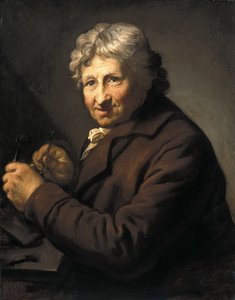
Daniel Nikolaus Chodowiecki remains a fascinating figure at the crossroads of Polish heritage and German artistic life. Born in Danzig (Gdańsk) in 1726, his early years were steeped in a culture that would forever inform his sensitive gaze. Though his roots trace back through generations of tradesmen and Huguenot ancestry, it was Berlin that ultimately became the crucible for his genius. His journey to this Prussian capital is recounted with a wry self-awareness—a detail noted even in letters suggesting a 'genuine Pole' transplanted into German soil.
His artistic education began after moving to Berlin at the age of sixteen, where he was taken under the wing of an uncle who provided him with crucial tutelage. This early grounding allowed his talent to blossom, leading him eventually to become a recognized member and later vice-director of the prestigious Berlin Academy of Art. His life was one of steady professional ascent, marked by dedication to craft and an unwavering commitment to the artistic community.
Mastery in Printmaking: Capturing the Bourgeois Soul
While Chodowiecki’s output spanned paintings and drawings, it is his etchings that secure his place in art history. He was not merely a painter; he was perhaps the most celebrated German graphic artist of his era. His thousands of delicate prints serve as an unparalleled visual diary of the late eighteenth century. These works possess an extraordinary intimacy, allowing us to peer into the daily rhythms and quiet dramas of the burgeoning bourgeoisie during the period known as Zopfstil—a transitional aesthetic caught between the flourish of Rococo and the emerging structure of Classicism.
His book illustrations are particularly noteworthy, encompassing nearly all the great literary classics. Through these detailed renderings, Chodowiecki achieved a remarkable ability to capture not just scenes, but entire sensibilities. His art speaks eloquently of the sensibility cult that permeated the age, blending meticulous observation with deep emotional resonance.
Historical Significance and Artistic Legacy
Chodowiecki’s significance extends beyond mere technical skill; he is a chronicler of an era undergoing profound transformation. His prints offer invaluable glimpses into the life of the middle class—the very backbone of the society depicted. They are records of manners, fashion, and domestic life that might otherwise be lost to time.
By becoming the director of the Berlin Academy of Arts in 1797, he cemented his role as an institutional pillar. His work thus embodies a confluence of personal history—the echoes of Polish identity within German artistic patronage—and a profound engagement with the cultural currents sweeping through Europe. To study Chodowiecki is to study the delicate balance between private life and public art, rendered with the precision of an etcher's needle.
daniel nikolaus chodowiecki
1726 - 1801 , Poland
Quick Facts
- Artistic Movement Or Style: Zopfstil
- Date Of Birth: 1726
- Date Of Death: 1801
- Full Name: Daniel Nikolaus Chodowiecki
- Nationality: Polish-German
- Notable Artworks:
- Etchings
- Book illustrations
- Place Of Birth: Danzig, Poland