 Preview
 Send
Send Share
Share
 Details

 Download
 Similars
 X-Ray
X-Ray Diaporama
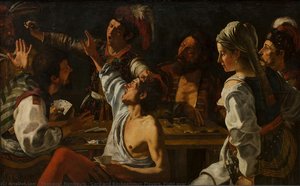
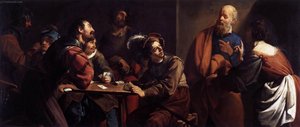
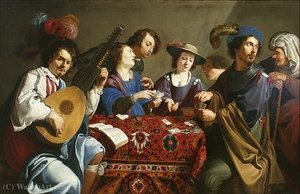
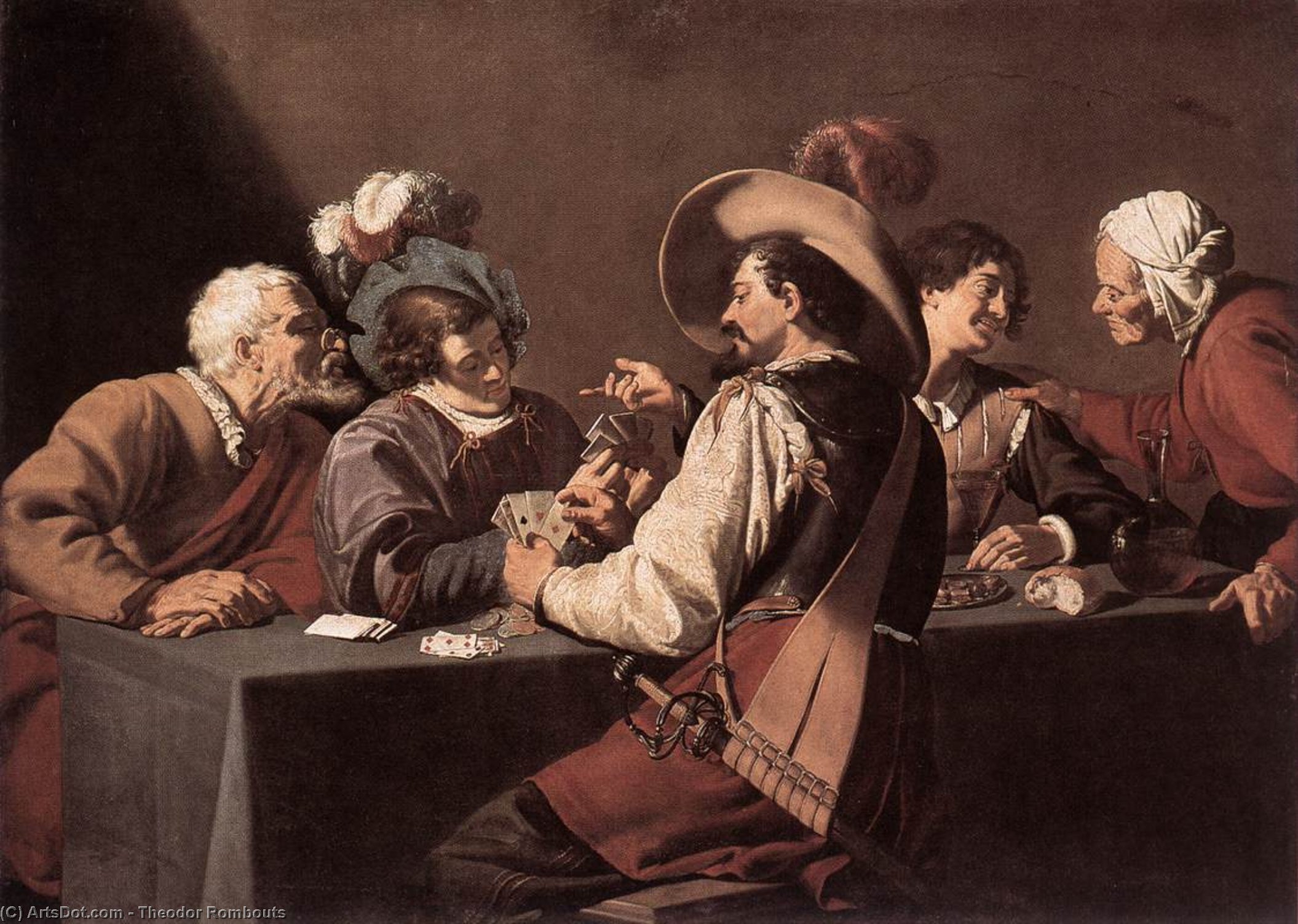
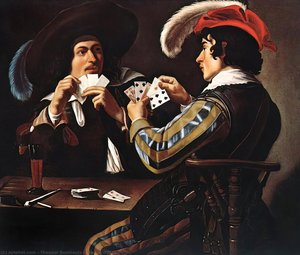
The Card Players
 Oil On Canvas
- WallArt
- Caravaggismo
 152.0 x 206.0 cm
 Koninklijk Museum voor Schone Kunsten
 Read More
Hand Made Oil Reproduction
Hand-painted oil on canvas in your size and frame, made to order by our artists. ( Buy Print Buy Image)




P118B $10

P118H $10

P118W $10

P438Z $10

P508JH $12

P508YH $12

P805H $10

P805Z $10

P919BZ $10

P919G $10

P919XJ $10

P959ZH $10

P968JZ $12

W106C $8

W218G $10

W218JH $8

W218Y $10

W307PJ $10

W316G $10

W316PJ $8

W316Y $10

W398PJ $8

W4111J $10

W500HY $15

W500JH $15

W692G $12

W849H $8

W940BG $15

W953PJ $8




Pick from our preset sizes that match the artwork's original proportions.

You may enter your own dimensions to fit a specific frame or space. If your selected size does not match the original image's proportions, we will either crop the artwork or extend the painting with additional hand-painted elements. A digital mockup will be sent for your approval before production begins.
Please note that the on-screen preview does not reflect the actual cropping or extension. Only the mockup will accurately show the final composition.
While custom sizes are available, we recommend selecting a dimension from the predefined list to preserve the original proportions.
After order, ArtsDot.com team will email client for instructions and provide a mockup preview
Worldwide Delivery () in 3/4 weeks instead of standard 5 weeks. (16 August). No compromise on quality.

Free Worldwide Express Shipping

High-Quality Linen Canvas

Full Shipping Insurance

Customs Tax Refund Guarantee

True Color Matching Guarantee

60-Day Return Policy (Defects Only)

100% Money-Back Guarantee

Bulk Discount Offer
 Glass option is only available in size under 110 CM

The Card Players
Reproduction Medium
Reproduction Size
-


Total Price
$ 263
Artwork Description
A Window into 17th-Century Life: Theodoor Rombouts’ “The Card Players”
Theodoor Rombouts' "The Card Players," painted circa 1630, isn’t merely a depiction of a game; it’s a meticulously crafted tableau vivant – a snapshot of everyday life in the Netherlands during the turbulent years leading up to the Thirty Years’ War. Rombouts, a pivotal figure within the Flemish Caravaggism movement, masterfully captures a moment of quiet contemplation and shared experience amongst a group of men, their faces etched with concentration as they engage in a game of cards. The painting immediately draws the viewer into its intimate scene, utilizing dramatic chiaroscuro – the stark contrast between light and shadow – to sculpt the figures and imbue the composition with an almost theatrical intensity. The earthy palette, dominated by browns, ochres, and deep reds, evokes the warmth of a tavern or a private home, grounding the scene in a tangible reality while simultaneously hinting at the underlying drama of human interaction.
Rombouts’ technical skill is evident in every detail. The figures are rendered with remarkable realism, from the meticulously draped fabrics to the subtle nuances of expression on their faces. Note the careful attention paid to the textures – the rough wool of the garments, the smooth sheen of the cards, and the worn surfaces of the table. The artist’s use of perspective creates a sense of depth, drawing the viewer into the scene and inviting them to become an unseen observer within this intimate gathering. The composition itself is carefully balanced, with the central figures anchoring the scene while the surrounding men contribute to the overall dynamism.
Caravaggism's Influence: Light, Shadow, and Human Drama
Rombouts’ work firmly places him within the burgeoning Caravaggist movement, a style characterized by its dramatic use of light and shadow – known as *tenebrismo* – and its focus on portraying human emotion with raw intensity. Inspired by the Italian painter Michelangelo Merisi da Caravaggio, Rombouts adopted his technique of highlighting key figures against dark backgrounds, creating a sense of immediacy and drawing the viewer’s eye to the most important elements of the scene. This is particularly evident in the way the light falls upon the hands of the players as they manipulate the cards, emphasizing their concentration and skill.
Beyond mere technical proficiency, Rombouts' painting speaks volumes about the social dynamics of the time. The card game itself was a popular pastime, offering an opportunity for men to socialize, compete, and perhaps even engage in a bit of friendly rivalry. The scene suggests a moment of respite from the hardships of daily life, a chance to momentarily escape into the world of games and camaraderie. The lack of overt celebration or boisterous laughter hints at a more subdued atmosphere, suggesting a shared understanding and quiet respect among the players.
Symbolism and Emotional Resonance
While seemingly simple in its subject matter, “The Card Players” is rich with symbolic meaning. The cards themselves can be interpreted as metaphors for life – chance, risk, and reward. The game represents a microcosm of human experience, reflecting the complexities of relationships, competition, and fate. The men’s downcast eyes suggest introspection and perhaps a degree of melancholy, hinting at the uncertainties of life beyond the confines of the game.
The painting's enduring appeal lies in its ability to evoke a sense of familiarity and connection. It captures a universal human experience – the simple pleasure of gathering with friends for a shared activity – and transforms it into a timeless work of art. The quiet intensity of the scene, combined with Rombouts’ masterful technique, creates an emotional resonance that continues to captivate viewers centuries after its creation. It is a poignant reminder of the importance of human connection in a world often characterized by isolation and distraction.
High-quality reproductions of “The Card Players” are available at ArtsDot.com, allowing art lovers to bring this iconic masterpiece into their homes and offices. Consider it not just a painting, but a window into the past – a glimpse into the lives and experiences of those who came before us.
Related Artworks

Artist Biography
early life and training
theodoor rombouts, a prominent flemish painter, was born in antwerp in 1597. he was the son of bartholomeus rombouts, a wealthy tailor, and barbara de greve. rombouts' early training as an artist began under frans (franchois) van lanckvelt in 1608, followed by studies under abraham janssens and possibly nicolas régnier in antwerp.italian influence and caravaggesque style
in 1616, rombouts traveled to rome, where he was exposed to the works of caravaggio and his followers. this experience significantly influenced his style, leading him to become a key figure in the flemish caravaggism movement. theodoor rombouts is considered the primary and most original representative of this artistic movement.notable works and style
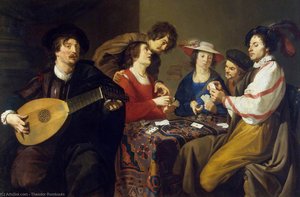
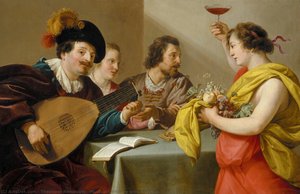
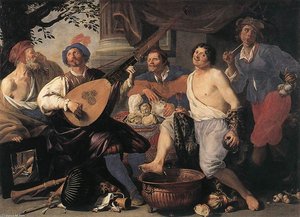
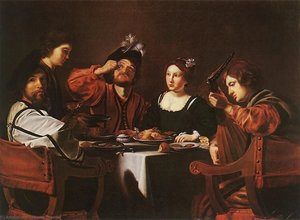
upon returning to antwerp in 1625, rombouts became a master of the guild of st. luke. his works during this period are characterized by:- musical company with bacchus (c. 1630), showcasing his use of vibrant colors and strong contrasts, typical of the caravaggesque style.
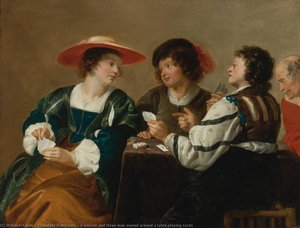
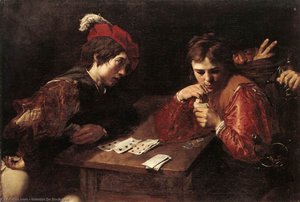
- card and backgammon players. fight over cards (c. 1620-1630), demonstrating his ability to capture dramatic moments with intense lighting.
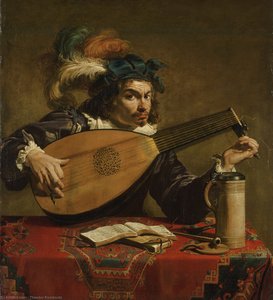
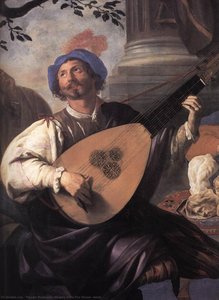
- the lute player (c. 1620), a prime example of his single musician portraits, influenced by the works of manfredi and valentin de boulogne.
museums and collections
rombouts' works can be found in various museums, including:- the royal museums of fine arts of belgium (brussels, belgium), featuring an extensive collection of his paintings.
- the kremer collection (amsterdam, netherlands), housing several of his notable works, such as musical company with bacchus.
legacy and influence
theodoor rombouts played a significant role in shaping the flemish caravaggism movement. his influence can be seen in the works of later artists, such as jacob jordaens, gonzales coques, jan cossiers, and gillis remeeus.
theodoor rombouts
1597 - 1637 , Belgium
Quick Facts
- Artistic Movement Or Style: Caravaggism
- Artists Or Movements Influenced By This Artist: Jacob Jordaens, Gonzalo Coques
- Artists Who Influenced This Artist: Caravaggio
- Date Of Birth: 1597 Antwerp Belgium
- Date Of Death: 1637
- Full Name: Theodoor Rombouts
- Nationality: Flemish
- Notable Artworks:
- Musical Company with Bacchus
- Card and Backgammon Players
- Fight Over Cards
- The Lute Player
- Place Of Birth: Antwerp Belgium
Related Articles

Dutch Baroque Masters: 10 Paintings That Shaped an Era | ArtsDot
Journey through the Golden Age with our guide to the Top 10 Dutch Baroque masterpieces! Explore iconic paintings by Rembrandt, Vermeer & Frans Hals. Find museum-quality art reproductions and elevate your home decor at ArtsDot.com.

Golden Age Reflections: Dutch Baroque Painting & Cultural Innovation
Explore the Dutch Golden Age of painting! Discover key artists like Vermeer & ter Borch, their innovative techniques, and the rich cultural context behind these Baroque masterpieces. Learn about collecting & appreciating this iconic art period.

Baroque Masterpieces: 10 Paintings That Defined an Era |
Journey through the drama & grandeur of Baroque art! Explore 10 masterpieces by Caravaggio, Rembrandt, Rubens & more. Discover stunning oil paintings, rich colors & timeless stories. Find museum-quality reproductions at .
Decoding Baroque Grandeur: A Guide to the Drama and Emotion of 17th-Century Art
Explore the breathtaking drama of 17th-century Baroque art. Our expert guide decodes the use of chiaroscuro, emotional intensity, and historical grandeur to help you appreciate and curate timeless masterpieces for your collection.

The Dramatic Flourish: Exploring the Baroque Movement's Enduring Legacy in Art History
Explore the dramatic world of Baroque art! Discover iconic artists like Caravaggio & Rubens, defining techniques, and its lasting impact on art history. Expert insights for collectors & enthusiasts at ArtsDot.