

 Preview
 Send
Send Share
Share
 Details

 Download
 Similars
 X-Ray
X-Ray Diaporama
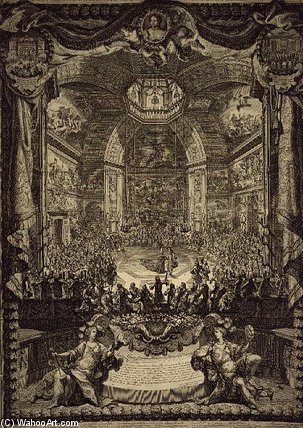
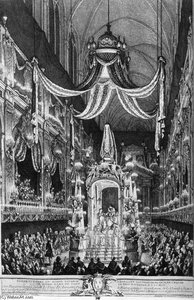
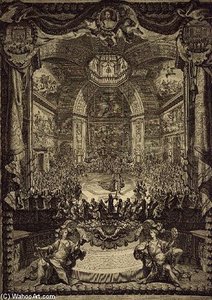
Grand Feast Of H.R.H. The Princess Of Orange

 Read More
Purchase a high-resolution, enhanced digital image, far superior to the online preview.
Each file is meticulously prepared by our in-house specialists using advanced tools and expert manual retouching. We ensure every image has exceptional clarity, precise color accuracy, and fine detail.
The final file is delivered via email within 72 hours, optimized for immediate use in professional, editorial, and print environments. This is the same quality trusted by top-tier design studios, publishers, and galleries.
Digital Image
Download a high-resolution file for personal display, printing, and creative projects. ( Buy Print Buy Hand Made Painting)
Included in Every Digital Image Order
Expert Digital Delivery, Guaranteed
When you choose ArtsDot.com, you're not just getting an image - you're receiving a professionally enhanced digital artwork, crafted with precision and backed by a satisfaction guarantee. Here's everything that comes with your order, automatically:

Fast Email Delivery
Your high-resolution digital image file will be emailed to you within 72 hours of ordering - ready for immediate use.

AI-Enhanced Digital File
Your artwork is professionally optimized using advanced AI tools and manual editing, ensuring maximum detail, clarity, and color accuracy.

Free Lifetime Re-Delivery
Accidentally deleted or lost your file? No worries - we'll resend it to you anytime, free of charge.

No Import Fees - Ever
Enjoy your artwork instantly with zero customs, duties, or delivery fees - digital downloads are always tax-free.

Color Accuracy Guarantee
We ensure your digital image reflects the original colors as closely as possible using professional tools and color management.

60-Day Satisfaction Guarantee
If you're not satisfied with your digital image, we'll revise it or refund 100% within 60 days - no questions asked.

100% Money-Back Guarantee
Not satisfied? Get a full refund within 60 days of receiving your digital file - no questions asked.

Bulk Order Discounts
Buy 3 images, save 10% - Buy 5, save 15% - Buy 10+, save 20%. Great for creative projects, galleries, and agencies.
Related Artworks
Artist Biography
The Architect of Baroque Splendor: The Life and Legacy of Daniel Marot
In the grand, sweeping tapestry of the late seventeenth century, few names evoke the opulent textures of the Baroque era as vividly as Daniel Marot. Born in Paris around 1663 into a lineage of artistic distinction, Marot was far more than a mere decorator; he was a visionary who bridged the gap between French elegance and Northern European grandeur. As the son of the esteemed architect and engraver Jean Marot I, Daniel was immersed from infancy in the language of design, learning to speak through line, symmetry, and ornament. His early training under masters such as Jean Le Pautre and his exposure to the influential works of Jean Bérain provided him with a sophisticated toolkit of draughtsmanship and perspective that would later define the aesthetic of entire nations.
The trajectory of Marot’s life was profoundly shaped by the turbulent political tides of his era. As a member of the Huguenot community, he was part of the significant wave of émigrés forced to flee France following the Revocation of the Edict of Nantes in 1685. This displacement, while personally transformative, became an artistic catalyst. Carrying the refined, classicizing Louis XIV style with him to the Dutch Republic, Marot acted as a cultural ambassador, transplanting the sophisticated courtly manner of Paris into the heart of Holland. His arrival in the Netherlands brought a new sense of architectural drama to the region, where he worked under the patronage of the Stadthouder, eventually contributing to the breathtaking interiors of the Palace of Het Loo.
A Master of Ornament and Royal Commission
Marot’s true genius lay in his ability to treat an entire environment as a single, cohesive work of art. He did not merely design buildings; he choreographed spaces. Whether through his intricate engravings or his monumental architectural plans, his work emphasized a seamless integration of furniture, wall coverings, and structural elements. His mastery of the Late Baroque style was characterized by a meticulous attention to detail—a rhythmic use of symmetry and a penchant for lavish ornamentation that could transform a cold hall into a theater of royal power. This skill reached its zenith when he accompanied William III and Mary II to England, where his influence helped shape the very essence of the "William and Mary" style.
His contributions to English royal residences were nothing short of transformative. At Whitehall Palace and Hampton Court Palace, Marot’s hand is visible in the dramatic spatial arrangements and the lush, ornamental garden parterres that once defined the landscape. His ability to execute complex designs—ranging from the delicate grisaille paintings used to depict architectural interiors to the grander schemes for audience halls—cemented his status as a premier designer of the age. Even when his name is not explicitly etched into the stone of every building he touched, his aesthetic fingerprints are found in the very soul of the period's most prestigious royal settings.
The Enduring Impression of a Design Visionary
Beyond the physical structures and grand halls, Marot’s legacy survives through his prolific output of engravings and design patterns. These works served as a blueprint for the spread of Baroque taste across Europe, allowing his sophisticated motifs to be replicated and admired far beyond the reach of his direct commissions. His technique, often utilizing monochrome compositions and masterful shading, allowed him to convey a palpable sense of depth and atmosphere that captivated the eye and stirred the imagination.
To study the work of Daniel Marot is to witness the movement of history through the lens of beauty. He was an artist who thrived in transition, turning the hardship of exile into an opportunity for cultural expansion. His life remains a testament to the power of design to transcend borders, leaving behind a world that is more structured, more ornate, and infinitely more magnificent because of his vision.
daniel the elder marot
1663 - 1752 , France
Quick Facts
- Artistic Movement Or Style: Baroque
- Artists Or Movements Influenced By This Artist: ["William and Mary's court"]
- Artists Who Influenced This Artist: ['Jean Bérain']
- Date Of Birth: Paris, France (1663)
- Date Of Death: 1752
- Full Name: Daniel Marot I
- Nationality: French
- Notable Artworks:
- Grand Feast Of H.R.H. The Princess Of Orange
- Three false brethren
- Place Of Birth: Paris

