 Preview
 Send
Send Share
Share
 Details

 Download
 Similars
 X-Ray
X-Ray Diaporama
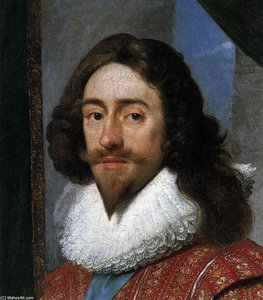
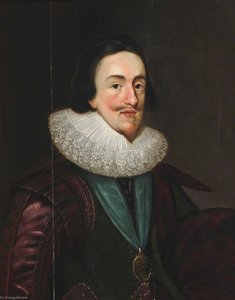
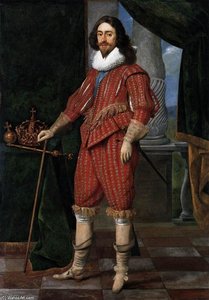
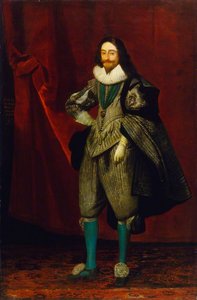
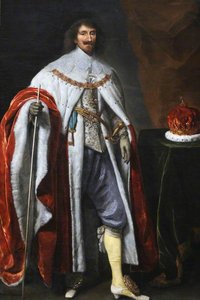
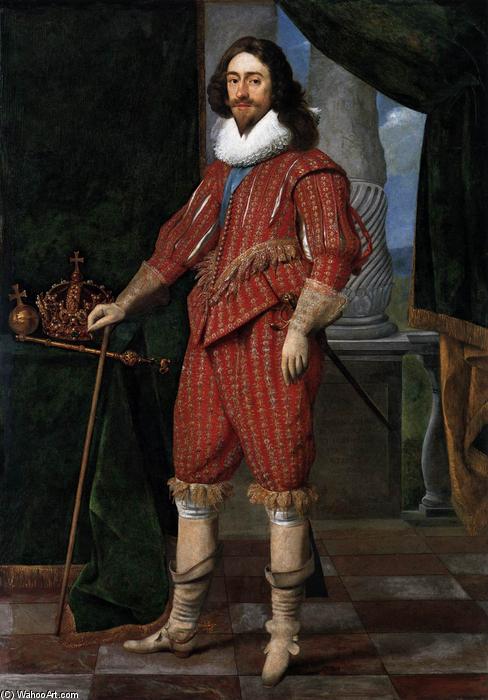
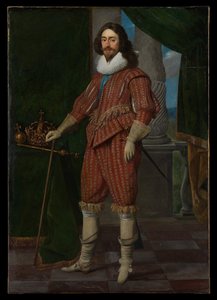
Charles I, King of England
 Oil On Canvas
- WallArt
- Baroque Period
 1629
1629 200.0 x 141.0 cm
 Metropolitan Museum of Art
 Read More
Hand Made Oil Reproduction
Hand-painted oil on canvas in your size and frame, made to order by our artists. ( Buy Print Buy Image)




P118B $10

P118H $10

P118W $10

P438Z $10

P508JH $12

P508YH $12

P805H $10

P805Z $10

P919BZ $10

P919G $10

P919XJ $10

P959ZH $10

P968JZ $12

W106C $8

W218G $10

W218JH $8

W218Y $10

W307PJ $10

W316G $10

W316PJ $8

W316Y $10

W398PJ $8

W4111J $10

W500HY $15

W500JH $15

W692G $12

W849H $8

W940BG $15

W953PJ $8




Pick from our preset sizes that match the artwork's original proportions.

You may enter your own dimensions to fit a specific frame or space. If your selected size does not match the original image's proportions, we will either crop the artwork or extend the painting with additional hand-painted elements. A digital mockup will be sent for your approval before production begins.
Please note that the on-screen preview does not reflect the actual cropping or extension. Only the mockup will accurately show the final composition.
While custom sizes are available, we recommend selecting a dimension from the predefined list to preserve the original proportions.
After order, ArtsDot.com team will email client for instructions and provide a mockup preview
Worldwide Delivery () in 3/4 weeks instead of standard 5 weeks. (23 August). No compromise on quality.

Free Worldwide Express Shipping

High-Quality Linen Canvas

Full Shipping Insurance

Customs Tax Refund Guarantee

True Color Matching Guarantee

60-Day Return Policy (Defects Only)

100% Money-Back Guarantee

Bulk Discount Offer
 Glass option is only available in size under 110 CM

Charles I, King of England
Reproduction Medium
Reproduction Size
-


Total Price
$ 263
Artwork Description
A Regal Portrait: Daniel Mijtens’s Charles I
The year is 1629, and within the opulent confines of an English court, a portrait emerges that transcends mere likeness—it embodies power, contemplation, and the weighty burden of kingship. Daniel Mijtens’s “Charles I, King of England” isn't simply a painting; it’s a carefully constructed narrative rendered in oil on canvas, a testament to the artist’s skill and his astute understanding of portraying not just a man, but an entire era.
Mijtens, born in Delft around 1590, navigated a fascinating artistic journey. Initially rooted in the Dutch tradition, particularly influenced by his uncle Aert Mijtens, he ultimately found his most enduring legacy in England. This particular portrait marks a significant shift – a move towards a more naturalistic and approachable style that resonated deeply with the English court of Charles I. The painting’s composition is immediately striking: the king dominates the frame, yet he isn't presented as an imposing figure of absolute authority. Instead, he appears engaged in quiet reflection, his gaze directed beyond the viewer, hinting at the immense responsibilities and anxieties weighing upon his shoulders.
A Symphony of Baroque Detail
The painting’s execution is a masterclass in Baroque technique. Mijtens meticulously renders Charles's attire – the vibrant red doublet, trimmed with intricate gold embroidery, speaks to his royal status while simultaneously conveying wealth and power. The white breeches, adorned with delicate lace cuffs and hem, are a subtle yet significant detail, reflecting contemporary fashion trends. Notice the careful layering of fabrics, each rendered with painstaking precision; the fur-lined collar adds a touch of warmth and luxury, suggesting both comfort and authority. Beyond the figure itself, Mijtens skillfully employs chiaroscuro – the dramatic interplay of light and shadow – to sculpt the form and create a sense of depth and volume. The dark green curtains, punctuated by glimpses of classical architecture, establish an intimate indoor setting, grounding the regal subject within a space of controlled power.
Symbolism Woven into the Canvas
More than just a visual representation, “Charles I” is rich in symbolic meaning. The scepter he holds isn’t merely a symbol of authority; it represents his divine right to rule – a concept deeply ingrained in 17th-century European thought. The careful arrangement of the composition itself contributes to this symbolism. Charles's posture—slightly turned away, contemplative—suggests a ruler burdened by decisions and aware of the challenges ahead. The classical architectural elements visible through the curtains subtly allude to the legacy of Roman power, reinforcing the idea of continuity and tradition upon which the English monarchy was built. The overall effect is one of dignified restraint, conveying both strength and vulnerability.
A Window into a Turbulent Era
“Charles I” offers a poignant glimpse into a pivotal moment in English history – the reign of a king whose ambition and political maneuvering ultimately led to his downfall. Commissioned during a period of increasing tension between Charles and Parliament, the portrait serves as a visual record of a man grappling with immense pressure. It’s a reminder that even the most powerful figures are subject to human complexities and anxieties. The painting's creation coincided with the early stages of the English Civil War, making it not just an artistic achievement but also a historical artifact reflecting the political climate of the time. Today, housed within the Metropolitan Museum of Art in New York City, this masterpiece continues to captivate viewers with its masterful technique and profound emotional resonance.
Bringing History Home: A Reproduction
For those seeking to experience the beauty and power of Mijtens’s “Charles I” firsthand, a hand-painted oil reproduction offers an exceptional opportunity. Available through /art/list/?Filter=8Y3DRL-Daniel-I-Mijtens-Charles-I-King-of-England, this meticulously crafted replica captures the essence of the original while offering a more accessible and affordable option. Further information about Daniel I Mijtens and his works can be found on https://ArtsDot.com – a valuable resource for art enthusiasts seeking to delve deeper into the artist’s life and oeuvre.
Related Artworks
Artist Biography
Daniel Mijtens: The English Court’s Naturalist
Daniel Mijtens (c. 1590 – 1647/48), often known as Daniel Mytens the Elder, stands as a pivotal figure in the transition of portraiture from the formality of earlier Dutch styles to the more approachable and naturalistic depictions favored by the English court during the Stuart period. Born in Delft, Netherlands, into a family deeply rooted in artistic tradition – his uncle was the esteemed Aert Mijtens, and he was related to Isaac Mijtens – Mijtens’s early training likely occurred within the studio of Michiel Jansz van Mierevelt in The Hague. This formative experience instilled in him a foundational understanding of composition and technique, which he would later adapt and refine during his prolific career, particularly in England. His initial period in the Netherlands remains somewhat obscure, with few known works from this early phase, suggesting a deliberate shift in artistic direction as he embarked on a new chapter in his life.A Move to London and Royal Patronage
By 1618, Mijtens had established himself in London, quickly gaining recognition through his commissions for Thomas Howard, the 14th Earl of Arundel, a leading art collector and connoisseur. This initial patronage proved crucial, providing him with access to influential circles and establishing a reputation as a skilled portraitist. His early works for the Earl showcased a burgeoning talent – portraits of Arundel himself and his Countess, Alethea Talbot – demonstrating an emerging ability to capture likenesses with subtle detail and a nascent sense of psychological depth. However, it was his subsequent commissions for King James I and Prince Charles that truly cemented his position within the English court. The scale of these projects—including multiple iterations of portraits of the royal family—necessitated assistance from a workshop, hinting at the considerable demand for his services and the evolving nature of artistic production during this period.The Hamilton Portraits: A Masterclass in Naturalism
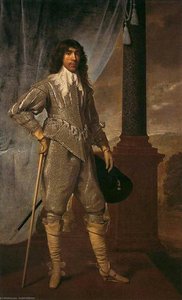
Among Mijtens’s most celebrated works are the portraits of James Hamilton, later 1st Duke of Hamilton. These paintings, particularly those depicting a young Hamilton at seventeen in 1623 and again in 1629, represent a significant departure from the stiff formality typical of earlier court portraits. Mijtens masterfully captured the subject’s youthful vitality and character, imbuing the images with an unprecedented sense of realism and immediacy. The subtle nuances of expression, the play of light and shadow, and the attention to detail in the rendering of clothing and accessories all contribute to a remarkably lifelike portrayal. These portraits are considered cornerstones of Mijtens's legacy, demonstrating his innovative approach to portraiture and influencing subsequent artists like Abraham van Blyenberch. The meticulous duplication of this particular portrait highlights the scale of his work and the importance placed on creating multiple versions for various patrons.Influence and Legacy
Mijtens’s arrival in England coincided with a period of artistic exchange, and he actively sought to expand his knowledge and refine his style. His visits to the Netherlands in 1626 and 1630 were likely undertaken to study the latest developments in painting, particularly the works of Peter Paul Rubens and Anthony van Dyck – artists whose dynamic compositions and masterful use of light profoundly impacted Mijtens’s technique. He introduced a new naturalism into the English court portrait, moving away from the idealized representations favored by some of his predecessors. However, his career was ultimately overshadowed by the arrival of Anthony van Dyck in 1632, who quickly surpassed him as the leading court portraitist due to his superior technical skill and refined aesthetic sensibilities. Despite this decline in prominence, Mijtens’s contributions to English art remain significant, shaping the trajectory of portraiture and leaving behind a body of work that continues to fascinate and inspire. He ultimately returned to the Netherlands, dedicating himself primarily to art dealing before his death in 1648.Notable Works
- Daniel Mijtens - Charles I (1600–1649), King of England (Metropolitan Museum of Art) – A prime example of his royal portraiture, showcasing the formality and grandeur expected of such depictions.
- Duke of Hamilton – Demonstrates his ability to capture youthful vitality and character with remarkable realism.
- Charles I, King of England - A key portrait reflecting the evolving style of courtly representation during the Stuart era.
daniel i mijtens
1590 - 1648 , Netherlands
Quick Facts
- Artistic Movement Or Style: Naturalism, Court Portraiture
- Artists Or Movements Influenced By This Artist: ['Abraham van Blyenberch']
- Artists Who Influenced This Artist: ['van Mierevelt']
- Date Of Birth: c. 1590
- Date Of Death: 1648/48
- Full Name: Daniël Mijtens
- Nationality: Dutch
- Notable Artworks:
- Charles I Portraits
- James Hamilton Duke
- Place Of Birth: Delft, Netherlands
Related Articles
Charles Bird King: Capturing Native American Dignity Through Portraiture & Cultural Exchange
Explore the captivating portraits of Charles Bird King, renowned for his depictions of Native American leaders. Discover the historical context, artistic techniques, and collecting value of these significant 19th-century artworks.
Thomas Daniell: Navigating Light, Landscape & Cultural Exchange in Early 19th-Century India
Explore the captivating landscapes of Thomas Daniell, a pioneering artist who documented India's beauty in the 19th century. Discover his 'Oriental Scenery,' aquatint technique & lasting legacy. Hand-painted reproductions available at ArtsDot.
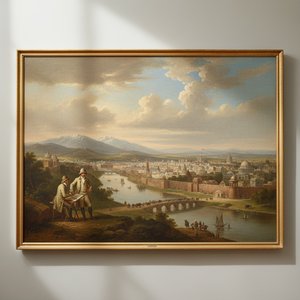
Panoramic Visions of Empire: The Daniells’ Artistic Collaboration & Legacy
Explore the captivating 'Oriental Scenery' by Thomas & William Daniell. Discover their pioneering aquatint prints of India, imperial context, artistic collaboration, and lasting legacy. A deep dive for history lovers.
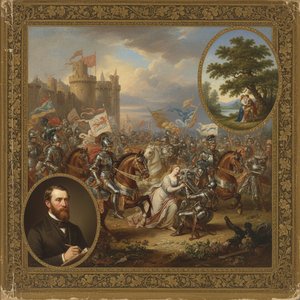
Daniel Maclise: Historical Narratives & Romantic Ideals in 19th-Century British Art
Explore the life & works of Daniel Maclise, a leading Victorian historical painter. Discover his captivating murals, Shakespearean scenes, and portraits at ArtsDot.com – handmade oil paintings & museum-quality prints.
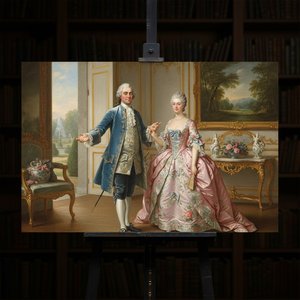
Charles-André van Loo: A Study in Rococo Portraiture & the French Court's Artistic Dynamics
Explore the elegant world of Charles-André van Loo, a master of Rococo portraiture at the French court. Discover his life, techniques, and enduring influence on 18th-century art. Hand-painted reproductions available.