Early Life & Artistic Foundations: From Heraldic Painting to Oriental Promise
 Wikipedia: Thomas Daniell
Thomas Daniell (1749 – 19 March 1840) was an English landscape painter who also painted Orientalist themes. He spent seven years in India, accompanied by his nephew William, also an artist, and published several series of aquatints of the country. ...
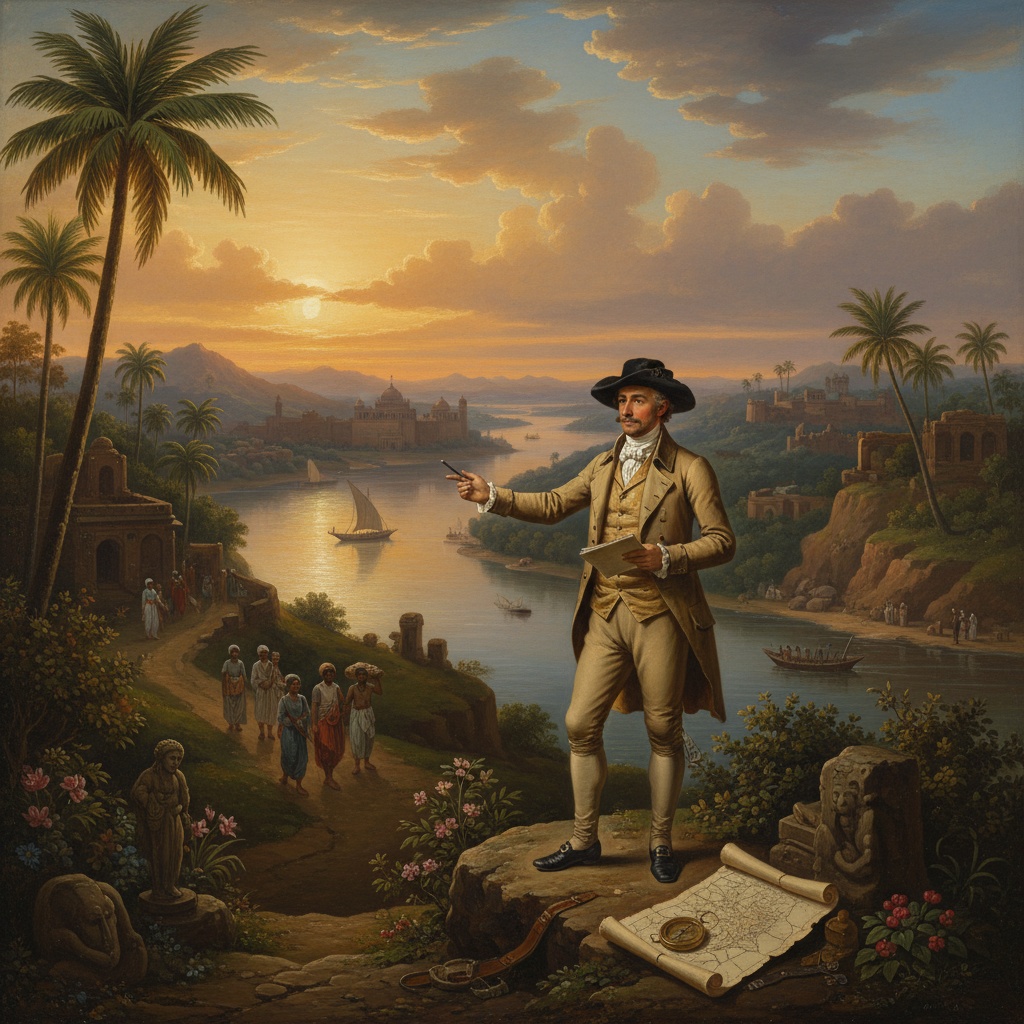
Thomas Daniell’s journey toward becoming one of the most celebrated chroniclers of India began not amidst the vibrant hues and exotic landscapes he would later immortalize, but in the comparatively restrained world of 18th-century English heraldry. Born in Kingston upon Thames in 1749, his initial apprenticeship to a heraldic painter provided a foundation in meticulous detail and precise rendering – skills that would prove invaluable as he sought to capture the complexities of a distant land. Though he exhibited floral pieces and landscapes at the Royal Academy Schools from 1772 onwards, Daniell found establishing himself within the established British art scene challenging. A growing fascination with accounts of India, fueled by the expanding influence of the East India Company, ignited a desire for something more – an opportunity to witness firsthand the wealth, culture, and spectacle that lay beyond the horizon. This ambition led him, in 1784, to seek permission from the Company to travel to Calcutta, accompanied by his nephew William, embarking on a transformative adventure that would redefine both their artistic careers.
The Voyage to India: A Decade of Exploration and Observation (1784-1794)
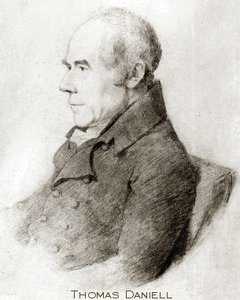 Thomas and William Daniell
Explore the captivating landscapes of Thomas & William Daniell! Renowned British artists known for their pioneering 'Oriental Scenery' and detailed depictions of Britain. Discover hand-painted reproductions today!
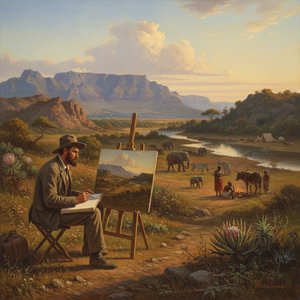
The journey itself was no mere passage; it was an immersion into the very spirit of exploration. Sailing from Gravesend in April 1785, the Daniells endured a lengthy voyage, arriving in Calcutta via Whampoa in early 1786. Upon arrival, they immediately set about documenting their surroundings, recognizing the unique opportunity to visually record a world largely unknown to European audiences. Over the next decade, Thomas and William traversed Bengal, Bihar, Uttar Pradesh, Rajasthan, Tamil Nadu, and Kerala, meticulously sketching and watercoloring the diverse landscapes, architectural marvels, and everyday life unfolding before them. This wasn’t simply about replicating what they saw; it was a process of careful observation, artistic interpretation, and a growing understanding of India's rich cultural tapestry. Their collaborative spirit proved essential – Thomas possessing a keen eye for composition while William excelled in the technical precision required to translate their visions into lasting images.
Capturing Calcutta: The 'Twelve Views' and the Birth of a Unique Aesthetic
The Daniells’ initial project, “Twelve Views of Calcutta,” published between 1786 and 1788, marked the genesis of their distinctive aesthetic. These aquatints weren’t simply topographical records; they were carefully constructed narratives that blended European neoclassical sensibilities with the unique character of the Indian city. Fort William, Government House, and the bustling ghats along the Hooghly River were rendered with remarkable accuracy, yet infused with a romanticized quality that appealed to British audiences eager for glimpses of their colonial holdings. Crucially, Daniell employed a camera obscura – a relatively new technology at the time – to achieve an unprecedented level of detail in his compositions. This innovative approach, combined with hand-coloring by local artisans, resulted in prints that were both visually striking and historically significant, offering a nuanced portrayal of Calcutta’s architectural grandeur and vibrant street life.
Oriental Scenery: A Magnum Opus & Pioneering Aquatint Technique
Aquatint is an intaglio printmaking technique, a variant of etching that produces areas of tone rather than lines. For this reason it has mostly been used in conjunction with etching, to give both lines and shaded tone. It has also been used histori...
The culmination of their Indian travels was the monumental series “Oriental Scenery,” published in six volumes between 1795 and 1808. Comprising 144 exquisitely detailed aquatint plates, this work stands as a testament to the Daniells’ artistic dedication and pioneering spirit. Aquatint, a technique that allowed for the creation of tonal variations rather than solely linear detail, proved perfectly suited to capturing the subtle nuances of Indian light and shadow. The process involved applying powdered rosin to copper plates, etching with acid, and then carefully wiping away excess ink to reveal varying shades of gray – a laborious but rewarding method. The series showcased iconic sites like the Taj Mahal, the sacred ghats of Varanasi, and the ancient temples of Madurai, presenting them not merely as architectural wonders but as integral parts of a living, breathing culture. The inclusion of figures engaged in daily life added another layer of depth, offering glimpses into the customs, traditions, and social fabric of India.
Daniell’s Legacy & the Complexities of Orientalism in Art History
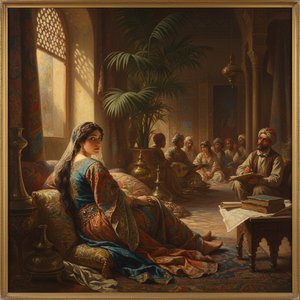
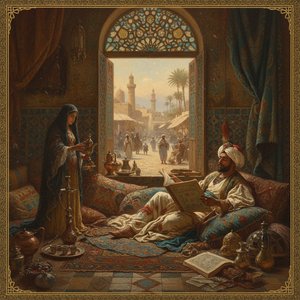
In art history, literature, and cultural studies, Orientalism is the imitation or depiction of aspects of the Eastern world (or "Orient") by writers, designers, and artists from the Western world. Orientalist painting, particularly of the Middle East...
Thomas Daniell's work profoundly shaped British perceptions of India for generations. His “Oriental Scenery” became a cornerstone of visual understanding, influencing artists, writers, and policymakers alike. However, it is crucial to acknowledge the context within which these images were created – an era marked by colonial power dynamics and the prevailing discourse of Orientalism. While Daniell’s depictions often celebrated India's beauty and grandeur, they were inevitably filtered through a Western lens, reflecting certain biases and preconceptions. The term “Orientalism,” as articulated by Edward Said, highlights the tendency to essentialize Eastern cultures as static, exotic, and fundamentally different from the West. Examining Daniell’s work through this critical framework allows for a more nuanced understanding of its historical significance – recognizing both its artistic merit and its potential limitations. It is important to note that while some scholars view Orientalist art as inherently patronizing, others emphasize the genuine fascination and admiration that motivated artists like Daniell.
Rediscovering Daniell: Collections, Influence & Modern Appreciation
Today, Thomas Daniell’s works are held in prestigious collections worldwide, including the British Museum, the Victoria and Albert Museum, and the National Museum of Asian Art. His influence can be seen in the work of subsequent artists who sought to capture the beauty and diversity of India. The enduring appeal of his aquatints lies not only in their technical brilliance but also in their ability to transport viewers to a bygone era – a time when exploration, artistic curiosity, and colonial ambition converged. ArtsDot offers exquisite hand-painted reproductions of Daniell’s masterpieces, allowing art enthusiasts to experience the captivating landscapes of India firsthand. Through these reproductions, we strive to preserve his legacy and make his extraordinary vision accessible to a wider audience, fostering a deeper appreciation for both the artistic skill and historical context of this remarkable artist.