The Barker Dynasty: A Family of Artists in Bath
 Wikipedia: Thomas Jones Barker
Thomas Jones Barker (19 April 1813 – 29 March 1882) was an English historical, military, and portrait painter. == The Barkers of Bath == Thomas Jones Barker was born at Bath in 1815, into a family of artists. His grandfather, Benjamin Barker, was "...
The story of Thomas Barker is inextricably linked to that of his family, a veritable dynasty of artists who flourished in the vibrant cultural milieu of 18th and 19th-century England. While often referred to as “Barker of Bath,” a moniker distinguishing him from other members of his lineage, understanding his artistic trajectory requires acknowledging the foundations laid by those who came before. His grandfather, Benjamin Barker, though initially trained in law, found himself drawn to the canvas – albeit with limited success, primarily painting horses and sporting figures. This early foray into art, however humble, established a familial precedent. It was Thomas’s father, also named Thomas Barker, who truly cemented the family's reputation as accomplished painters, becoming a prominent figure in Bath society and a respected portraitist. The influence of this paternal guidance proved pivotal in shaping young Thomas’s artistic sensibilities.
The Barker workshop wasn’t merely a place of technical instruction; it was an environment steeped in artistic discourse, where the nuances of color, composition, and subject matter were constantly debated and refined. His uncles, Benjamin Jr. and Joseph Barker, further contributed to this rich creative atmosphere, each pursuing their own distinct styles within the broader landscape tradition. Even his younger brother, John Joseph Barker, and cousin Marianne A. Barker followed suit, ensuring that the artistic flame continued to burn brightly across generations. This familial network provided not only practical support but also a crucial sense of community and shared ambition, fostering an environment where Thomas could hone his skills and develop his unique voice.
Early Landscapes & The Influence of Romantic Sensibility
 Wikipedia: Romantic literature in English
Romanticism was an artistic, literary, and intellectual movement that originated in Europe toward the end of the 18th century. Scholars regard the publishing of William Wordsworth's and Samuel Coleridge's Lyrical Ballads in 1798 as probably the begin...
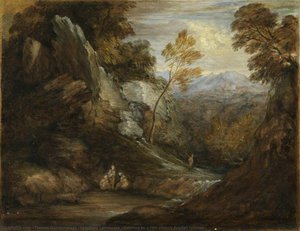
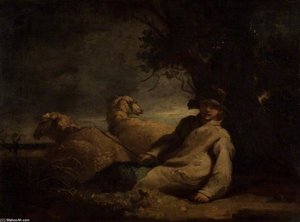
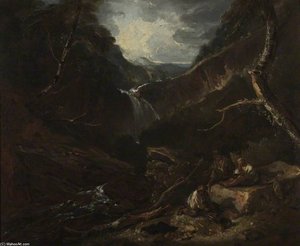
Thomas Barker’s early works reveal a clear debt to the burgeoning Romantic movement that swept across England at the turn of the 19th century. Rejecting the rigid formalism of earlier artistic styles, Romanticism prioritized emotion, imagination, and the sublime power of nature. This shift in aesthetic sensibilities resonated deeply with Barker, who found himself increasingly drawn to depicting idyllic rural scenes imbued with a sense of tranquility and emotional depth. His initial landscapes, often featuring humble pastoral subjects – shepherd boys tending flocks, tranquil woodland glades bathed in golden light – reflect this early embrace of Romantic ideals.
However, Barker’s approach wasn't simply imitative. He possessed a keen eye for detail and a remarkable ability to capture the atmospheric nuances of the English countryside. His paintings weren’t merely representations of nature; they were evocations of feeling, imbued with a sense of nostalgia and longing. This sensitivity to mood and atmosphere would become a defining characteristic of his work, setting him apart from many of his contemporaries. The influence of artists like Wordsworth and Coleridge – whose Lyrical Ballads are often considered the genesis of English Romanticism – is palpable in Barker’s early landscapes, which share a similar reverence for the beauty and power of the natural world.
Barker's Parisian Success: Salon Exhibitions and Royal Commissions
At the age of nineteen, Thomas Barker made a bold decision that would profoundly shape his career: he moved to Paris to study under the renowned painter Horace Vernet. This relocation wasn’t merely a pursuit of technical refinement; it was an immersion into the heart of the European art world. The Parisian Salon, the official exhibition of the Académie des Beaux-Arts, served as the ultimate proving ground for aspiring artists, and Barker quickly established himself as a formidable presence. His debut in 1836 with three paintings – including “Beauties of the Court of Charles II” which garnered a bronze medal – signaled his arrival on the Parisian art scene.
Over the following years, Barker consistently exhibited at the Salon, showcasing a diverse range of subjects that demonstrated his versatility and technical prowess. He found particular success with scenes depicting hunters, poachers, and dogs—themes that reflected both his personal interests and the prevailing tastes of French society. His ability to capture the drama and energy of these rural pursuits resonated with audiences, earning him critical acclaim and a growing reputation. This recognition culminated in two prestigious royal commissions from King Louis Philippe I, solidifying Barker’s position as a sought-after artist. The conferral of the Cross of the Legion of Honour further underscored his artistic achievements.
‘The Bride of Death’ and the Narrative Power of Emotion
Perhaps Thomas Barker's most celebrated work is “La fiancée de la mort” (The Bride of Death), a hauntingly beautiful painting that exemplifies his mastery of narrative and emotional expression. Commissioned by Princess Marie, daughter of King Louis Philippe I, the painting depicts a poignant scene inspired by an ancient ballade – a tragic tale of love, loss, and sacrifice. The composition is striking in its dramatic intensity, featuring a young woman poised on the brink of death, her fate intertwined with a spectral figure representing mortality.
What sets “The Bride of Death” apart isn’t merely its technical execution but also its profound psychological depth. Barker skillfully conveys the protagonist's inner turmoil through subtle gestures and expressive facial features, creating a sense of empathy and emotional resonance. The inclusion of a faithful dog – modeled after his own beloved companion, Mentor – adds another layer of pathos to the scene, symbolizing loyalty and unwavering devotion in the face of tragedy. Contemporary critics lauded the painting as “a revival of the intellectual” in art, praising its ability to evoke powerful emotions and explore complex themes. The presence of Mentor, with his “wonderfully life-like” gaze, became a focal point for viewers, adding a touch of realism and tenderness to the otherwise somber composition.
Beyond the Brushstroke: Social Context and Barker’s Artistic Vision
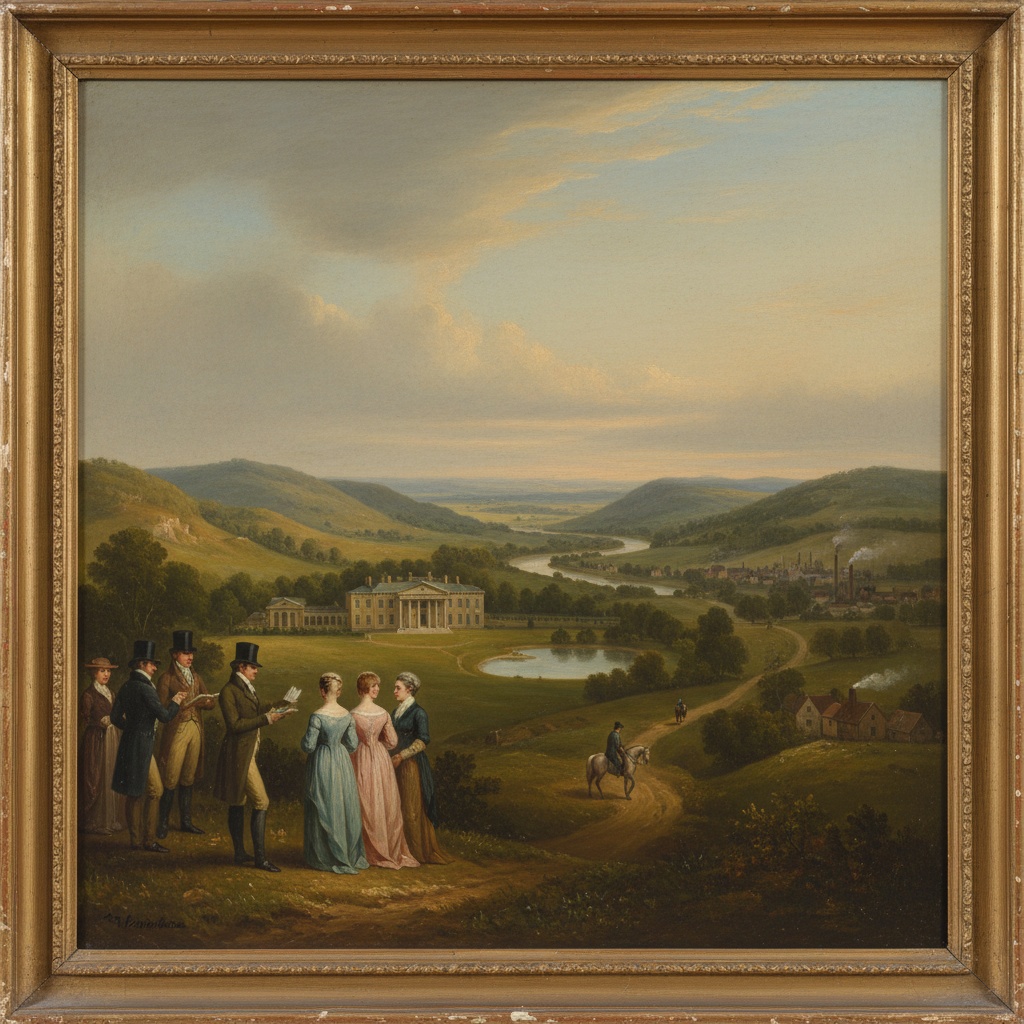
To fully appreciate Thomas Barker's work, it is essential to consider the broader social context in which he operated. The early 19th century was a period of profound transformation in England, marked by rapid industrialization, depopulation of the countryside, and growing class tensions. The Romantic movement, in many ways, served as a reaction against these societal changes, celebrating the beauty of nature and the virtues of rural life. Barker’s landscapes can be seen as both a reflection of this nostalgic yearning for a simpler past and a subtle critique of the encroaching industrial landscape.
His depictions of hunters and poachers, while seemingly straightforward genre scenes, also offer a glimpse into the social realities of the time – the struggles of rural communities and the challenges faced by those living on the margins of society. Furthermore, his success in Paris speaks to the broader cultural exchange between England and France during this period, highlighting the growing appreciation for English Romanticism among French audiences. Barker’s artistic vision wasn't simply about creating beautiful paintings; it was about capturing the spirit of an era – its hopes, anxieties, and enduring human emotions.
Legacy and Rediscovery: Thomas Barker in Modern Collections
While Thomas Barker enjoyed considerable success during his lifetime, his work fell into relative obscurity for much of the 20th century. However, recent years have witnessed a renewed appreciation for his artistic achievements, fueled by scholarly research and increased interest in Victorian art. Paintings like “The Bride of Death” are now recognized as masterpieces of Romantic narrative, showcasing Barker’s exceptional technical skill and emotional depth.
Today, his works can be found in prominent museum collections around the world, including the Victoria Art Gallery in Bath and the National Gallery of Art in Washington D.C., offering audiences a glimpse into the artistic vision of this remarkable painter. At ArtsDot.com, we are proud to offer high-quality reproductions of Thomas Barker’s most iconic paintings, allowing art enthusiasts to experience the beauty and emotional power of his work firsthand. Whether you're drawn to his idyllic landscapes or his dramatic narrative scenes, Barker’s paintings continue to captivate and inspire, reminding us of the enduring power of art to evoke emotion and reflect the complexities of the human condition. Explore our collection today and discover the timeless appeal of Thomas Barker of Bath.