 Preview
 Send
Send Share
Share
 Details

 Download
 Similars
 X-Ray
X-Ray Diaporama
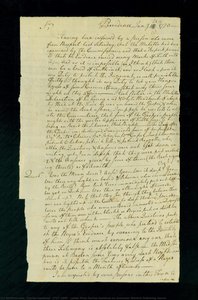
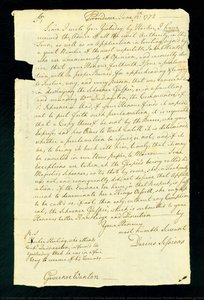
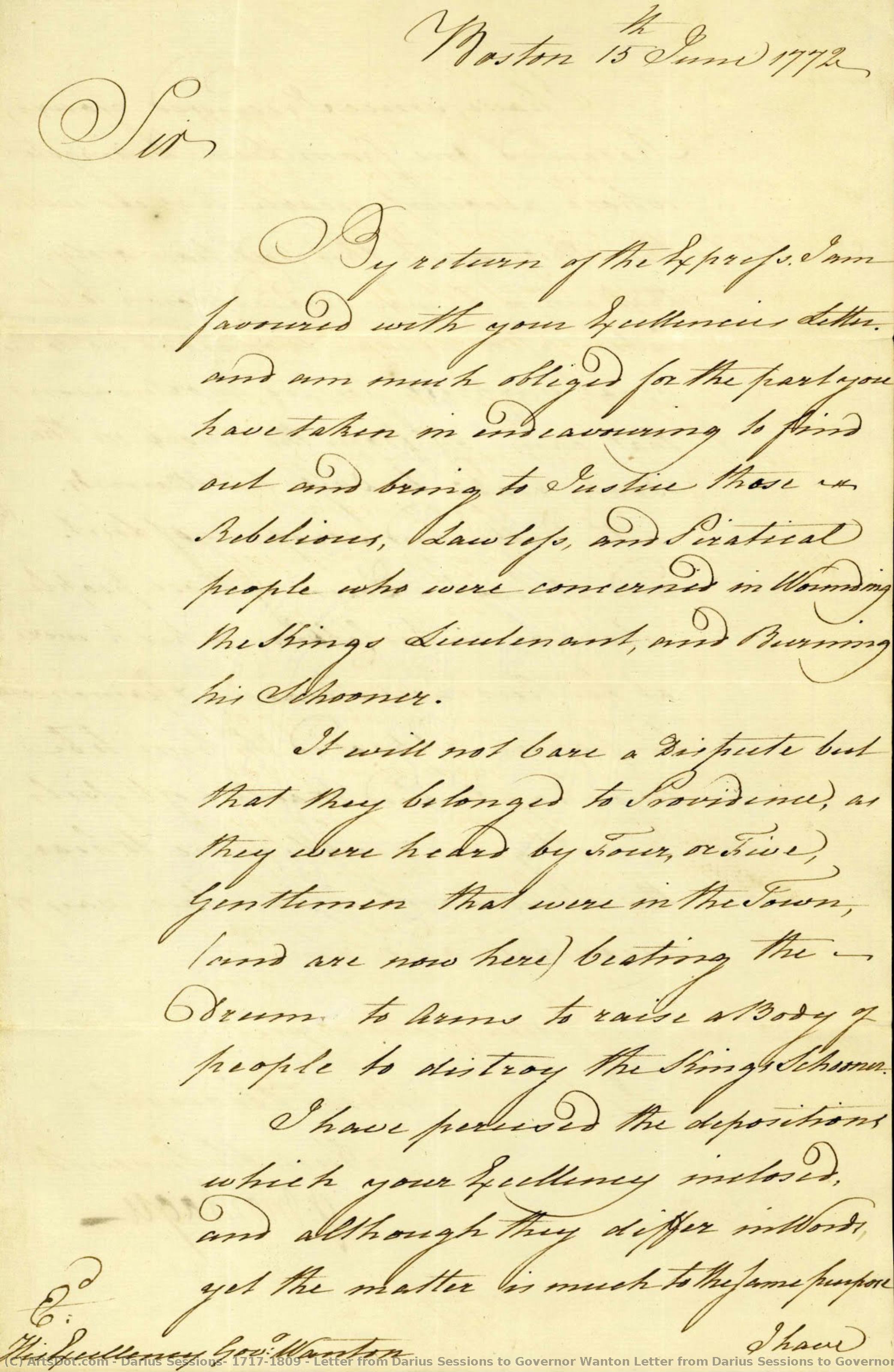
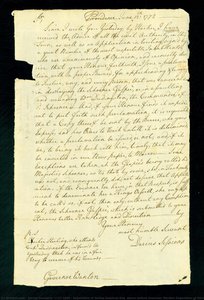
Letter from Darius Sessions to Governor Wanton Letter from Darius Sessions to Governor Wanton, page 1

 Read More
Giclée / Art Print
Museum-quality giclée or canvas print with fast production and flexible finish options. ( Buy Hand Made Painting Buy Image)




































Pick from our preset sizes that match the artwork's original proportions.

You may enter your own dimensions to fit a specific frame or space. If your selected size does not match the original image's proportions, we will either crop the artwork or extend the image with a mirrored or solid-fill edge. A digital mockup will be sent for your approval before production begins.
Please note that the on-screen preview does not reflect the actual cropping or extension. Only the mockup will accurately show the final composition.
While custom sizes are available, we recommend selecting a dimension from the predefined list to preserve the original proportions.
Worldwide Delivery () in 2 weeks instead of standard 4/5 weeks. (26 August)

Free Worldwide Express Shipping

High-Quality Linen Canvas

Full Shipping Insurance

Customs Tax Refund Guarantee

True Color Matching Guarantee

60-Day Return Policy (Defects Only)

100% Money-Back Guarantee

Bulk Discount Offer
 Glass option is only available in size under 110 CM

Letter from Darius Sessions to Governor Wanton Letter from Darius Sessions to Governor Wanton, page 1
Giclée / Art Print
Reproduction Size
-


Total Price
$ 63
Related Artworks

Artist Biography
The Architect of Stability: The Life and Legacy of Darius Sessions
In the turbulent tapestry of the American colonial era, where the threads of loyalty and rebellion were often violently intertwined, the figure of Darius Sessions (1717–1809) emerges as a profound study in moderation and diplomatic grace. Born on August 17, 1717, in Pomfret, Connecticut, to Nathaniel Sessions and Joanna Corbin, his early life was rooted in the prosperous landscapes of eastern Connecticut. A graduate of Yale College in 1737, Sessions possessed a refined intellect that would later serve him not just in the halls of governance, but in navigating the treacherous political waters of the Rhode Island colony. His journey from a well-to-do Connecticut upbringing to the heights of colonial administration reflects a life shaped by both mercantile ambition and a steadfast commitment to civic order.
Before ascending to the political stage, Sessions was deeply immersed in the maritime and commercial pulse of the Atlantic world. His early career was marked by a pragmatic engagement with the sea and trade; he was part owner of the privateer sloop Reprisal during King George's War in 1746 and later served as the master of the schooner Smithfield, navigating the vital routes to the West Indies. This period of maritime mastery provided him with a unique perspective on the vulnerabilities of colonial commerce—a perspective that would become critical when the shadows of British imperial overreach began to darken the Narragansett Bay.
A Sentinel Amidst the Storm of Revolution
The true measure of Sessions’ character was tested during his tenure as Deputy Governor of the Colony of Rhode Island and Providence Plantations, a role he assumed in 1769. As the fires of discontent ignited by the Stamp Act spread through the colonies, Sessions found himself positioned at the epicenter of a brewing storm. Unlike the more radical voices calling for immediate insurrection, Sessions acted as an architect of stability. He was a man who understood the heavy cost of chaos, seeking instead to mediate the escalating tensions between the colonial populace and the British Crown.
Nowhere was his diplomatic skill more evident than during the infamous Gaspee Affair of 1772. When British authorities began aggressively searching commercial vessels, disrupting the very lifeblood of Rhode Island’s economy, Sessions did not merely react with fervor; he reacted with strategic precision. He worked tirelessly to manage the fallout of the destruction of the HMS Gaspee, playing a subtle yet instrumental role in protecting the identities of those involved. His ability to balance the demand for justice with the necessity of preventing an all-out massacre demonstrated a sophisticated understanding of political survival and communal preservation.
Legacy of Influence and Intellectual Depth
Beyond the immediate drama of the American Revolution, Sessions’ influence permeated the cultural and educational foundations of his region. He was a man of significant intellectual connections, maintaining a close friendship with James Manning, the first president of Brown University. It is often credited that Sessions' influence helped ensure the university found its permanent home in Providence rather than Newport or Warren, cementing the city's role as an intellectual hub.
While history often remembers the loud proclamations of revolutionaries, the legacy of Darius Sessions lies in the quiet, essential work of maintaining the social fabric. His life represents a bridge between the colonial past and the burgeoning American future—a period where the preservation of order was just as vital as the pursuit of liberty. Through his mercantile ventures, his legal acumen, and his steady hand in governance, he remains a pivotal, if understated, figure in the foundational narrative of the United States.
darius sessions, 1717-1809
1717 - 1809 , United States of America
Quick Facts
- Date Of Birth: August 1717
- Date Of Death: April 1809
- Full Name: Darius Sessions
- Nationality: American
- Notable Artworks: ['Aaron']
- Place Of Birth: United States of America