 Preview
 Send
Send Share
Share
 Details

 Download
 Similars
 X-Ray
X-Ray Diaporama
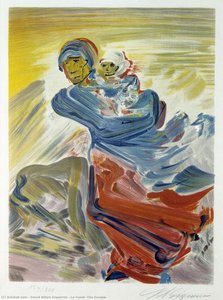
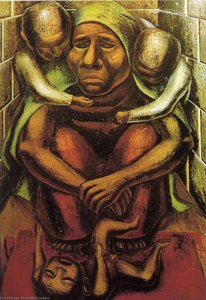
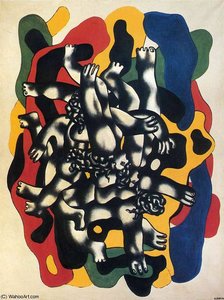
La huida (The Escape)


 Read More
Hand Made Oil Reproduction
Hand-painted oil on canvas in your size and frame, made to order by our artists. ( Buy Print Buy Image)




P118B $10

P118H $10

P118W $10

P438Z $10

P508JH $12

P508YH $12

P805H $10

P805Z $10

P919BZ $10

P919G $10

P919XJ $10

P959ZH $10

P968JZ $12

W106C $8

W218G $10

W218JH $8

W218Y $10

W307PJ $10

W316G $10

W316PJ $8

W316Y $10

W398PJ $8

W4111J $10

W500HY $15

W500JH $15

W692G $12

W849H $8

W940BG $15

W953PJ $8




Pick from our preset sizes that match the artwork's original proportions.

You may enter your own dimensions to fit a specific frame or space. If your selected size does not match the original image's proportions, we will either crop the artwork or extend the painting with additional hand-painted elements. A digital mockup will be sent for your approval before production begins.
Please note that the on-screen preview does not reflect the actual cropping or extension. Only the mockup will accurately show the final composition.
While custom sizes are available, we recommend selecting a dimension from the predefined list to preserve the original proportions.
After order, ArtsDot.com team will email client for instructions and provide a mockup preview
Worldwide Delivery () in 3/4 weeks instead of standard 5 weeks. (17 August). No compromise on quality.

Free Worldwide Express Shipping

High-Quality Linen Canvas

Full Shipping Insurance

Customs Tax Refund Guarantee

True Color Matching Guarantee

60-Day Return Policy (Defects Only)

100% Money-Back Guarantee

Bulk Discount Offer
 Glass option is only available in size under 110 CM

La huida (The Escape)
Reproduction Medium
Reproduction Size
-


Total Price
$ 263
Artwork Description
David Alfaro Siqueiros’s “La Huida” – A Symphony of Fear and Resilience
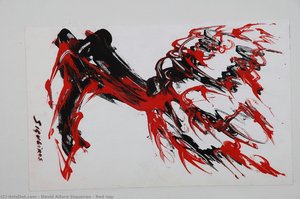
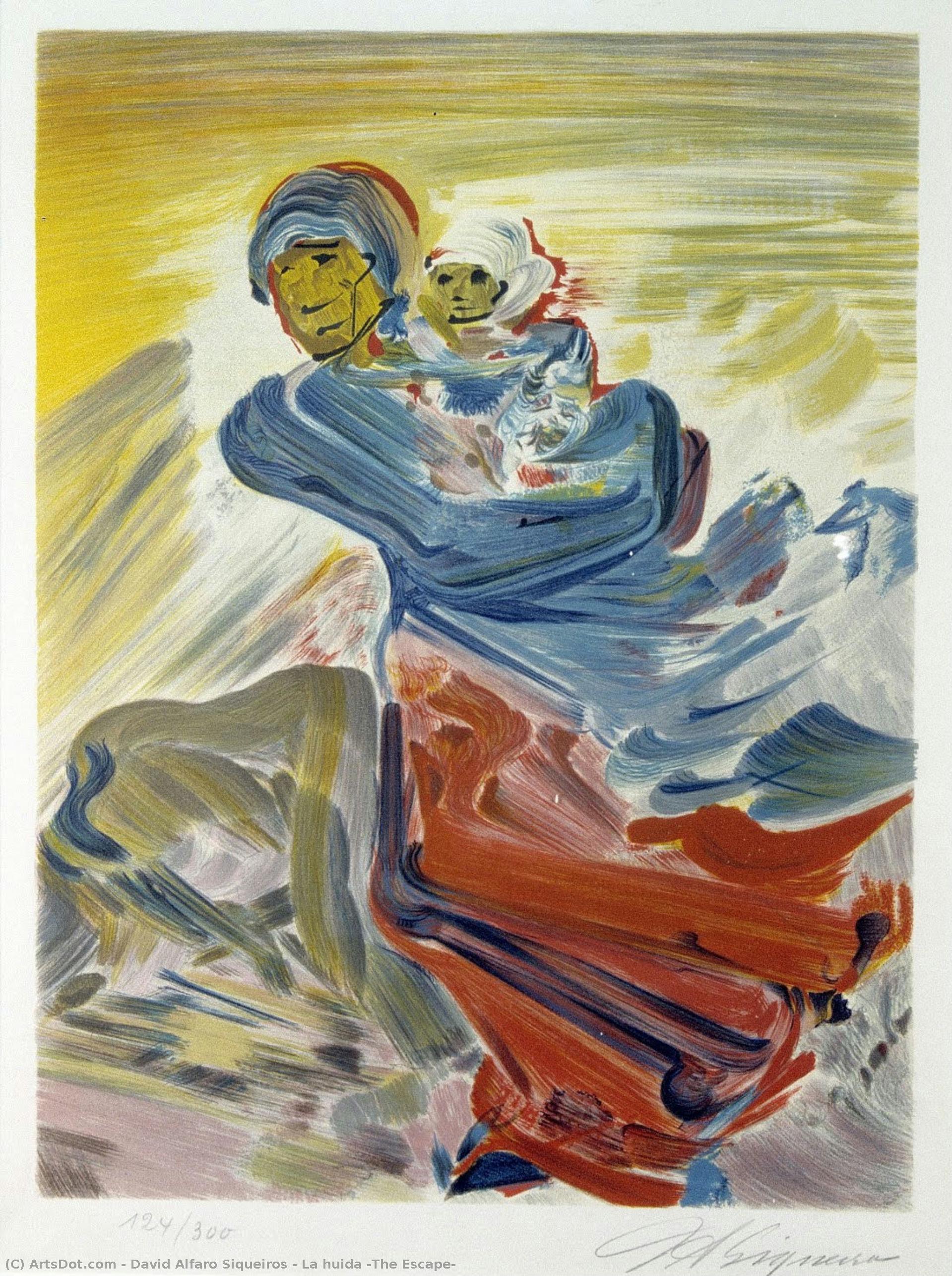
David Alfaro Siqueiros (1896–1974) stands as one of Mexico's most monumental figures in the 20th century, not merely for his prolific output but for embodying the spirit of revolution itself. More than just a painter, he was an uncompromising voice challenging convention and passionately advocating for art’s role in societal transformation—a conviction that fueled his lifelong dedication to artistic experimentation and social activism. His formative years instilled within him a profound skepticism toward governmental authority and a fervent belief in anarchist ideals, shaping his worldview and propelling him towards a career defined by audacious artistic endeavors. Notably, Siqueiros's early education at the Academy of San Carlos fostered an ethos of intellectual independence, culminating in the establishment of an “open-air academy”—a defiant act signaling the genesis of his artistic journey and foreshadowing a lifetime committed to disrupting established norms. This rebellious spirit permeated his entire oeuvre, cementing his legacy as a pioneer of Mexican muralism and a champion of artistic freedom.- Subject Matter: Siqueiros’s “La Huida” depicts a poignant scene—a mother desperately shielding her child from imminent danger. The image transcends mere representation; it embodies the universal anxieties surrounding vulnerability and protection, particularly within the context of political upheaval.
- Style & Technique: Executed as a lithograph, "La Huida" exemplifies Siqueiros’s mastery of printmaking techniques. His masterful use of hatching and cross-hatching creates textural depth and conveys an urgent sense of movement—mirroring the frantic pace of the mother's escape. The artwork’s aesthetic aligns seamlessly with Siqueiros’s broader stylistic approach, characterized by bold color palettes and expressive brushstrokes that prioritize emotional impact over meticulous realism.
Echoes of Polyforum Mural: A Connection to Grand Vision
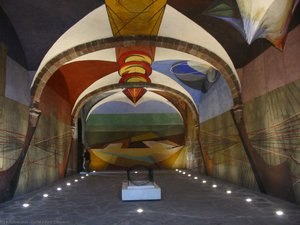
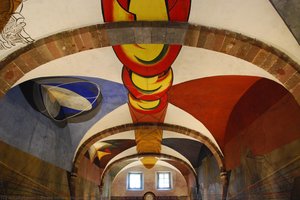
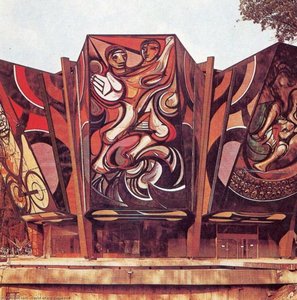
“La Huida” holds a significant place within Siqueiros's artistic canon, serving as a direct descendant of his monumental Polyforum mural, “The March of Humanity,” commissioned in the 1960s. This ambitious project aimed to capture the essence of human progress—a concept powerfully articulated through symbolic imagery and dynamic composition. The lithograph’s restrained palette—primarily reds and blues—directly reflects the dominant hues employed in “The March,” reinforcing a thematic continuity that underscores Siqueiros's unwavering commitment to conveying grand narratives through visual art. Furthermore, the stylistic similarities between the two works underscore Siqueiros’s consistent pursuit of artistic innovation while retaining core principles rooted in social realism.- Historical Context: Created during a period marked by intense political polarization and societal unrest, “La Huida” speaks to the anxieties prevalent throughout Mexico's turbulent mid-century—specifically, concerns about safeguarding innocence amidst governmental oppression.
- Symbolism: The mother’s protective embrace symbolizes resilience and determination in the face of adversity, while the arid landscape underscores vulnerability and the precariousness of survival. Red embodies passion and urgency, mirroring the emotional intensity conveyed by Siqueiros's masterful technique.
Emotional Resonance & Artistic Legacy
“La Huida” transcends its formal elements to evoke a profound sense of empathy—drawing viewers into the mother’s harrowing experience and prompting contemplation on themes of maternal devotion and societal injustice. Siqueiros’s artistic legacy extends far beyond his individual creations; he established a paradigm for Mexican muralism, inspiring generations of artists to utilize art as a vehicle for social commentary and political activism. His unwavering belief in art's transformative potential continues to resonate today, reminding us that visual expression can serve as a powerful catalyst for fostering dialogue and challenging entrenched ideologies—a testament to Siqueiros’s enduring influence on the artistic landscape of Mexico and beyond.Related Artworks
Artist Biography
A Life Forged in Revolution
David Alfaro Siqueiros, born José de Jesús Alfaro Siqueiros in 1896 – though later research pinpointed his birthplace as Chihuahua City rather than Camargo – was more than just a painter; he was a force of nature, an embodiment of the tumultuous spirit of post-revolutionary Mexico. His life wasn’t confined to the studio but exploded onto the public stage, interwoven with political struggle and a relentless pursuit of art as a tool for social transformation. Early experiences shaped his trajectory: orphaned young, raised by his grandparents in Irapuato, Guanajuato, he was exposed to anarcho-syndicalist ideas that would deeply influence his worldview. This nascent political awareness blossomed during his student days at the Academy of San Carlos, where a protest against rigid teaching methods led to the establishment of an “open-air academy” – a defiant act marking the beginning of his artistic journey and foreshadowing a lifetime of challenging convention. The Mexican Revolution itself was the crucible in which Siqueiros’s artistic and political convictions were forged. He didn't merely observe the upheaval; he actively participated, joining the constitutional army and witnessing firsthand the hardships endured by working people and rural communities – experiences that would forever inform his art.European Immersion and the Birth of a Muralist
The years between 1919 and 1923 proved pivotal as Siqueiros embarked on an extended sojourn to Europe. This period wasn’t simply about honing technical skills; it was an immersion in the avant-garde currents reshaping the art world. He absorbed the lessons of Cubism, particularly the innovative use of color and form pioneered by Paul Cézanne, while also forging connections with fellow Mexican artist Diego Rivera. A crucial element of his European education involved studying Renaissance fresco techniques in Italy – a skill that would become central to his monumental mural projects. However, it was the deepening of his political ideology through exposure to Marxism that truly solidified his artistic direction. He began to envision art not as an aesthetic pursuit but as a powerful instrument for revolution, a means of depicting the realities of American life and galvanizing social change. This conviction culminated in the 1921 manifesto “Vida Americana,” which articulated his vision with unwavering clarity. Siqueiros wasn’t content with replicating existing techniques; he was driven to experiment, constantly seeking new materials and methods – including spray guns and industrial paints – to create large-scale murals that were both visually arresting and politically charged.Masterpieces of Social Realism
Siqueiros’s artistic output is characterized by a dynamic energy and an unflinching commitment to social realism. His murals aren't passive depictions; they are visceral experiences, brimming with movement, emotion, and a profound sense of urgency. "The New Democracy" (1940s), considered one of his most important works, exemplifies this approach. The composition is deliberately chaotic, reflecting the complexities and contradictions of modern society, while bold colors and dramatic lighting amplify the emotional impact. Similarly, "The Polished City" (1930s) delves into the alienation and dehumanization inherent in urban life, offering a critical commentary on industrial capitalism. Perhaps his most ambitious undertaking was "The March of Humanity" (1957-1971), a monumental work spanning over 40 meters. This epic mural traces the struggles and aspirations of humanity throughout history, from ancient civilizations to modern revolutions, serving as a powerful testament to the enduring spirit of resistance. Siqueiros’s style is instantly recognizable: dynamic compositions, dramatic chiaroscuro, and an innovative incorporation of industrial techniques all contribute to his unique visual language. He aimed not just to be seen but to provoke, to challenge viewers to confront uncomfortable truths and envision a more just world. His work often depicted the plight of the working class, the horrors of war, and the struggle for liberation.Legacy and Influence
David Alfaro Siqueiros’s impact extends far beyond the realm of painting. As one of the “big three” Mexican muralists – alongside Diego Rivera and José Clemente Orozco – he played an instrumental role in establishing Mexican muralism as a significant artistic movement, transforming public spaces into canvases for social commentary. His work is a prime example of social realism, using art to address pressing political and social issues and advocate for the marginalized. But his influence didn’t stop at the border. Siqueiros's techniques and themes profoundly inspired the Chicano art movement in the United States during the civil rights era, providing a visual language for expressing cultural identity and challenging systemic oppression. His unwavering commitment to his political beliefs, even in the face of imprisonment and exile, cemented his legacy as an artist who dared to use their work to challenge power structures and fight for social justice. The Polyforum Cultural Siqueiros, a massive complex he designed and decorated in Mexico City, stands as a lasting monument to his vision – a testament to the transformative power of art when wielded with courage and conviction. He left behind not just paintings but a legacy of activism, innovation, and an enduring belief in the potential for art to change the world.Key Characteristics of Siqueiros’s Art
- Dynamic Composition: His murals are rarely static; they convey movement and energy.
- Social Commentary: A consistent focus on political and social issues, particularly those affecting the working class.
- Innovative Techniques: Experimentation with materials like industrial paints and spray guns to achieve unique effects.
- Dramatic Lighting: Use of chiaroscuro to create emotional impact and highlight key elements.
- Monumentality: Large-scale murals designed for public spaces, intended to engage a wide audience.
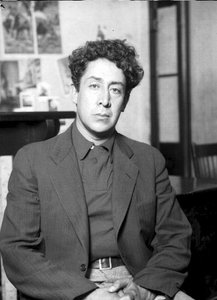
David Alfaro Siqueiros
1896 - 1974 , Mexico
Quick Facts
- Artistic Movement Or Style: Social Realism, Muralism
- Artists Or Movements Influenced By This Artist: ['Chicano art movement']
- Artists Who Influenced This Artist:
- Paul Cézanne
- Diego Rivera
- Date Of Birth: December 29, 1896
- Date Of Death: January 6, 1974
- Full Name: David Alfaro Siqueiros
- Nationality: Mexican
- Notable Artworks:
- The New Democracy
- The Polished City
- March of Humanity
- Place Of Birth: Chihuahua, Mexico
Related Articles

Elevating Interiors: How Murals are Redefining Kitchens and Bathrooms
Transform your kitchen & bathroom with stunning murals! Explore design trends, durable materials & expert advice. Elevate your interiors with 's bespoke mural solutions.
Revolution on Canvas: Exploring the Socio-Political Power & Artistic Legacy of Mexican Muralism
Explore the powerful world of Mexican muralism! Discover Diego Rivera, Frida Kahlo & Orozco's revolutionary art, social impact & lasting legacy. Expert insights & high-quality reproductions at ArtsDot.
José Clemente Orozco: A Revolutionary Vision of Mexican Muralism & the Human Condition
Explore the powerful world of José Clemente Orozco, a key figure in Mexican Muralism. Discover his revolutionary art, social commentary, and lasting impact on 20th-century painting. Learn about his unique style & legacy.

From Jungle Scenes to Gold Leaf Geometry: A Guide to Today's Most Requested Mural Styles
Explore today's top mural styles for hotels & commercial spaces! Discover trends, expert insights, & custom design solutions. Elevate your space with .
Diego Rivera: A Revolutionary Vision of Mexican Identity Through Muralism
Explore the revolutionary murals of Diego Rivera and his profound impact on Mexican art & identity. Discover his techniques, iconic works like 'Man at the Crossroads,' and lasting legacy with ArtsDot.