 Preview
 Send
Send Share
Share
 Details

 Download
 Similars
 X-Ray
X-Ray Diaporama
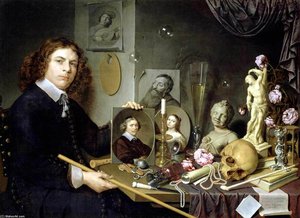
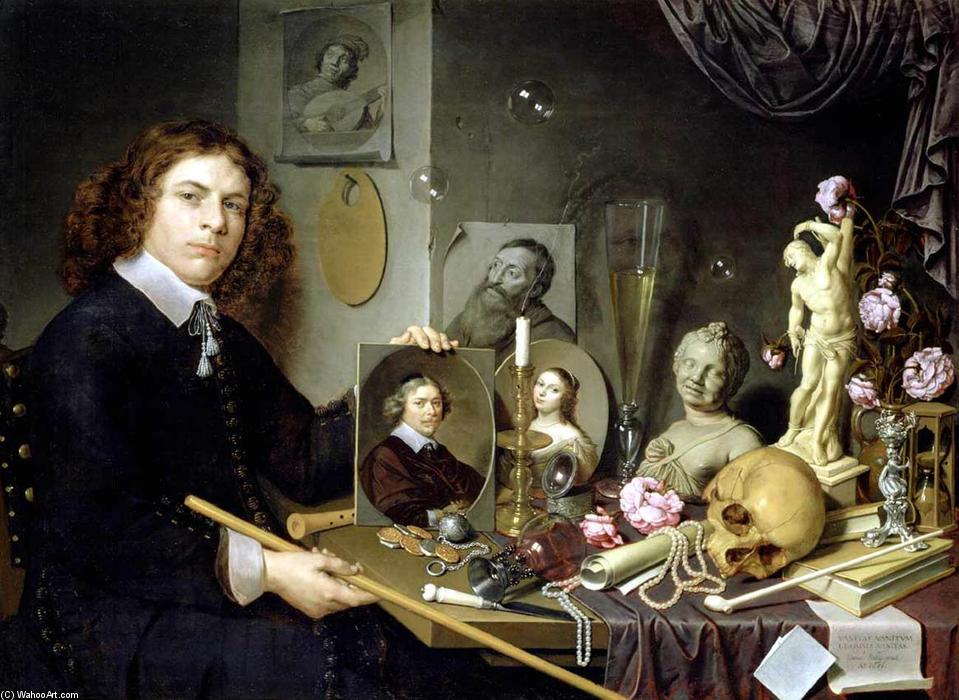
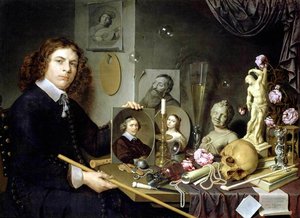
Self-Portrait with Vanitas Symbols
 Oil On Canvas
- WallArt
- Baroque
 1651
1651 65.0 x 97.0 cm
 Stedelijk Museum De Lakenhal
 Read More
Hand Made Oil Reproduction
Hand-painted oil on canvas in your size and frame, made to order by our artists. ( Buy Print Buy Image)




P118B $10

P118H $10

P118W $10

P438Z $10

P508JH $12

P508YH $12

P805H $10

P805Z $10

P919BZ $10

P919G $10

P919XJ $10

P959ZH $10

P968JZ $12

W106C $8

W218G $10

W218JH $8

W218Y $10

W307PJ $10

W316G $10

W316PJ $8

W316Y $10

W398PJ $8

W4111J $10

W500HY $15

W500JH $15

W692G $12

W849H $8

W940BG $15

W953PJ $8




Pick from our preset sizes that match the artwork's original proportions.

You may enter your own dimensions to fit a specific frame or space. If your selected size does not match the original image's proportions, we will either crop the artwork or extend the painting with additional hand-painted elements. A digital mockup will be sent for your approval before production begins.
Please note that the on-screen preview does not reflect the actual cropping or extension. Only the mockup will accurately show the final composition.
While custom sizes are available, we recommend selecting a dimension from the predefined list to preserve the original proportions.
After order, ArtsDot.com team will email client for instructions and provide a mockup preview
Worldwide Delivery () in 3/4 weeks instead of standard 5 weeks. (17 August). No compromise on quality.

Free Worldwide Express Shipping

High-Quality Linen Canvas

Full Shipping Insurance

Customs Tax Refund Guarantee

True Color Matching Guarantee

60-Day Return Policy (Defects Only)

100% Money-Back Guarantee

Bulk Discount Offer
 Glass option is only available in size under 110 CM

Self-Portrait with Vanitas Symbols
Reproduction Medium
Reproduction Size
-


Total Price
$ 263
Artwork Description
David Bailly’s “Self-Portrait with Vanitas Symbols”: A Meditation on Mortality in Baroque Leiden
The Stedelijk Museum De Lakenhal in Leiden, Netherlands, houses a remarkable oil painting by David Bailly—a cornerstone of Dutch Golden Age art and a poignant exploration of the human condition. Completed in 1651, “Self-Portrait with Vanitas Symbols” transcends mere representation; it’s an immersive experience into Baroque aesthetics and philosophical contemplation. Measuring 65 x 97 cm, this artwork immediately draws the eye with Bailly's masterful use of chiaroscuro—a dramatic interplay of light and dark—creating a palpable sense of depth and emotion that continues to resonate centuries later.A Portrait Steeped in Symbolism
Bailly’s self-portrait isn’t simply a depiction of his likeness; it’s a carefully constructed visual statement laden with symbolic elements characteristic of the vanitas genre. The central figure, dressed in black attire and adorned with a white collar, gazes directly at the viewer through a mirror reflecting another man—a subtle duality that speaks to themes of introspection and mortality. Crucially positioned on his lap is a skull, a ubiquitous symbol of death and decay within Baroque art. This isn’t merely an ornamental detail; it serves as a forceful reminder of the inevitability of human demise and prompts viewers to confront their own mortality.Technique and Artistic Style: Mastery of Oil Painting
David Bailly's technical prowess is evident in every brushstroke. He employed meticulous observation and painstaking layering techniques—typical of Baroque painting—to achieve an astonishing level of realism and textural detail. The artist skillfully utilized chiaroscuro to sculpt the figure’s form, highlighting musculature and conveying a sense of solemn seriousness. Furthermore, Bailly's palette was restrained yet impactful, favoring muted tones that contribute to the overall melancholic mood. The meticulous rendering of surfaces—from the fabric of his coat to the polished surface of the mirror—demonstrates Bailly’s dedication to capturing the nuances of visual perception.Historical Context: Leiden and the Baroque Spirit
“Self-Portrait with Vanitas Symbols” emerged during a period of significant intellectual ferment in Leiden, where humanist ideas mingled with religious anxieties. The Baroque style flourished across Europe, prioritizing grandeur, emotion, and dramatic expression—often reflecting upon spiritual matters and confronting existential questions. Bailly’s painting aligns perfectly with this artistic ethos, embodying the Baroque preoccupation with contemplating death as an inevitable part of life's journey. It reflects a broader cultural trend toward acknowledging human vulnerability and accepting the transient nature of earthly existence.Emotional Resonance: A Timeless Reflection on Existence
More than just a beautiful artwork, Bailly’s “Self-Portrait with Vanitas Symbols” compels viewers to pause and consider profound questions about life's purpose and legacy. The inclusion of books symbolizes knowledge and learning—yet their presence alongside the skull underscores the futility of pursuing worldly ambitions in the face of death. Similarly, the vase represents beauty and abundance, juxtaposed against decay, highlighting the ephemeral quality of earthly pleasures. Ultimately, Bailly’s masterpiece invites contemplation on the human condition, prompting us to grapple with our own mortality and appreciate the preciousness of each passing moment—a message that remains powerfully relevant today.- Artist: David Bailly
- Year: 1651
- Size: 65 x 97 cm
- Location: Stedelijk Museum De Lakenhal, Leiden, Netherlands
Visit /art/list/?Filter=8Y32CF-David-Bailly-Self-Portrait-with-Vanitas-Symbols to explore more about David Bailly's artwork. Discover the Stedelijk Museum De Lakenhal and its impressive collection of Dutch art on /art/list/?Filter=A@D3AFUT-The-Museum-Pieterskerk-(Leiden-Netherlands)-A-Comprehensive-Guide. Learn more about the vanitas theme and its significance in art on https://en.wikipedia.org/wiki/Vanitas.
For those interested in owning a piece of art history, handmade oil painting reproductions are available on https://Al
Related Artworks
Artist Biography
David Bailly: A Life in Dutch Golden Age Art
Early Life and Training (1584-1608)
- Birth and Family: David Bailly was born in Leiden, Netherlands, in 1584. His father, Peter Bailly, was a Flemish immigrant who worked as a calligrapher and fencing master.
- Early Artistic Education: He initially received drawing instruction from his father and the copper engraver Jacques de Gheyn. This foundational training instilled in him a strong draftsmanship.
- Apprenticeships: Bailly further honed his skills through apprenticeships with Adriaan Verburg, a surgeon-painter in Leiden, and Cornelius van der Voort, a portrait painter in Amsterdam. These experiences exposed him to different artistic techniques and subject matter.
The Grand Tour and Early Career (1608-1613)
- Continental Travels: In the winter of 1608, Bailly embarked on a ‘Grand Tour,’ traveling through Frankfurt, Nuremberg, Augsburg, Hamburg, Tyrol, and Venice before reaching Rome. This journey was crucial for his artistic development.
- Italian Influence: He spent five months in Venice working as a journeyman, absorbing the influences of Italian Renaissance and Venetian art. His return voyage included commissions from German princes, including the Duke of Brunswick.
Artistic Development and Style (1613-1657)
- Diverse Subject Matter: Upon returning to the Netherlands in 1613, Bailly began painting a variety of subjects, including still lifes and portraits. He became known for his self-portraits and depictions of students and professors at the University of Leiden.
- Vanitas Paintings: A significant portion of his oeuvre consists of *vanitas* paintings – symbolic works that reflect on the transience of life, often featuring flowers, candles, and other ephemeral objects. These paintings demonstrate a philosophical depth alongside artistic skill.
- Portraiture Style: His portrait style is characterized by realism and attention to detail, capturing the likenesses and personalities of his sitters with sensitivity.
Major Achievements and Guild Membership
- Guild Leadership: In 1648, Bailly was elected headman of the Leiden Guild of St. Luke, a testament to his standing within the artistic community.
- Teaching Legacy: He served as a teacher and mentor to his nephews, Harmen and Pieter Steenwijck, passing on his knowledge and skills to the next generation.
Influences and Historical Significance
- Artistic Influences: Bailly was influenced by the Italian masters he encountered during his Grand Tour, as well as by Dutch predecessors in portraiture and still life painting.
- Impact on Dutch Art: He contributed to the flourishing of art during the Dutch Golden Age, particularly through his insightful *vanitas* paintings that reflected the era’s preoccupation with mortality and spirituality.
- Legacy: While not as widely recognized today as some of his contemporaries, David Bailly remains an important figure in the history of Dutch art, representing a blend of technical skill, intellectual depth, and artistic innovation.
David Bailly
1584 - 1657 , Netherlands
Quick Facts
- Birth Date: 1584
- Birth Place: Leiden, Netherlands
- Death Date: 1657
- Influenced:
- Harmen Steenwijck
- Pieter Steenwijck
- Influenced By:
- Adriaan Verburg
- Cornelius van der Voort
- Jacques de Gheyn
- Movement: Dutch Golden Age painting
- Name: David Bailly
- Nationality: Dutch
- Notable Works:
- Self-Portrait with Vanitas Symbols
- Portrait of Anthony de Wale
Related Articles

Golden Age Reflections: Dutch Baroque Painting & Cultural Innovation
Explore the Dutch Golden Age of painting! Discover key artists like Vermeer & ter Borch, their innovative techniques, and the rich cultural context behind these Baroque masterpieces. Learn about collecting & appreciating this iconic art period.

Dutch Masters: 10 Golden Age Paintings That Still Inspire |
Journey into the Dutch Golden Age! Explore 10 iconic paintings by Rembrandt, Vermeer & Hals. Discover the stories behind these Baroque masterpieces and find museum-quality art reproductions to elevate your home decor on .

Dutch Baroque Masters: 10 Paintings That Shaped an Era | ArtsDot
Journey through the Golden Age with our guide to the Top 10 Dutch Baroque masterpieces! Explore iconic paintings by Rembrandt, Vermeer & Frans Hals. Find museum-quality art reproductions and elevate your home decor at ArtsDot.com.

Illuminating Innovation: Exploring the Dutch Golden Age of Painting
Explore the Dutch Golden Age of painting with ArtsDot. Discover Rembrandt, Vermeer & other Masters. Learn about key characteristics, iconic artworks, and lasting influence. Expert insights for collectors & enthusiasts.

Illuminating Realism: Exploring the Dutch Golden Age of Painting (1600-1700)
Explore the Dutch Golden Age of painting (1600-1700) with ArtsDot. Discover Rembrandt, Vermeer & other masters. Learn about techniques, history & find museum-quality reproductions.