

 Preview
 Send
Send Share
Share
 Details

 Download
 Similars
 X-Ray
X-Ray Diaporama
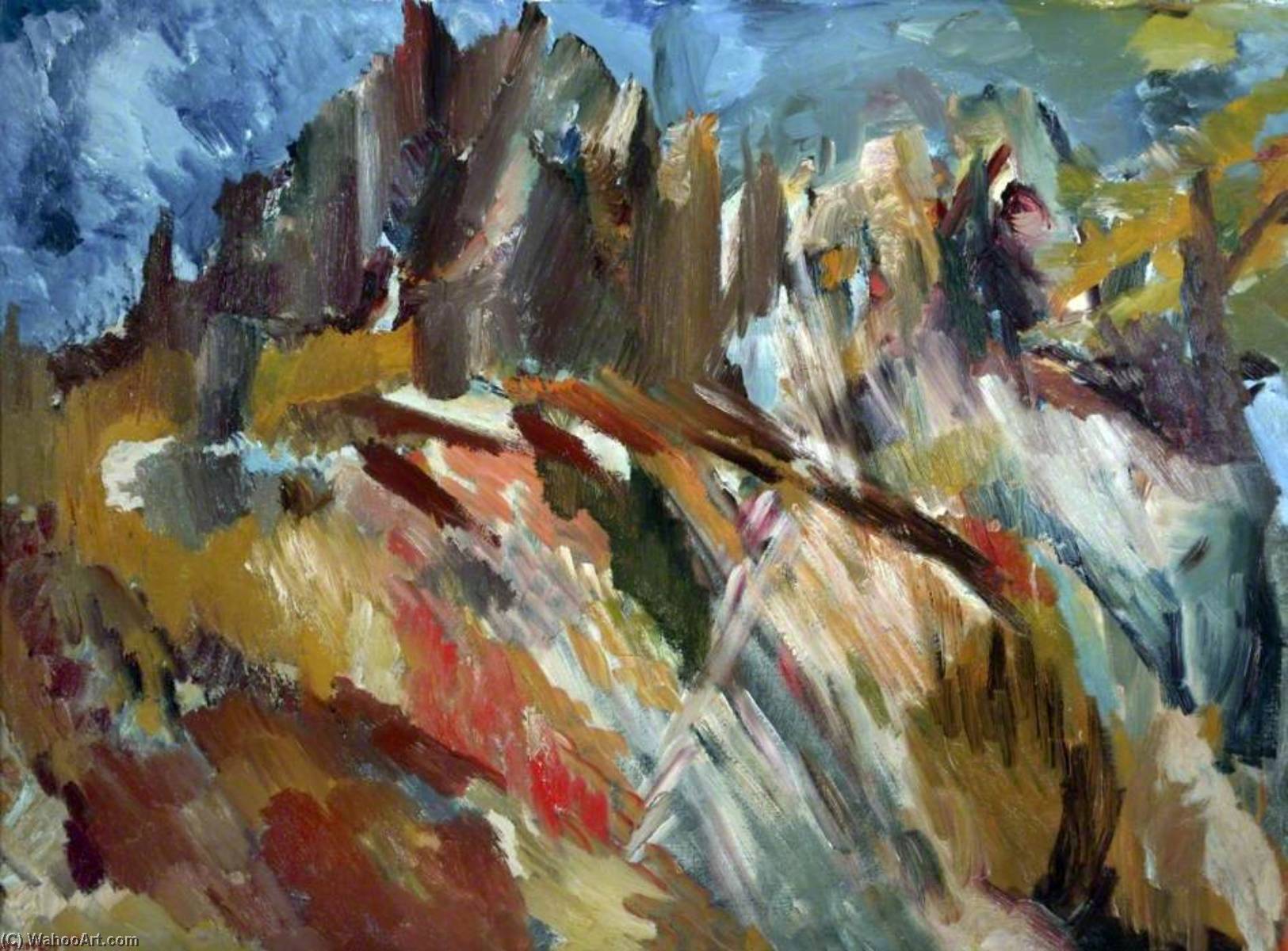
Mount Saint Hilarion and the Castle Ruins
 Oil On Canvas
- WallArt
- Cubist Landscape
 1948
1948 94.0 x 128.0 cm
 Walker Art Gallery
 Read More
Purchase a high-resolution, enhanced digital image, far superior to the online preview.
Each file is meticulously prepared by our in-house specialists using advanced tools and expert manual retouching. We ensure every image has exceptional clarity, precise color accuracy, and fine detail.
The final file is delivered via email within 72 hours, optimized for immediate use in professional, editorial, and print environments. This is the same quality trusted by top-tier design studios, publishers, and galleries.
Digital Image
Download a high-resolution file for personal display, printing, and creative projects. ( Buy Print Buy Hand Made Painting)
Included in Every Digital Image Order
Expert Digital Delivery, Guaranteed
When you choose ArtsDot.com, you're not just getting an image - you're receiving a professionally enhanced digital artwork, crafted with precision and backed by a satisfaction guarantee. Here's everything that comes with your order, automatically:

Fast Email Delivery
Your high-resolution digital image file will be emailed to you within 72 hours of ordering - ready for immediate use.

AI-Enhanced Digital File
Your artwork is professionally optimized using advanced AI tools and manual editing, ensuring maximum detail, clarity, and color accuracy.

Free Lifetime Re-Delivery
Accidentally deleted or lost your file? No worries - we'll resend it to you anytime, free of charge.

No Import Fees - Ever
Enjoy your artwork instantly with zero customs, duties, or delivery fees - digital downloads are always tax-free.

Color Accuracy Guarantee
We ensure your digital image reflects the original colors as closely as possible using professional tools and color management.

60-Day Satisfaction Guarantee
If you're not satisfied with your digital image, we'll revise it or refund 100% within 60 days - no questions asked.

100% Money-Back Guarantee
Not satisfied? Get a full refund within 60 days of receiving your digital file - no questions asked.

Bulk Order Discounts
Buy 3 images, save 10% - Buy 5, save 15% - Buy 10+, save 20%. Great for creative projects, galleries, and agencies.
Collectible Description
David Bomberg’s Mount Saint Hilarion and the Castle Ruins: A Landscape Charged with Emotion
David Bomberg's "Mount Saint Hilarion and the Castle Ruins," painted in 1948, stands as a testament to the artist’s profound engagement with both landscape and psychological expression. Executed in oil on canvas, this artwork embodies the spirit of Surrealism while retaining elements of Cubist influence—a stylistic duality that reflects Bomberg's intellectual curiosity and his desire to transcend mere representation. The painting captures a dramatic vista overlooking Cyprus, dominated by jagged mountains bathed in fiery hues – predominantly reds and oranges – punctuated by crumbling castle ruins. This isn’t simply a depiction of scenery; it’s an attempt to convey the artist’s visceral reaction to the environment.A Synthesis of Influences: Cubism Meets Surrealism
Bomberg's artistic journey began amidst the vibrant intellectual ferment of London’s ‘Whitechapel Boys,’ a cohort of artists who championed experimental approaches to painting. Heavily influenced by Walter Sickert’s focus on urban life and form, Bomberg honed his skills at Westminster School of Art before delving into lithography. Crucially, his exposure to Paul Cézanne's groundbreaking work during the Roger Fry exhibition solidified his conviction that art should prioritize underlying structure and emotion over photographic accuracy. This conviction propelled him toward exploring Cubist fragmentation alongside Surrealist dreamlike imagery—a deliberate fusion that distinguishes “Mount Saint Hilarion” from more conventional landscapes of its time. The fractured planes of Cézanne’s landscapes are subtly echoed in the mountainous terrain, hinting at a deeper exploration of perception and spatial relationships.The Power of Color and Texture: Technique as Emotional Conduit
Bomberg's distinctive technique is immediately apparent. Rather than meticulously blending colors to achieve realistic hues, he applied paint with bold strokes—often utilizing his fingers—creating palpable textural surfaces that pulsate with energy. The intense reds and oranges dominating the mountain peaks aren’t merely descriptive; they convey a sense of heat, passion, and almost primal excitement. This expressive gesture speaks to Bomberg's desire to bypass rational thought and tap into subconscious impulses. Furthermore, the crumbling castle ruins serve as symbolic reminders of decay and loss—a poignant contrast to the vibrant vitality of the surrounding landscape. The artist’s deliberate manipulation of pigment contributes significantly to the painting’s emotional impact, inviting viewers to contemplate themes of resilience and transformation.Historical Context: Postwar Anxiety and Artistic Innovation
Painted in the aftermath of World War II, “Mount Saint Hilarion” reflects the anxieties and uncertainties prevalent during the period. The devastation wrought by conflict fueled a desire for artistic experimentation—a rejection of academic conventions in favor of subjective experience. Bomberg’s work aligns with broader trends within Surrealism and Expressionism, movements that sought to liberate art from representational constraints and explore the realm of dreams and emotions. This painting isn't merely aesthetically pleasing; it embodies the intellectual spirit of its time – a courageous assertion of artistic freedom amidst societal upheaval.A Landscape Beyond Representation: Emotional Resonance
Ultimately, “Mount Saint Hilarion and the Castle Ruins” succeeds in capturing something far more profound than just a visual scene. It communicates an emotional state—a feeling of exhilaration mingled with melancholy—that resonates deeply with the viewer. Bomberg’s masterful use of color, texture, and compositional arrangement compels us to confront not only the beauty of the Cypriot landscape but also our own responses to nature's grandeur and the inevitability of change. It remains a powerful example of how art can transcend mere depiction to convey complex psychological ideas—a legacy that continues to inspire admiration and contemplation today.Related Artworks
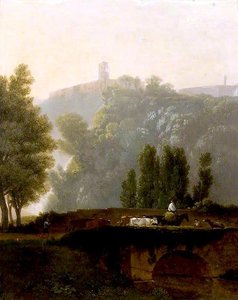
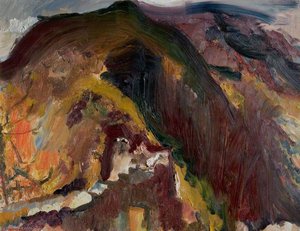
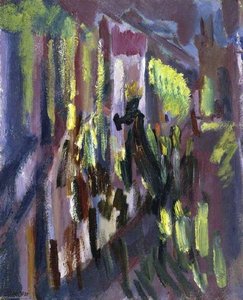
Artist Biography
Early Life and Artistic Training
- Born: Birmingham, United Kingdom (December 5, 1890)
- Died: London, United Kingdom (August 19, 1957)
- One of the 'Whitechapel Boys' – a group of East End artists who emerged in the early 20th century.
Born to Polish-Jewish immigrant parents, Abraham and Rebecca Bomberg, initially studied at the City and Guilds Technical Art School before training as a lithographer in Birmingham.
Studied under Walter Sickert at Westminster School of Art (1908-1910), influenced by Sickert's focus on form and urban life. Significant exposure to Paul Cézanne through the 1910 Roger Fry exhibition "Manet and the Post-Impressionists." Attended the Slade School of Art (1911), winning the Tonks Prize for his drawing of fellow student Isaac Rosenberg.
The Avant-Garde Years: Cubism, Futurism, and Controversy
- At the Slade, Bomberg was part of a remarkable generation including Mark Gertler, Stanley Spencer, C.R.W. Nevinson, and Dora Carrington.
- Influenced by the 1912 London exhibitions of Italian Futurists and Fry's second Post-Impressionist exhibition (Picasso, Matisse, Fauvists, Wyndham Lewis).
- Developed a distinctive style combining Cubism and Futurism – characterized by geometric compositions, limited color palettes, angular figures, and grid-like structures.
- His radical approach led to expulsion from the Slade School of Art in 1913, deemed too audacious for the institution's conventional methods.
- Briefly associated with Bloomsbury Group’s Omega Workshops and exhibited with the Camden Town Group. Showed affinity with Wyndham Lewis’s Vorticist movement but remained independent, refusing full involvement.
From War to Landscape: A Shift in Style
Experiences as a private soldier during World War I profoundly impacted his artistic vision, leading to a move away from abstraction.
The 1920s saw Bomberg adopt a more figurative style, focusing on portraits and landscapes drawn directly from nature. Developed an increasingly expressionist technique, marked by textured impasto and emotional intensity.
Extensive travels through the Middle East (particularly Palestine) and Europe significantly influenced his later work. His depictions of Jerusalem are particularly notable.
Later Years and Legacy
- From 1945 to 1953, taught at Borough Polytechnic (now London South Bank University), influencing a generation of artists including Frank Auerbach, Leon Kossoff, Philip Holmes, Cliff Holden, Edna Mann, Dorothy Mead, Gustav Metzger, Dennis Creffield, Cecil Bailey and Miles Richmond.
- Married landscape painter Lilian Holt.
- Despite periods of relative obscurity during his lifetime, Bomberg's work has gained increasing recognition in recent decades as a significant contribution to British modern art.
- David Bomberg House at London South Bank University is named in his honor.
- His legacy lies in his unique synthesis of European avant-garde movements and his later development of a powerful, expressive landscape style that captured the essence of place and human experience.
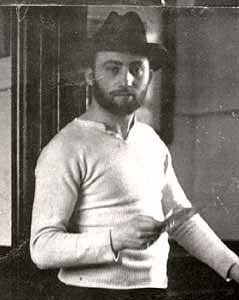
David Bomberg
1890 - 1957 , United Kingdom
Quick Facts
- Artistic Movement Or Style:
- Cubism
- Futurism
- Expressionism
- Artists Or Movements Influenced By This Artist:
- Frank Auerbach
- Leon Kossoff
- Artists Who Influenced This Artist:
- Paul Cézanne
- Walter Sickert
- Wyndham Lewis
- Date Of Birth: December 5, 1890
- Date Of Death: August 19, 1957
- Full Name: David Garshen Bomberg
- Nationality: British
- Notable Artworks:
- Self Portrait (1937)
- Kitty, the Artist’s Sister (1929)
- Study for a Painting
- Jerusalem
- Place Of Birth: Birmingham, United Kingdom

