 Preview
 Send
Send Share
Share
 Details

 Download
 Similars
 X-Ray
X-Ray Diaporama
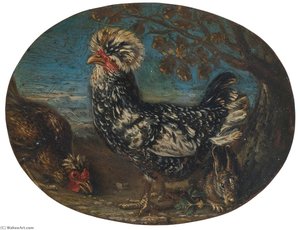
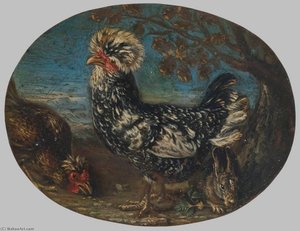
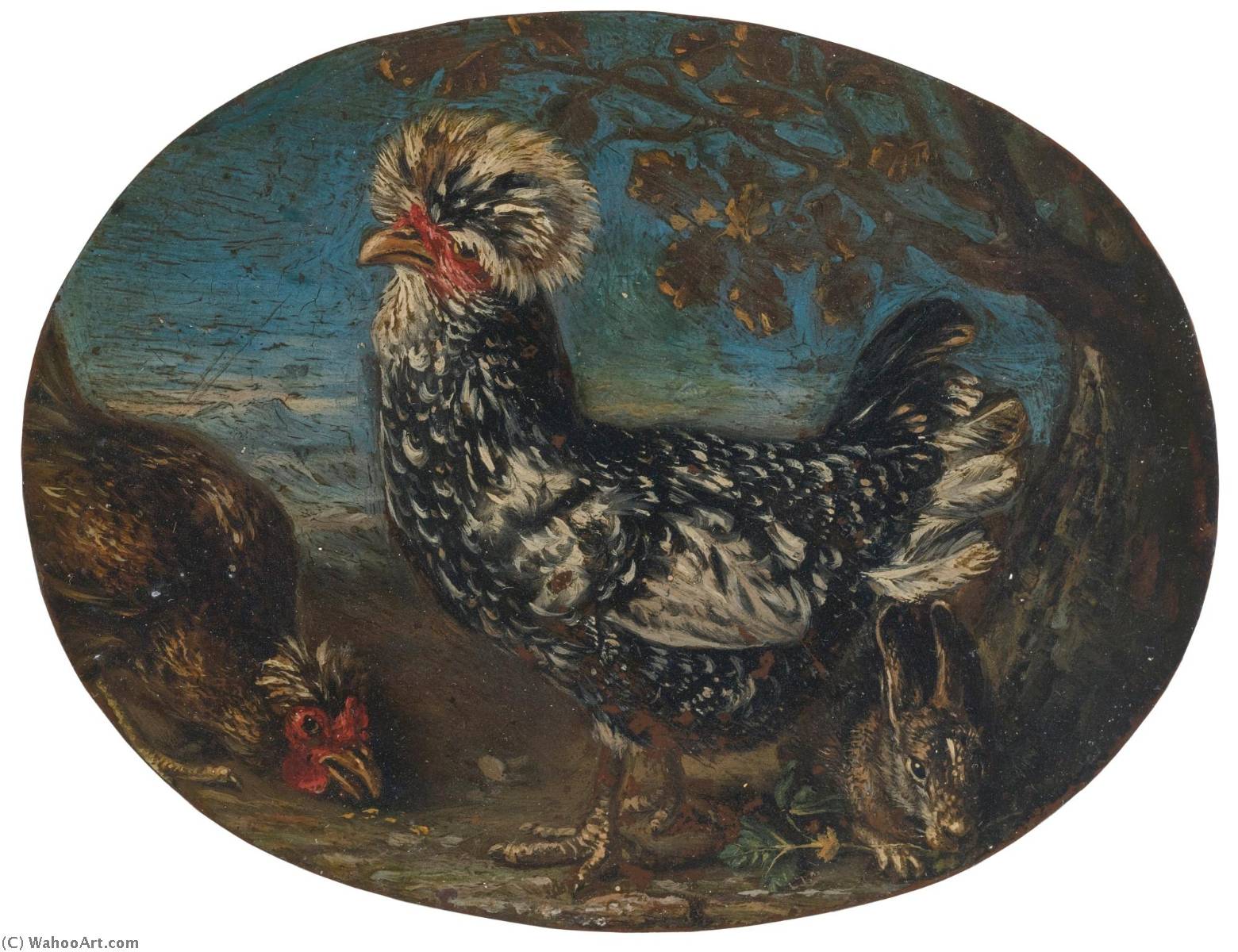
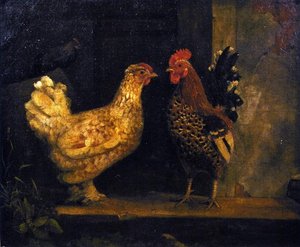
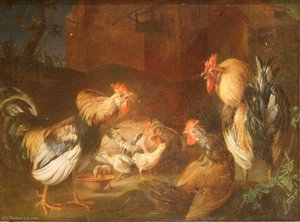
Roosters and a rabbit in a landscape
 9.0 x 11.0 cm
 Read More
Hand Made Oil Reproduction
Hand-painted oil on canvas in your size and frame, made to order by our artists. ( Buy Print Buy Image)




































Pick from our preset sizes that match the artwork's original proportions.

You may enter your own dimensions to fit a specific frame or space. If your selected size does not match the original image's proportions, we will either crop the artwork or extend the painting with additional hand-painted elements. A digital mockup will be sent for your approval before production begins.
Please note that the on-screen preview does not reflect the actual cropping or extension. Only the mockup will accurately show the final composition.
While custom sizes are available, we recommend selecting a dimension from the predefined list to preserve the original proportions.
After order, ArtsDot.com team will email client for instructions and provide a mockup preview
Worldwide Delivery () in 3/4 weeks instead of standard 5 weeks. (26 August). No compromise on quality.

Free Worldwide Express Shipping

High-Quality Linen Canvas

Full Shipping Insurance

Customs Tax Refund Guarantee

True Color Matching Guarantee

60-Day Return Policy (Defects Only)

100% Money-Back Guarantee

Bulk Discount Offer
 Glass option is only available in size under 110 CM

Roosters and a rabbit in a landscape
Reproduction Medium
Reproduction Size
-


Total Price
$ 263
Related Artworks


Artist Biography
A Master of the Flemish Baroque: The Life and Legacy of David de Koninck
In the golden age of 17th-century Flemish art, few names evoke the lush, visceral beauty of the natural world quite like David de Koninck. Known to many art historians by his evocative moniker, Rammelaer, de Koninck was a painter who possessed the rare ability to breathe life into the silent subjects of still life and landscape. His work does not merely depict animals; it captures the very essence of their movement, the texture of their fur, and the atmospheric tension of the hunt. Born around 1636 in the vibrant artistic hub of Antwerp, de Koninck emerged from a lineage of masters, carrying forward a tradition of meticulous observation that would eventually allow him to command the attention of royal courts across Europe.
The foundation of de Koninck’s brilliance was laid under the watchful eye of Pieter Boel, an accomplished animal painter who had himself been shaped by the legendary Jan Fyt. This lineage is crucial to understanding de Koniente's technique; from Boel, he inherited a profound command over light and shadow, as well as the ability to render the subtle anatomical details of prey and predator alike. By 1663, his talent was officially recognized when he ascended to the rank of master within the prestigious Antwerp Guild of Saint Luke. This period of his life marked the transition from a gifted apprentice to a confident creator, setting the stage for an international career that would transcend the borders of his native Flanders.
A Journey Through Europe: From Paris to Rome
Driven by an insatiable artistic curiosity, de Koninck’s path led him far beyond the familiar streets of Antwerp. His relocation to Paris in the mid-1660s proved to be a transformative chapter. In the French capital, he engaged in a fruitful professional exchange with Nicasius Bernaerts, a prominent Flemish painter serving the royal court. This period of Parisian activity allowed de Koninck to absorb the sophisticated elegance of French taste, blending his robust Flemish roots with a more refined, courtly sensibility. The influence of the Académie royale de peinture et de sculpture likely polished his approach, adding a layer of grace to his already masterful depictions of hunting scenes and animal studies.
However, it was his subsequent journey to Italy that would truly define his artistic identity and provide him with a new cultural vocabulary. Residing in Rome between 1671 and 1694, de Koninck immersed himself in the heart of the Baroque movement. It was during this Roman sojourn that he joined the Bentvueghels, a spirited and boisterous association of Dutch and Flemish artists. Within this brotherhood, he adopted the nickname Rammelaer—a name derived from Latin roots signifying a "rattle"—which served as a testament to his integration into this vibrant community of expatriate creators. The light of Italy, with its dramatic contrasts and classical grandeur, undoubtedly deepened the emotional resonance of his landscapes, infusing them with a sense of timelessness.
The Artistry of the Hunt and the Still Life
The true magic of de Koninck’s oeuvre lies in his ability to weave narrative into the seemingly static genre of still life. His paintings often feature a captivating array of subjects, ranging from the domestic to the wild:
- Animal Portraits: Whether it be the playful curiosity of a rabbit or the regal presence of a peacock, de Koninck treated every creature with individual dignity and anatomical precision.
- Hunting Narratives: His landscapes are rarely empty; they are imbued with the drama of the chase, capturing the tension of birds in flight or the aftermath of a successful hunt.
- Atmospheric Landscapes: He utilized light not just to illuminate, but to create mood, using soft, hazy horizons and dappled sunlight to evoke the fleeting beauty of the natural world.
Ultimately, the historical significance of David de Koninck lies in his role as a bridge between the heavy, textured traditions of the early Flemish masters and the more expansive, international Baroque style. His ability to navigate the artistic landscapes of Antwerp, Paris, Rome, and potentially Vienna allowed him to create a body of work that is both deeply rooted in tradition and strikingly modern in its emotional reach. Today, his paintings remain enduring testaments to a period when art sought to capture the magnificent, often fleeting, splendor of life in all its forms.
david de koninck
1636 - 1699
Quick Facts
- Artistic Movement Or Style: Baroque
- Artists Or Movements Influenced By This Artist: ['Nicasius bernards']
- Artists Who Influenced This Artist: ['Jan fyt']
- Date Of Birth: 1636
- Date Of Death: 1699
- Full Name: david de koninck
- Nationality: Flemish
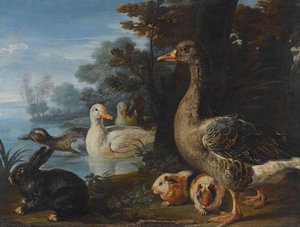
- Notable Artworks: ['A cockerel, hens, doves and a parrot in a formal garden setting Ducks, guinea pigs and a rabbit in a wooded landscape beside a lake']
- Place Of Birth: Antwerp, Belgium