 Preview
 Send
Send Share
Share
 Details

 Download
 Similars
 X-Ray
X-Ray Diaporama
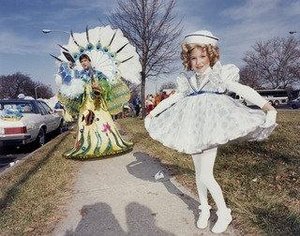
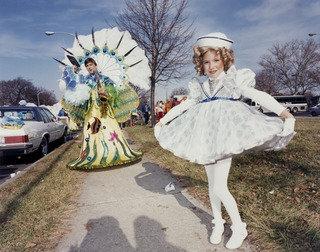
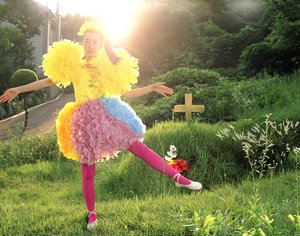
Shirley Temple, Mummer's Parade, Philadelphia, Pennsylvania
 1983
1983 38.0 x 48.0 cm
 Read More
Hand Made Oil Reproduction
Hand-painted oil on canvas in your size and frame, made to order by our artists. ( Buy Print Buy Image)




































Pick from our preset sizes that match the artwork's original proportions.

You may enter your own dimensions to fit a specific frame or space. If your selected size does not match the original image's proportions, we will either crop the artwork or extend the painting with additional hand-painted elements. A digital mockup will be sent for your approval before production begins.
Please note that the on-screen preview does not reflect the actual cropping or extension. Only the mockup will accurately show the final composition.
While custom sizes are available, we recommend selecting a dimension from the predefined list to preserve the original proportions.
After order, ArtsDot.com team will email client for instructions and provide a mockup preview
Worldwide Delivery () in 3/4 weeks instead of standard 5 weeks. (29 August). No compromise on quality.

Free Worldwide Express Shipping

High-Quality Linen Canvas

Full Shipping Insurance

Customs Tax Refund Guarantee

True Color Matching Guarantee

60-Day Return Policy (Defects Only)

100% Money-Back Guarantee

Bulk Discount Offer
 Glass option is only available in size under 110 CM

Shirley Temple, Mummer's Parade, Philadelphia, Pennsylvania
Reproduction Medium
Reproduction Size
-


Total Price
$ 263
Related Artworks








Artist Biography
The Soul of the American Landscape: The Artistry of David Marshall Graham
To encounter the work of David Marshall Graham is to step into a realm where the rugged reality of the American landscape meets the ethereal whispers of the subconscious. Born in 1947, Graham has spent a lifetime translating the quiet majesty of Maine’s coastline and its verdant, rural interiors into a visual language that is both deeply grounded and hauntingly dreamlike. His journey began in Feasterville, Pennsylvania, within a household where the creative spirit was a constant companion. Raised by a father who was a sculptor, Graham developed an early, profound sensitivity to form, texture, and the way light interacts with the physical world—elements that would later become the cornerstone of his celebrated oil paintings.
His formal education at the Pratt Institute in Brooklyn provided the technical crucible necessary to refine his burgeoning talent. It was here that he mastered the intricate art of color layering, a technique that allows his canvases to possess an inner luminosity, as if the light were emanating from within the paint itself rather than merely reflecting off its surface. This mastery of medium allowed him to move beyond simple representation, enabling him to capture the atmospheric weight of a misty morning on the Atlantic or the sun-drenched stillness of a woodland clearing with unparalleled precision.
A Synthesis of Realism and Surrealism
The true brilliance of Graham’s oeuvre lies in his ability to blend meticulous realism with subtle, often unsettling, surrealist undertones. While his subjects—the windswept pines, the jagged Maine rocks, and the solitary figures of Americana—are instantly recognizable, there is an emotional depth that transcends mere topography. He does not simply paint a landscape; he paints the feeling of a landscape. His compositions often utilize symbolic elements such as birds in flight or isolated trees to evoke themes of resilience, solitude, and the profound connection between humanity and the natural world.
This stylistic duality draws inevitable comparisons to masters of American art. One can sense the quiet, psychological tension of Edward Hopper in his depictions of solitude, paired with the sweeping, dramatic grandeur found in the works of Albert Bierstadt. By weaving these influences together, Graham creates a unique aesthetic that captures the "Americana" spirit—a nostalgic yet piercingly modern reflection on the beauty and the loneliness of the American wilderness.
Evolution and Lasting Legacy
As his career progressed through the 1970s and 80s, Graham’s work underwent a fascinating metamorphosis. While his early successes were rooted in the breathtaking landscapes of the Northeast, he began to experiment with more psychological and introspective imagery. This period of development saw him moving toward a style that incorporated dreamlike elements, where the boundaries between the physical world and the internal psyche became increasingly blurred. His paintings from this era serve as poignant narratives, inviting the viewer to contemplate their own place within the vast, often mysterious, cycles of nature.
Today, the significance of David Marshall Graham’s contribution to American landscape painting remains profound. His ability to capture the "soul" of a region—specifically the rugged, enduring spirit of Maine—has earned him a lasting place in the hearts of collectors and art enthusiasts alike. Through his evocative use of color, light, and symbolism, he continues to remind us that the landscapes we inhabit are not merely scenery, but mirrors reflecting our deepest human experiences.
Quick Facts
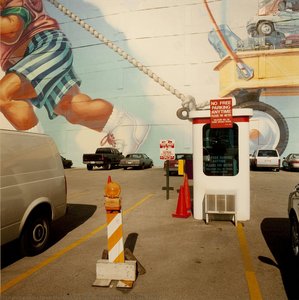
- Artistic Movement Or Style: Photorealism
- Artists Or Movements Influenced By This Artist: ['Photorealism']
- Artists Who Influenced This Artist:
- Edward Hopper
- Richard Estes
- Date Of Birth: 1947
- Full Name: David Marshall Graham
- Nationality: American
- Notable Artworks: ['Robin, Feasterville']
- Place Of Birth: Feasterville, Pennsylvania, USA