

 Preview
 Send
Send Share
Share
 Details

 Download
 Similars
 X-Ray
X-Ray Diaporama
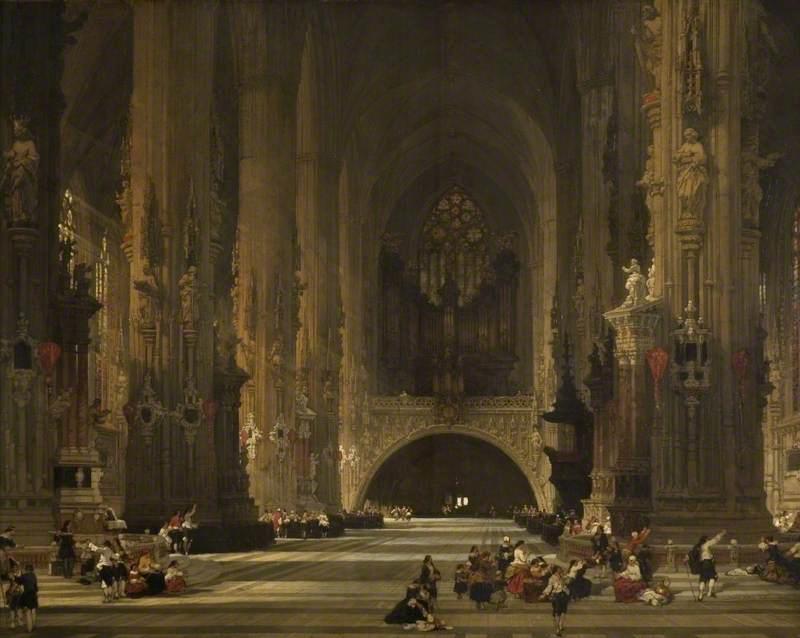
Interior of the Cathedral of St Stephen, Vienna


 Read More
Purchase a high-resolution, enhanced digital image, far superior to the online preview.
Each file is meticulously prepared by our in-house specialists using advanced tools and expert manual retouching. We ensure every image has exceptional clarity, precise color accuracy, and fine detail.
The final file is delivered via email within 72 hours, optimized for immediate use in professional, editorial, and print environments. This is the same quality trusted by top-tier design studios, publishers, and galleries.
Digital Image
Download a high-resolution file for personal display, printing, and creative projects. ( Buy Print Buy Hand Made Painting)
Included in Every Digital Image Order
Expert Digital Delivery, Guaranteed
When you choose ArtsDot.com, you're not just getting an image - you're receiving a professionally enhanced digital artwork, crafted with precision and backed by a satisfaction guarantee. Here's everything that comes with your order, automatically:

Fast Email Delivery
Your high-resolution digital image file will be emailed to you within 72 hours of ordering - ready for immediate use.

AI-Enhanced Digital File
Your artwork is professionally optimized using advanced AI tools and manual editing, ensuring maximum detail, clarity, and color accuracy.

Free Lifetime Re-Delivery
Accidentally deleted or lost your file? No worries - we'll resend it to you anytime, free of charge.

No Import Fees - Ever
Enjoy your artwork instantly with zero customs, duties, or delivery fees - digital downloads are always tax-free.

Color Accuracy Guarantee
We ensure your digital image reflects the original colors as closely as possible using professional tools and color management.

60-Day Satisfaction Guarantee
If you're not satisfied with your digital image, we'll revise it or refund 100% within 60 days - no questions asked.

100% Money-Back Guarantee
Not satisfied? Get a full refund within 60 days of receiving your digital file - no questions asked.

Bulk Order Discounts
Buy 3 images, save 10% - Buy 5, save 15% - Buy 10+, save 20%. Great for creative projects, galleries, and agencies.
Collectible Description
A Glimpse of Sacred Space: David Roberts’ Interior of St. Stephen's Cathedral
David Roberts’ “Interior of the Cathedral of St Stephen, Vienna,” painted in 1853, is more than just a depiction of a magnificent architectural space; it’s a carefully constructed tableau of light, shadow, and human presence within a deeply resonant historical context. This oil on canvas offers a remarkably intimate view of Vienna's iconic cathedral, transporting the viewer into its soaring heights and echoing chambers, revealing not merely a building but a vibrant hub of spiritual life.
Roberts, a Scottish artist renowned for his Orientalist scenes and meticulous lithographs, possessed an extraordinary eye for detail and a masterful understanding of light. His work bridged the gap between artistic representation and historical documentation, particularly during his extensive travels throughout the Middle East. Born in Stockbridge, Scotland, Roberts’ early apprenticeship as a house painter instilled within him a profound appreciation for texture, color, and the transformative power of light – skills he would later hone into a distinctive artistic voice. This foundation is evident in the painting's subtle gradations of tone and its remarkably realistic portrayal of materials, from the rough-hewn stone of the pillars to the shimmering stained glass windows.
The Baroque Heartbeat
St. Stephen’s Cathedral, or “Stephansdom” as it’s affectionately known by Viennese locals, is a testament to centuries of architectural evolution. Originally built in the 12th century as a Roman Catholic parish church, its current form largely dates back to the Baroque period, particularly during the reign of Emperor Charles VI. Roberts' painting captures this complex layering of styles – the Gothic arches and soaring vaults alongside the ornate detailing characteristic of the Baroque era. The cathedral’s imposing presence is immediately apparent, yet Roberts skillfully avoids overwhelming the viewer with sheer scale; instead, he focuses on creating a sense of contained grandeur, inviting us to explore its intricate details.
The painting's color palette leans heavily towards rich browns and golds, reflecting the warm hues of candlelight and stained glass. These colors are masterfully employed to create a dramatic interplay of light and shadow, emphasizing the cathedral’s verticality and drawing the eye upwards toward the vaulted ceiling. Notice how Roberts uses darker tones to define the pillars and arches, while lighter shades illuminate the central aisle and highlight the figures within the scene. This careful manipulation of color not only enhances the visual impact but also contributes to the painting's overall atmosphere of solemn reverence.
A Moment in Time
What truly elevates “Interior of St. Stephen’s Cathedral” beyond a simple architectural rendering is its depiction of human activity. Roberts doesn’t present an empty, static space; instead, he captures a lively gathering within the cathedral's walls. A small group of individuals – some standing near the center, others scattered throughout the scene – are engaged in conversation or contemplation. The presence of handbags and backpacks suggests a casual, everyday event taking place within this sacred setting, subtly blurring the boundaries between religious devotion and secular life.
The inclusion of these figures adds a layer of narrative complexity to the painting, inviting us to speculate about their identities and motivations. Are they pilgrims seeking solace? Locals attending mass? Tourists marveling at the cathedral’s beauty? Roberts deliberately leaves these questions unanswered, allowing each viewer to project their own interpretations onto the scene. The painting becomes not just a representation of a place but a reflection of human experience within that space.
Symbolism and Emotional Resonance
Beyond its technical brilliance and historical context, “Interior of St. Stephen’s Cathedral” possesses a profound emotional resonance. The cathedral's soaring height and intricate details evoke a sense of awe and wonder, while the warm colors and intimate lighting create an atmosphere of serenity and contemplation. The painting speaks to the enduring power of faith, tradition, and community – themes that have resonated throughout human history.
Roberts’ masterful use of light and shadow further enhances this emotional impact. The shafts of light streaming through the stained glass windows cast a luminous glow upon the scene, transforming the cathedral into a veritable sanctuary. This interplay of light and darkness symbolizes both the presence of God and the mysteries of faith – inviting us to seek spiritual enlightenment within its walls.
A Timeless Masterpiece
“Interior of the Cathedral of St Stephen, Vienna” remains a captivating work of art, offering a glimpse into a pivotal moment in Viennese history and a profound meditation on the human condition. Reproductions of this painting continue to inspire admiration for Roberts’ artistic skill and his ability to capture the essence of a sacred space – a testament to the enduring power of beauty, faith, and human connection.
Related Artworks



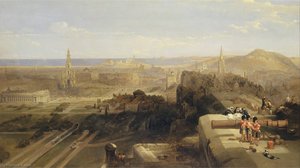

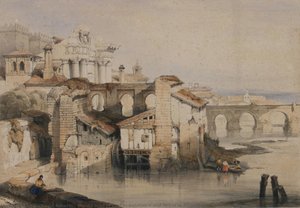
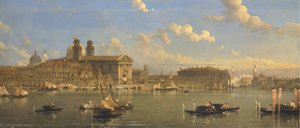
Artist Biography
David Roberts: A Life in Art
David Roberts (1796-1864) was a Scottish painter celebrated for his detailed Orientalist scenes and meticulous lithographs. His work provides invaluable visual documentation of the Middle East during the 19th century, bridging artistic representation with historical record.
Early Life and Career
Born on October 24, 1796, in Stockbridge near Edinburgh, Roberts’s early life was marked by practical training. At the age of ten, he began an apprenticeship with house painter and decorator Gavin Beugo. This foundational experience instilled a strong technical skill set, which he supplemented through evening art studies.
His initial professional work included redecorating Scone Palace in 1815. He then transitioned to scene painting for James Bannister’s circus, honing his skills in creating immersive environments. These early experiences laid the groundwork for his later success as a prominent Orientalist painter.
Artistic Journey and Influences
Roberts' artistic development was shaped by a growing fascination with different cultures and landscapes. While initially focused on theatrical scenery, he gradually shifted towards more independent artistic pursuits. His travels to Spain in 1832 were formative, sparking an interest in architectural detail and exotic locales.
However, it was his extensive tours of Egypt and the Near East (1838-1840) that truly defined his career. These journeys provided him with a wealth of sketches and observations which he later translated into his most famous works. His style wasn’t heavily influenced by any single artist, but rather developed from careful observation and technical mastery.
Notable Works and Achievements
Roberts is best known for The Holy Land, Syria, Idumea, Arabia, Egypt, and Nubia – a series of meticulously detailed lithograph prints. These images captured the grandeur of ancient sites and the vibrancy of contemporary life in the region.
- Lithographs: His lithographs were widely circulated and became highly influential in shaping European perceptions of the Middle East.
- Paintings: He also produced numerous oil paintings, often large-scale works depicting expansive landscapes and architectural marvels.
In 1841, Roberts was elected as a Royal Academician – a significant recognition of his contributions to the art world.
Artistic Style and Characteristics
Roberts’s artistic style is characterized by:
- Orientalism: A strong focus on depicting scenes from the Middle East, reflecting the European fascination with “the Orient.”
- Attention to Detail: His work is renowned for its precision and accuracy in rendering architectural details, costumes, and landscapes.
- Landscaping & Townscapes: He skillfully combined romantic sensibilities with detailed observation, creating evocative depictions of both natural environments and urban settings.
Legacy and Historical Significance
David Roberts’s work played a crucial role in popularizing the Middle East among European audiences. His images provided a visual window into a region that was largely unknown to many, influencing travel, scholarship, and artistic representation.
His lithographs served as important historical documents, preserving images of sites that have since changed or been lost. He left an indelible mark on the art world, inspiring subsequent generations of artists and continuing to captivate viewers today.
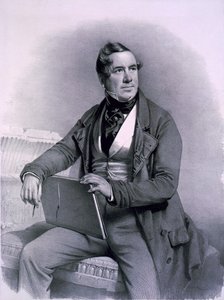
David Roberts
1796 - 1864 , United Kingdom
Quick Facts
- Birth Date: October 24, 1796
- Birth Place: Stockbridge, United Kingdom
- Death Date: 1864
- Influenced: Jenaro Pérez Villaamil, Alexander Nasmyth
- Movement: Orientalism
- Name: David Roberts
- Nationality: Scottish
- Notable Works: The Holy Land, Syria, Idumea, Arabia, Egypt, and Nubia

