

 Preview
 Send
Send Share
Share
 Details

 Download
 Similars
 X-Ray
X-Ray Diaporama
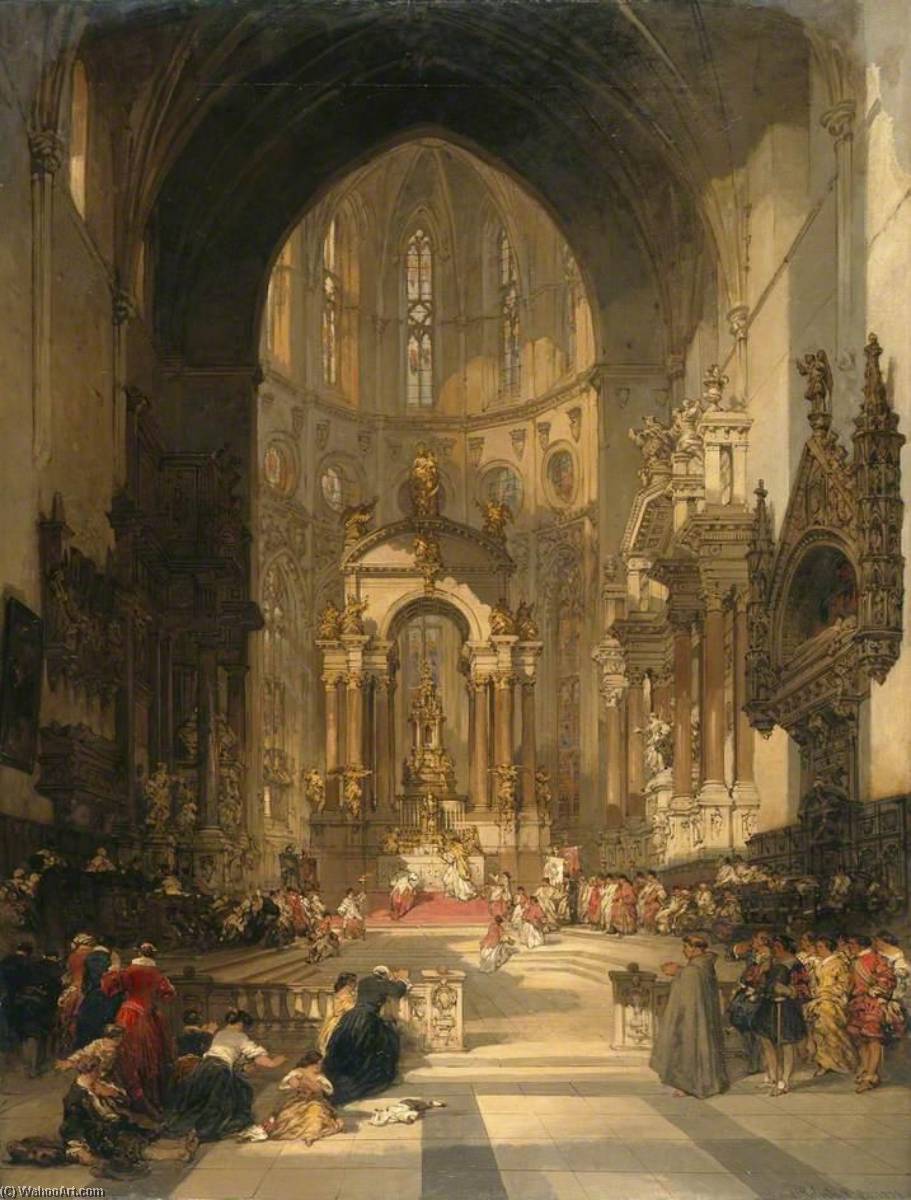
The High Altar of the Church of SS Giovanni e Paolo at Venice


 Read More
Purchase a high-resolution, enhanced digital image, far superior to the online preview.
Each file is meticulously prepared by our in-house specialists using advanced tools and expert manual retouching. We ensure every image has exceptional clarity, precise color accuracy, and fine detail.
The final file is delivered via email within 72 hours, optimized for immediate use in professional, editorial, and print environments. This is the same quality trusted by top-tier design studios, publishers, and galleries.
Digital Image
Download a high-resolution file for personal display, printing, and creative projects. ( Buy Print Buy Hand Made Painting)
Included in Every Digital Image Order
Expert Digital Delivery, Guaranteed
When you choose ArtsDot.com, you're not just getting an image - you're receiving a professionally enhanced digital artwork, crafted with precision and backed by a satisfaction guarantee. Here's everything that comes with your order, automatically:

Fast Email Delivery
Your high-resolution digital image file will be emailed to you within 72 hours of ordering - ready for immediate use.

AI-Enhanced Digital File
Your artwork is professionally optimized using advanced AI tools and manual editing, ensuring maximum detail, clarity, and color accuracy.

Free Lifetime Re-Delivery
Accidentally deleted or lost your file? No worries - we'll resend it to you anytime, free of charge.

No Import Fees - Ever
Enjoy your artwork instantly with zero customs, duties, or delivery fees - digital downloads are always tax-free.

Color Accuracy Guarantee
We ensure your digital image reflects the original colors as closely as possible using professional tools and color management.

60-Day Satisfaction Guarantee
If you're not satisfied with your digital image, we'll revise it or refund 100% within 60 days - no questions asked.

100% Money-Back Guarantee
Not satisfied? Get a full refund within 60 days of receiving your digital file - no questions asked.

Bulk Order Discounts
Buy 3 images, save 10% - Buy 5, save 15% - Buy 10+, save 20%. Great for creative projects, galleries, and agencies.
The High Altar of the Church of SS Giovanni e Paolo at Venice – A Glimpse into Venetian Grandeur
David Roberts’s “The High Altar of the Church of SS Giovanni e Paolo at Venice” is more than a depiction of a religious scene; it's a meticulously crafted illusion, a testament to 19th-century artistic ambition and a profound exploration of space and light. Painted in 1858, this monumental canvas transports the viewer into the heart of Venice’s historic church, capturing not just its physical form but also the palpable sense of reverence and architectural splendor within. Roberts, a Scottish artist renowned for his Orientalist scenes and detailed lithographs, here demonstrates an extraordinary command of perspective and color, creating a world that feels both utterly real and subtly fantastical.
The painting’s subject is deceptively simple: the high altar of the Church of SS Giovanni e Paolo, a significant landmark in Venice. However, Roberts doesn't merely present a straightforward representation. Instead, he employs a masterful technique known as *quadratura*, a method perfected by Andrea Pozzo and utilized extensively in Venetian churches during the Baroque period. This technique allows artists to create the illusion of three-dimensional space on a flat surface – essentially painting an entire architectural setting that doesn’t actually exist within the confines of the canvas.
A Symphony of Light and Shadow
Roberts's skill lies not just in his understanding of *quadratura*, but also in his ability to manipulate light. The scene is bathed in a warm, golden glow emanating from unseen windows, casting dramatic shadows that accentuate the intricate details of the altar’s carvings, the richly adorned vestments, and the faces of the figures gathered before it. Notice how he uses highlights to draw attention to specific elements – the shimmering gold leaf on the altar itself, the folds of the drapery, and the expressions of awe and devotion on the faces of the onlookers. This careful orchestration of light creates a sense of depth and realism that is truly remarkable.
The composition is carefully balanced, guiding the viewer’s eye through the scene. The figures in the foreground are rendered with a degree of naturalism, while those further back recede into the atmospheric haze, reinforcing the illusion of vast space. Roberts's attention to detail extends to every element – from the intricate patterns on the altar’s marble to the subtle variations in color and texture of the fabrics. The painting is a veritable feast for the eyes, inviting close inspection and repeated viewing.
Historical Context and Artistic Influences
To fully appreciate “The High Altar,” it's crucial to understand its historical context. Venice during the mid-19th century was experiencing a resurgence of artistic patronage, fueled by wealthy merchants and nobles who sought to adorn their churches with magnificent works of art. Roberts’s painting reflects this spirit of grandeur and ambition, echoing the traditions of Venetian High Baroque while simultaneously embracing contemporary techniques. The influence of Andrea Pozzo is particularly evident in the masterful use of *quadratura* and the illusionistic perspective.
Roberts's earlier work as an Orientalist painter also informed his approach to this project. His meticulous attention to detail, his understanding of color and light, and his ability to create a sense of atmosphere are all hallmarks of his distinctive style. The painting demonstrates a remarkable synthesis of these influences, resulting in a truly unique and compelling artwork.
Symbolism and Emotional Resonance
Beyond its technical brilliance, “The High Altar” is rich in symbolism. The scene depicts a moment of communal worship, conveying a sense of faith, devotion, and the importance of religious tradition. The altar itself represents the sacred heart of the church, a focal point for prayer and reflection. The figures gathered before it embody the diverse range of people who come together to honor their beliefs.
The painting evokes a powerful emotional response – a sense of awe, reverence, and perhaps even nostalgia. It transports us back in time to a world where religious art played a central role in everyday life, offering a glimpse into the beauty and grandeur of Venetian culture. Reproductions of this artwork offer a way to bring this feeling of timeless splendor into any space.
Related Artworks

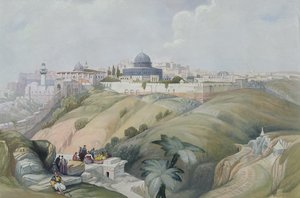
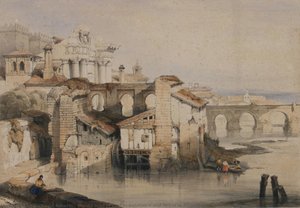
Artist Biography
David Roberts: A Life in Art
David Roberts (1796-1864) was a Scottish painter celebrated for his detailed Orientalist scenes and meticulous lithographs. His work provides invaluable visual documentation of the Middle East during the 19th century, bridging artistic representation with historical record.
Early Life and Career
Born on October 24, 1796, in Stockbridge near Edinburgh, Roberts’s early life was marked by practical training. At the age of ten, he began an apprenticeship with house painter and decorator Gavin Beugo. This foundational experience instilled a strong technical skill set, which he supplemented through evening art studies.
His initial professional work included redecorating Scone Palace in 1815. He then transitioned to scene painting for James Bannister’s circus, honing his skills in creating immersive environments. These early experiences laid the groundwork for his later success as a prominent Orientalist painter.
Artistic Journey and Influences
Roberts' artistic development was shaped by a growing fascination with different cultures and landscapes. While initially focused on theatrical scenery, he gradually shifted towards more independent artistic pursuits. His travels to Spain in 1832 were formative, sparking an interest in architectural detail and exotic locales.
However, it was his extensive tours of Egypt and the Near East (1838-1840) that truly defined his career. These journeys provided him with a wealth of sketches and observations which he later translated into his most famous works. His style wasn’t heavily influenced by any single artist, but rather developed from careful observation and technical mastery.
Notable Works and Achievements
Roberts is best known for The Holy Land, Syria, Idumea, Arabia, Egypt, and Nubia – a series of meticulously detailed lithograph prints. These images captured the grandeur of ancient sites and the vibrancy of contemporary life in the region.
- Lithographs: His lithographs were widely circulated and became highly influential in shaping European perceptions of the Middle East.
- Paintings: He also produced numerous oil paintings, often large-scale works depicting expansive landscapes and architectural marvels.
In 1841, Roberts was elected as a Royal Academician – a significant recognition of his contributions to the art world.
Artistic Style and Characteristics
Roberts’s artistic style is characterized by:
- Orientalism: A strong focus on depicting scenes from the Middle East, reflecting the European fascination with “the Orient.”
- Attention to Detail: His work is renowned for its precision and accuracy in rendering architectural details, costumes, and landscapes.
- Landscaping & Townscapes: He skillfully combined romantic sensibilities with detailed observation, creating evocative depictions of both natural environments and urban settings.
Legacy and Historical Significance
David Roberts’s work played a crucial role in popularizing the Middle East among European audiences. His images provided a visual window into a region that was largely unknown to many, influencing travel, scholarship, and artistic representation.
His lithographs served as important historical documents, preserving images of sites that have since changed or been lost. He left an indelible mark on the art world, inspiring subsequent generations of artists and continuing to captivate viewers today.
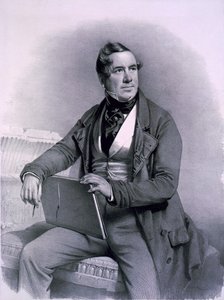
David Roberts
1796 - 1864 , United Kingdom
Quick Facts
- Birth Date: October 24, 1796
- Birth Place: Stockbridge, United Kingdom
- Death Date: 1864
- Influenced: Jenaro Pérez Villaamil, Alexander Nasmyth
- Movement: Orientalism
- Name: David Roberts
- Nationality: Scottish
- Notable Works: The Holy Land, Syria, Idumea, Arabia, Egypt, and Nubia

