 Preview
 Send
Send Share
Share
 Details

 Download
 Similars
 X-Ray
X-Ray Diaporama
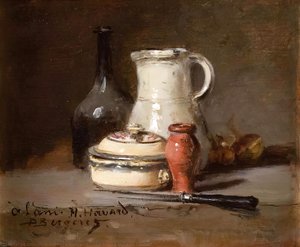
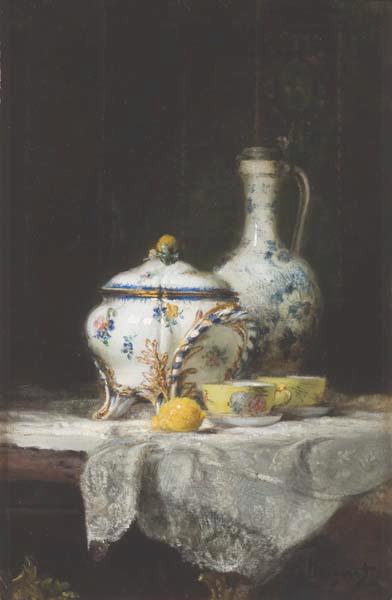
Nature morte à la soupière et à la cruche de faïence

 Read More
Hand Made Oil Reproduction
Hand-painted oil on canvas in your size and frame, made to order by our artists. ( Buy Print Buy Image)




P118B $10

P118H $10

P118W $10

P438Z $10

P508JH $12

P508YH $12

P805H $10

P805Z $10

P919BZ $10

P919G $10

P919XJ $10

P959ZH $10

P968JZ $12

W106C $8

W218G $10

W218JH $8

W218Y $10

W307PJ $10

W316G $10

W316PJ $8

W316Y $10

W398PJ $8

W4111J $10

W500HY $15

W500JH $15

W692G $12

W849H $8

W940BG $15

W953PJ $8




Pick from our preset sizes that match the artwork's original proportions.

You may enter your own dimensions to fit a specific frame or space. If your selected size does not match the original image's proportions, we will either crop the artwork or extend the painting with additional hand-painted elements. A digital mockup will be sent for your approval before production begins.
Please note that the on-screen preview does not reflect the actual cropping or extension. Only the mockup will accurately show the final composition.
While custom sizes are available, we recommend selecting a dimension from the predefined list to preserve the original proportions.
After order, ArtsDot.com team will email client for instructions and provide a mockup preview
Worldwide Delivery () in 3/4 weeks instead of standard 5 weeks. (30 August). No compromise on quality.

Free Worldwide Express Shipping

High-Quality Linen Canvas

Full Shipping Insurance

Customs Tax Refund Guarantee

True Color Matching Guarantee

60-Day Return Policy (Defects Only)

100% Money-Back Guarantee

Bulk Discount Offer
 Glass option is only available in size under 110 CM

Nature morte à la soupière et à la cruche de faïence
Reproduction Medium
Reproduction Size
-


Total Price
$ 263
Related Artworks
Artist Biography
The Luminous Soul of Still Life: The Artistry of Denis Pierre Bergeret
In the golden twilight of the nineteenth century, a period defined by the shifting tides between Romanticism and the dawn of Impressionism, Denis Pierre Bergeret emerged as a master of quiet contemplation. Born in 1844 in Saint-Étienne, Auvergne, Bergeret’s early life was steeped in the rich traditions of French artistry. His formal education at the prestigious École Supérieure des Beaux-Arts in Paris provided him with a rigorous foundation, exposing him to the atmospheric nuances of Luminism and the rustic, soulful essence of the Barbizon school. While many of his contemporaries sought the grandeur of historical epic or the fleeting movement of landscapes, Bergeret found a profound, spiritual resonance within the stillness of the inanimate object.
As his career matured, Bergeret underwent a transformative artistic evolution. He moved away from the expansive vistas of his early training to focus intensely on the genre of still life, yet he elevated the subject far beyond mere domestic observation. His work became deeply intertwined with Symbolist ideals, where every arrangement of fruit, flower, or ceramic vessel served as a vessel for esoteric meaning. To gaze upon a Bergeret composition is to enter a space of meditation; he utilized objects not just as physical entities, and certainly not merely as exercises in realism, but as symbols of mortality, the passage of time, and the delicate interconnectedness between humanity and the natural world.
A Symphony of Light and Texture
The true brilliance of Bergeret’s mastery lies in his unparalleled command over light and the tactile reality of his subjects. He possessed a rare ability to manipulate pigment to evoke the subtle, shifting qualities of natural illumination. Through the meticulous application of glazing techniques—layering translucent washes of color over one another—he achieved a luminous depth that seemed to radiate from within the canvas itself. This method allowed him to capture the soft glow on a porcelain pitcher or the velvety skin of a ripening peach with an almost supernatural clarity.
His technical prowess was matched by his sensitivity to texture, creating a sensory experience for the viewer that transcends the visual:
- The interplay of shadow: He studied the way light dissolves into darkness, using chiaroscuro elements to create volume and a sense of dramatic presence.
- Materiality: His ability to differentiate between the cold smoothness of earthenware, the delicate fragility of petals, and the heavy drape of fabric.
- Chromatic Harmony: A sophisticated use of color palettes that balanced rich, earthy tones with sudden, brilliant highlights to guide the eye through his compositions.
Legacy and Historical Significance
Though the name Denis Pierre Bergeret may not carry the same immediate recognition as the titans of Impressionism, his contribution to the French art canon remains significant. He bridged the gap between the meticulous realism of the past and the emotive, symbolic depth of the modern era. His works, such as "Nature morte à la soupière et à la cruche de faïence," stand as enduring testaments to a period when art sought to find the infinite within the finite. By imbuing everyday objects with a sense of the sacred, Bergeret ensured that his legacy would be one of profound emotional resonance, reminding us that beauty and meaning are often found in the most silent, overlooked corners of our existence.
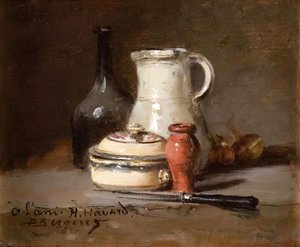
denis pierre bergeret
1844 - 1910
Quick Facts
- Artistic Movement Or Style: Still Life Art
- Artists Or Movements Influenced By This Artist: ['Impressionism']
- Artists Who Influenced This Artist:
- Gustave Courbet
- Jean-François Millet
- Date Of Birth: 1844
- Date Of Death: 1910
- Full Name: Denis Pierre Bergeret
- Nationality: French
- Notable Artworks:
- Nature morte à la soupière et à la cruche de faïence
- Nature morte au pichet, aux figues et aux raisins
- Place Of Birth: Paris, France
Related Articles
Renoir's Masterpieces: Explore 25 Iconic Paintings & Bring Art Home | ArtsDot
Explore 25 iconic Pierre-Auguste Renoir paintings! Discover the stories behind Impressionist masterpieces like 'Dance at Le Moulin de la Galette' & 'Luncheon of the Boating Party'. Find museum-quality art reproductions and elevate your home decor with ArtsDot.com.
Denis Maurice: A Study in Post-War French Figuration & the Poetics of Everyday Life
Explore the life & work of Maurice Denis, pivotal French painter bridging Impressionism to modern art. Discover his Nabis symbolism, theories on 'ideation,' and profound commitment to sacred art. A deep dive for art enthusiasts.

Georges Seurat's Masterpieces: 25 Paintings That Defined Pointillism | ArtsDot
Explore 25 iconic Georges Seurat paintings & discover the brilliance of Pointillism. From 'La Grande Jatte' to his harbor scenes, delve into art history with ArtsDot.com. Find museum-quality reproductions for your home decor. Explore the full collection online!
19th Century Masterpieces: 10 Paintings That Defined an Era | ArtsDot
Journey through 19th century art with ArtsDot! Explore 10 iconic paintings – from Monet & Renoir to Courbet – and discover the stories behind Romanticism, Realism & Impressionism. Find museum-quality reproductions for your home decor. Explore the full collection online!
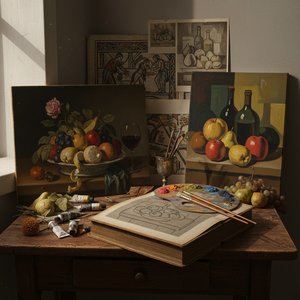
Silent Narratives: Exploring the Enduring Appeal of Still Life Painting Across Centuries
Explore the rich history of still life painting with ArtsDot. Discover Dutch Masters, decode vanitas symbolism & learn about collecting timeless art. Expert insights and museum-quality reproductions.