 Preview
 Send
Send Share
Share
 Details

 Download
 Similars
 X-Ray
X-Ray Diaporama
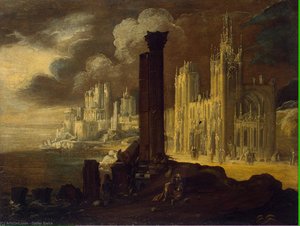
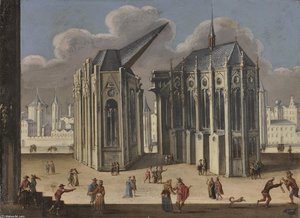
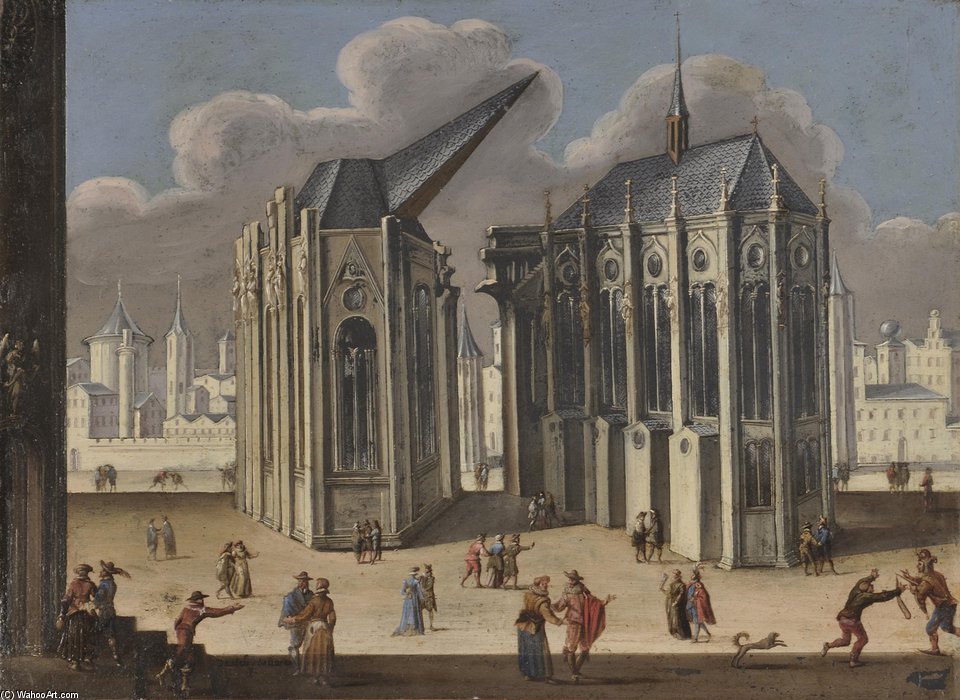
Fantastic View Of A Gothic Cathedral
 Read More
Hand Made Oil Reproduction
Hand-painted oil on canvas in your size and frame, made to order by our artists. ( Buy Print Buy Image)




































Pick from our preset sizes that match the artwork's original proportions.

You may enter your own dimensions to fit a specific frame or space. If your selected size does not match the original image's proportions, we will either crop the artwork or extend the painting with additional hand-painted elements. A digital mockup will be sent for your approval before production begins.
Please note that the on-screen preview does not reflect the actual cropping or extension. Only the mockup will accurately show the final composition.
While custom sizes are available, we recommend selecting a dimension from the predefined list to preserve the original proportions.
After order, ArtsDot.com team will email client for instructions and provide a mockup preview
Worldwide Delivery () in 3/4 weeks instead of standard 5 weeks. (21 August). No compromise on quality.

Free Worldwide Express Shipping

High-Quality Linen Canvas

Full Shipping Insurance

Customs Tax Refund Guarantee

True Color Matching Guarantee

60-Day Return Policy (Defects Only)

100% Money-Back Guarantee

Bulk Discount Offer
 Glass option is only available in size under 110 CM

Fantastic View Of A Gothic Cathedral
Reproduction Medium
Reproduction Size
-


Total Price
$ 263
Related Artworks
Artist Biography
The Enigmatic Wanderer of the Baroque
Didier Barra remains an artist shrouded in a profound and captivating mystery, his life a series of shadows cast by the remarkable brilliance of his surviving works. Born around 1590 in the quiet environs of Metz, Lorraine—then part of the Duché de Lorraine—Barra’s early years are largely lost to the mists of time, leaving historians to reconstruct his trajectory through the very brushstrokes he left behind. Around 1608, he embarked on a transformative journey toward Italy, a migration that would fundamentally alter his artistic soul. Upon arriving in Naples, a city then pulsating with the vibrant energy of the Baroque era, Barra found more than just a new home; he found a canvas for a vision that was uniquely his own, blending the meticulous precision of his French roots with the dramatic, emotive intensity of the Italian landscape.Visions of Decay and Sublime Grandeur
To encounter a Barra landscape is to step into a world caught in the silent, slow-motion collapse of time itself. He achieved a singular renown for his cityscapes—visions of crumbling towers and desolate, near-barren buildings that evoke an unsettling, almost post-apocalyptic atmosphere. His palette was intentionally austere, dominated by the somber tones of muted browns, ochres, and grays, which served to heighten the psychological weight of his compositions. Through a masterful command of perspective, Barra created architectural sentinels that seem both mighty and melancholic, inviting the viewer to contemplate the inevitable decay of human endeavor. In works such as Landscape with Buildings, one observes an incredible interplay between the sharp, weathered textures of stone and a soft, atmospheric haze that suggests the heavy, humid air of the Mediterranean. These were not merely depictions of ruins; they were psychological landscapes where the grandeur of the past meets the haunting stillness of a world ravaged by time.The Shadow of Monsù Desiderio
For centuries, the true identity of this master was obscured by a collective misattribution. Until the mid-twentieth century, much of Barra’s extraordinary output was credited to a single, mythical figure known as Monsù Desiderio. It was only through rigorous modern scholarship that the veil was lifted, revealing that this singular "hand" was actually the work of several distinct artists, with Didier Barra standing as one of its most vital contributors alongside figures like François de Nomé. This revelation has reshaped our understanding of the Neapolitan school, transforming a single legend into a complex tapestry of individual genius. Today, Barra is celebrated not just for his technical skill, but for his ability to capture the sublime—that terrifyingly beautiful intersection of awe and dread. His legacy persists in the way he taught us to look at ruins, not as mere debris, but as profound monuments to the fleeting nature of existence.
Didier Barra
1590 - 1644 , Italy
Quick Facts
- Artistic Movement Or Style: Renaissance
- Artists Or Movements Influenced By This Artist: ['Baroque']
- Artists Who Influenced This Artist:
- Alessandro Baratta
- Claude Deruet
- Date Of Birth: Metz, Italy (1590)
- Date Of Death: Naples (1644)
- Full Name: Didier Barra
- Nationality: French
- Notable Artworks:
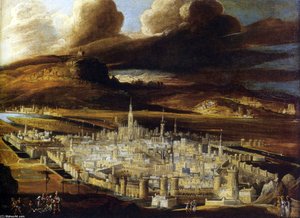
- Vue De Metz Depuis La Colline Bellecroix Anciennement
- Fantastic View Of A Gothic Cathedral
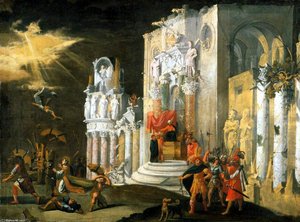
- The Martyrdom Of Saint Catherine
- Place Of Birth: Metz, Italy