 Preview
 Send
Send Share
Share
 Details

 Download
 Similars
 X-Ray
X-Ray Diaporama
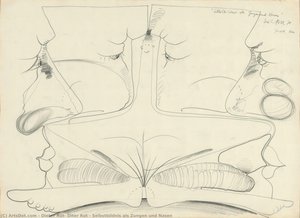
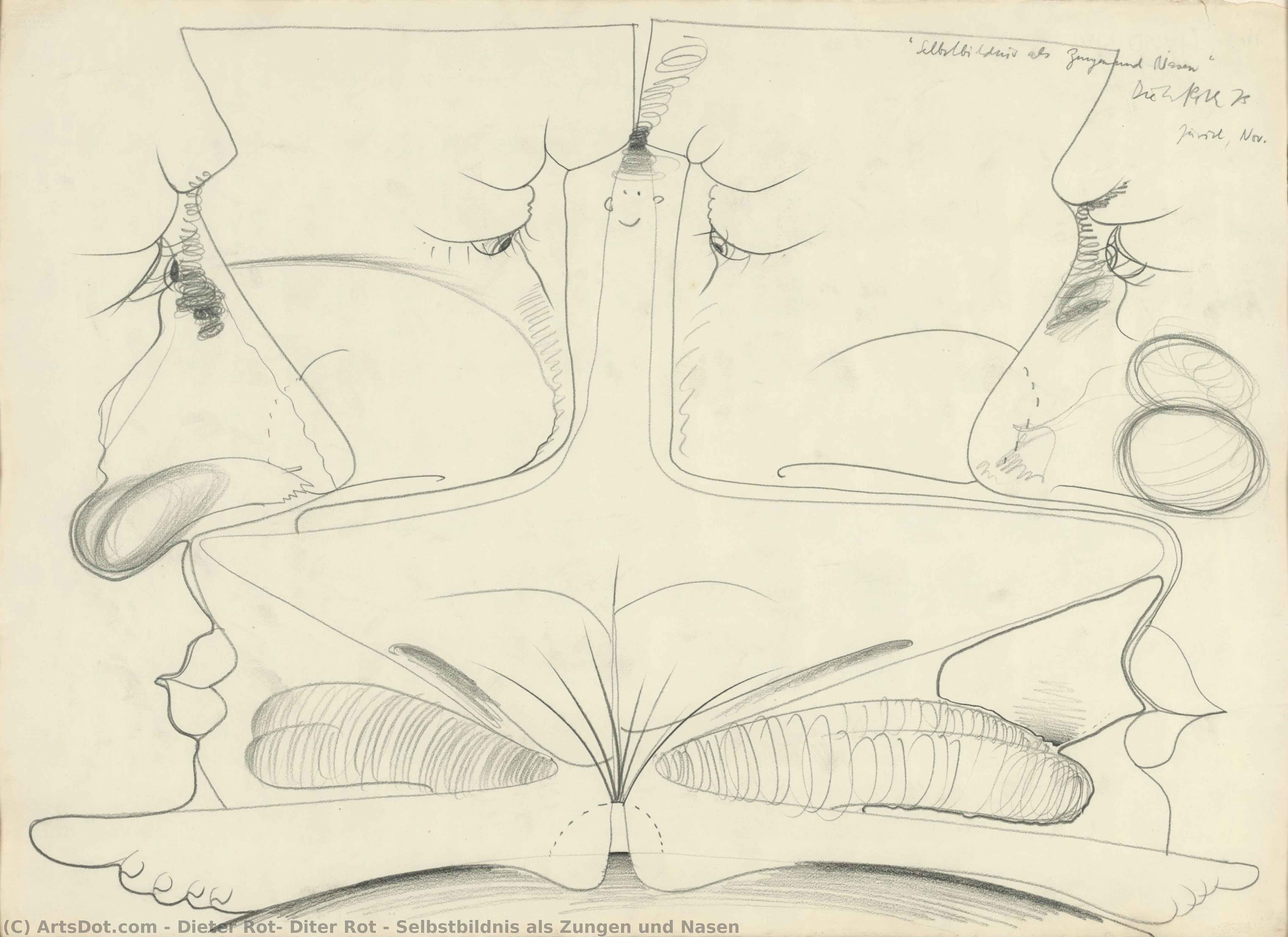
Selbstbildnis als Zungen und Nasen
 Pencil
- Fluxus
 1973
1973- Contemporary
 58.0 x 78.0 cm
 Serralves Foundation
 Read More
Giclée / Art Print
Museum-quality giclée or canvas print with fast production and flexible finish options. ( Buy Hand Made Painting Buy Image)




P118B $10

P118H $10

P118W $10

P438Z $10

P508JH $12

P508YH $12

P805H $10

P805Z $10

P919BZ $10

P919G $10

P919XJ $10

P959ZH $10

P968JZ $12

W106C $8

W218G $10

W218JH $8

W218Y $10

W307PJ $10

W316G $10

W316PJ $8

W316Y $10

W398PJ $8

W4111J $10

W500HY $15

W500JH $15

W692G $12

W849H $8

W940BG $15

W953PJ $8




Pick from our preset sizes that match the artwork's original proportions.

You may enter your own dimensions to fit a specific frame or space. If your selected size does not match the original image's proportions, we will either crop the artwork or extend the image with a mirrored or solid-fill edge. A digital mockup will be sent for your approval before production begins.
Please note that the on-screen preview does not reflect the actual cropping or extension. Only the mockup will accurately show the final composition.
While custom sizes are available, we recommend selecting a dimension from the predefined list to preserve the original proportions.
Worldwide Delivery () in 2 weeks instead of standard 4/5 weeks. (27 August)

Free Worldwide Express Shipping

High-Quality Linen Canvas

Full Shipping Insurance

Customs Tax Refund Guarantee

True Color Matching Guarantee

60-Day Return Policy (Defects Only)

100% Money-Back Guarantee

Bulk Discount Offer
 Glass option is only available in size under 110 CM

Selbstbildnis als Zungen und Nasen
Giclée / Art Print
Reproduction Size
-


Total Price
$ 63
Collectible Description
A Visceral Encounter with the Self
In the evocative realm of Dieter Roth, the boundaries between the observer and the observed often dissolve into a raw, unfiltered reality. His 1973 work, Selbstbildnis als Zungen und Nasen (Self-Portrait as Tongues and Noses), serves as a profound testament to the artist's ability to confront the human condition through a lens of startling vulnerability. This black and white drawing captures a moment of intense, almost grotesque intimacy, where the artist’s face is rendered with meticulous detail, yet transformed by an unconventional gesture. As the mouth opens and the tongue protrudes, the piece transcends mere representation, inviting the viewer into a space of primal expression that challenges the traditional sanctity of the portrait.
The technique employed in this piece speaks to the precision of a master draftsman, utilizing the stark contrasts of monochrome to sculpt form from shadow. Every line of the man's face—the furrow of the brow, the texture of the lips, and the sharp definition of the nose—is captured with an intensity that borders on the hyper-realistic. Yet, within this technical mastery lies a deliberate subversion. The inclusion of a secondary, ghostly pencil sketch of a woman’s face layered within the composition adds a haunting, psychological depth, suggesting a fragmentation of identity or perhaps the overlapping of memories and personas. This layering technique creates a sense of temporal flux, much like the artist's broader fascination with impermanence and transformation.
The Fluxus Spirit and the Beauty of Decay
To understand this self-portrait, one must look toward the radical spirit of the Fluxus movement, with which Roth was deeply intertwined. During this era, artists sought to break down the walls between high art and everyday life, often embracing the ephemeral and the decaying. In Selbstbildnis als Zungen und Nasen, we see this rebellion manifest in the subject matter itself; by focusing on the tongue and the nose—sensory organs of taste and smell—Roth directs our attention to the most visceral, biological aspects of existence. The work does not seek to beautify the subject but rather to present a truthful, albeit unsettling, anatomical honesty that resonates with the expressionist influences of artists like Francis Bacon.
For the discerning collector or interior designer, this piece offers a sophisticated intellectual anchor for a curated space. It is an artwork that demands attention and provokes dialogue, making it an ideal centerpiece for modern, minimalist, or avant-garde environments. A high-quality reproduction of this drawing allows the dramatic interplay of light and dark to breathe within a room, providing a focal point that is both intellectually stimulating and visually arresting. It serves as a reminder of the power of art to confront the grotesque and find a haunting, singular beauty within the most human of gestures.
Related Artworks




Artist Biography
The Alchemy of Impermanence: The Life and Vision of Dieter Roth
Born in Hanover, Germany, on April 21, 1930, Dieter Roth—often referred to by the variation Diter Rot—emerged as one of the most radical and boundary-pushing figures of the twentieth-century avant-garde. His artistic journey was never a linear progression toward perfection, but rather a profound exploration of decay, transformation, and the beautiful instability of existence. Moving through the cultural landscapes of Europe, Roth developed a practice that defied the static nature of traditional fine art, choosing instead to embrace the organic processes of life and death. His work serves as a visceral meditation on the passage of time, where the boundaries between the creator, the medium, and the environment are perpetually blurred.
Roth’s creative evolution was deeply intertwined with the experimental spirit of the Fluxus movement. As a co-founder of the magazine Spirale, he became a central node in a network of artists dedicated to breaking down the walls between high art and everyday life. This period of his life was marked by an intense curiosity regarding how objects interact with their surroundings. He did not merely seek to represent reality; he sought to engage with its physical degradation. His fascination with found materials—ranging from discarded newspapers and magazines to the much more provocative use of organic matter—allowed him to create works that were living, breathing, and ultimately, dying.
Materiality and the Aesthetics of Decay
What truly distinguishes Roth’s oeuvre is his fearless approach to medium. While many artists of his era sought permanence through oil on canvas or carved stone, Roth found profound meaning in the ephemeral. He became renowned for his sculptures that incorporated rotting foodstuffs, a technique that challenged the very notion of what an art object could be. In pieces such as Insel, the artist utilized decomposing organic elements to create a sensory experience that engaged not just the eyes, but the sense of smell and the awareness of biological change. This focus on impermanence turned his sculptures into performances of natural entropy, where the artwork changed shape, color, and texture every day it remained on display.
Beyond his sculptural experiments, Roth revolutionized the concept of the book. His artist's books were far from passive objects of reading; they were tactile, interactive landscapes. By designing books with pages that readers could rearrange or manipulate, he dismantled the traditional hierarchy of narrative and structure. This approach mirrored his interest in Concrete Art and the deconstruction of form, inviting a participatory experience that transformed the viewer into an active collaborator. His editioned prints and works on paper further showcased this mastery of technique, blending experimental textures with a deep-seated connection to the raw materials of the modern world.
Legacy and Artistic Influence
The historical significance of Dieter Roth lies in his ability to expand the vocabulary of contemporary art. He drew inspiration from the psychological depth of Expressionism, finding echoes of the raw emotion found in the works of Edvard Munch and Francis Bacon, yet he applied these influences to a much more physical, materialist framework. His legacy is felt in every movement that seeks to challenge the sanctity of the museum object and every artist who finds beauty in the discarded or the decomposing.
Throughout his career, Roth’s work was celebrated in prestigious institutions, including the Museum Folkwang in Essen, Germany, ensuring that his radical experiments were documented within the canon of art history. Though he passed away in 1998, his impact remains undiminished. He left behind a body of work that continues to provoke thought about the nature of creation and the inevitability of dissolution, reminding us that there is a profound, haunting beauty to be found in the very process of falling apart.
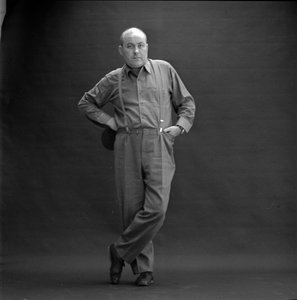
dieter rot, diter rot
1930 - 1998 , Germany
Quick Facts
- Artists Or Movements Influenced By This Artist: ['']
- Artists Who Influenced This Artist: ['']
- Date Of Birth: 1930
- Notable Artworks: ['']
- Place Of Birth: WahooArt
Related Articles

White on Canvas: 10 Masterpieces & Timeless Elegance for Your Home Decor
Explore 10 iconic white paintings by Monet, Whistler & Rothko! Discover the stories behind these serene masterpieces and their impact on art history. Find museum-quality reproductions for your home decor at .

Dark Masterpieces: 10 Iconic Paintings Dominated by Black Tones |
Explore 10 iconic paintings dominated by black tones, from Rembrandt’s chiaroscuro to Goya's dark expressions. Discover the stories behind these masterpieces & find museum-quality art reproductions for your home at .

Monochrome Visions: Exploring the Aesthetic & Historical Significance of Black & White Photography
Explore the rich history & artistic power of black and white photography. From early techniques to iconic masters like Ansel Adams, discover why monochrome continues to captivate art lovers today. Expert insights for collectors.
Mars Black Masterpieces: 10 Iconic Paintings & Timeless Art Decor Ideas
Delve into the power of 'Mars Black' with 10 iconic paintings by masters like Rembrandt & Caravaggio. Explore dramatic chiaroscuro, gothic art, and timeless beauty. Find museum-quality reproductions & elevate your home decor on .
The Subtleties of White: Exploring Absence, Light & Symbolism in Art History
Explore the profound symbolism & history of white in art! From ancient purity to modern abstraction, discover how artists have used absence & light. Expert insights from ArtsDot.