 Preview
 Send
Send Share
Share
 Details

 Download
 Similars
 X-Ray
X-Ray Diaporama
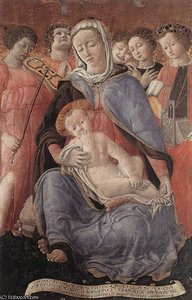
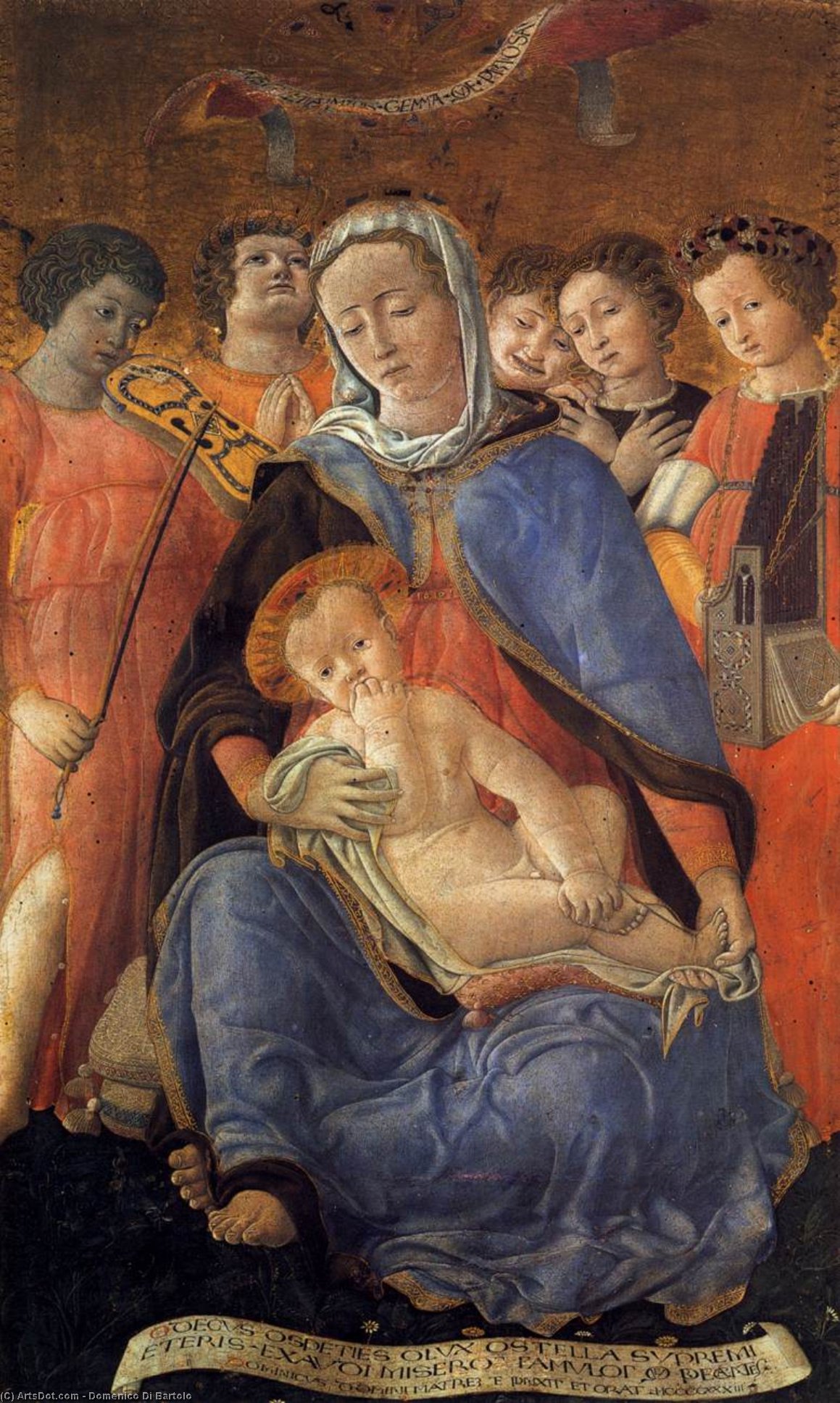
Madonna of Humility
 Oil On Panel
- Gothic style
 1433
1433- Late Medieval
 93.0 x 60.0 cm
 Pinacoteca Nazionale
 Read More
Hand Made Oil Reproduction
Hand-painted oil on canvas in your size and frame, made to order by our artists. ( Buy Print Buy Image)




P118B $10

P118H $10

P118W $10

P438Z $10

P508JH $12

P508YH $12

P805H $10

P805Z $10

P919BZ $10

P919G $10

P919XJ $10

P959ZH $10

P968JZ $12

W106C $8

W218G $10

W218JH $8

W218Y $10

W307PJ $10

W316G $10

W316PJ $8

W316Y $10

W398PJ $8

W4111J $10

W500HY $15

W500JH $15

W692G $12

W849H $8

W940BG $15

W953PJ $8




Pick from our preset sizes that match the artwork's original proportions.

You may enter your own dimensions to fit a specific frame or space. If your selected size does not match the original image's proportions, we will either crop the artwork or extend the painting with additional hand-painted elements. A digital mockup will be sent for your approval before production begins.
Please note that the on-screen preview does not reflect the actual cropping or extension. Only the mockup will accurately show the final composition.
While custom sizes are available, we recommend selecting a dimension from the predefined list to preserve the original proportions.
After order, ArtsDot.com team will email client for instructions and provide a mockup preview
Worldwide Delivery () in 3/4 weeks instead of standard 5 weeks. (24 August). No compromise on quality.

Free Worldwide Express Shipping

High-Quality Linen Canvas

Full Shipping Insurance

Customs Tax Refund Guarantee

True Color Matching Guarantee

60-Day Return Policy (Defects Only)

100% Money-Back Guarantee

Bulk Discount Offer
 Glass option is only available in size under 110 CM

Madonna of Humility
Reproduction Medium
Reproduction Size
-


Total Price
$ 263
Artwork Description
A Vision in Wood: The Enduring Grace of the Madonna of Humility
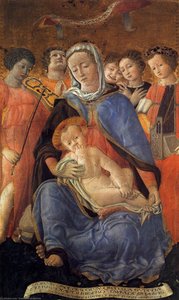
To stand before the Madonna of Humility by Domenico Di Bartolo is to step directly into the luminous, devotional atmosphere of early Quattrocento Siena. This masterpiece, dating from 1433, is not merely a depiction of sacred figures; it is an exquisitely crafted meditation on divine motherhood and human tenderness. The very air around the painted wood seems thick with rich color and profound spirituality. Di Bartolo captures that delicate threshold moment in art history—the lingering echoes of the Gothic tradition mingling with the nascent stirrings of Renaissance naturalism. It speaks to a time when piety was expressed through breathtaking levels of meticulous craftsmanship, inviting the viewer into an intimate, sacred tableau.
Gothic Detail Meets Profound Symbolism
The composition itself is a masterclass in devotional arrangement. At its heart sits the Virgin Mary, portrayed with a serene dignity as she cradles the infant Christ. The motif of nourishment—the baby being suckled by Mary—is rendered with an almost startling intimacy, symbolizing not just physical sustenance but the very source of divine grace flowing into humanity. Look closely at the surrounding angels and cherubs; they are not mere decorative elements. Each figure, draped in robes of deep blue, vibrant red, and rich green, participates in a silent chorus of adoration. These colors were never arbitrary; they carried weight, signifying heavenly attributes and roles within the complex tapestry of Christian iconography. The background, steeped in those characteristic dark, luxurious tones, serves to push the central figures forward, granting them an almost palpable presence.
The Craftsmanship of Domenico Di Bartolo
Domenico Di Bartolo’s handling of this piece showcases his exceptional skill as a master woodworker and painter. The medium itself—wood panel painting—demands a unique marriage of structural integrity and delicate surface artistry. His attention to detail, visible in the folds of drapery and the gentle contours of the faces, speaks to an artist deeply devoted to his craft. While the era was poised for monumental change, Di Bartolo anchors us firmly within the refined elegance of the Gothic style. This adherence to intricate patterning and rich symbolism makes it a pivotal work for understanding the artistic sensibilities of 15th-century Italian devotion.
Bringing Sacred Beauty Home
For those who seek to incorporate such profound artistry into a modern space, reproductions of the Madonna of Humility offer an unparalleled connection to art history. Owning or displaying a high-quality reproduction allows one to bathe a room in the soft glow of devotional color and intricate narrative detail. It serves as more than decoration; it acts as a focal point for contemplation, drawing the eye toward themes of grace, maternal love, and enduring faith. The piece whispers tales of Siena’s golden age, offering collectors and designers alike a tangible link to the sublime artistry that defined an era.
Related Artworks
Artist Biography
The Dawn of a New Era: Exploring the Art of the 1400s
The fifteenth century stands as a pivotal moment in art history – a time of profound transformation, where the rigid formality of the Gothic era began to yield to the burgeoning dynamism and humanism of the Renaissance. While often viewed as a singular “Renaissance,” this period was far more nuanced, unfolding differently across Europe’s diverse city-states. This article delves into the artistic landscape of the 1400s, exploring key figures, stylistic developments, and the complex interplay of patronage, innovation, and tradition that defined this remarkable era.
The seeds of change were sown in Italy, particularly within the vibrant republics of Florence, Venice, and Siena. Unlike the centralized power structures of many European kingdoms, these city-states fostered a unique environment where wealth, ambition, and artistic patronage flourished. Powerful merchant families like the Medici in Florence commissioned works not merely for religious devotion but also to project their status, influence, and civic pride. This competitive spirit fueled an unprecedented surge in artistic creativity, leading to groundbreaking advancements in technique, subject matter, and representation.
Early Masters and Northern Influences
The early decades of the century witnessed a fascinating convergence of styles. In Italy, artists like Gentile da Fabriano and Robert Campin skillfully blended Gothic traditions with emerging Renaissance principles. Gentile’s *Adoration of the Magi* (c. 1423), housed in the Uffizi Gallery, exemplifies this transitional phase – retaining elements of intricate detail and symbolic richness characteristic of the Gothic style while introducing a greater sense of naturalism and perspective. Campin's work, particularly his “Nativity,” showcases a meticulous attention to detail and a realistic portrayal of human figures, foreshadowing the Renaissance emphasis on individual representation.
Meanwhile, in the North – specifically Flanders (modern-day Belgium) – artists like Jan van Eyck and Rogier van der Weyden were pioneering new techniques. Van Eyck’s mastery of oil paint revolutionized artistic practice, allowing for unprecedented levels of detail, luminosity, and realism. His *Arnolfini Portrait* (1434), a masterpiece of Northern Renaissance art, is renowned for its meticulous rendering of textures – the velvet drapery, the wooden floorboards, the tiny details within the mirror – creating an immersive and remarkably lifelike experience. These artists’ focus on realistic detail and intimate scenes would profoundly influence Italian painters in subsequent decades.
The Florentine Revolution: Masaccio and Donatello
Florence emerged as a crucial center of artistic innovation during the mid-century, largely thanks to the patronage of the Medici family. This period witnessed the rise of figures like Masaccio and Donatello, who fundamentally reshaped the course of Renaissance art. Masaccio’s frescoes in the Brancacci Chapel at Santa Maria del Carmine are considered groundbreaking for their masterful use of linear perspective – creating a convincing illusion of depth and space that revolutionized painting techniques. His *Trinity* fresco is particularly notable for its dramatic lighting and emotional intensity.
Donatello, a sculptor who initially worked in the Gothic style, pushed the boundaries of realism and humanism through his sculptures. His bronze *David* (c. 1440s), one of the first free-standing nude statues since antiquity, embodies the Renaissance ideal of the heroic individual – celebrating beauty, strength, and civic virtue. Donatello’s work demonstrated a renewed interest in classical forms and proportions, reflecting the humanist values that were gaining prominence during this era.
Beyond Italy: Developments Across Europe
While Florence dominated much of the artistic discourse, significant developments occurred across Europe. In Siena, artists like Simone di Nanni Ferrucci continued to produce works rooted in Gothic traditions but increasingly incorporating Renaissance elements. Venetian painting, under the influence of artists like Giovanni Bellini and later Titian, developed a distinctive style characterized by rich colors, atmospheric effects, and a focus on sensuality and beauty. The Limbourg Brothers’ *Très Riches Hours* (c. 1416-1418), a lavish illuminated manuscript, exemplifies the exquisite craftsmanship and intricate detail that flourished in Northern Europe during this period.
Legacy and Historical Significance
The art of the 1400s laid the foundation for the High Renaissance of the following century. The innovations in technique – particularly the development of oil painting – and the shift towards humanism, realism, and classical inspiration established a new paradigm for Western art. The patronage system fostered by the Italian republics created an environment where artists could thrive, pushing the boundaries of creativity and shaping the course of artistic history. The legacy of this era continues to resonate today, influencing countless artists across centuries.
domenico di bartolo
1400 - 1445 , Italy
Quick Facts
- Artistic Movement Or Style: Early Renaissance
- Artists Or Movements Influenced By This Artist: ['Renaissance art']
- Artists Who Influenced This Artist: ['Gothic artists']
- Date Of Death: 1445
- Nationality: Italian
- Notable Artworks:
- Gentile da Fabriano's Altarpiece
- Robert Campin’s Nativity
Related Articles

Giclée Prints: Archival Quality & Aesthetic Nuances for the Discerning Collector
Explore the world of giclée prints with ArtsDot. Learn about archival quality, aesthetic nuances & investment potential. Expert guidance for discerning art collectors seeking museum-quality reproductions and lasting value.

The Enduring Legacy of Fine Art Prints: Technique, History & Aesthetic Impact
Explore the rich history & techniques of fine art prints. Discover investment potential, assess authenticity, and learn how to preserve your collection with expert guidance. Trusted insights for discerning collectors.

Echoes of Time: Exploring the Enduring Appeal & Historical Context of Vintage Art Prints
Explore the captivating world of vintage art prints! Discover their history, collecting tips & enduring appeal. Expert insights on chromolithography and building a legacy collection with ArtsDot.
The Enduring Legacy of Printmaking: Techniques, Themes & Artistic Innovation Across Centuries
Explore the rich history of printmaking with ArtsDot. Discover techniques from intaglio to lithography, learn about collecting valuable prints & find museum-quality reproductions. Expert insights for art enthusiasts and collectors.
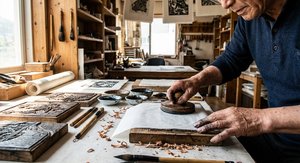
The Enduring Legacy of Woodblock Printmaking: Technique, History & Artistic Expression
Explore the rich history of woodblock printmaking – from ancient techniques to Ukiyo-e masterpieces. Discover expert insights on collecting, preserving & appreciating this enduring art form.