 Preview
 Send
Send Share
Share
 Details

 Download
 Similars
 X-Ray
X-Ray Diaporama
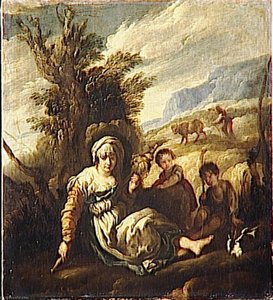
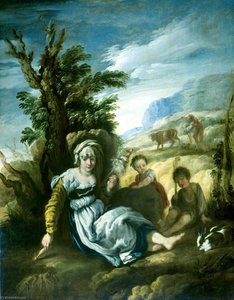
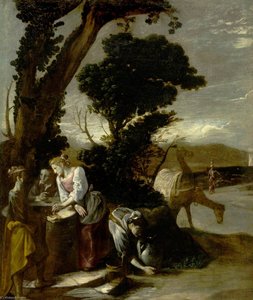
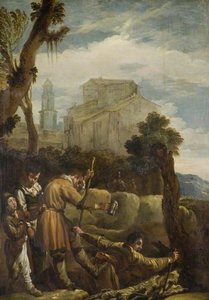
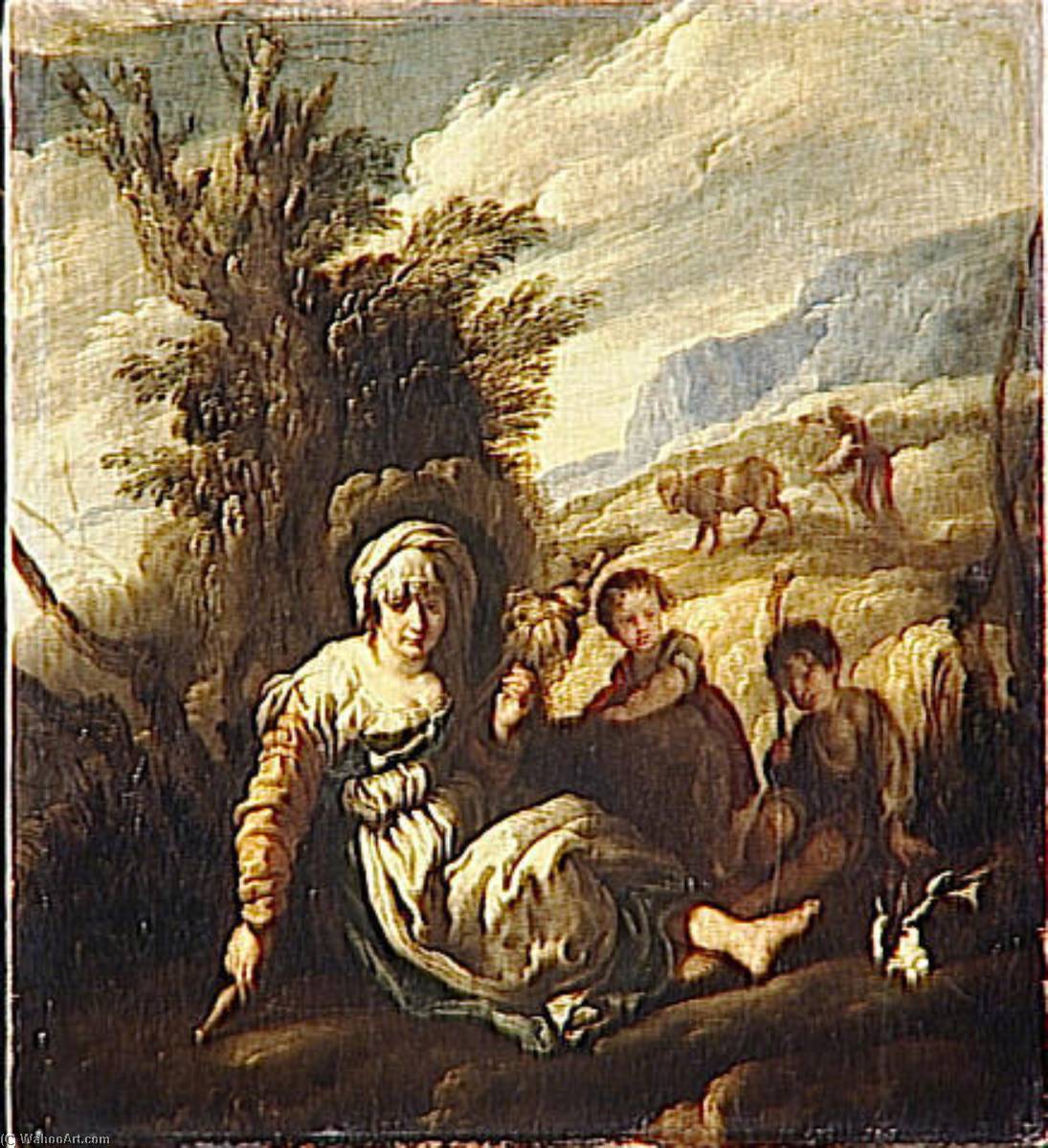
LE PREMIER AGE EVE FILANT ET ADAM LABOURANT, dit aussi LA VIE CHAMPETRE, ou LA FILEUSE


 Read More
Hand Made Oil Reproduction
Hand-painted oil on canvas in your size and frame, made to order by our artists. ( Buy Print Buy Image)




P118B $10

P118H $10

P118W $10

P438Z $10

P508JH $12

P508YH $12

P805H $10

P805Z $10

P919BZ $10

P919G $10

P919XJ $10

P959ZH $10

P968JZ $12

W106C $8

W218G $10

W218JH $8

W218Y $10

W307PJ $10

W316G $10

W316PJ $8

W316Y $10

W398PJ $8

W4111J $10

W500HY $15

W500JH $15

W692G $12

W849H $8

W940BG $15

W953PJ $8




Pick from our preset sizes that match the artwork's original proportions.

You may enter your own dimensions to fit a specific frame or space. If your selected size does not match the original image's proportions, we will either crop the artwork or extend the painting with additional hand-painted elements. A digital mockup will be sent for your approval before production begins.
Please note that the on-screen preview does not reflect the actual cropping or extension. Only the mockup will accurately show the final composition.
While custom sizes are available, we recommend selecting a dimension from the predefined list to preserve the original proportions.
After order, ArtsDot.com team will email client for instructions and provide a mockup preview
Worldwide Delivery () in 3/4 weeks instead of standard 5 weeks. (16 August). No compromise on quality.

Free Worldwide Express Shipping

High-Quality Linen Canvas

Full Shipping Insurance

Customs Tax Refund Guarantee

True Color Matching Guarantee

60-Day Return Policy (Defects Only)

100% Money-Back Guarantee

Bulk Discount Offer
 Glass option is only available in size under 110 CM

LE PREMIER AGE EVE FILANT ET ADAM LABOURANT, dit aussi LA VIE CHAMPETRE, ou LA FILEUSE
Reproduction Medium
Reproduction Size
-


Total Price
$ 263
Artwork Description
A Tender Genesis: Domenico Fetti’s “Eve Filant et Adam Labourant”
Domenico Fetti's "Le Premier Âge : Ève filant et Adam labourant," often referred to as “Eve Filant and Adam Labourant,” is more than just a depiction of the biblical narrative; it’s a poignant meditation on humanity’s nascent state, brimming with quiet dignity and understated emotion. Painted in Rome around 1613-1614, during his time working for Cardinal Federico Borromeo in Milan, this small yet profoundly moving canvas offers a glimpse into the burgeoning Baroque style while retaining elements of Mannerism's lingering influence. The scene unfolds simply: Adam, clad in roughspun garments, diligently toils at a rudimentary plow, his brow furrowed with effort, while Eve, her face turned towards him, tenderly nurses their infant son. A small bird rests on her lap, adding a touch of delicate beauty to the otherwise earthy tableau.A Synthesis of Styles: Mannerism and the Dawn of Baroque
Fetti’s work exemplifies the transitional period between these two artistic movements. The composition itself is rooted in Mannerist principles – figures are rendered with a subtle elongation, creating an almost dreamlike quality. Note particularly the slightly compressed perspective and the carefully controlled use of light and shadow, hallmarks of the style. However, Fetti skillfully incorporates Baroque elements: a heightened sense of realism, a greater attention to detail in depicting textures like Adam’s clothing and Eve's shawl, and most importantly, an intense focus on conveying psychological depth through facial expressions. The subtle sadness in Adam’s eyes, the gentle affection between mother and child – these are not merely decorative details but crucial components of the painting’s emotional resonance. The use of muted earth tones—ochres, browns, and greys—further contributes to a sense of groundedness and realism, anchoring the scene within a tangible reality.Symbolism Woven into the Scene
Beyond the straightforward biblical narrative, "Eve Filant et Adam Labourant" is rich in symbolic meaning. The act of labor represents humanity’s initial connection to the earth, a necessary struggle for survival and sustenance. Eve's nurturing role underscores her position as the first caregiver, embodying compassion and domesticity – values highly prized during the early 17th century. The presence of the bird is particularly significant; often interpreted as a symbol of hope, innocence, or divine grace, it serves to elevate the scene beyond a simple depiction of daily life. The infant son represents the future of humanity, a testament to the promise of new beginnings and the continuation of God’s creation. It's a visual representation of the core tenets of faith and family.Emotional Resonance and Lasting Impact
What truly elevates this painting is its ability to evoke a profound sense of empathy and quiet contemplation. Fetti masterfully captures the vulnerability and tenderness of this early human family, inviting viewers to connect with their shared experience of hardship and love. The scene isn’t grand or dramatic; it's intimate and deeply affecting. It speaks to the universal themes of labor, devotion, and the enduring bond between parents and child. The painting’s understated beauty and emotional honesty have ensured its place as a significant work within Fetti’s oeuvre and a compelling example of the artistic transition from Mannerism to Baroque. Reproductions offer an accessible way to experience this powerful artwork, bringing its timeless message into any space.- Artist: Domenico Fetti (1589-1623)
- Date: c. 1613-1614
- Medium: Oil on canvas
- Location: Courtauld Institute of Art, London (original), various museums and private collections worldwide.
Related Artworks
Artist Biography
The Luminescent Transition: The Life and Legacy of Domenico Fetti
In the grand tapestry of Italian art history, few threads are as vibrant yet fleeting as that of Domenico Fetti. Born in Rome around 1589, Fetti emerged during a period of profound aesthetic metamorphosis, acting as a vital bridge between the stylized elegance of Mannerism and the raw, theatrical power of the Roman Baroque. The son of a painter, Pietro Fetti, Domenico was immersed in the language of pigments and light from his earliest years. His formative training in Rome under masters such as Ludovico Cigoli and Andrea Commodi provided him with a sophisticated foundation, blending the intricate compositions of the late Renaissance with an emerging interest in the dramatic chiaroscuro that would soon define the seventeenth century.
Fetti’s journey was one of movement and prestigious patronage, reflecting the shifting political and cultural landscapes of Italy. His departure from Rome to Mantua in 1613 marked a significant milestone in his professional ascent. It was here, under the watchful eye of Cardinal Ferdinando I Gonzaga, that Fetti truly began to manifest his unique artistic voice. The monumental commission of The Miracle of the Loaves and Fishes for the Palazzo Gonzaga stands as a testament to this era. In this work, one can observe the artist grappling with the Caravaggisti influence—utilizing deep shadows and intense realism to evoke a sense of divine presence within the human realm. This period in Mantua allowed him to refine a style that was simultaneously grand enough for princely halls yet intimate enough to capture the subtle nuances of human emotion.
A Mastery of Light, Genre, and Emotion
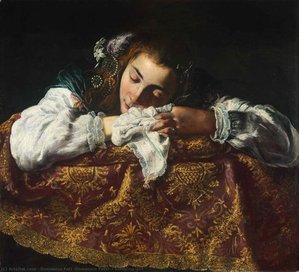
As Fetti’s career progressed, his artistic evolution took him toward the luminous atmosphere of Venice. This relocation in 1622 introduced a new layer of complexity to his palette, as he began to integrate the soft, atmospheric qualities characteristic of Venetian painting with the dramatic tension learned in Rome. His repertoire became remarkably diverse, ranging from profound religious narratives to tender, everyday scenes. He possessed a rare ability to elevate the mundane into the monumental; whether depicting the serene labor in Adam and Eve at Work or the quiet, introspective stillness of a Sleeping Girl, Fetti imbued his subjects with a psychological depth that resonated far beyond the canvas.
The technical brilliance of Fetti lies in his ability to manipulate light to direct the viewer's soul. His works often feature:
- Dramatic Contrast: A sophisticated use of shadow to create volume and a sense of theatrical presence.
- Intimate Narratives: A focus on small, poignant moments that invite the observer into a private world of biblical or genre-based storytelling.
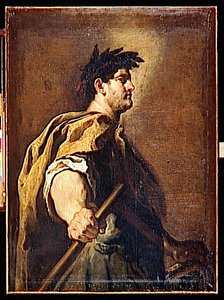
- Expressive Brushwork: A technique that balances the precision required for portraiture, such as in L'Emperheur Domitien, with a fluid, painterly energy.
Though his life was tragically short, ending in 1623 at the age of only thirty-four, Domenico Fetti left behind an indelible mark on the Baroque movement. He did not merely follow the trends of his time; he synthesized them, creating a style that captured the tension between the old world of artifice and the new world of naturalism. Today, his works remain essential touchstones for understanding how the shadows of Mannerism gave way to the brilliant, emotive light of the Baroque era.
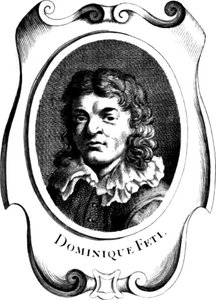
domenico feti (domenico fetti)
1589 - 1623 , Italy
Quick Facts
- Artistic Movement Or Style: Baroque painting; Caravaggisti style
- Artists Who Influenced This Artist:
- Ludovico Cigoli
- Andrea Commodi
- Date Of Birth: Rome, Italy (1589)
- Date Of Death: 16 April 1623
- Full Name: Domenico Fetti
- Nationality: Italian
- Notable Artworks:
- The Parable of Lazarus and the Rich Man
- Saint Mary Magdalene Penitent
- David with the Head of Goliath
- Place Of Birth: Rome
Related Articles

Baroque Masterpieces: 10 Paintings That Defined an Era |
Journey through the drama & grandeur of Baroque art! Explore 10 masterpieces by Caravaggio, Rembrandt, Rubens & more. Discover stunning oil paintings, rich colors & timeless stories. Find museum-quality reproductions at .

The Dramatic Flourish: Exploring the Baroque Movement's Enduring Legacy in Art History
Explore the dramatic world of Baroque art! Discover iconic artists like Caravaggio & Rubens, defining techniques, and its lasting impact on art history. Expert insights for collectors & enthusiasts at ArtsDot.

Baroque Drama: Bringing Opulence & Emotion into Contemporary Interiors
Explore the opulent world of Baroque interior design! Discover key elements, modern applications & how to bring dramatic elegance into your home with 's authentic reproductions.

The Visceral Stage: Exploring Dramatic Narratives & Emotional Intensity in Baroque Art
Explore the dramatic world of Baroque art! Discover iconic masters like Caravaggio & Rembrandt, their techniques, and the movement's lasting impact. Expert insights for collectors & enthusiasts at ArtsDot.
Theatricality & Triumph: Baroque Drama in Painting & Sculpture
Explore the dramatic world of Baroque art! Discover its history, defining characteristics, & lasting influence on painting & sculpture. Expert insights into Caravaggio, Zurbarán, and Bernini – plus high-quality reproductions at ArtsDot.