 Preview
 Send
Send Share
Share
 Details

 Download
 Similars
 X-Ray
X-Ray Diaporama
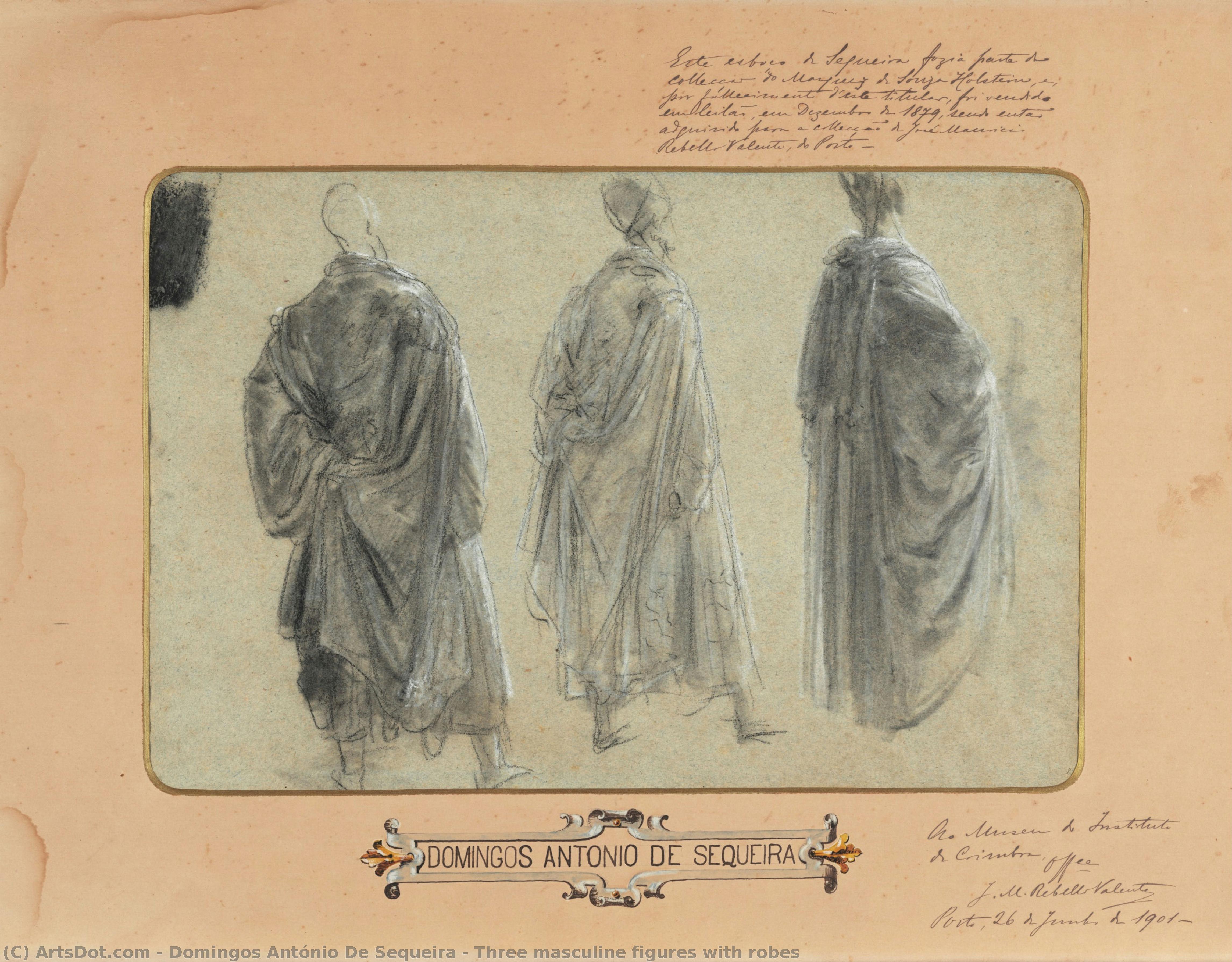
Three masculine figures with robes
 Charcoal
- WallArt
- Neoclassicism
 1833
1833- 19th Century
 29.0 x 43.0 cm
 Machado de Castro National Museum
 Read More
Hand Made Oil Reproduction
Hand-painted oil on canvas in your size and frame, made to order by our artists. ( Buy Print Buy Image)




































Pick from our preset sizes that match the artwork's original proportions.

You may enter your own dimensions to fit a specific frame or space. If your selected size does not match the original image's proportions, we will either crop the artwork or extend the painting with additional hand-painted elements. A digital mockup will be sent for your approval before production begins.
Please note that the on-screen preview does not reflect the actual cropping or extension. Only the mockup will accurately show the final composition.
While custom sizes are available, we recommend selecting a dimension from the predefined list to preserve the original proportions.
After order, ArtsDot.com team will email client for instructions and provide a mockup preview
Worldwide Delivery () in 3/4 weeks instead of standard 5 weeks. (17 August). No compromise on quality.

Free Worldwide Express Shipping

High-Quality Linen Canvas

Full Shipping Insurance

Customs Tax Refund Guarantee

True Color Matching Guarantee

60-Day Return Policy (Defects Only)

100% Money-Back Guarantee

Bulk Discount Offer
 Glass option is only available in size under 110 CM

Three masculine figures with robes
Reproduction Medium
Reproduction Size
-


Total Price
$ 263
Artwork Description
A Study in Shadow and Light
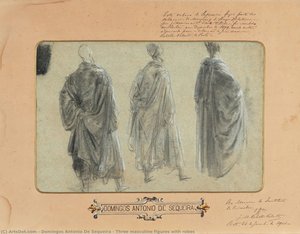
In the quiet intimacy of Domingos António de Sequeira’s 1833 sketch, we are invited into a private moment of artistic contemplation. This charcoal and white chalk drawing, titled Three masculine figures with robes, transcends its humble origins as a preparatory study to become a profound meditation on form and texture. The composition centers on three male figures, draped in heavy, expansive robes that envelop their bodies, creating a rhythmic flow of fabric across the paper. There is an undeniable sense of stillness in their pose; they lie or recline with a shared gravity, their presence anchored by the weight of their garments. Through the masterful use of charcoal, Sequeira captures the deep, velvety shadows that define the folds of the cloth, while delicate applications of white chalk act as sudden, brilliant highlights, tracing the edges of the drapery where light strikes the surface.
The technique employed here reveals the raw, tactile essence of the artist's process. The drawing is not merely a depiction of men, but an exploration of how light interacts with complex surfaces. One can almost feel the grit of the charcoal and the crispness of the chalk. A charming, historical detail remains visible in the upper left corner—a small spot of coal, a lingering vestige of the artist sharpening his tool. This tiny imperfection serves as a poignant reminder of the physical act of creation, connecting the modern viewer to the nineteenth-century studio where Sequeira labored. The way the light is applied laterally across the figures creates a sculptural quality, giving the two-dimensional medium a remarkable sense of three-dimensional volume and depth.
Timeless Elegance for the Modern Collector
For the discerning collector or interior designer, this piece offers a sophisticated bridge between classical academic tradition and contemporary minimalist aesthetics. The monochromatic palette—composed of deep blacks, soft greys, and luminous whites—allows it to integrate seamlessly into a variety of high-end environments, from a moody, dark-toned study to a bright, airy gallery space. The subject matter, while rooted in the 1830s, possesses an eternal quality; the focus on drapery and human form evokes the grandeur of classical antiquity, making it a perfect centerpiece for those looking to add a sense of historical weight and intellectual depth to a room.
Choosing a high-quality reproduction of this work means bringing more than just a visual element into a home; it is about capturing an atmosphere of quiet introspection. The subtle textures of the charcoal and the intentionality of every stroke provide a focal point that encourages slow looking and deep appreciation. Whether placed in a curated collection or used to anchor a large-scale wall arrangement, Three masculine figures with robes serves as a testament to the enduring power of the sketch—a window into a moment where light, shadow, and human presence converge in perfect, silent harmony.
Related Artworks
Artist Biography
Giovanni Antonio Canal, Known as Canaletto: A Venetian Master of Light and City
Giovanni Antonio Canal, universally known as Canaletto (1697-1768), stands as a pivotal figure in the history of Western art. Born into a family steeped in theatrical design – his father was a scene painter – Canaletto’s artistic journey began not with grand commissions but with humble beginnings assisting his father and brother, crafting backdrops for Venetian opera houses. This early exposure to visual storytelling, combined with an innate observational skill, laid the foundation for his extraordinary career as a *veduta* painter, specializing in meticulously rendered views of Venice and later, London. His legacy rests not just on technical mastery but also on capturing the very essence of urban life – the play of light, the bustle of commerce, and the quiet dignity of everyday existence.
Canaletto’s artistic development was profoundly shaped by his Venetian surroundings. The city itself—a labyrinth of canals, bridges, and palazzi bathed in the unique quality of northern Italian light—provided an inexhaustible source of inspiration. Initially, he produced small-scale paintings for private patrons, intimate studies of architectural details and local scenes – works like “The Stonemason’s Yard” (circa 1727) exemplify this early period. These pieces demonstrate a remarkable attention to detail, a keen understanding of perspective, and an ability to imbue even the most mundane subjects with a sense of atmosphere. However, recognizing the lucrative potential of catering to the burgeoning tourist trade, Canaletto shifted his focus towards larger-scale, more elaborate *vedute* designed for sale to visitors. This shift didn’t represent a decline in quality; rather, it showcased his ability to synthesize observation and artistic skill into commercially successful works.
The Rise of the Workshop and the ‘Formulaic’ Painting
As Canaletto's fame grew, he increasingly relied on a workshop system to meet the demands of a rapidly expanding market. While he remained the principal designer and oversaw the overall composition and color palette, his assistants – notably his nephew Bernardo Bellotto – executed much of the painting process. This collaborative approach allowed Canaletto to produce an astonishing volume of work, documenting Venice’s architectural evolution and capturing its vibrant social life. These later works, often depicting grand ceremonies or public events like “Regatta on the Grand Canal” (1730), are characterized by their polished surfaces, bright colors, and a certain degree of schematic precision. Critics initially questioned the authenticity of these paintings, suggesting that Canaletto was merely a facilitator, relying on his assistants to carry out the actual painting. However, careful examination reveals Canaletto’s meticulous control over the design, color scheme, and overall aesthetic – he wasn't simply delegating; he was orchestrating.
A Journey North: London and Beyond
In 1746, at the invitation of Joseph “Consul” Smith, a wealthy British merchant and art collector, Canaletto embarked on a significant chapter in his career – a decade spent painting in England. This period marked a crucial evolution in his style. He moved beyond purely topographical representations, incorporating elements of *capriccio*, imaginary landscapes that blended real and invented features. His London paintings—including “Eton College” (1746) and views of Warwick Castle and Alnwick Castle – demonstrate a heightened sense of drama and an exploration of compositional possibilities. The English market proved exceptionally receptive to Canaletto’s work, fueled by Smith's astute business acumen and the patronage of King George III. The success in England solidified his reputation as one of Europe’s leading landscape painters.
Legacy and Influence
Canaletto’s impact on art history is undeniable. He elevated *veduta* painting to a new level of sophistication, establishing a standard for accuracy, detail, and atmospheric rendering that influenced generations of artists. His meticulous observation, combined with his artistic sensibility, created images that are not merely representations of reality but evocative glimpses into the soul of cities. Beyond his technical achievements, Canaletto’s work offers a unique window into 18th-century Venice and London—a testament to the enduring appeal of urban landscapes and the power of art to capture the spirit of a place and its people. His legacy continues to inspire artists today, reminding us of the beauty and complexity that can be found in the everyday world.
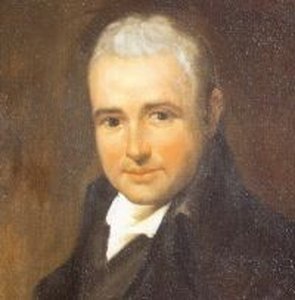
domingos antónio de sequeira
1768 - 1837 , Portugal
Quick Facts
- Artistic Movement Or Style: Veduta painting
- Artists Or Movements Influenced By This Artist:
- William Marlow
- Samuel Scott
- Artists Who Influenced This Artist:
- Luca Carlevaris
- Bernardo Bellotto
- Date Of Birth: 18 October 1697
- Date Of Death: 19 April 1768
- Full Name: Giovanni Antonio Canal
- Nationality: Italian
- Notable Artworks:
- The Stonemason's Yard
- Regatta on the Grand Canal
- Eton College
- A View of Venice
- Place Of Birth: Venice, Italy
Related Articles

White on Canvas: 10 Masterpieces & Timeless Elegance for Your Home Decor
Explore 10 iconic white paintings by Monet, Whistler & Rothko! Discover the stories behind these serene masterpieces and their impact on art history. Find museum-quality reproductions for your home decor at .

The Nuances of Graphite: Exploring Emotional Depth & Technical Mastery in Pencil Drawing
Explore the captivating world of graphite drawing! Discover its rich history, master essential techniques like chiaroscuro, and learn how artists evoke emotion through this timeless medium. Expert insights for art enthusiasts.
Charcoal & Canvas: 10 Masterpieces of Shadow & Light |
Explore 10 iconic paintings dominated by charcoal tones – from Rembrandt's dramatic chiaroscuro to Goya’s expressive portraits. Discover the stories behind these masterpieces & find museum-quality art reproductions for your home at .

The Subtleties of White: Exploring Absence, Light & Symbolism in Art History
Explore the profound symbolism & history of white in art! From ancient purity to modern abstraction, discover how artists have used absence & light. Expert insights from ArtsDot.
Frederick Bridgman: Anatomical Mastery & the Evolution of Figure Drawing Instruction
Explore the anatomical mastery of George B. Bridgman & his revolutionary figure drawing techniques. Discover how his methods transformed art instruction and continue to inspire artists today. Learn more at ArtsDot.