 Preview
 Send
Send Share
Share
 Details

 Download
 Similars
 X-Ray
X-Ray Diaporama
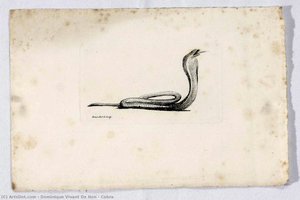
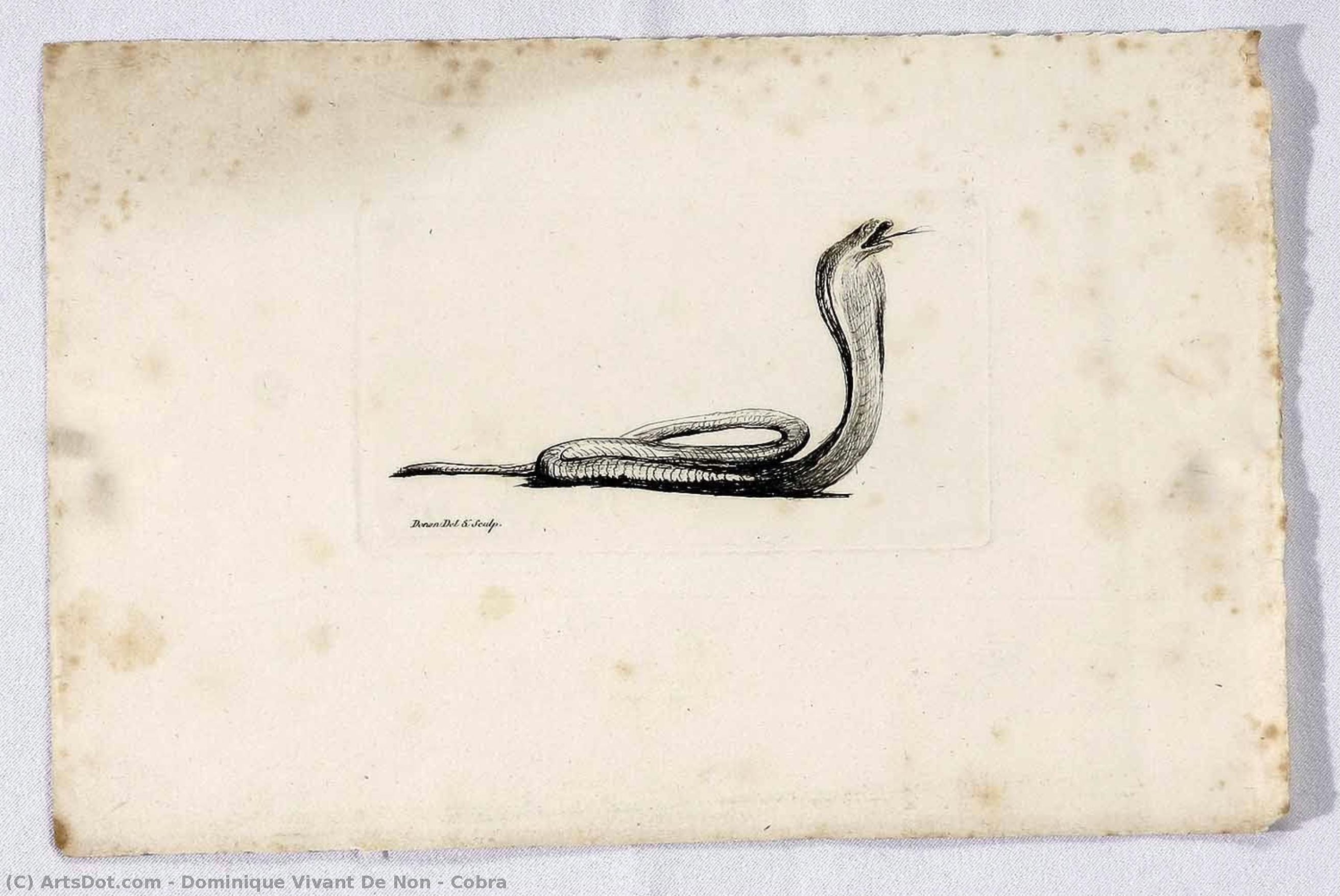
Cobra

 Read More
Hand Made Oil Reproduction
Hand-painted oil on canvas in your size and frame, made to order by our artists. ( Buy Print Buy Image)




































Pick from our preset sizes that match the artwork's original proportions.

You may enter your own dimensions to fit a specific frame or space. If your selected size does not match the original image's proportions, we will either crop the artwork or extend the painting with additional hand-painted elements. A digital mockup will be sent for your approval before production begins.
Please note that the on-screen preview does not reflect the actual cropping or extension. Only the mockup will accurately show the final composition.
While custom sizes are available, we recommend selecting a dimension from the predefined list to preserve the original proportions.
After order, ArtsDot.com team will email client for instructions and provide a mockup preview
Worldwide Delivery () in 3/4 weeks instead of standard 5 weeks. (17 August). No compromise on quality.

Free Worldwide Express Shipping

High-Quality Linen Canvas

Full Shipping Insurance

Customs Tax Refund Guarantee

True Color Matching Guarantee

60-Day Return Policy (Defects Only)

100% Money-Back Guarantee

Bulk Discount Offer
 Glass option is only available in size under 110 CM

Cobra
Reproduction Medium
Reproduction Size
-


Total Price
$ 263
Related Artworks
Artist Biography
A Life Dedicated to Art and Discovery: Dominique Vivant Denon
Dominique Vivant Denon, born in Givry near Chalon-sur-Saône on January 4th, 1747, was a figure of remarkable versatility – a diplomat, writer, artist, archaeologist, and ultimately, the first director of the Louvre Museum. His life unfolded against a backdrop of immense societal change, from the opulence of the French court to the fervor of revolution and the ambition of Napoleon’s empire. Denon wasn't simply an observer of history; he actively shaped it, leaving an indelible mark on the world of art and our understanding of ancient civilizations. Initially destined for a legal career, his passions quickly steered him towards the aesthetic realms of painting, drawing, and literature. A comedy penned in his youth garnered attention, but it was through his charm and intellect that he secured a position within the court of Louis XV, tasked with curating collections for Madame de Pompadour. This early exposure to refined artistry ignited a lifelong pursuit of beauty and knowledge.From Diplomatic Missions to Artistic Exploration
Denon’s diplomatic career spanned Russia, Sweden, Switzerland, and notably, Naples. These assignments weren't merely political endeavors; they were opportunities for artistic immersion. In Naples, he spent seven years meticulously studying ancient monuments, collecting artifacts, and honing his skills in etching and mezzotinto engraving. His encounters with Sir William and Lady Hamilton during this period proved influential, resulting in striking portraits of Lady Hamilton that captured the era’s fascination with classical ideals. The death of his patron, Charles Gravier, comte de Vergennes, prompted his return to Paris in 1787, where he was welcomed into the Académie royale de peinture et sculpture. However, the allure of Italy proved too strong, and he soon found himself back on its shores, residing primarily in Venice and Florence, dedicating himself fully to artistic pursuits. The French Revolution brought upheaval, initially threatening his position but ultimately allowing him to navigate a complex political landscape through his connections with figures like Jacques-Louis David.The Egyptian Campaign and the Birth of Modern Egyptology
Denon’s most significant contribution arguably came during Napoleon Bonaparte's Egyptian campaign (1798–1801). Accompanying Napoleon, he wasn’t merely a chronicler but an active participant in documenting the wonders of ancient Egypt. He became a founding member of the Institut d’Egypte, tirelessly sketching monuments and landscapes, often under perilous conditions. The resulting two-volume publication, *Voyage dans la basse et la haute Egypte* (1802), was revolutionary for its time. It wasn't simply a travelogue; it was a meticulously illustrated account that brought the mysteries of Egypt to a European audience, laying the foundation for modern Egyptology and sparking widespread fascination with the ancient world. The work’s impact extended beyond scholarly circles, influencing art, architecture, and popular culture for generations to come.Director of the Louvre: A Visionary Curator
In 1804, Napoleon appointed Denon as the first director general of the Louvre Museum – a role he held until 1815. He transformed the museum from a royal collection into a public institution accessible to all. He wasn’t simply an administrator; he was a visionary curator who understood the power of art to educate and inspire. During this period, Denon accompanied Napoleon on expeditions throughout Europe, advising him on acquisitions – often involving the controversial “pillage” of artworks from conquered territories. While ethically complex, these actions significantly expanded the Louvre's holdings, establishing it as one of the world’s premier museums. He skillfully arranged exhibitions and publications, making art more widely available and fostering a deeper appreciation for diverse cultures. His legacy is still visible today in the Denon Wing of the museum itself, a testament to his enduring influence.A Lasting Legacy: Art, Diplomacy, and the Pursuit of Knowledge
Dominique Vivant Denon died in Paris on April 27th, 1825, leaving behind a remarkable body of work that spanned multiple disciplines. He was created Baron Denon by Napoleon in 1812, acknowledging his significant contributions to the empire’s cultural ambitions. His life exemplifies the Enlightenment ideal of the polymath – a scholar driven by curiosity and a desire to understand the world through art, literature, and archaeology. His influence extends far beyond his own artistic creations. He not only documented ancient civilizations but also played a pivotal role in shaping how we perceive them today. Denon’s dedication to making art accessible to the public, coupled with his pioneering work in Egyptology, cemented his place as a true visionary and one of the most important figures in the history of art and museums.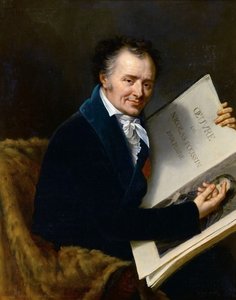
dominique vivant de non
1747 - 1825 , France
Quick Facts
- Artistic Movement Or Style: Orientalism, Neoclassicism
- Date Of Birth: January 4, 1747
- Date Of Death: April 27, 1825
- Full Name: Dominique Vivant Denon
- Nationality: French
- Notable Artworks:
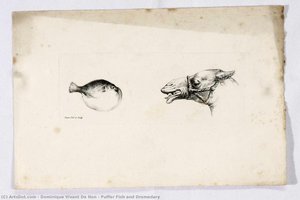
- Puffer Fish and Dromedary
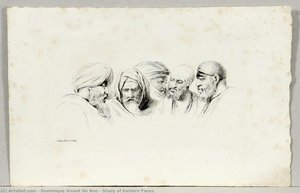
- Study of Eastern Faces
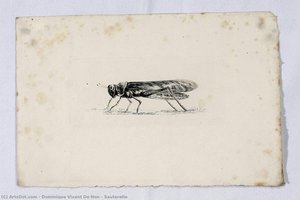
- Sauterelle
- Voyage in Egypt
- Place Of Birth: Chalon-sur-Saône, France