 Preview
 Send
Send Share
Share
 Details

 Download
 Similars
 X-Ray
X-Ray Diaporama
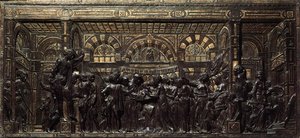
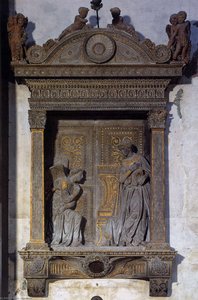
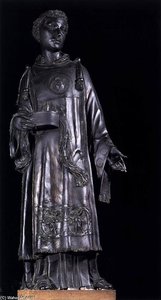
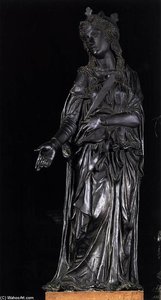
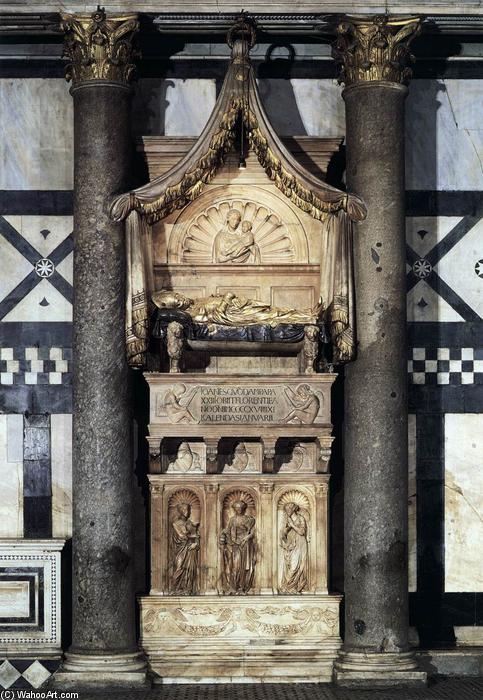
Funeral Monument to John XXIII


 Read More
Hand Made Oil Reproduction
Hand-painted oil on canvas in your size and frame, made to order by our artists. ( Buy Print Buy Image)




P118B $10

P118H $10

P118W $10

P438Z $10

P508JH $12

P508YH $12

P805H $10

P805Z $10

P919BZ $10

P919G $10

P919XJ $10

P959ZH $10

P968JZ $12

W106C $8

W218G $10

W218JH $8

W218Y $10

W307PJ $10

W316G $10

W316PJ $8

W316Y $10

W398PJ $8

W4111J $10

W500HY $15

W500JH $15

W692G $12

W849H $8

W940BG $15

W953PJ $8




Pick from our preset sizes that match the artwork's original proportions.

You may enter your own dimensions to fit a specific frame or space. If your selected size does not match the original image's proportions, we will either crop the artwork or extend the painting with additional hand-painted elements. A digital mockup will be sent for your approval before production begins.
Please note that the on-screen preview does not reflect the actual cropping or extension. Only the mockup will accurately show the final composition.
While custom sizes are available, we recommend selecting a dimension from the predefined list to preserve the original proportions.
After order, ArtsDot.com team will email client for instructions and provide a mockup preview
Worldwide Delivery () in 3/4 weeks instead of standard 5 weeks. (17 August). No compromise on quality.

Free Worldwide Express Shipping

High-Quality Linen Canvas

Full Shipping Insurance

Customs Tax Refund Guarantee

True Color Matching Guarantee

60-Day Return Policy (Defects Only)

100% Money-Back Guarantee

Bulk Discount Offer
 Glass option is only available in size under 110 CM

Funeral Monument to John XXIII
Reproduction Medium
Reproduction Size
-


Total Price
$ 263
Artwork Description
Donatello’s Funeral Monument to John XXIII: A Testament to Renaissance Grief
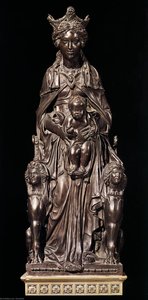
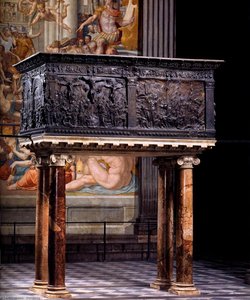
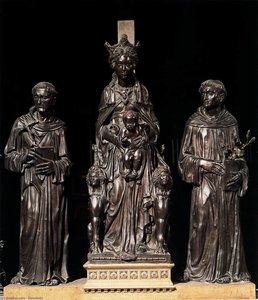
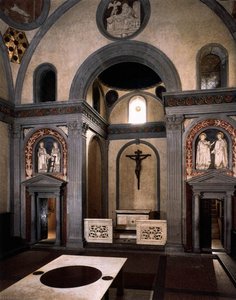
Donatello’s monumental sculpture of Antipope John XXIII stands as an arresting emblem of the tumultuous era that birthed the High Renaissance in Florence – a period marked by papal schism, political intrigue, and profound spiritual reflection. Commissioned by Baldassare Cossa's executors after his untimely demise in 1419, this masterpiece wasn’t merely a funerary tribute; it was an ambitious artistic statement grappling with themes of mortality, faith, and the enduring legacy of papal authority.
- Contextual Significance: The sculpture emerged during the Great Schism, a crisis that fractured Christendom into rival papal claimants. Its placement within the Baptistery of St. John – alongside Michelangelo’s Pietà – underscored Florence's commitment to artistic excellence and its assertion of cultural leadership amidst religious division.
- Stylistic Innovation: Donatello departed from the prevailing Gothic style, embracing a distinctly humanist aesthetic informed by classical ideals. The sculpture’s monumental scale and meticulous detailing exemplify the Renaissance fascination with proportion and naturalism, reflecting a renewed interest in Greco-Roman art and philosophy.
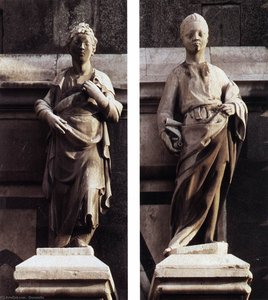
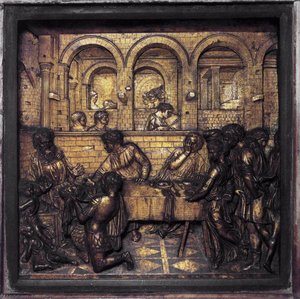
- Technical Mastery: Crafted primarily from Carrara marble and bronze, the monument showcases Donatello's unparalleled skill in sculpting both stone and metal. The intricate reliefs depicting Faith, Love, and Hope—executed with astonishing precision—demonstrate his mastery of carving techniques and his ability to convey complex emotions through sculptural form.
- Symbolic Representation: Each element of the sculpture carries profound symbolic weight. The draped sarcophagus symbolizes death itself, while the Madonna and Child figure embodies divine compassion and maternal care. The four corbels supporting the sarcophagus are adorned with emblems representing the virtues—faith, hope, charity, and prudence—reflecting Cossa’s piety and reaffirming Christian values.
- Emotional Impact: Viewing Donatello's Funeral Monument evokes a palpable sense of solemn reverence. Its austere beauty and masterful craftsmanship compel contemplation on themes of loss, remembrance, and the enduring power of art to transcend time and convey universal human emotions.
The sculpture’s influence extended far beyond its immediate surroundings, inspiring subsequent funerary monuments throughout Italy and establishing Donatello as a pivotal figure in shaping Renaissance artistic sensibilities.
Detailed Examination of Composition and Technique
Donatello's meticulous approach to sculpting involved painstaking carving of Carrara marble, utilizing tools honed over decades of experience. The sculptor skillfully employed techniques such as Buon Fresco (indirect painting) and Patina—a chemical reaction that creates a protective surface layer—to achieve remarkable textural depth and luminosity. Furthermore, the bronze effigy of John XXIII was cast using the lost-wax method, ensuring exceptional accuracy and detail.
Historical Context: The Great Schism and Florentine Patronage
The commission for this monumental sculpture arose from a complex political landscape dominated by papal disputes. Florence’s republican elite recognized Donatello's genius and actively supported his artistic endeavors, securing him patronage from influential families like the Medici. This collaboration exemplifies the flourishing cultural environment of Renaissance Florence—a crucible of innovation where artists thrived under the auspices of enlightened rulers.
Interpretations and Legacy
Art historians continue to debate the sculpture’s symbolic meanings and its role in shaping artistic conventions. Nevertheless, Donatello's Funeral Monument to John XXIII remains an undisputed masterpiece—a testament to Renaissance artistry and a poignant meditation on mortality and faith that continues to resonate with audiences today.
Related Artworks
Artist Biography
early life and career
donato di niccolò di betto bardi, known as donatello, was born in florence, italy around 1386. he studied classical sculpture, which heavily influenced his development of an early renaissance style. this new approach to art and culture would eventually become the hallmark of the florentine renaissance.key works and innovations
donatello's most famous work, david, was the first freestanding nude male sculpture since antiquity. commissioned by the medici family, it showcased his innovative style and technical expertise. other notable works include:- st. louis of toulouse (now in the museum of the basilica di santa croce), which featured a classical frame designed by donatello.
- the sacrifice of isaac, created for the campanile of santa maria del fiore in florence, characterized by strong portrait details.
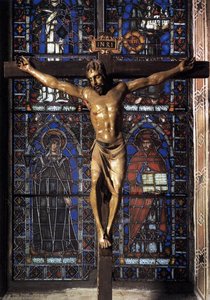
- crucifix (1425) for santa croce, which portrayed christ in a moment of agony.
artistic style and legacy
donatello's style can be divided into broad phases, beginning with the development of expressiveness and classical monumentality. his work was not immediately accepted by the community but eventually became the most popular, influencing other italian courts and european artists. key art movements:personal life and working style
donatello was known for being amiable and well-liked, but poor at the business side of his career. he tended to accept more commissions than he could handle, often completing works late or handing them over to other sculptors. notable artworks and artists:- leonardo da vinci: annunciation (detail)
- amico aspertini: statua di pan/leone che azzanna un cavallo
- michelangelo buonarroti: tondo pitt
museums and art collections:
- museo della collegiata (empoli, italy): a hidden gem of the renaissance, featuring works by francesco botticini and raffaello botticini.
- the early italian renaissance art movement
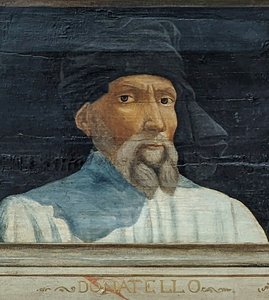
Donatello
1386 - 1466 , Italy
Quick Facts
- Artistic Movement Or Style: Early Renaissance
- Artists Or Movements Influenced By This Artist:
- Italian Renaissance
- Early Renaissance
- Florentine Renaissance
- Artists Who Influenced This Artist: ['Classical sculpture']
- Date Of Birth: c. 1386
- Date Of Death: 1466
- Full Name: Donatello di Niccolò
- Nationality: Italian
- Notable Artworks:
- David
- St. Louis of Toulouse
- Sacrifice of Isaac
- Crucifix
- Place Of Birth: Florence, Italy
Related Articles

Bronze Sculptures That Defined Art History | ArtsDot
Journey through art history with our Top 10 bronze sculptures! Explore masterpieces by Rodin, Michelangelo & more. Discover stories behind iconic statues and find museum-quality reproductions for your home decor at ArtsDot.com.

John Singer Sargent's 25 Masterpieces: Portraits & Beyond | ArtsDot
Explore 25 iconic John Singer Sargent paintings – from dazzling portraits to Impressionist landscapes. Discover the stories behind Madame X, El Jaleo & more! Find museum-quality art reproductions and elevate your home decor with ArtsDot.com.

John Constable's Masterpieces: Explore 25 Iconic Landscapes for Your Home
Journey through John Constable's 25 most celebrated landscapes. Explore Romanticism, Dedham Vale & his masterful use of light in iconic paintings like 'Hay Wain'. Find museum-quality art reproductions and elevate your home decor on ArtsDot.com.

Bronze Age to Modern Masters: 10 Sculptures That Redefined Art | ArtsDot
Journey through art history with 10 legendary bronze sculptures – from Michelangelo's David to Rodin’s Thinker. Explore the stories, techniques & timeless beauty of these masterpieces. Find museum-quality reproductions & elevate your home decor on ArtsDot.com.

The Enduring Form: Exploring Themes & Techniques in Sculpture Across Historical Periods
Explore the rich history of sculpture from ancient masterpieces to contemporary innovations. Discover key techniques, influential artists & investment potential for discerning art collectors.