 Preview
 Send
Send Share
Share
 Details

 Download
 Similars
 X-Ray
X-Ray Diaporama
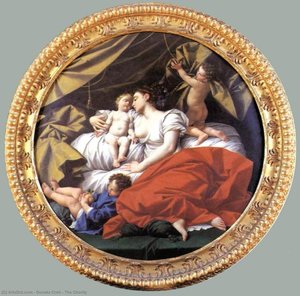
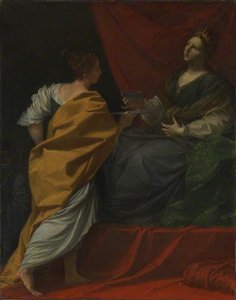
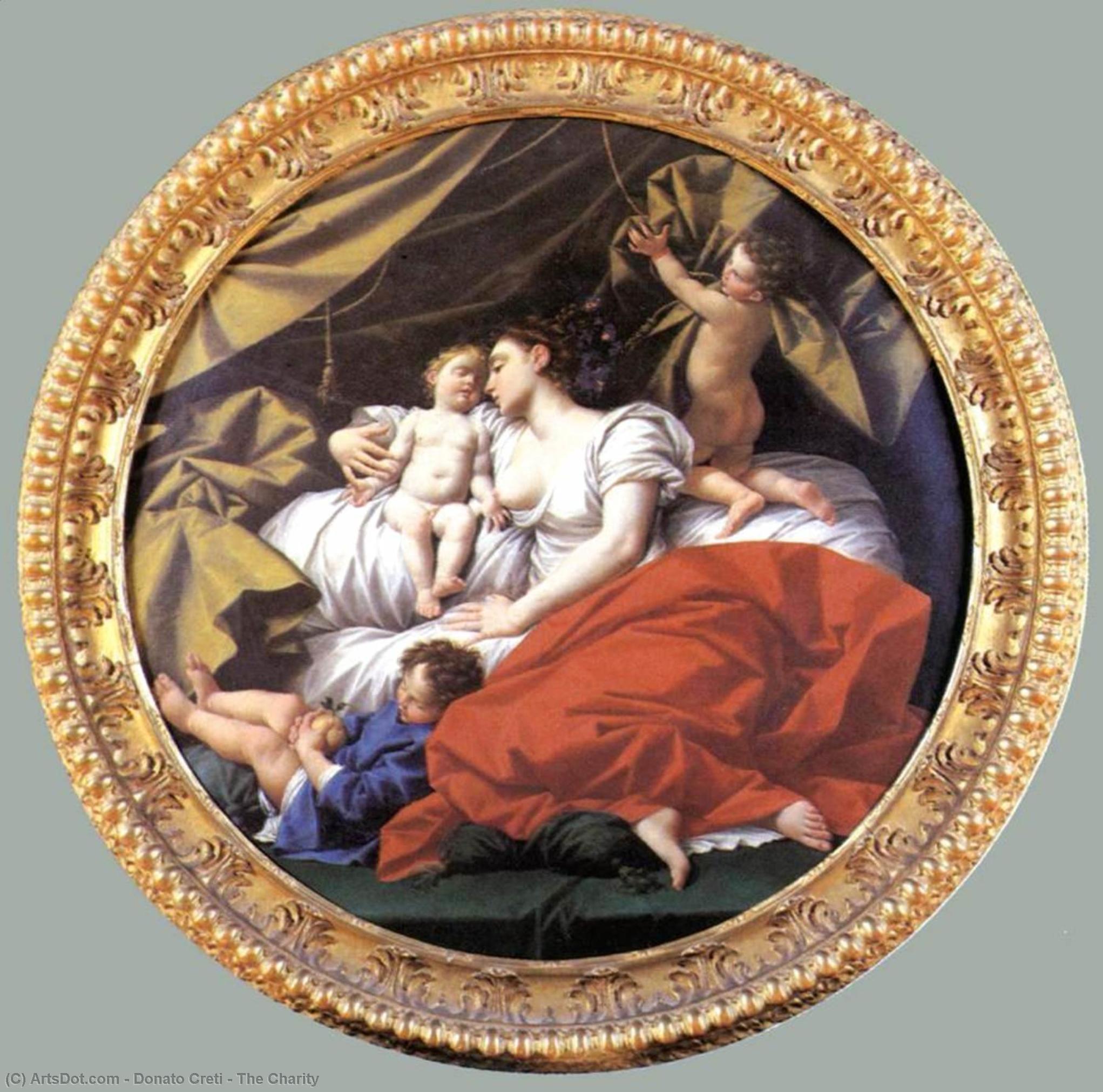
The Charity
 Neoclassicism
 1745
1745 79.0 x 79.0 cm
 Palazzo d'Accursio
 Read More
Hand Made Oil Reproduction
Hand-painted oil on canvas in your size and frame, made to order by our artists. ( Buy Print Buy Image)




P118B $10

P118H $10

P118W $10

P438Z $10

P508JH $12

P508YH $12

P805H $10

P805Z $10

P919BZ $10

P919G $10

P919XJ $10

P959ZH $10

P968JZ $12

W106C $8

W218G $10

W218JH $8

W218Y $10

W307PJ $10

W316G $10

W316PJ $8

W316Y $10

W398PJ $8

W4111J $10

W500HY $15

W500JH $15

W692G $12

W849H $8

W940BG $15

W953PJ $8




Pick from our preset sizes that match the artwork's original proportions.

You may enter your own dimensions to fit a specific frame or space. If your selected size does not match the original image's proportions, we will either crop the artwork or extend the painting with additional hand-painted elements. A digital mockup will be sent for your approval before production begins.
Please note that the on-screen preview does not reflect the actual cropping or extension. Only the mockup will accurately show the final composition.
While custom sizes are available, we recommend selecting a dimension from the predefined list to preserve the original proportions.
After order, ArtsDot.com team will email client for instructions and provide a mockup preview
Worldwide Delivery () in 3/4 weeks instead of standard 5 weeks. (17 August). No compromise on quality.

Free Worldwide Express Shipping

High-Quality Linen Canvas

Full Shipping Insurance

Customs Tax Refund Guarantee

True Color Matching Guarantee

60-Day Return Policy (Defects Only)

100% Money-Back Guarantee

Bulk Discount Offer
 Glass option is only available in size under 110 CM

The Charity
Reproduction Medium
Reproduction Size
-


Total Price
$ 263
Artwork Description
Donato Creti: Bridging Baroque Grandeur with Neoclassical Restraint – An Exploration of ‘The Charity’
Donato Creti (1671-1749) stands as a pivotal figure in the artistic landscape of Bologna and, more broadly, the transition from the opulent Baroque to the emerging neoclassical aesthetic. While overshadowed by contemporaries like Caravaggio and Bernini – masters of dramatic theatricality – Creti carved out a distinctive path, synthesizing influences from both traditions into a singular style characterized by refined elegance and intellectual precision. His oeuvre reveals an artist acutely aware of stylistic developments, subtly adapting techniques and compositional strategies to reflect the evolving sensibilities of his time.
‘The Charity,’ painted in 1745, exemplifies Creti’s masterful blend of Baroque grandeur with neoclassicism's burgeoning emphasis on clarity and restraint. The artwork depicts a serene tableau – a woman cradling two children—a scene imbued with profound symbolic significance rooted in Christian morality. Unlike the turbulent emotionalism prevalent in much Baroque art, Creti employs meticulous modeling and crisp lines to convey an idealized vision of maternal devotion and familial tenderness.
- Style: Neoclassicism – Reflecting Enlightenment ideals of reason and order, Creti’s approach prioritizes geometric precision and harmonious proportions.
- Technique: Oil on Wood – Creti skillfully utilizes oil paints on wood panels to achieve a luminous surface finish and subtle tonal variations that enhance the painting's visual impact.
- Composition: Balanced Symmetry – The central figure is positioned at the apex of the composition, creating a sense of stability and conveying an aura of dignified composure.
- Color Palette: Warm Undertones – Creti employs muted earth tones—primarily ochre and Sienna—to create a tranquil atmosphere that underscores the painting’s spiritual themes.
The artwork's setting—a simple bed and chair—further reinforces its intimate character, inviting contemplation on themes of compassion, nurturing, and familial responsibility. Creti’s deliberate choice to depict these virtues speaks to the broader humanist concerns that underpinned neoclassical art, signaling a move away from purely decorative pursuits toward representations that communicated moral instruction.
Beyond its formal qualities, ‘The Charity’ resonates with an emotional depth achieved through subtle gestures and expressive facial expressions. Creti captures not merely the physical presence of motherhood but also the profound spiritual connection between mother and child—a testament to his artistic sensitivity and his ability to convey complex ideas within a restrained visual framework.
Creti's legacy extends beyond individual masterpieces; he established himself as a teacher, fostering the talents of younger artists who would carry forward his stylistic innovations. His influence can be discerned in subsequent Bolognese painters—a continuing dialogue between tradition and intellectual inquiry that solidified Creti’s place as one of the most important figures in Bolognese Baroque and Neoclassical art.
Donato Creti's contribution to artistic history is undeniable, securing his reputation as a visionary artist who skillfully navigated the stylistic crossroads of his era. ‘The Charity,’ therefore, stands not only as an aesthetically compelling artwork but also as a window into the intellectual and moral landscape of 18th-century Bologna—a testament to Creti’s enduring artistic genius.
Related Artworks


Artist Biography
A Bolognese Bridging Worlds: The Life and Art of Donato Creti
Donato Creti, born in Cremona in 1671 and passing away in Bologna in 1749, occupies a fascinating, if sometimes overlooked, position within the transition from the Baroque to the Rococo and Neoclassical styles. He wasn’t merely swept along by these shifting currents; he actively navigated them, forging a distinctive artistic voice that blended theatrical grandeur with an emerging sense of formal restraint. His father, Gioseffo Creti, was also a painter, though one of more modest renown specializing in architectural depictions – a foundation upon which Donato would build, initially embracing dramatic settings before ultimately moving beyond pure decoration. The family’s relocation to Bologna early in his life proved pivotal, immersing him in the rich artistic heritage of that city and setting the stage for his remarkable career.Formative Years and Artistic Development
Creti's artistic journey began with an apprenticeship under Giorgio Rasparini, but it was his tutelage with Lorenzo Pasinelli that truly shaped his early development. Pasinelli, a key figure connected to the Bolognese school descended from Guido Reni, instilled in him a rigorous academic foundation. Even as a student, Creti displayed exceptional talent, earning the affectionate nickname ‘ragazzino’ – “the boy” – for his precocity and skill. This natural aptitude attracted patronage from Conte Alessandro Fava, a crucial benefactor who provided opportunities for study and creative exploration. Early influences were readily apparent: the dynamic frescoes of the Carracci brothers resonated deeply, while a potential sojourn to Venice exposed him to the vibrant colorism and theatricality of Venetian masters like Veronese. These early works often showcased this Veronese-inspired flair, particularly in their elaborate architectural settings. However, Creti wasn’t content with mere imitation; he absorbed the lessons of Pasinelli but began to cultivate a unique approach that moved beyond decorative flourishes towards a more structured, classically informed sensibility.Celestial Visions and Mythological Narratives
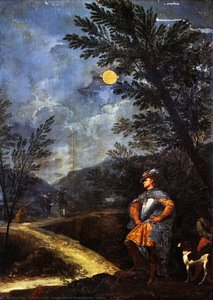
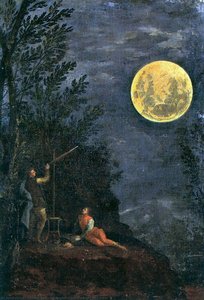
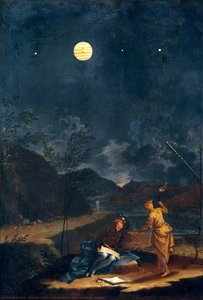
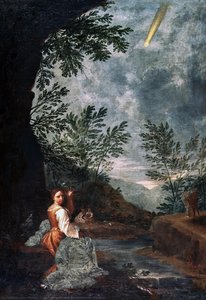
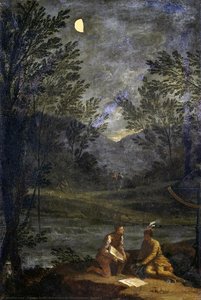
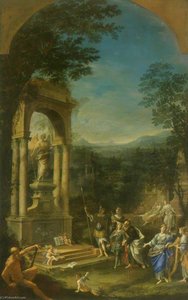
Creti's artistic output was remarkably diverse, encompassing mythological scenes, allegorical compositions, and religious subjects. However, he is perhaps best known for his series of small canvases depicting celestial bodies against nocturnal landscapes – a truly singular contribution to 18th-century art. Commissioned in 1711 by Count Luigi Marsili, these paintings—representing the sun, moon, a comet, and the five then-known planets (Mercury, Venus, Mars, Jupiter, Saturn)—were intended as a diplomatic gift for Pope Clement XI. More than mere aesthetic objects, they served as an advocacy piece, championing the establishment of an astronomical observatory in Bologna. This ambition was ultimately realized with papal support, solidifying Creti’s role not just as an artist but as a cultural advocate. The painting of Jupiter is particularly noteworthy; it features an accurate depiction of the Great Red Spot and at least two of its moons – a testament to Creti's keen observational skills and his engagement with contemporary scientific knowledge. Beyond these astronomical studies, works like *The Mystic Marriage of Saint Catherine of Alexandria* and *Allegorical Tomb of Joseph Addison* demonstrate his mastery of composition, color, and narrative storytelling.A Legacy of Transition and Influence
Art historian Rudolf Wittkower aptly described Creti as the “Bolognese Marco Benefial,” recognizing his pivotal role in bridging the gap between the Rococo’s decorative tendencies and the emerging neoclassical style. He wasn't a radical innovator, but rather a skilled synthesizer who absorbed diverse influences and forged them into something uniquely his own. His work is characterized by an academicized grand style—deliberate, refined, and rooted in classical principles—that evolves into a manneristic neoclassicism with crisp modeling of figures. This blend of elegance and formality resonated with contemporaries and influenced subsequent generations of artists, including Aureliano Milani, Francesco Monti, and Ercole Graziani the Younger. Creti’s unique combination of artistic skill and scientific curiosity makes him a compelling figure in art history—a painter who looked both to the past for inspiration and to the heavens for understanding, leaving behind a legacy that continues to captivate and inspire.Notable Pupils
- Aureliano Milani
- Francesco Monti
- Ercole Graziani the Younger
- Domenico Maria Fratta
- Giuseppe Peroni
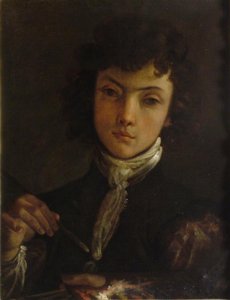
Donato Creti
1671 - 1749 , Italy
Quick Facts
- Artistic Movement Or Style: Rococo, Neoclassicism
- Artists Or Movements Influenced By This Artist:
- Aureliano Milani
- Francesco Monti
- Ercole Graziani
- Artists Who Influenced This Artist:
- Carracci brothers
- Lorenzo Pasinelli
- Paolo Veronese
- Date Of Birth: Feb 24, 1671
- Date Of Death: Jan 31, 1749
- Full Name: Donato Creti
- Nationality: Italian
- Notable Artworks:
- Jupiter
- Mercury and Paris
- Saint Bernardin
- Astronomical Saturn
- Addison's Tomb
- Place Of Birth: Cremona, Italy
Related Articles

Baroque Drama: Bringing Opulence & Emotion into Contemporary Interiors
Explore the opulent world of Baroque interior design! Discover key elements, modern applications & how to bring dramatic elegance into your home with 's authentic reproductions.

Oil on Canvas: A Historical & Technical Exploration of a Timeless Artistic Medium
Explore the rich history & enduring techniques of oil painting on canvas. Discover the science behind its longevity, conservation practices, and contemporary relevance. Expert insights for art enthusiasts.

The Dramatic Flourish: Exploring the Baroque Movement's Enduring Legacy in Art History
Explore the dramatic world of Baroque art! Discover iconic artists like Caravaggio & Rubens, defining techniques, and its lasting impact on art history. Expert insights for collectors & enthusiasts at ArtsDot.

The Enduring Power of Painting: A Historical & Contemporary Exploration of Form and Emotion
Explore the rich history & enduring techniques of oil painting with ArtsDot. Discover masterpieces, learn about art collecting, and find authentic handmade reproductions crafted by skilled artists.

Baroque Masterpieces: 10 Paintings That Defined an Era |
Journey through the drama & grandeur of Baroque art! Explore 10 masterpieces by Caravaggio, Rembrandt, Rubens & more. Discover stunning oil paintings, rich colors & timeless stories. Find museum-quality reproductions at .