 Send
Send Share
Share
 Details

 Download
 Similars
 Diaporama
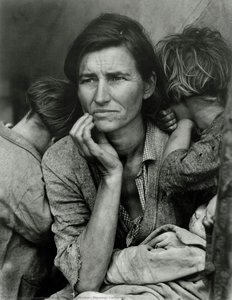
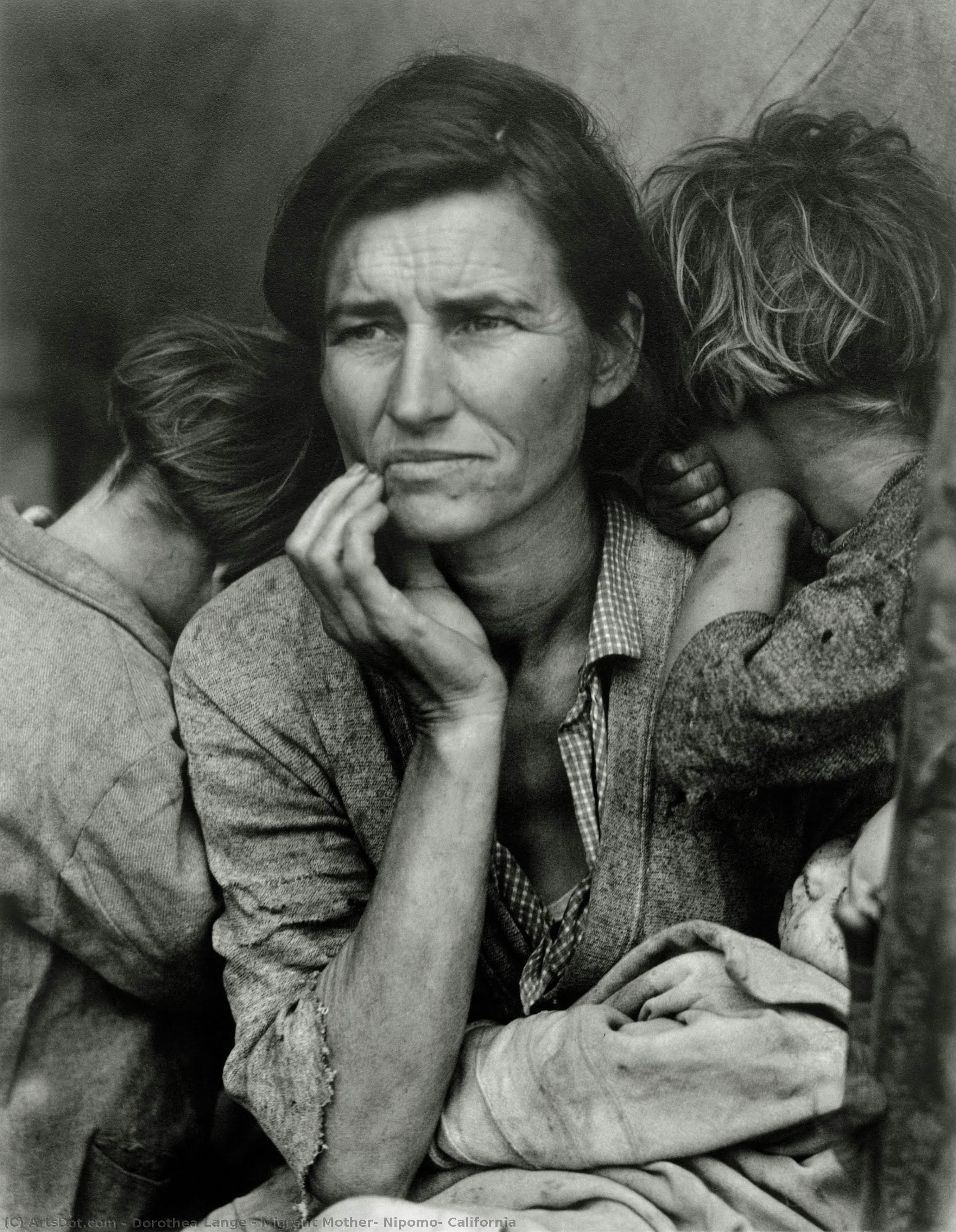
Migrant Mother, Nipomo, California


 Read More
Giclée / Art Print
Museum-quality giclée or canvas print with fast production and flexible finish options. ( Buy Hand Made Painting Buy Image)




































Pick from our preset sizes that match the artwork's original proportions.

You may enter your own dimensions to fit a specific frame or space. If your selected size does not match the original image's proportions, we will either crop the artwork or extend the image with a mirrored or solid-fill edge. A digital mockup will be sent for your approval before production begins.
Please note that the on-screen preview does not reflect the actual cropping or extension. Only the mockup will accurately show the final composition.
While custom sizes are available, we recommend selecting a dimension from the predefined list to preserve the original proportions.
Worldwide Delivery () in 2 weeks instead of standard 4/5 weeks. (24 August)

Free Worldwide Express Shipping

High-Quality Linen Canvas

Full Shipping Insurance

Customs Tax Refund Guarantee

True Color Matching Guarantee

60-Day Return Policy (Defects Only)

100% Money-Back Guarantee

Bulk Discount Offer
 Glass option is only available in size under 110 CM

Migrant Mother, Nipomo, California
Giclée / Art Print
Reproduction Size
-


Total Price
$ 63
Collectible Description
The Face of Resilience: A Glimpse into the Great Depression
In the annals of American history, few images possess the haunting, indelible power of Dorothea Lange’s “Migrant Mother, Nipomo, California.” Captured in the harsh reality of March 1936, this photograph transcends its role as a mere historical document to become a universal icon of human endurance. Through the lens of Lange’s large-format Graflex camera, we are not merely observers of a moment in time; we are witnesses to the profound struggle of the Dust Bowl era. The subject, Florence Owens Thompson, emerges from the grain of the film as a symbol of maternal strength amidst overwhelming economic devastation. Her weathered features and distant, anxious gaze tell a story of survival that resonates far beyond the borders of California, speaking to anyone who has ever faced the unpredictable tides of hardship.
The composition is a masterclass in documentary intimacy. Lange skillfully directs our attention toward the central figure, whose face dominates the frame with an almost sculptural presence. By positioning Thompson slightly off-center, Lange creates an asymmetrical balance that feels organic and unforced, mirroring the instability of the lives being depicted. The two children, nestled against her, turn their faces away from the camera, their vulnerability emphasized by their huddling posture. This choice avoids the voyeurism of a direct portrait, instead inviting the viewer into a private, protective embrace. The blurred, indistinct background strips away all distractions, forcing an inescapable confrontation with the raw emotion etched into the subjects' skin and clothing.
A Symphony of Light and Shadow
Technically, the photograph is a triumph of tonal range and texture. Utilizing the silver gelatin print process, Lange achieved a breathtaking grayscale palette that moves from the deepest, velvety blacks to piercing, brilliant whites. The lighting—likely a soft, diffused natural light—plays across the contours of Thompson’s face, highlighting the fine lines of worry and the rough textures of her clothing. These highlights and shadows do more than provide depth; they create a dramatic chiaroscuro effect that amplifies the psychological weight of the scene. Every fold in the fabric and every strand of hair contributes to a sense of hyper-realism that makes the image feel immediate, as if the air of the Nipomo camp is still heavy with the dust of the Great Depression.
For the discerning collector or interior designer, this reproduction offers more than just a visual centerpiece; it provides an emotional anchor for a space. The stark, monochromatic elegance of the piece allows it to integrate seamlessly into modern, minimalist, or classic academic settings. It serves as a profound conversation starter, embodying themes of empathy, social justice, and the indomable human spirit. To hang this work is to honor the history of photojournalism and to celebrate the artistry of Dorothea Lange, whose empathetic eye transformed a moment of desperate poverty into an eternal monument of grace.
Related Artworks

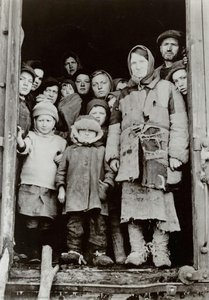
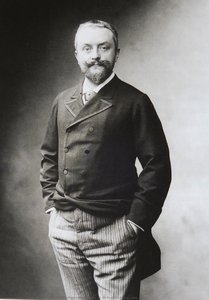
Artist Biography
A Life Etched in Empathy: The World Through Dorothea Lange’s Lens
Dorothea Lange, born Dorothea Margaretta Nutzhorn in Hoboken, New Jersey, in 1895, wasn't simply a photographer; she was a visual historian of the American spirit, particularly during times of profound hardship. Her life story itself held echoes of the resilience she would come to capture in her subjects. A childhood marked by polio, leaving her with a permanent limp, and the abrupt abandonment of her family by her father instilled within her an early awareness of vulnerability and displacement. These personal experiences undoubtedly shaped her empathetic approach to documenting the lives of others. Rather than succumb to a life dictated by circumstance, Lange resolutely pursued her passion for photography, studying under Clarence H. White at Columbia University and establishing herself as a portrait photographer in San Francisco during the 1920s. However, it was the seismic shift brought about by the Great Depression that would truly define her artistic trajectory.Documenting Despair: The FSA Years and the Power of Witness
The 1930s witnessed a dramatic transformation in Lange’s work. She turned her lens away from studio portraiture and towards the stark realities faced by those ravaged by economic collapse. This shift wasn't merely professional; it was deeply moral. Employed by the Resettlement Administration (RA) and later the Farm Security Administration (FSA), she embarked on a journey across rural America, documenting the plight of migrant workers, sharecroppers, and families struggling to survive. Her marriage to economist Paul Schuster Taylor proved pivotal, their collaboration blending economic data with Lange’s poignant imagery to create a powerful narrative of hardship and resilience. They traveled together extensively, particularly in California, witnessing firsthand the devastating effects of drought, displacement, and exploitation. It was during this period that she created some of her most iconic images, photographs that transcended mere documentation and became enduring symbols of an era.Migrant Mother: An Icon Forged in Compassion
Perhaps no single image is more synonymous with the Great Depression than Lange’s *Migrant Mother* (1936). The photograph, depicting Florence Owens Thompson, a destitute pea picker and her children, isn't simply a record of poverty; it’s an embodiment of human dignity in the face of unimaginable adversity. Lange didn’t merely capture a scene; she engaged with her subject, listening to Thompson’s story and establishing a connection that allowed for such raw emotional honesty to be conveyed through the image. The composition—the mother's worried gaze, the clinging children, the lines etched on her face—speaks volumes about the desperation of the times, yet also hints at an unwavering maternal strength. *Migrant Mother* became instantly recognizable, plastered across newspapers and magazines, galvanizing public support for relief efforts and solidifying Lange’s reputation as a photographer with a profound social conscience. It remains a testament to the power of photography to not only reflect reality but to shape it.Beyond the Depression: War, Remembrance, and Lasting Legacy
Lange's commitment to documenting human experience didn't end with the New Deal era. During World War II, she was commissioned by the War Relocation Authority to photograph the internment of Japanese Americans – a project that presented her with a profound moral dilemma. While fulfilling her contractual obligations, she deeply opposed the injustice of the internment and later expressed regret over her involvement, recognizing the devastating impact it had on those communities. These photographs, initially suppressed by the government, have since gained significant historical importance, serving as a stark reminder of a dark chapter in American history. In later years, Lange continued to travel with Paul Taylor, documenting cultures and traditions across Asia. Dorothea Lange died in 1965, leaving behind a body of work that continues to resonate deeply today. Her influence on documentary photography is immeasurable; she helped establish the genre as a powerful tool for social change, demonstrating the ability of images to raise awareness, inspire empathy, and ultimately, challenge injustice. Her legacy isn’t just about the photographs themselves, but about the unwavering humanism that informed her vision—a commitment to seeing and portraying individuals with dignity and respect, even in their most vulnerable moments.Influences and Enduring Impact
Lange's artistic development was shaped by several key influences. She admired the work of photographers like Clarence H. White and Arnold Genthe, learning technical skills and an appreciation for composition from them. The social realism found in the writing of John Steinbeck, particularly *The Grapes of Wrath*, also resonated deeply with her, reinforcing her belief in the importance of documenting the lives of marginalized communities. Her work, in turn, has inspired generations of photographers to use their art as a force for good. Lange’s photographs are not merely historical artifacts; they are timeless reminders of our shared humanity and the enduring power of empathy. They continue to be exhibited, studied, and celebrated, ensuring that her vision—a world seen through the lens of compassion—remains relevant and vital in the 21st century.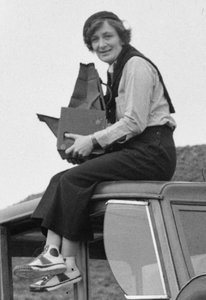
Dorothea Lange
1895 - 1965 , United States of America
Quick Facts
- Artistic Movement Or Style: Documentary photography
- Artists Or Movements Influenced By This Artist: ['Documentary photography']
- Artists Who Influenced This Artist:
- Clarence H. White
- Arnold Genthe
- Date Of Birth: May 26, 1895
- Date Of Death: October 11, 1965
- Full Name: Dorothea Lange
- Nationality: American
- Notable Artworks:
- Migrant Mother
- Forced from home
- Tractored Out
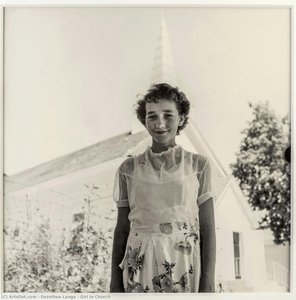
- Girl in Church
- Place Of Birth: Hoboken, USA
Related Articles

Giclée Prints: Archival Quality & Aesthetic Nuances for the Discerning Collector
Explore the world of giclée prints with ArtsDot. Learn about archival quality, aesthetic nuances & investment potential. Expert guidance for discerning art collectors seeking museum-quality reproductions and lasting value.

Hokusai's Masterpieces: 25 Iconic Prints & Paintings for Art Lovers | ArtsDot
Journey through Katsushika Hokusai’s 25 most iconic artworks, including *The Great Wave*. Explore the ukiyo-e master's history, style & timeless Japanese woodblock prints. Find museum-quality reproductions for your home at ArtsDot.com.

The Enduring Legacy of Fine Art Prints: Technique, History & Aesthetic Impact
Explore the rich history & techniques of fine art prints. Discover investment potential, assess authenticity, and learn how to preserve your collection with expert guidance. Trusted insights for discerning collectors.

Echoes of Time: Exploring the Enduring Appeal & Historical Context of Vintage Art Prints
Explore the captivating world of vintage art prints! Discover their history, collecting tips & enduring appeal. Expert insights on chromolithography and building a legacy collection with ArtsDot.

The Enduring Legacy of Printmaking: Techniques, Themes & Artistic Innovation Across Centuries
Explore the rich history of printmaking with ArtsDot. Discover techniques from intaglio to lithography, learn about collecting valuable prints & find museum-quality reproductions. Expert insights for art enthusiasts and collectors.