 Preview
 Send
Send Share
Share
 Details

 Download
 Similars
 X-Ray
X-Ray Diaporama
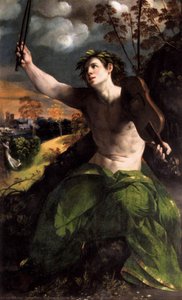
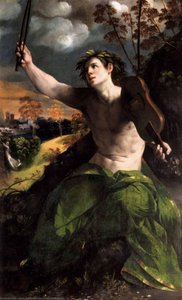
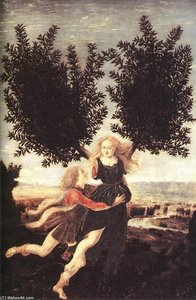
Apollo and Daphne


 Read More
Hand Made Oil Reproduction
Hand-painted oil on canvas in your size and frame, made to order by our artists. ( Buy Print Buy Image)




P118B $10

P118H $10

P118W $10

P438Z $10

P508JH $12

P508YH $12

P805H $10

P805Z $10

P919BZ $10

P919G $10

P919XJ $10

P959ZH $10

P968JZ $12

W106C $8

W218G $10

W218JH $8

W218Y $10

W307PJ $10

W316G $10

W316PJ $8

W316Y $10

W398PJ $8

W4111J $10

W500HY $15

W500JH $15

W692G $12

W849H $8

W940BG $15

W953PJ $8




Pick from our preset sizes that match the artwork's original proportions.

You may enter your own dimensions to fit a specific frame or space. If your selected size does not match the original image's proportions, we will either crop the artwork or extend the painting with additional hand-painted elements. A digital mockup will be sent for your approval before production begins.
Please note that the on-screen preview does not reflect the actual cropping or extension. Only the mockup will accurately show the final composition.
While custom sizes are available, we recommend selecting a dimension from the predefined list to preserve the original proportions.
After order, ArtsDot.com team will email client for instructions and provide a mockup preview
Worldwide Delivery () in 3/4 weeks instead of standard 5 weeks. (17 August). No compromise on quality.

Free Worldwide Express Shipping

High-Quality Linen Canvas

Full Shipping Insurance

Customs Tax Refund Guarantee

True Color Matching Guarantee

60-Day Return Policy (Defects Only)

100% Money-Back Guarantee

Bulk Discount Offer
 Glass option is only available in size under 110 CM

Apollo and Daphne
Reproduction Medium
Reproduction Size
-


Total Price
$ 263
Artwork Description
Dosso Dossi’s Apollo and Daphne: A Renaissance Dreamscape
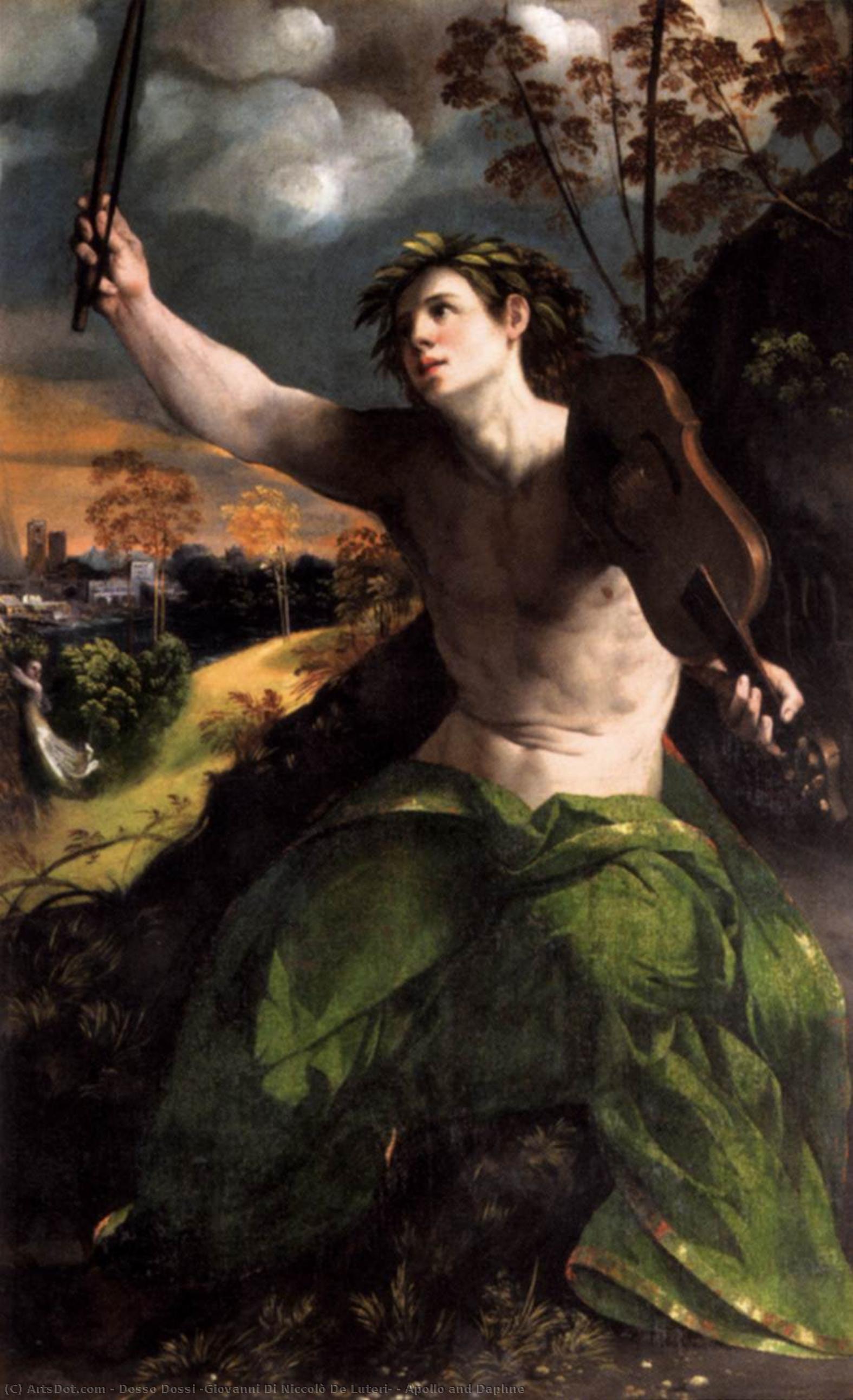
The artwork depicts a scene from Greek mythology: Apollo and Daphne. It's a Renaissance-style painting with a focus on dramatic lighting and detailed figures, embodying the spirit of Ferrara’s artistic flourishing under Alfonso I dEste. More than just a depiction of legend, it represents a masterful synthesis of humanist ideals and Venetian influences—a testament to Dosso Dossi’s singular vision.Composition & Narrative Depth
Apollo dominates the foreground, positioned slightly off-center to create visual interest. He’s depicted mid-stride, reaching out as if attempting to grasp Daphne, who is partially visible in the background transforming into a laurel tree. This dynamic arrangement isn't merely aesthetically pleasing; it meticulously conveys the narrative core of Ovid’s Metamorphoses—Apollo’s relentless pursuit of Daphne and her desperate transformation to escape his unwanted affections. The landscape recedes into the distance, establishing depth and perspective, reinforcing the drama unfolding before our eyes.Color Palette & Atmospheric Illusion
The color palette is dominated by greens and browns, punctuated by splashes of gold and orange in the sky—a deliberate choice that reflects the lush Tuscan countryside surrounding Ferrara during Dosso Dossi’s time. The green hues range from deep forest to lighter shades, creating texture and volume in Apollo’s drapery and the surrounding foliage. Skin tones are rendered with remarkable realism, subtly shaded to convey muscle definition. Crucially, Dosso Dossi employs sfumato—a technique perfected by Leonardo da Vinci—to create a hazy atmospheric effect, blurring the edges of forms and lending an ethereal quality to the scene. This stylistic element elevates the painting beyond mere representation, immersing the viewer in a dreamlike realm evocative of Venetian art.Technique & Artistic Mastery
Dosso Dossi demonstrates exceptional skill with brushstrokes, generally subtle yet purposeful, contributing to the overall smoothness of the surface. The artist’s meticulous attention to detail—evident in the rendering of Apollo's musculature and Daphne’s delicate transformation—underscores his dedication to capturing the essence of classical sculpture, particularly the Belvedere Torso, which profoundly influenced Renaissance artists. Linear perspective is skillfully employed in the background, creating a convincing illusion of depth and enhancing the dramatic impact of the composition. The use of oil on canvas ensures rich colors and luminous textures, guaranteeing that Dosso Dossi’s masterpiece retains its beauty and grandeur for centuries to come.Symbolism & Mythological Resonance
The subject matter—the mythological story of Apollo's pursuit of Daphne—holds profound symbolic significance. Daphne embodies purity and resistance to unwanted desire, while Apollo represents divine power and artistic ambition. The laurel wreath, associated with Apollo as god of music and poetry, serves as a visual emblem of this theme, reinforcing the painting’s intellectual depth. Ultimately, Dosso Dossi's *Apollo and Daphne* transcends mere storytelling; it explores universal themes of love, loss, and transformation—a timeless reflection on human experience captured in breathtaking artistic form.Related Artworks
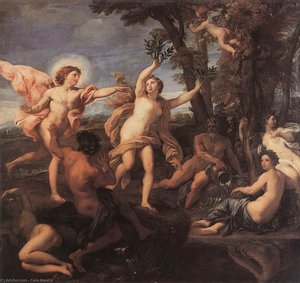
Artist Biography
The Visionary of Ferrara: The Life and Legacy of Dosso Dossi
In the golden age of the Italian Renaissance, amidst the courtly splendor of Ferrara, there emerged a painter whose brush possessed the power to weave dreams into reality. Giovanni di Niccolò de Luteri, known to history by his evocative moniker Dosso Dossi, was not merely a chronicler of myth, but a creator of entire atmospheric worlds. Born around 1489 in San Giovanni del Dosso, his very name carries the echoes of his origins, yet his artistic spirit wandered far beyond the borders of his birthplace. As a central figure of the Scuola di Ferrara, Dossi bridged the gap between the rigorous precision of the early Renaissance and the emotive, color-driven innovations that would soon define the Venetian school.
The foundations of Dossi’s mastery were laid through an apprenticeship that connected him to the giants of the previous generation. By studying under the meticulous Andrea Mantegna in Mantua, Dossi inherited a profound respect for classical structure and the complex geometry of perspective. However, where Mantegna sought clarity and sculptural permanence, Dossi pursued something far more elusive. He began to infuse his compositions with a soft, luminous quality that suggested movement and mystery, a development that would eventually see him standing alongside legends like Titian and Giorgione as a pioneer of a new, poetic visual language.
Mythological Grandeur and the Venetian Glow
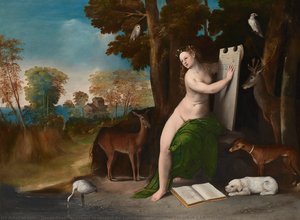
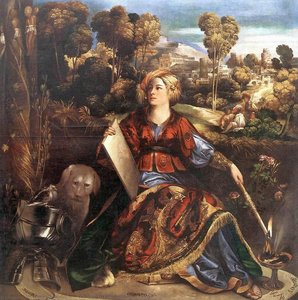
Dossi’s true brilliance flourished under the patronage of the Este court, particularly during the reign of Alfonso I d'Este. Within this sophisticated environment, he found the perfect subject matter: the complex, often eroticized, and deeply allegorical tales of classical mythology. His works, such as the enchanting Circe or Melissa, do not simply depict ancient legends; they inhabit them. He had a singular ability to blend the heroic with the supernatural, creating scenes where gods and nymphs appear to emerge from a twilight haze. This characteristic "dreamlike" quality was achieved through a masterful use of atmospheric perspective, where distant landscapes dissolve into soft blues and muted greens, pulling the viewer into a state of quiet contemplation.
The influence of Venice is unmistakable in Dossi’s mature style. He moved away from the hard outlines of his Mantuan training toward a more fluid, painterly approach characterized by rich, saturated pigments and a preoccupation with light. This Venetian influence allowed him to manipulate color to evoke mood rather than just form. In his hands, light does not merely illuminate a scene; it transforms it, casting shadows that hide secrets and highlights that suggest the divine. His ability to harmonize the structural discipline of the Ferrara school with the chromatic warmth of Venice made his oeuvre uniquely captivating and difficult to replicate.
A Lasting Impression on the Renaissance Canvas
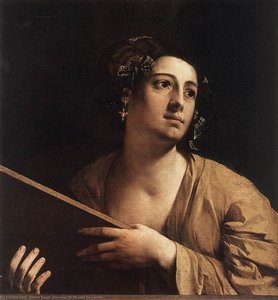
The historical significance of Dosso Dossi lies in his role as a transitional master who helped steer Italian art toward the expressive freedom of Mannerism. His works, ranging from grand frescoes like Francesco Maria della Rovere Leading His Troops to intimate, enigmatic portraits and sibyls, demonstrate a versatility that challenged the boundaries of contemporary painting. He mastered the art of the allegory, using mythological figures to communicate complex political and humanist ideas favored by the Ferrarese elite.
Though his life ended in 1542, leaving behind a legacy etched in the very fabric of the Renaissance, Dossi’s impact remains profound. His contributions can be summarized through several key artistic achievements:
- The Synthesis of Styles: Successfully merging the structural precision of Mantegna with the atmospheric lyricism of the Venetian masters.
- Atmospheric Innovation: Pioneering a use of landscape and light that prioritized emotional resonance and psychological depth over strict realism.
- Narrative Allegory: Elevating mythological painting through the creation of complex, dreamlike narratives that served both courtly prestige and humanist inquiry.
- The Ferrara Identity: Establishing the School of Ferrara as a distinct and vital force in the Italian Renaissance landscape.
Today, when we gaze upon the swirling shadows and luminous textures of a Dossi masterpiece, we are not just looking at paint on canvas; we are witnessing the enduring power of a visionary who taught the world how to see the magic hidden within the classical past.
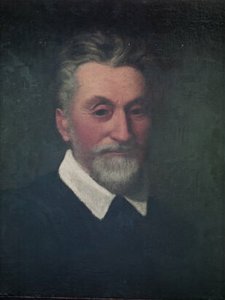
dosso dossi (giovanni di niccolò de luteri)
1486 - 1542 , Italy
Quick Facts
- Artistic Movement Or Style: School of Ferrara
- Artists Who Influenced This Artist:
- Giorgione
- Titian
- Date Of Birth: c. 1489
- Date Of Death: 1542
- Full Name: Giovanni di Niccolò de Luteri
- Nationality: Italian
- Notable Artworks:
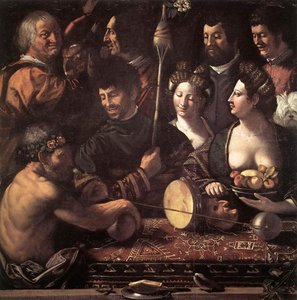
- Witchcraft (Allegory of Hercules)
- Circe (or Melissa)
- Jupiter, Mercury and the Virtue
- Place Of Birth: San Giovanni del Dosso, Italy
Related Articles

Jacopo Tintoretto's Masterpieces: 25 Paintings That Define Venetian Drama | ArtsDot
Explore 25 breathtaking masterpieces by Jacopo Tintoretto, the Venetian master of drama and light. Discover the stories behind iconic Renaissance paintings & find museum-quality art reproductions to elevate your home decor on ArtsDot.com.
Neo-Classicism's Greatest Hits: 10 Masterpieces for Your Home |
Journey through Neo-Classicism's finest! Explore 10 iconic masterpieces by David, Ingres & Canova. Discover art history, techniques & timeless beauty – perfect for inspiring your home decor. Find museum-quality reproductions at
Echoes of Olympus: Mythological Narratives in Western Art Through the Ages
Explore the captivating history of mythological narratives in Western art! From ancient Greece to modern masterpieces, discover iconic artworks & symbolism. Expert analysis and high-quality reproductions at ArtsDot.
The Enduring Legacy of Classicism: Principles, Evolution & Influence in Western Art
Explore the enduring legacy of Classicism in Western art! Discover its historical context, key principles, iconic masterpieces & lasting influence. Learn about Renaissance and Neoclassical movements with ArtsDot.
Timeless Resonance: Exploring Classic Vibe in Art – A Historical & Aesthetic Analysis
Explore the rich history & enduring aesthetic of Classicism art! Discover key movements, iconic artists like Raphael & David, and its lasting influence on Western art. Deepen your appreciation today.