

 Preview
 Send
Send Share
Share
 Details

 Download
 Similars
 X-Ray
X-Ray Diaporama
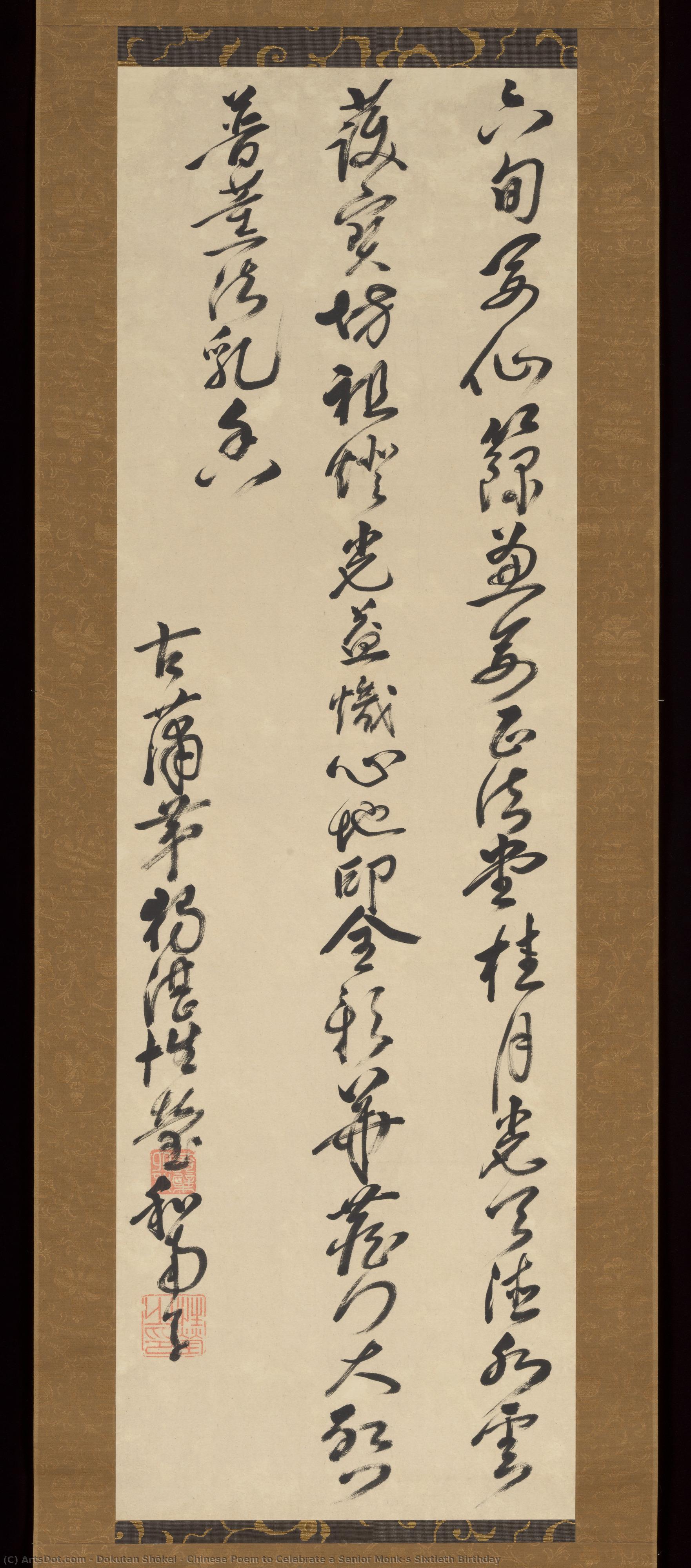
Chinese Poem to Celebrate a Senior Monk’s Sixtieth Birthday
 Suiboku ga
 701
701 128.0cm x 41.0cm
 Read More
Purchase a high-resolution, enhanced digital image, far superior to the online preview.
Each file is meticulously prepared by our in-house specialists using advanced tools and expert manual retouching. We ensure every image has exceptional clarity, precise color accuracy, and fine detail.
The final file is delivered via email within 72 hours, optimized for immediate use in professional, editorial, and print environments. This is the same quality trusted by top-tier design studios, publishers, and galleries.
Digital Image
Download a high-resolution file for personal display, printing, and creative projects. ( Buy Print Buy Hand Made Painting)
Included in Every Digital Image Order
Expert Digital Delivery, Guaranteed
When you choose ArtsDot.com, you're not just getting an image - you're receiving a professionally enhanced digital artwork, crafted with precision and backed by a satisfaction guarantee. Here's everything that comes with your order, automatically:

Fast Email Delivery
Your high-resolution digital image file will be emailed to you within 72 hours of ordering - ready for immediate use.

AI-Enhanced Digital File
Your artwork is professionally optimized using advanced AI tools and manual editing, ensuring maximum detail, clarity, and color accuracy.

Free Lifetime Re-Delivery
Accidentally deleted or lost your file? No worries - we'll resend it to you anytime, free of charge.

No Import Fees - Ever
Enjoy your artwork instantly with zero customs, duties, or delivery fees - digital downloads are always tax-free.

Color Accuracy Guarantee
We ensure your digital image reflects the original colors as closely as possible using professional tools and color management.

60-Day Satisfaction Guarantee
If you're not satisfied with your digital image, we'll revise it or refund 100% within 60 days - no questions asked.

100% Money-Back Guarantee
Not satisfied? Get a full refund within 60 days of receiving your digital file - no questions asked.

Bulk Order Discounts
Buy 3 images, save 10% - Buy 5, save 15% - Buy 10+, save 20%. Great for creative projects, galleries, and agencies.
The Artist: Dokutan Shōkei (Duzhan Xingying)
Dokutan Shōkei, also known as Duzhan Xingying, was a Chinese monk born in Putian, China in 1628. He was a significant figure in the spread of Zen Buddhism and was a disciple of Ingen Ryūki, who founded the Ōbaku school of Zen Buddhism in Japan. Dokutan Shōkei was known for practicing the teachings of both Zen and Pure Land sects, and he came to be recognized as one of the most important Chinese monks in Japanese history (learn more about Dokutan Shōkei).The Painting: Chinese Poem to Celebrate a Senior Monk’s Sixtieth Birthday
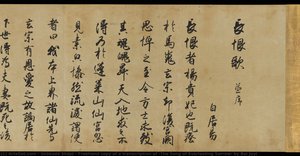
Chinese Poem to Celebrate a Senior Monk’s Sixtieth Birthday is an ink-on-paper painting by Dokutan Shōkei, created during the Edo period (1615–1868) in Japan. The artwork features two long columns and one short column of bold Ming-style cursive calligraphy that transcribe a Chinese poem composed in eight lines, with five syllables each. Balanced on the left is a half-column of characters of the same size and style, comprising the calligrapher’s signature (see more works by William Blake). The verse was composed on the occasion of another unnamed monk's sixtieth birthday, and it is a beautiful example of Chinese calligraphy and poetry. The painting is part of the permanent collection at the Metropolitan Museum of Art in New York (see more works by Pablo Picasso).Style and Significance
Dokutan Shōkei’s calligraphy is a masterful example of the Suiboku ga art movement, which emerged during the Tang dynasty of China (618–907) and overturned earlier, more realistic techniques. Suiboku ga is typically monochrome, using shades of black ink in different concentrations to create washes and textures. The style emphasizes virtuoso brushwork and conveying the perceived spirit or essence of the subject (see more works by Pablo Picasso). In this painting, Dokutan Shōkei’s calligraphy is fluid and expressive, with bold strokes that convey a sense of energy and movement. The poem’s content and the calligrapher’s signature add layers of meaning to the artwork, making it a rich and complex example of Chinese calligraphy and poetry (see more works by Max Ernst). Overall, Chinese Poem to Celebrate a Senior Monk’s Sixtieth Birthday is a significant work of art that showcases Dokutan Shōkei’s mastery of the Suiboku ga style and his deep understanding of Chinese poetry and calligraphy. The painting is not only a beautiful example of these artistic traditions but also a testament to the enduring influence of Chinese culture in Japan (view the painting).Related Artworks

Artist Biography
Rembrandt Harmenszoon van Rijn: A Master of Light and Emotion
Rembrandt Harmenszoon van Rijn, a name synonymous with artistic genius in the Netherlands, remains one of history’s most profoundly influential painters. Born on July 15, 1606, in Leiden, Rembrandt's journey was marked by both extraordinary success and periods of personal hardship, yet his legacy endures through an unparalleled ability to capture human emotion, masterfully manipulate light, and tell compelling stories within his canvases. His life spanned nearly six decades, culminating in his death on October 4, 1669, in Amsterdam, leaving behind a vast and deeply moving body of work that continues to captivate audiences worldwide. Rembrandt’s early artistic training remains somewhat shrouded in mystery. While he likely received instruction from his father, Isaac van Rijn, a painter and frame maker, the precise details of his formative years are elusive. His uncle, Salomon van Ruysdael, another artist, undoubtedly played a role, though little of his work survives. Despite this lack of formal documentation, Rembrandt quickly demonstrated exceptional talent, earning recognition for his portraits in Leiden by 1625. He moved to Amsterdam around 1631, establishing himself as a respected portraitist and quickly gaining commissions from wealthy merchants and civic officials. This period saw the creation of many of his most celebrated early works, including *The Storm on the Sea of Galilee* (1633), a dramatic depiction of Christ’s calming of a storm, showcasing his burgeoning skill in rendering light and movement. However, Rembrandt's ambition extended beyond mere portraiture; he sought to explore deeper themes of human experience, delving into biblical narratives and historical events. Rembrandt’s artistic development underwent a significant transformation throughout his career. Initially known for his polished realism and meticulous detail, particularly evident in works like *The Anatomy Lesson of Dr. Nicolaes Tulp* (1632), he gradually shifted towards a more expressive and emotionally charged style. This evolution was driven by a desire to convey inner states rather than simply replicating external appearances. He experimented with looser brushstrokes, dramatic contrasts of light and shadow – what he termed *chiaroscuro* – and a greater emphasis on psychological depth. The period between 1640 and 1650 witnessed this stylistic shift most dramatically, culminating in masterpieces such as *The Night Watch* (1642), a complex group portrait that transcends the conventions of its genre to become a vibrant tableau of human interaction. This painting, initially commissioned by a militia company, is considered a pivotal moment in Rembrandt’s career, demonstrating his mastery of composition, color, and dramatic lighting. Later works, like *Bathsheba at Her Bath* (1662) and *The Return of the Prodigal Son* (c. 1669), further explored themes of repentance, forgiveness, and redemption, reflecting Rembrandt’s own personal struggles with faith and mortality. Rembrandt's influence on subsequent generations of artists is immeasurable. His innovative use of light and shadow, his profound understanding of human psychology, and his willingness to challenge artistic conventions established a new standard for portraiture and narrative painting. Artists like Johannes Vermeer, Frans Hals, and Jacob van Ruisdael were all profoundly affected by Rembrandt’s work. Furthermore, Rembrandt's exploration of self-portraiture – he created over 60 self-portraits throughout his life – offered an unprecedented level of introspection and honesty, providing a unique window into the artist’s own evolving personality and artistic process. His etchings, particularly *The Hundred Guilder Print* (1654), are equally remarkable for their technical skill and expressive power. Rembrandt's legacy extends far beyond the realm of painting; he is revered as a symbol of artistic integrity, emotional depth, and the enduring power of human creativity.Key Works
- *The Storm on the Sea of Galilee* (1633) – Demonstrates early mastery of light and movement.
- *The Anatomy Lesson of Dr. Nicolaes Tulp* (1632) – Exemplifies meticulous realism and detailed observation.
- *The Night Watch* (1642) – A groundbreaking group portrait that redefined the genre.
- *Bathsheba at Her Bath* (1662) – Explores themes of temptation, guilt, and redemption.
- *The Return of the Prodigal Son* (c. 1669) – A poignant depiction of forgiveness and familial reconciliation.
Influences and Techniques
Rembrandt’s artistic development was shaped by a confluence of influences, including the Italian Renaissance masters like Leonardo da Vinci and Michelangelo, as well as the works of earlier Dutch painters such as Jacob van Ruisdael. He meticulously studied their techniques, particularly their use of light and shadow, and incorporated these elements into his own style. Rembrandt’s signature technique involved *chiaroscuro*, a dramatic contrast between light and dark, which he used to create depth, volume, and emotional intensity. He also employed a loose, expressive brushstroke that added texture and dynamism to his paintings. His ability to capture the subtle nuances of human expression – from joy and sorrow to contemplation and despair – is what truly sets his work apart.Historical Significance
Rembrandt’s life coincided with the Dutch Golden Age, a period of unprecedented prosperity and cultural flourishing in the Netherlands. His art reflected the values and ideals of this era, celebrating human achievement, religious faith, and civic virtue. Despite facing financial difficulties and personal tragedies later in his career, Rembrandt remained committed to his artistic vision, producing some of his most enduring works during this challenging time. His story serves as a testament to the power of perseverance and the importance of pursuing one’s passions despite adversity. Rembrandt's work continues to be studied and admired by art historians, critics, and audiences around the world, solidifying his place as one of the greatest artists in Western history.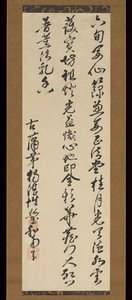
duzhan xingying
1628 - 1706 , China
Quick Facts
- Artistic Movement Or Style: Classical Dutch landscape
- Artists Or Movements Influenced By This Artist:
- Gainsborough
- Constable
- Artists Who Influenced This Artist: ['Salomon van Ruysdael']
- Date Of Birth: 1628/9?
- Date Of Death: 1682
- Full Name: Jacob van Ruisdael
- Nationality: Dutch
- Notable Artworks:
- The Jewish Cemetery
- Bentheim Castle View
- A Pool Surrounded by Trees
- Place Of Birth: Haarlem, Netherlands


