 Preview
 Send
Send Share
Share
 Details

 Download
 Similars
 X-Ray
X-Ray Diaporama
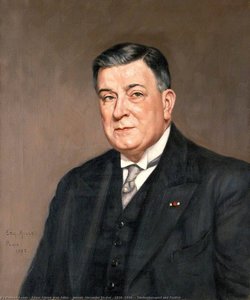
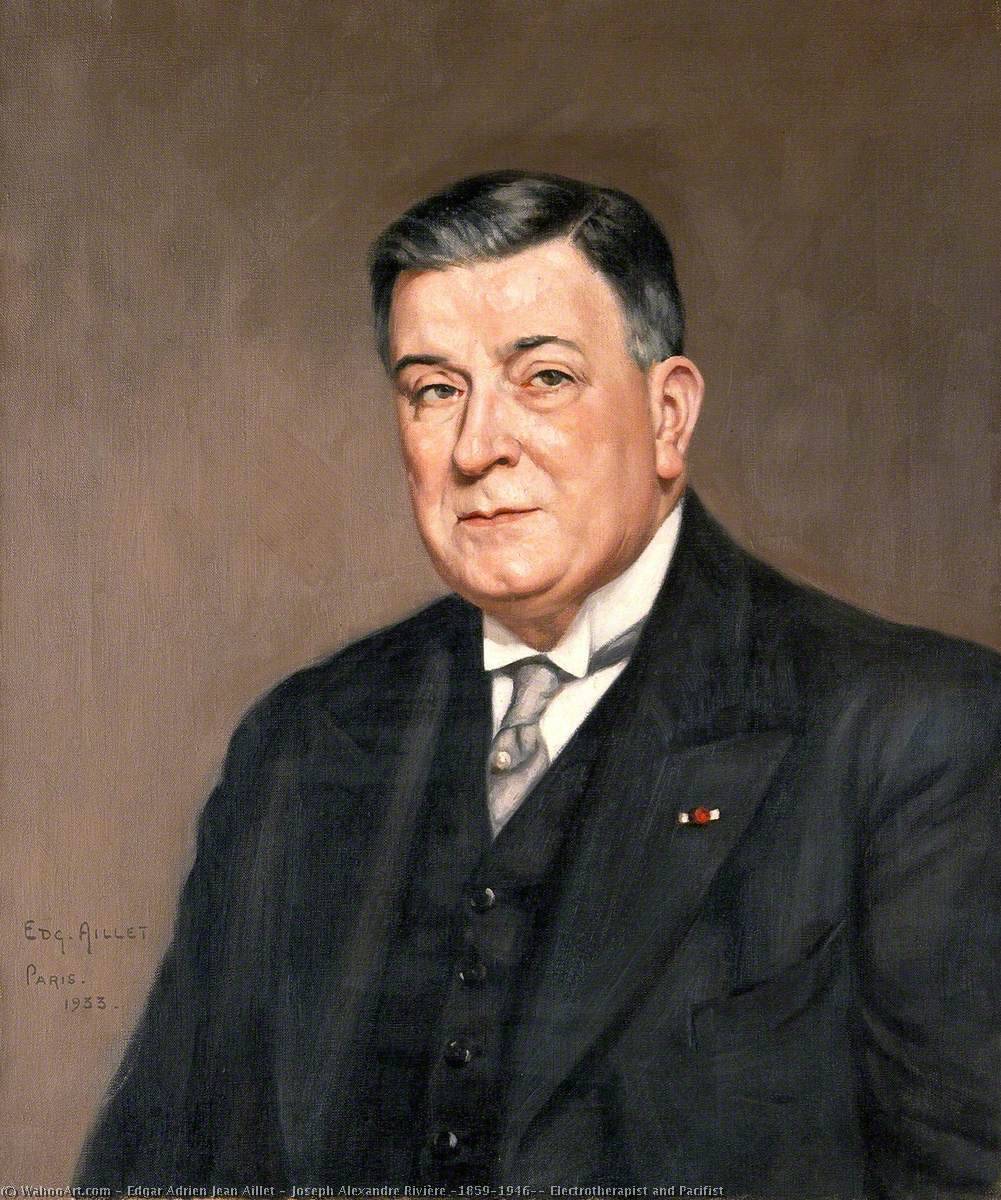
Joseph Alexandre Rivière (1859–1946), Electrotherapist and Pacifist
 Contemporary Realism
 1933
1933 65.0 x 54.0 cm
 Read More
Giclée / Art Print
Museum-quality giclée or canvas print with fast production and flexible finish options. ( Buy Hand Made Painting Buy Image)




































Pick from our preset sizes that match the artwork's original proportions.

You may enter your own dimensions to fit a specific frame or space. If your selected size does not match the original image's proportions, we will either crop the artwork or extend the image with a mirrored or solid-fill edge. A digital mockup will be sent for your approval before production begins.
Please note that the on-screen preview does not reflect the actual cropping or extension. Only the mockup will accurately show the final composition.
While custom sizes are available, we recommend selecting a dimension from the predefined list to preserve the original proportions.
Worldwide Delivery () in 2 weeks instead of standard 4/5 weeks. (25 August)

Free Worldwide Express Shipping

High-Quality Linen Canvas

Full Shipping Insurance

Customs Tax Refund Guarantee

True Color Matching Guarantee

60-Day Return Policy (Defects Only)

100% Money-Back Guarantee

Bulk Discount Offer
 Glass option is only available in size under 110 CM

Joseph Alexandre Rivière (1859–1946), Electrotherapist and Pacifist
Giclée / Art Print
Reproduction Size
-


Total Price
$ 63
Related Artworks

Artist Biography
A Chronicler of Minds: The Portraits of Edgar Adrien Jean Aillet
Edgar Adrien Jean Aillet occupies a fascinating, yet often overlooked, niche in the history of 19th-century French portraiture. While not a household name like Ingres or Courbet, Aillet carved out a distinctive career documenting the faces – and by extension, the intellectual spirit – of prominent scientists and thinkers of his time. His work offers a compelling glimpse into an era defined by rapid scientific advancement and a burgeoning faith in empirical observation. Born in France (the exact year remains elusive), Aillet’s life is shrouded in some mystery; however, what *is* clear is his dedication to capturing the likenesses of those shaping the modern world. He wasn't interested in grand historical narratives or allegorical scenes, but rather in the quiet dignity and intellectual weight of individuals like Henri Moissan, Charles Rivière, and others who pushed the boundaries of human knowledge.The Rise of Scientific Portraiture
Aillet’s emergence as a portraitist coincided with a growing demand for representations of scientific figures. The 19th century witnessed an unprecedented elevation of science in public consciousness. Discoveries in chemistry, physics, and biology were transforming society, and the men (almost exclusively men) responsible for these breakthroughs became objects of fascination. Traditional portraiture often focused on nobility or wealthy patrons; Aillet tapped into a new market – institutions, scientific societies, and even the scientists themselves – eager to preserve their legacies through art. This wasn’t merely about physical resemblance; it was about conveying intelligence, dedication, and the seriousness of their pursuits. His portraits weren't flamboyant displays of wealth or status but rather studies in character, emphasizing the sitter’s inner life. Aillet understood that a portrait could serve as a powerful symbol of intellectual achievement, a visual testament to the power of reason and discovery.Style and Technique: Echoes of Classicism
Aillet's artistic style is firmly rooted in classical traditions. His paintings exhibit a meticulous attention to detail, precise draftsmanship, and a restrained palette – often employing muted earth tones and subtle gradations of light and shadow. There’s a clear influence of Ingres in his smooth surfaces and idealized forms, though Aillet avoids the sometimes-stiff formality of his predecessor. He favored a three-quarter length pose, allowing him to focus on the sitter's face and hands – considered revealing indicators of personality and intellect. The lighting is typically soft and diffused, creating a sense of calm contemplation. While he wasn’t an innovator in terms of technique, Aillet possessed a remarkable ability to capture the *essence* of his subjects. He didn’t simply paint what he saw; he sought to portray their intellectual character, their dedication to science, and their place within the broader landscape of knowledge. His brushwork is almost invisible, prioritizing clarity and precision over expressive gestures.Notable Works and Subjects
Among Aillet’s most celebrated works are his portraits of Henri Moissan, the Nobel laureate chemist known for isolating fluorine, and Charles Rivière, a prominent biologist specializing in microscopic anatomy. These paintings aren't just accurate depictions; they offer insights into the personalities of these scientists. The portrait of Moissan, for example, conveys a sense of intense focus and determination, reflecting his relentless pursuit of scientific truth. Similarly, Rivière’s portrait captures his meticulous attention to detail and quiet dedication to his research. Aillet also painted numerous other figures within the French scientific community, creating a visual archive of intellectual life during this period.- Henri Moissan: A testament to the chemist's unwavering focus.
- Charles Rivière: Capturing the biologist’s dedication to microscopic study.
- Portraits of lesser-known scientists: Providing a broader view of the French scientific landscape.
Legacy and Historical Significance
While Aillet may not be widely recognized today, his work holds significant historical value. His portraits offer a unique window into the world of 19th-century science, providing visual representations of individuals who shaped our understanding of the natural world. He documented a generation of thinkers at a pivotal moment in history, capturing their likenesses and conveying their intellectual spirit to future generations. His paintings serve as more than just portraits; they are historical documents, offering insights into the values, aspirations, and personalities of those who drove scientific progress. Aillet’s legacy lies not in groundbreaking stylistic innovations but in his unwavering dedication to portraying the faces – and minds – of the scientists who transformed our world. His work reminds us that art can play a vital role in preserving intellectual history and celebrating the pursuit of knowledge.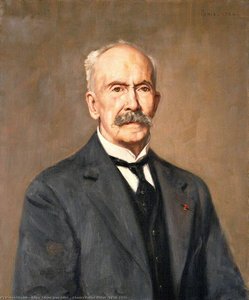
Related Articles

The Enduring Legacy of Oil on Canvas: Technique, History & Aesthetic Impact
Explore the rich history & techniques of oil painting – from Renaissance masters to Impressionism. Discover pigments, layering methods, and why this timeless medium endures. Expert insights for artists & art enthusiasts.

Oil on Canvas: A Historical & Technical Exploration of a Timeless Artistic Medium
Explore the rich history & enduring techniques of oil painting on canvas. Discover the science behind its longevity, conservation practices, and contemporary relevance. Expert insights for art enthusiasts.

The Enduring Power of Painting: A Historical & Contemporary Exploration of Form and Emotion
Explore the rich history & enduring techniques of oil painting with ArtsDot. Discover masterpieces, learn about art collecting, and find authentic handmade reproductions crafted by skilled artists.

The Enduring Legacy of Oil on Canvas: Technique, History & Contemporary Practice
Explore the rich history & enduring techniques of oil painting on canvas. Discover the science behind its longevity, conservation practices, and contemporary relevance. Expert insights for art enthusiasts.
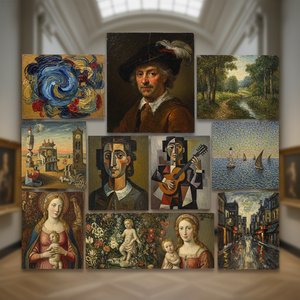
Oil on Board Masters: 10 Paintings That Redefined Art | ArtsDot
Explore 10 legendary 'Oil on Board' masterpieces by Van Gogh, Monet & more! Discover art history, iconic styles like Impressionism, and find museum-quality reproductions to elevate your home decor. Explore the full collection online at ArtsDot.com.