 Preview
 Send
Send Share
Share
 Details

 Download
 Similars
 X-Ray
X-Ray Diaporama
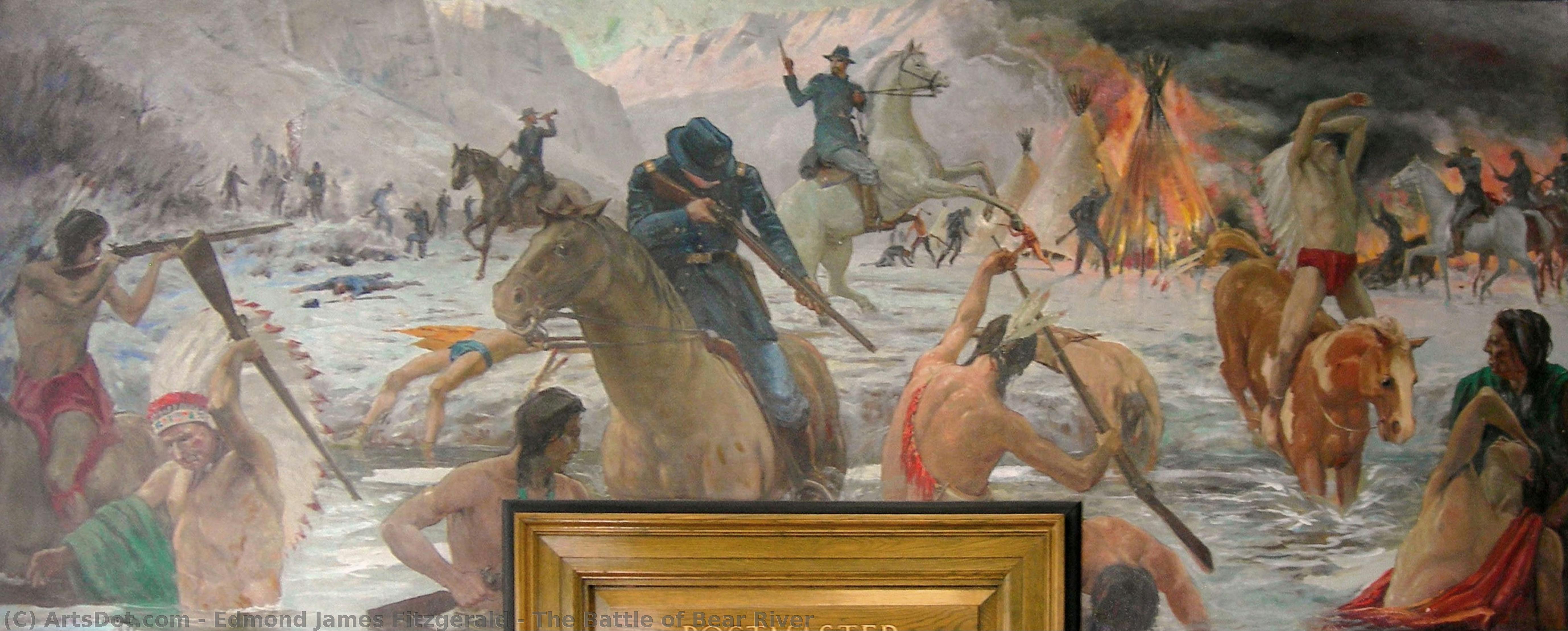
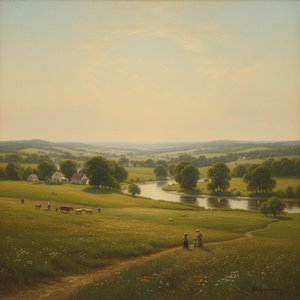
The Battle of Bear River


 Read More
Hand Made Oil Reproduction
Hand-painted oil on canvas in your size and frame, made to order by our artists. ( Buy Print Buy Image)




































Pick from our preset sizes that match the artwork's original proportions.

You may enter your own dimensions to fit a specific frame or space. If your selected size does not match the original image's proportions, we will either crop the artwork or extend the painting with additional hand-painted elements. A digital mockup will be sent for your approval before production begins.
Please note that the on-screen preview does not reflect the actual cropping or extension. Only the mockup will accurately show the final composition.
While custom sizes are available, we recommend selecting a dimension from the predefined list to preserve the original proportions.
After order, ArtsDot.com team will email client for instructions and provide a mockup preview
Worldwide Delivery () in 3/4 weeks instead of standard 5 weeks. (24 August). No compromise on quality.

Free Worldwide Express Shipping

High-Quality Linen Canvas

Full Shipping Insurance

Customs Tax Refund Guarantee

True Color Matching Guarantee

60-Day Return Policy (Defects Only)

100% Money-Back Guarantee

Bulk Discount Offer
 Glass option is only available in size under 110 CM

The Battle of Bear River
Reproduction Medium
Reproduction Size
-


Total Price
$ 338
Artwork Description
Related Artworks
![Indian Tobacco Shop Sign [reverse, Indian Facing Right] — Winslow Homer, Contemporary Realism](/media/artworks/images-thumb/74/22/7422432cafc295265ef3b7f7fa62d35d.jpg)
Artist Biography
The Mariner’s Vision: A Life Forged in Salt and Soil
Born amidst the misty, salt-sprayed landscapes of Seattle in 1912, Edmond James Fitzgerald possessed an eye that was inherently attuned to the shifting rhythms of the natural world. His early years were not merely spent observing the coast, but actively engaging with its raw, untamed beauty. At the tender age of nineteen, Fitzgerald joined the U.S. Geological Survey Expedition to Alaska, a journey that would leave an indelible mark on his artistic soul. The rugged geography and ethereal light of the Arctic territories became foundational elements in his visual vocabulary, prompting him to return annually for a decade to document the frozen frontiers. This period of exploration was complemented by his formal training at the California School of Fine Arts, where he studied under masters such as Lee Randolph and Mark Tobey. Under the mentorship of Eustace Zeigler, whose influence loomed large over his early development, Fitzgerald began to refine a technique that blended the meticulous precision of a naturalist with the emotive, impressionistic brushstrokes of a true storyteller.The Crucible of Conflict and the Art of Combat
The tranquility of his early marine and landscape studies was profoundly interrupted by the global upheaval of World War II. Enlisting in the United States Naval Reserve, Fitzgerald transitioned from a painter of serene vistas to a commander of an LST (Landing Craft Tank), navigating the perilous waters of Europe to transport troops and vital supplies. This period of intense service did more than just test his courage; it fundamentally reshaped his artistic perspective. The visceral reality of war—the spray of the sea meeting the smoke of battle—found its way onto his canvases. He emerged not only as a naval officer but as a combat artist, tasked with capturing the harrowing truth of human struggle. His monumental work for the Seamens Church Institute in New York stands as a testament to this era, featuring a massive depiction of the Omaha Beach landing. In this piece, he masterfully integrated his own history, including a distant view of the very LST he commanded, creating a profound intersection between personal memory and historical record.A Tapestry of American History and Heritage
Beyond the salt spray of the Pacific and the turbulence of war, Fitzgerald’s later career was defined by a deep commitment to documenting the historical soul of the American West. He became a muralist of significant renown, using large-scale compositions to breathe life into pivotal, often tragic, moments of the past. His mural in Preston, Idaho, titled The Battle of Bear River, serves as a hauntingly beautiful tribute to the complexities of American Indian history, demonstrating his determination to include indigenous narratives within the broader tapestry of the Pacific Northwest. This dedication to historical truth was often a collaborative endeavor; his wife, the ceramic artist Mary Louise Streets, worked alongside him on many of these monumental projects, their shared creative passion helping to realize his grandest visions. From the shores of Lake Superior to the post offices of Oregon and Washington, Fitzgerald’s work remains a vibrant, enduring chronicle of a nation's landscape and its people, captured through a lens that was as much about the heart as it was about the eye.
edmond james fitzgerald
1912 - 1989 , United States of America
Quick Facts
- Artistic Movement Or Style: Marine Painting
- Artists Or Movements Influenced By This Artist: ['Robert Browning']
- Artists Who Influenced This Artist: ['Lee Randolph']
- Date Of Birth: 1912
- Full Name: Edmond James Fitzgerald
- Nationality: American
- Notable Artworks: ['The Battle of Bear River']
- Place Of Birth: Seattle, United States of America
Related Articles
Grant Wood & American Regionalism: Identity, Myth & the Rural Landscape
Explore the world of Grant Wood & American Regionalism with ArtsDot. Discover the symbolism behind 'American Gothic', recurring themes, and the movement's lasting impact on art history. High-quality reproductions available.
Hudson River School: 10 Masterpieces That Capture America's Wild Beauty | ArtsDot
Journey through America's breathtaking landscapes with our guide to the Top 10 Hudson River School masterpieces. Explore Thomas Cole, Frederic Church & more! Find museum-quality art reproductions and elevate your home decor at ArtsDot.com.
American Realism's Defining Works: 10 Masterpieces for Your Home
Explore 10 defining American Realism masterpieces – Hopper, Homer & more. Discover the stories behind these iconic paintings and bring timeless art to your home with ArtsDot's museum-quality reproductions. Explore the full collection online.
Robert Spencer: Luminism, Narrative & the American Landscape Tradition
Explore the captivating world of Luminism & the Hudson River School with our expert analysis. Discover the history, artists, and enduring beauty of 19th-century American landscape painting. Find museum-quality reproductions at ArtsDot.
Thomas Worthington Whittredge: Capturing the American Pastoral Ideal with Luminist Light
Explore the luminous landscapes of Thomas Worthington Whittredge, a key figure in the Hudson River School and master of Luminism. Discover his captivating paintings & legacy with ArtsDot.