

 Preview
 Send
Send Share
Share
 Details

 Download
 Similars
 X-Ray
X-Ray Diaporama
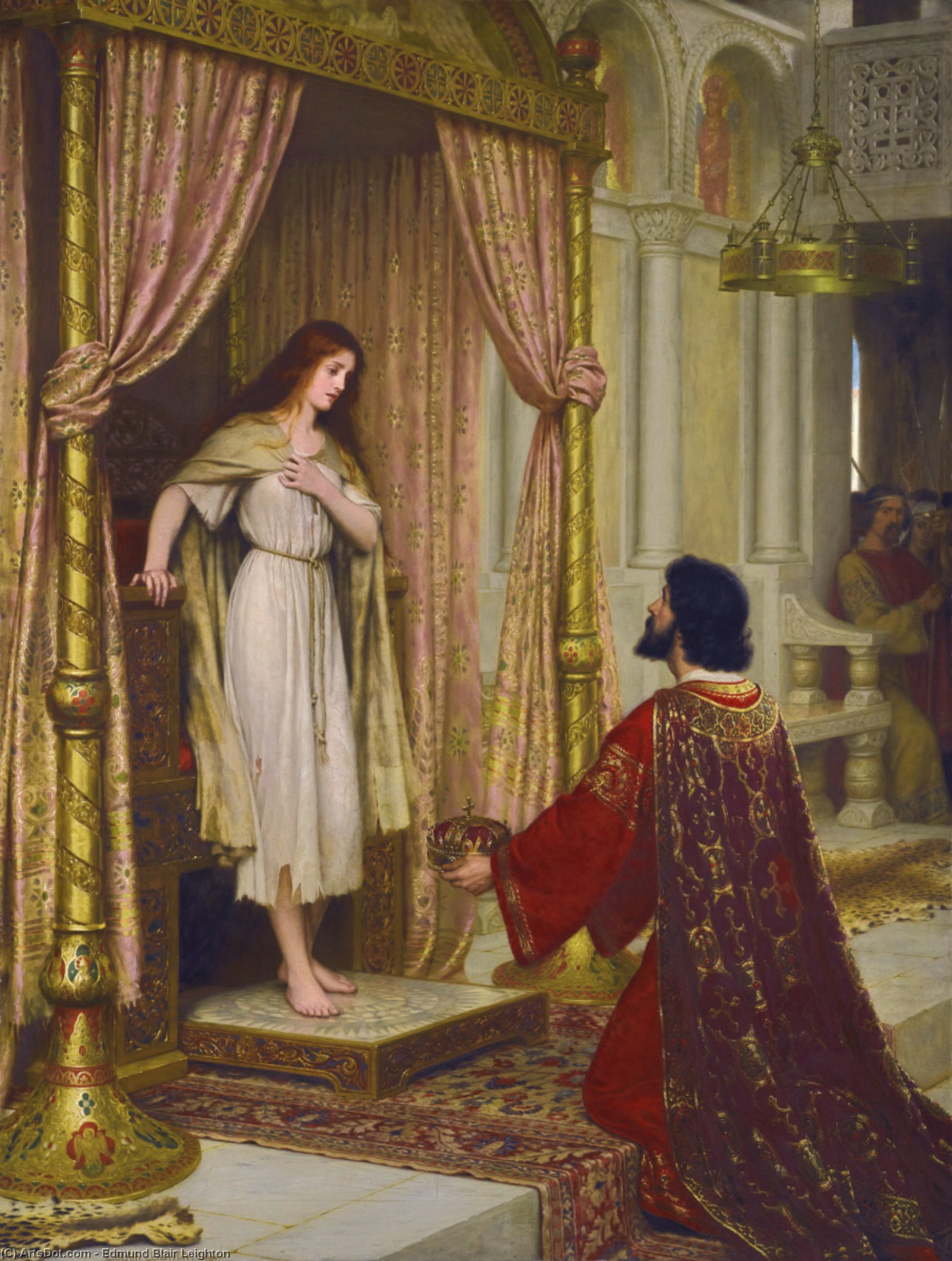
A King and a Beggar Maid

 Read More
Purchase a high-resolution, enhanced digital image, far superior to the online preview.
Each file is meticulously prepared by our in-house specialists using advanced tools and expert manual retouching. We ensure every image has exceptional clarity, precise color accuracy, and fine detail.
The final file is delivered via email within 72 hours, optimized for immediate use in professional, editorial, and print environments. This is the same quality trusted by top-tier design studios, publishers, and galleries.
Digital Image
Download a high-resolution file for personal display, printing, and creative projects. ( Buy Print Buy Hand Made Painting)
Included in Every Digital Image Order
Expert Digital Delivery, Guaranteed
When you choose ArtsDot.com, you're not just getting an image - you're receiving a professionally enhanced digital artwork, crafted with precision and backed by a satisfaction guarantee. Here's everything that comes with your order, automatically:

Fast Email Delivery
Your high-resolution digital image file will be emailed to you within 72 hours of ordering - ready for immediate use.

AI-Enhanced Digital File
Your artwork is professionally optimized using advanced AI tools and manual editing, ensuring maximum detail, clarity, and color accuracy.

Free Lifetime Re-Delivery
Accidentally deleted or lost your file? No worries - we'll resend it to you anytime, free of charge.

No Import Fees - Ever
Enjoy your artwork instantly with zero customs, duties, or delivery fees - digital downloads are always tax-free.

Color Accuracy Guarantee
We ensure your digital image reflects the original colors as closely as possible using professional tools and color management.

60-Day Satisfaction Guarantee
If you're not satisfied with your digital image, we'll revise it or refund 100% within 60 days - no questions asked.

100% Money-Back Guarantee
Not satisfied? Get a full refund within 60 days of receiving your digital file - no questions asked.

Bulk Order Discounts
Buy 3 images, save 10% - Buy 5, save 15% - Buy 10+, save 20%. Great for creative projects, galleries, and agencies.
Collectible Description
A Scene of Regal Encounter: Unveiling Edmund Leighton’s “A King and a Beggar Maid”
This captivating painting by Edmund Blair Leighton transports viewers to a world steeped in romance, chivalry, and the potential for transformative love. A master of historical genre scenes, Leighton presents us with a moment of profound connection between a kneeling king and a humble maiden, set within an opulent interior that hints at both power and vulnerability. This artwork is not merely a depiction of figures; it’s a narrative frozen in time, inviting contemplation on themes of social class, destiny, and the unexpected paths to happiness.Style & Technique: Echoes of Pre-Raphaelite Grandeur
Leighton's style firmly places him within the Victorian academic tradition, yet it’s infused with a distinct Pre-Raphaelite sensibility. The meticulous attention to detail, evident in the rich textures of fabrics, the sheen of gold accents, and the expressive faces of the figures, is characteristic of this movement. He employs an oil paint technique that prioritizes realism and luminosity, utilizing glazes to achieve subtle color transitions and a captivating depth. The composition itself—symmetrical yet dynamic—draws the eye towards the central interaction, while strong vertical lines establish formality balanced by curvilinear forms that soften the overall effect. The painting’s palette is rich and complex, dominated by warm golds and reds contrasted with muted whites and creams, creating a visually arresting experience.Historical Context & Symbolism: A Ballad Brought to Life
“A King and a Beggar Maid” draws inspiration from the 16th-century broadside ballad of Cophetua and Penelophon—a tale of an African king who falls instantly in love with a young beggar. This story, referenced by Shakespeare and others, became synonymous with immediate attraction and unconventional romance. Leighton’s interpretation captures the pivotal moment of their encounter. The king's kneeling posture symbolizes humility and reverence, while the maiden’s quiet dignity highlights the disparity in their social status. The ornate bed dominating the background suggests royalty but also a potential future—a life transformed by love. The contrast between opulence and simplicity is central to the painting’s symbolic weight, representing the breaking down of societal barriers and the power of genuine connection.Emotional Impact & Interior Design Considerations
This artwork evokes a sense of anticipation, mystery, and hope. The emotional resonance lies in the unspoken narrative—what led to this moment, and what will follow? The painting’s romantic themes and rich color palette make it an ideal addition to interiors seeking a touch of Victorian elegance or Pre-Raphaelite charm. It would be particularly well-suited for drawing rooms, libraries, or dining areas, where its narrative depth can spark conversation and inspire contemplation. The artwork’s size (unknown) allows for versatility in placement; it could serve as a focal point above a fireplace or within a gallery wall arrangement. A high-quality reproduction of “A King and a Beggar Maid” offers an opportunity to bring this timeless story and Leighton's masterful artistry into your home, creating a space that is both beautiful and emotionally engaging.Related Artworks
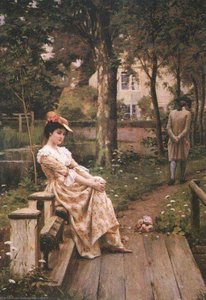
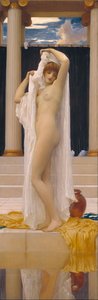
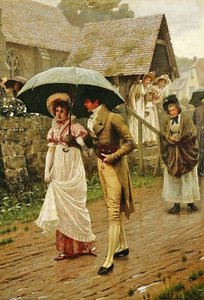
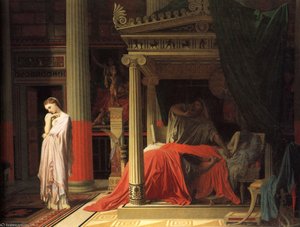
Artist Biography
A Painter of Romance and Chivalry
Edmund Blair Leighton, born in London on September 21st, 1852, was a master storyteller through paint, an artist who breathed life into the romanticized visions of medieval and Regency-era England. Though often associated with the Pre-Raphaelite movement due to his meticulous detail and narrative focus, Leighton carved out a unique space for himself, specializing in scenes that evoked chivalry, courtly love, and moments of poignant drama. His paintings weren’t simply historical recreations; they were carefully constructed emotional landscapes designed to stir the imagination and transport viewers to worlds of bygone elegance and heroic deeds. The son of artist Charles Blair Leighton and Caroline Boosey, Edmund experienced early hardship with his father's untimely death in 1855, leaving his mother to raise their family. This experience perhaps instilled a sensitivity that would later permeate his work, imbuing it with a sense of longing and nostalgia. After an initial foray into the world of commerce – a practical necessity following his father’s passing – Leighton pursued formal artistic training at the Royal Academy Schools, dedicating himself to honing his skills in draftsmanship and composition. He initially supplemented his income through illustrations for publications like Cassell's Magazine, further refining his skills in composition and storytelling before fully committing to oil painting.Developing a Distinctive Style
Leighton’s artistic development was shaped by a confluence of influences. The Pre-Raphaelites, with their emphasis on detail, vibrant color, and literary subject matter, undoubtedly played a role. However, Leighton distinguished himself from the more overtly symbolic and socially conscious members of that brotherhood through his focus on narrative clarity and emotional resonance. He wasn’t interested in making grand statements about morality or politics; rather, he sought to capture fleeting moments of human drama and create visually stunning compositions that appealed to a broad audience. His early works, exhibited at the Royal Academy from 1878 onwards – pieces like A Flaw in the Title (1874) and Witness My Act and Seal – quickly gained recognition for their technical skill and romantic sensibility. These successes established him as a rising star in the London art scene, paving the way for a prolific career that would span over four decades. He possessed an exceptional ability to imbue his figures with life and emotion, drawing viewers into the heart of each narrative.The Height of Popularity: Themes and Masterpieces
By the late 19th and early 20th centuries, Leighton had reached the peak of his artistic powers. His paintings became synonymous with romantic historical genre, capturing the imagination of collectors and art enthusiasts alike. Recurring themes in his work included scenes of courtly love, chivalrous knights, and moments of dramatic confrontation. Works like Godspeed (1900), depicting a knight receiving blessings before embarking on a quest, and The Accolade (1901), portraying a king bestowing knighthood upon a worthy warrior, became iconic representations of the era's fascination with medieval romance. These paintings weren’t merely historical depictions; they were carefully crafted allegories that explored universal themes of courage, honor, and devotion. Leighton’s meticulous attention to detail – from the intricate patterns on costumes to the subtle expressions on faces – brought these scenes to life, immersing viewers in a world of beauty and drama. Other notable works include Tristan and Isolde (1907), capturing the tragic love story with poignant intensity, and The Dedication (1908), showcasing a solemn religious ceremony. He had an uncanny ability to capture light and shadow, creating a sense of atmosphere that enhanced the emotional impact of his work.A Lasting Legacy
Despite his consistent exhibition at the Royal Academy for over forty years, Leighton never achieved full academic recognition, remaining neither an Academician nor an Associate. This perhaps reflects a certain independence of spirit and a refusal to conform to rigid artistic conventions. Nevertheless, his popularity remained undiminished throughout his lifetime, and his paintings continued to be widely reproduced and admired. He was elected to the Royal Institute of Oil Painters in 1887, acknowledging his mastery of the medium. Leighton’s influence can be seen in the works of subsequent artists who sought to capture the romance and drama of historical subjects. His legacy extends beyond the realm of fine art, permeating popular culture through countless reproductions and adaptations of his iconic images. He died on September 1st, 1922, leaving behind a body of work that continues to enchant and inspire audiences today. His son, Eric James Blair Leighton, also followed in his footsteps, continuing the family tradition of artistic excellence. Major works include:- A King and a Beggar Maid (1878): A poignant depiction of social contrast and unexpected affection.
- The Dying Copernicus (1880): A dramatic portrayal of the astronomer's final moments, filled with intellectual intensity.
- To Arms! (1888): An energetic scene of a medieval call to battle, brimming with patriotic fervor.
- Lady Godiva (1892): A classic depiction of the legendary tale, emphasizing both vulnerability and defiance.
- The Accolade (1901): Perhaps his most famous work, embodying the ideals of chivalry and honor.
- Tristan and Isolde (1907): A hauntingly beautiful representation of the tragic love story.

Edmund Blair Leighton
1852 - 1922 , United Kingdom
Quick Facts
- Artistic Movement Or Style: Pre-Raphaelite, Romanticism
- Artists Or Movements Influenced By This Artist: ['Subsequent historical painters']
- Artists Who Influenced This Artist: ['Pre-Raphaelites']
- Date Of Birth: September 21, 1852
- Date Of Death: September 1, 1922
- Full Name: Edmund Blair Leighton
- Nationality: British
- Notable Artworks:
- A King and a Beggar Maid
- The Accolade
- Godspeed
- Tristan and Isolde
- Place Of Birth: London, UK

