 Preview
 Send
Send Share
Share
 Details

 Download
 Similars
 X-Ray
X-Ray Diaporama
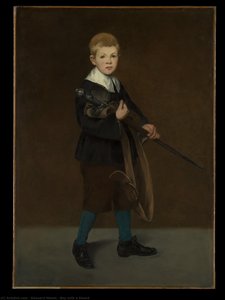
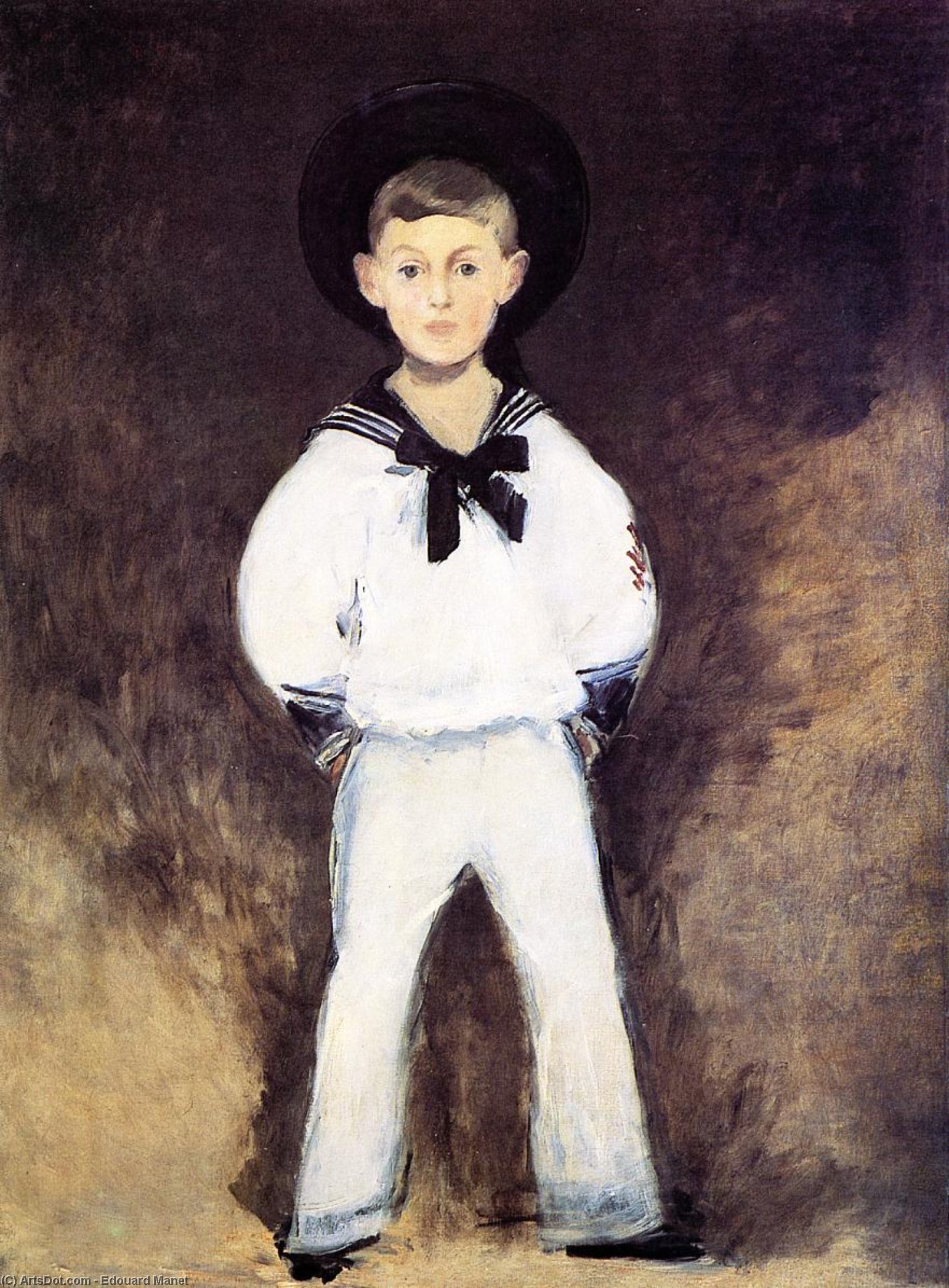
Portrait of Henry Bernstein as a Child
 Oil On Canvas
- WallArt
- Impressionism
 1881
1881- Modern
 135.0 x 97.0 cm
 Read More
Hand Made Oil Reproduction
Hand-painted oil on canvas in your size and frame, made to order by our artists. ( Buy Print Buy Image)




P118B $10

P118H $10

P118W $10

P438Z $10

P508JH $12

P508YH $12

P805H $10

P805Z $10

P919BZ $10

P919G $10

P919XJ $10

P959ZH $10

P968JZ $12

W106C $8

W218G $10

W218JH $8

W218Y $10

W307PJ $10

W316G $10

W316PJ $8

W316Y $10

W398PJ $8

W4111J $10

W500HY $15

W500JH $15

W692G $12

W849H $8

W940BG $15

W953PJ $8




Pick from our preset sizes that match the artwork's original proportions.

You may enter your own dimensions to fit a specific frame or space. If your selected size does not match the original image's proportions, we will either crop the artwork or extend the painting with additional hand-painted elements. A digital mockup will be sent for your approval before production begins.
Please note that the on-screen preview does not reflect the actual cropping or extension. Only the mockup will accurately show the final composition.
While custom sizes are available, we recommend selecting a dimension from the predefined list to preserve the original proportions.
After order, ArtsDot.com team will email client for instructions and provide a mockup preview
Worldwide Delivery () in 3/4 weeks instead of standard 5 weeks. (16 August). No compromise on quality.

Free Worldwide Express Shipping

High-Quality Linen Canvas

Full Shipping Insurance

Customs Tax Refund Guarantee

True Color Matching Guarantee

60-Day Return Policy (Defects Only)

100% Money-Back Guarantee

Bulk Discount Offer
 Glass option is only available in size under 110 CM

Portrait of Henry Bernstein as a Child
Reproduction Medium
Reproduction Size
-


Total Price
$ 263
Artwork Description
Portrait of Henry Bernstein as a Child – A Window Into Impressionist Vision
Édouard Manet’s “Portrait of Henry Bernstein as a Child,” painted in 1881, stands as a quintessential example of Impressionism's fascination with capturing fleeting moments and conveying emotion through subtle tonal shifts. More than just a depiction of a young boy—the son of financier Henri Bernstein—it embodies Manet’s groundbreaking approach to painting, marking a decisive step away from academic conventions toward embracing the vibrancy of modern life. This artwork resides in a private collection, offering rare insight into Manet's artistic evolution during his later years.The Painting: Composition and Technique
Measuring 135 x 97 cm, the canvas showcases Manet’s masterful command of oil paint on canvas—a medium he skillfully utilized to achieve remarkable textural depth and luminosity. Unlike traditional portraiture which prioritized meticulous detail and idealized beauty, Manet deliberately eschewed polished surfaces, favoring loose brushstrokes that capture the immediacy of observation. The artist employed a muted palette dominated by earthy browns and creams, prioritizing tonal harmony over vibrant color contrasts—a characteristic trait of Impressionist painters who sought to represent light and atmosphere as perceived by the eye. Notice how Manet skillfully blends colors to create an illusion of volume and shadow, drawing the viewer’s gaze directly to Henry Bernstein's face and posture. The boy is positioned centrally within the frame, gazing intently at the viewer—a deliberate gesture intended to engage the spectator emotionally and intellectually.Artistic Style: Impressionism's Embrace of Modernity
Manet’s artistic style firmly establishes him as a pioneer of Impressionism, aligning with the movement’s core tenets. Influenced by artists like Claude Monet and Camille Pissarro, Manet rejected the rigid rules imposed by the Académie des Beaux-Arts, prioritizing subjective experience over objective representation. He skillfully blended traditional techniques—such as careful anatomical rendering—with modernist elements—namely, a focus on capturing transient effects of light and color—a hallmark of Impressionist painting. The subtle gradations of tone achieved through layering paint create an ethereal quality, mirroring the hazy atmosphere characteristic of Parisian streets during Manet’s time. This deliberate departure from academic tradition signaled a profound shift in artistic sensibilities, paving the way for subsequent generations of painters to explore new expressive possibilities.Historical Context: A Reflection of Changing Societal Values
“Portrait of Henry Bernstein as a Child” emerged during a period of significant social and cultural transformation in France—the Belle Époque (Beautiful Era). This era witnessed unprecedented industrial growth, urbanization, and artistic experimentation, challenging established norms and conventions. Manet’s decision to portray a child—a subject rarely explored by artists of his time—reflects the growing interest in depicting everyday life and capturing the psychological nuances of human experience. Furthermore, the painting's understated elegance speaks to a broader trend toward rejecting ostentation and embracing simplicity—values that resonated deeply with Impressionist painters who sought to convey genuine emotion without resorting to theatrical grandeur. The portrait serves as a poignant reminder of Manet’s commitment to portraying reality as he perceived it, aligning perfectly with the movement’s ethos of capturing fleeting moments and conveying emotional resonance.Symbolism and Emotional Impact
Beyond its technical brilliance, “Portrait of Henry Bernstein as a Child” possesses symbolic depth—a testament to Manet's artistic vision. The boy’s direct gaze at the viewer invites contemplation and establishes an intimate connection between subject and observer—a technique employed by Impressionists to engage viewers emotionally. The muted color palette contributes to the painting’s melancholic mood, conveying a sense of quiet introspection and vulnerability. While seemingly simple in its composition, “Portrait of Henry Bernstein as a Child” encapsulates Manet's profound understanding of human psychology and his ability to translate emotion onto canvas—a legacy that continues to inspire artists today. It is an artwork that invites viewers to consider the beauty found within ordinary moments and the power of observation to illuminate the complexities of human experience.Related Artworks
Artist Biography
A Parisian Rebel: The Life and Art of Édouard Manet
Édouard Manet, born in 1832 into a comfortable bourgeois family in Paris, was hardly destined for the life of a revolutionary artist. His father, a respected judge, envisioned a secure future for his son in law or perhaps naval service – respectable professions befitting their social standing. Yet, even as a young boy, Manet’s heart belonged to art. At eleven, he began formal drawing lessons, and though briefly apprenticed to the academic painter Thomas Couture, he quickly found Couture's rigid methods stifling. This early resistance foreshadowed a lifetime spent challenging artistic conventions. Manet wasn’t interested in simply replicating the past; he sought to capture the vibrancy – and sometimes the unsettling realities – of modern Parisian life. He frequented the Louvre, not merely to copy Old Masters, but to dissect their techniques, learning from artists like Caravaggio and Velázquez how light and shadow could sculpt form and evoke emotion. However, it was a shift in artistic currents, particularly the rise of Realism championed by Gustave Courbet, that truly ignited Manet’s creative path. Courbet's insistence on depicting everyday life without idealization resonated deeply with Manet, freeing him from the constraints of historical or mythological subjects.Breaking with Tradition: Scandal and Innovation
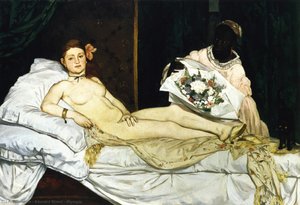
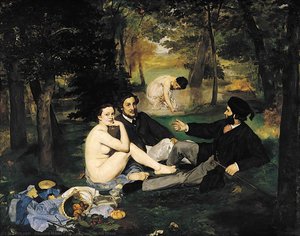
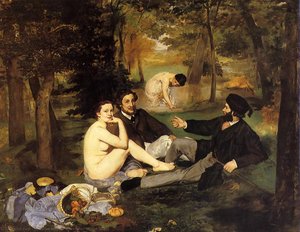
The 1860s marked a period of intense artistic ferment in Paris, and Manet found himself at the epicenter of it all. The arrival of Japanese prints – *ukiyo-e* – profoundly impacted his aesthetic sensibilities. He was captivated by their flattened perspectives, bold compositions, and striking use of color, elements that would become hallmarks of his own style. This influence, combined with his growing rejection of academic polish, led to works that shocked and scandalized the Parisian art world. Le Déjeuner sur l'herbe (The Luncheon on the Grass), exhibited at the Salon des Refusés in 1863 – an exhibition for works rejected by the official Salon – became a lightning rod for controversy. The painting, depicting a nude woman casually picnicking with two fully clothed men, wasn’t simply about nudity; it was about *how* that nudity was presented. Manet's figures lacked the idealized forms and mythological context of traditional nudes. They were undeniably modern, confronting the viewer with an unsettling directness. The scandal surrounding Le Déjeuner only intensified with his 1865 masterpiece, Olympia. This painting, a deliberate reimagining of Titian’s *Venus of Urbino*, presented a contemporary prostitute staring boldly out at the viewer. The unflinching realism and provocative subject matter were met with widespread condemnation. Critics accused Manet of vulgarity and artistic incompetence, but beneath the outrage lay a recognition that he was fundamentally altering the language of painting.A Bridge to Impressionism: Light, Brushwork, and Modern Life
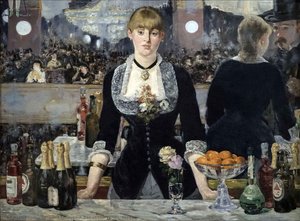
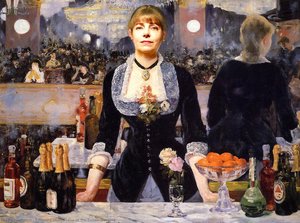
While Manet never fully embraced the label “Impressionist,” his influence on the movement was undeniable. He shared their rejection of academic conventions and their commitment to capturing the fleeting effects of light and atmosphere. He exhibited alongside Monet, Renoir, Degas, and others at the Impressionists’ independent exhibitions, solidifying his position as a key figure in the avant-garde. Manet's technique evolved towards a looser brushstroke, prioritizing the impression of form over precise detail. He experimented with color, often using stark contrasts to create dramatic effects. Beyond the scandalous nudes, Manet explored a wide range of subjects: portraits – including striking depictions of his wife Suzanne and fellow artist Émile Zola; scenes of Parisian nightlife, such as A Bar at the Folies-Bergère, which masterfully captures the alienation and spectacle of modern urban life; and intimate domestic scenes. He wasn’t merely documenting these subjects; he was interrogating them, questioning societal norms and challenging conventional notions of beauty.Legacy and Lasting Impact
Édouard Manet's untimely death in 1883 from syphilis cut short a career that had already irrevocably changed the course of art history. Though his reputation grew significantly after his passing, his impact was immediately felt by younger artists who recognized him as a liberator. He broke down barriers, challenging traditional notions of subject matter, technique, and artistic purpose.- His emphasis on capturing modern life paved the way for Impressionism and Post-Impressionism.
- His innovative use of brushwork and color influenced generations of painters.
- His willingness to confront uncomfortable truths about society forced viewers to question their own assumptions.
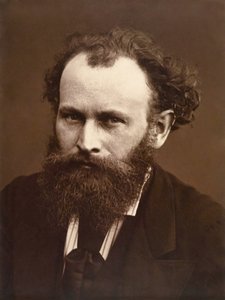
Édouard Manet
1832 - 1883 , France
Quick Facts
- Artistic Movement Or Style: Realism, Impressionism
- Artists Or Movements Influenced By This Artist:
- Claude Monet
- Pierre-Auguste Renoir
- Edgar Degas
- Impressionism
- Artists Who Influenced This Artist:
- Caravaggio
- Diego Velázquez
- Gustave Courbet
- Date Of Birth: January 23, 1832
- Date Of Death: 1883
- Full Name: Édouard Manet
- Nationality: French
- Notable Artworks:
- Le Déjeuner sur l'herbe
- Olympia
- A Bar at the Folies-Bergère
- Place Of Birth: Paris, France
Related Articles
Édouard Manet's Masterpieces: Explore 25 Iconic Paintings for Your Home Decor
Explore 25 iconic Édouard Manet paintings, from 'Le Déjeuner sur l'herbe' to 'Olympia'. Discover the stories behind these Impressionist masterpieces & find museum-quality art reproductions for your home. Explore the full collection online at ArtsDot.com!
Henri Matisse's Masterpieces: Explore 25 Iconic Paintings & Art Decor Ideas
Journey through Henri Matisse's 25 most iconic paintings! Explore Fauvism, vibrant colors & the stories behind masterpieces like 'The Dance'. Find museum-quality art reproductions and curated decor ideas to elevate your space. Discover all masterpieces on ArtsDot.com.

Impressionism's Masterpieces: 10 Paintings That Defined a Movement | ArtsDot
Journey through Impressionism's heart with 10 iconic paintings by Monet, Renoir & Degas. Explore light, color & the stories behind these masterpieces. Find museum-quality art reproductions and elevate your home decor on ArtsDot.com.
Henri Martin: A Synthesis of Impressionism & Symbolism in the French Landscape Tradition
Explore the captivating world of Henri Martin, a French Post-Impressionist bridging Impressionism & Symbolism. Discover his unique style, influential landscapes, and lasting legacy with ArtsDot.
Impressionism's Legacy: 10 Masterpieces That Transformed Art & Decor
Journey through Impressionism's radiant world! Explore 10 masterpieces by Monet, Renoir & Degas that revolutionized art. Discover the stories behind these iconic paintings and find museum-quality reproductions for your home at .