 Preview
 Send
Send Share
Share
 Details

 Download
 Similars
 X-Ray
X-Ray Diaporama
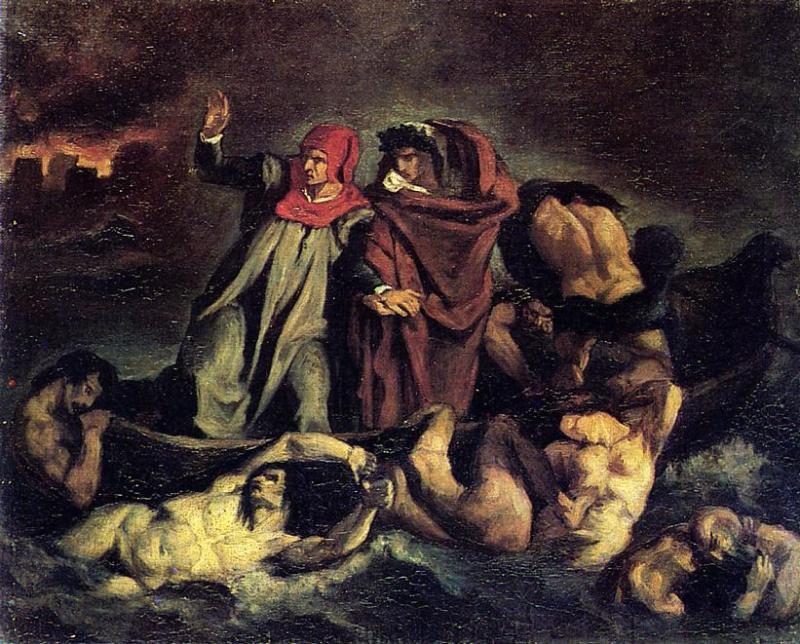
The barque of Dante (Copy after Delacroix)
 Oil On Canvas
- WallArt
- Romanticism
 1854
1854 38.0 x 45.0 cm
 Read More
Hand Made Oil Reproduction
Hand-painted oil on canvas in your size and frame, made to order by our artists. ( Buy Print Buy Image)




P118B $10

P118H $10

P118W $10

P438Z $10

P508JH $12

P508YH $12

P805H $10

P805Z $10

P919BZ $10

P919G $10

P919XJ $10

P959ZH $10

P968JZ $12

W106C $8

W218G $10

W218JH $8

W218Y $10

W307PJ $10

W316G $10

W316PJ $8

W316Y $10

W398PJ $8

W4111J $10

W500HY $15

W500JH $15

W692G $12

W849H $8

W940BG $15

W953PJ $8




Pick from our preset sizes that match the artwork's original proportions.

You may enter your own dimensions to fit a specific frame or space. If your selected size does not match the original image's proportions, we will either crop the artwork or extend the painting with additional hand-painted elements. A digital mockup will be sent for your approval before production begins.
Please note that the on-screen preview does not reflect the actual cropping or extension. Only the mockup will accurately show the final composition.
While custom sizes are available, we recommend selecting a dimension from the predefined list to preserve the original proportions.
After order, ArtsDot.com team will email client for instructions and provide a mockup preview
Worldwide Delivery () in 3/4 weeks instead of standard 5 weeks. (16 August). No compromise on quality.

Free Worldwide Express Shipping

High-Quality Linen Canvas

Full Shipping Insurance

Customs Tax Refund Guarantee

True Color Matching Guarantee

60-Day Return Policy (Defects Only)

100% Money-Back Guarantee

Bulk Discount Offer
 Glass option is only available in size under 110 CM

The barque of Dante (Copy after Delacroix)
Reproduction Medium
Reproduction Size
-


Total Price
$ 313
Artwork Description
A Tempestuous Journey: Manet’s ‘The Barque of Dante’
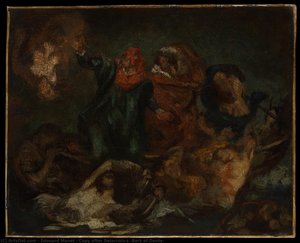
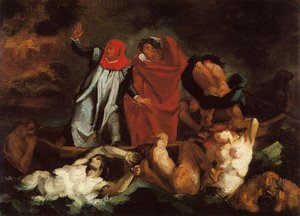
Édouard Manet's *The Barque of Dante (Copy after Delacroix)*, painted in 1854, is far more than a mere replication; it’s a powerful statement of artistic homage and burgeoning individual style. This dramatic scene, inspired by the harrowing eighth canto of Dante Alighieri’s *Inferno*, showcases Manet's early mastery while simultaneously acknowledging his deep admiration for Eugène Delacroix – whose original painting served as its direct inspiration.Delacroix’s Legacy and Manet’s Response
Manet, a pivotal figure in the transition from Realism to Impressionism, began his career steeped in the traditions of the French masters. His decision to copy Delacroix's *The Barque of Dante* wasn’t an exercise in imitation but rather a rigorous study of Romantic composition, color, and emotional intensity. It allowed Manet to dissect and internalize Delacroix’s techniques – particularly his dynamic brushwork and evocative use of light and shadow – before forging his own path. This work demonstrates how artists learn by engaging directly with the works they admire.Navigating the Circles of Hell: Subject & Symbolism
The painting depicts Charon, the ferryman of Hades, transporting souls across the River Styx to their eternal punishment in the depths of hell. A throng of desperate figures are crammed into a small boat, writhing and reaching out in anguish. Their red and black robes heighten the sense of drama and despair. The distant, fiery glow suggests the torments awaiting them. The Barque of Dante is rich with symbolism: the turbulent waters represent chaos and suffering; Charon embodies fate’s relentless hand; and the figures themselves symbolize humanity's collective struggle against sin and mortality.Technique & Artistic Style
Manet employed oil on canvas, a medium that allowed for rich color saturation and textural depth. While adhering to Delacroix’s compositional framework, Manet begins to introduce elements of his own style – a more direct realism in the depiction of figures and a growing confidence in handling light and shadow. The brushwork is visible, lending energy and immediacy to the scene. The painting's relatively small size (38 x 45 cm) intensifies the feeling of claustrophobia and desperation within the boat.Historical Context: A Bridge Between Movements
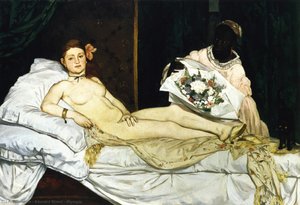
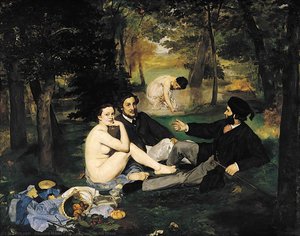
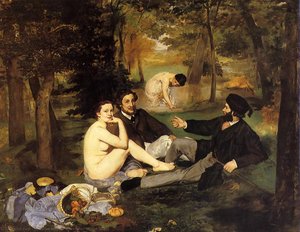
Created during a period of significant artistic change, *The Barque of Dante* reflects the waning influence of Romanticism and the emergence of Realist concerns. Manet’s work would soon become instrumental in paving the way for Impressionism, challenging academic conventions and prioritizing subjective experience over idealized representation. His later works, such as *Le Déjeuner sur l'herbe* and *Olympia*, sparked controversy but ultimately redefined modern art.Emotional Impact & Lasting Legacy
This painting evokes a powerful sense of unease and foreboding. The viewer is drawn into the scene’s turmoil, forced to confront themes of mortality, judgment, and despair. It's a visceral experience that transcends mere historical representation. Today, Manet is celebrated as a revolutionary artist whose work broke down barriers and opened new possibilities for artistic expression. *The Barque of Dante (Copy after Delacroix)* serves as a compelling reminder of his early talent and the enduring power of art to explore the darkest corners of the human condition.- For those interested in exploring more of Manet’s work, high-quality reproductions are available at ArtsDot.
- The Staatliche Museen zu Berlin houses an impressive collection of European paintings, including works by Manet and his contemporaries.
- Further research into Eugène Delacroix's original *The Barque of Dante* provides valuable context for understanding Manet’s interpretation.
Related Artworks
Artist Biography
A Parisian Rebel: The Life and Art of Édouard Manet
Édouard Manet, born in 1832 into a comfortable bourgeois family in Paris, was hardly destined for the life of a revolutionary artist. His father, a respected judge, envisioned a secure future for his son in law or perhaps naval service – respectable professions befitting their social standing. Yet, even as a young boy, Manet’s heart belonged to art. At eleven, he began formal drawing lessons, and though briefly apprenticed to the academic painter Thomas Couture, he quickly found Couture's rigid methods stifling. This early resistance foreshadowed a lifetime spent challenging artistic conventions. Manet wasn’t interested in simply replicating the past; he sought to capture the vibrancy – and sometimes the unsettling realities – of modern Parisian life. He frequented the Louvre, not merely to copy Old Masters, but to dissect their techniques, learning from artists like Caravaggio and Velázquez how light and shadow could sculpt form and evoke emotion. However, it was a shift in artistic currents, particularly the rise of Realism championed by Gustave Courbet, that truly ignited Manet’s creative path. Courbet's insistence on depicting everyday life without idealization resonated deeply with Manet, freeing him from the constraints of historical or mythological subjects.Breaking with Tradition: Scandal and Innovation
The 1860s marked a period of intense artistic ferment in Paris, and Manet found himself at the epicenter of it all. The arrival of Japanese prints – *ukiyo-e* – profoundly impacted his aesthetic sensibilities. He was captivated by their flattened perspectives, bold compositions, and striking use of color, elements that would become hallmarks of his own style. This influence, combined with his growing rejection of academic polish, led to works that shocked and scandalized the Parisian art world. Le Déjeuner sur l'herbe (The Luncheon on the Grass), exhibited at the Salon des Refusés in 1863 – an exhibition for works rejected by the official Salon – became a lightning rod for controversy. The painting, depicting a nude woman casually picnicking with two fully clothed men, wasn’t simply about nudity; it was about *how* that nudity was presented. Manet's figures lacked the idealized forms and mythological context of traditional nudes. They were undeniably modern, confronting the viewer with an unsettling directness. The scandal surrounding Le Déjeuner only intensified with his 1865 masterpiece, Olympia. This painting, a deliberate reimagining of Titian’s *Venus of Urbino*, presented a contemporary prostitute staring boldly out at the viewer. The unflinching realism and provocative subject matter were met with widespread condemnation. Critics accused Manet of vulgarity and artistic incompetence, but beneath the outrage lay a recognition that he was fundamentally altering the language of painting.A Bridge to Impressionism: Light, Brushwork, and Modern Life
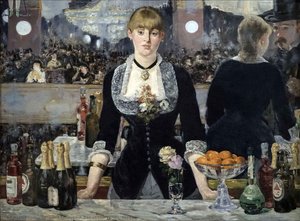
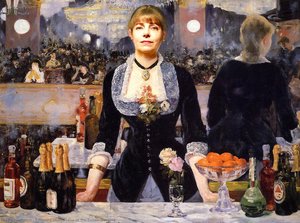
While Manet never fully embraced the label “Impressionist,” his influence on the movement was undeniable. He shared their rejection of academic conventions and their commitment to capturing the fleeting effects of light and atmosphere. He exhibited alongside Monet, Renoir, Degas, and others at the Impressionists’ independent exhibitions, solidifying his position as a key figure in the avant-garde. Manet's technique evolved towards a looser brushstroke, prioritizing the impression of form over precise detail. He experimented with color, often using stark contrasts to create dramatic effects. Beyond the scandalous nudes, Manet explored a wide range of subjects: portraits – including striking depictions of his wife Suzanne and fellow artist Émile Zola; scenes of Parisian nightlife, such as A Bar at the Folies-Bergère, which masterfully captures the alienation and spectacle of modern urban life; and intimate domestic scenes. He wasn’t merely documenting these subjects; he was interrogating them, questioning societal norms and challenging conventional notions of beauty.Legacy and Lasting Impact
Édouard Manet's untimely death in 1883 from syphilis cut short a career that had already irrevocably changed the course of art history. Though his reputation grew significantly after his passing, his impact was immediately felt by younger artists who recognized him as a liberator. He broke down barriers, challenging traditional notions of subject matter, technique, and artistic purpose.- His emphasis on capturing modern life paved the way for Impressionism and Post-Impressionism.
- His innovative use of brushwork and color influenced generations of painters.
- His willingness to confront uncomfortable truths about society forced viewers to question their own assumptions.
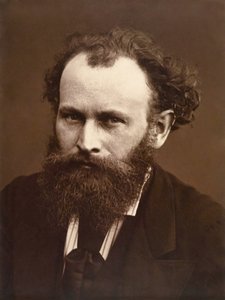
Édouard Manet
1832 - 1883 , France
Quick Facts
- Artistic Movement Or Style: Realism, Impressionism
- Artists Or Movements Influenced By This Artist:
- Claude Monet
- Pierre-Auguste Renoir
- Edgar Degas
- Impressionism
- Artists Who Influenced This Artist:
- Caravaggio
- Diego Velázquez
- Gustave Courbet
- Date Of Birth: January 23, 1832
- Date Of Death: 1883
- Full Name: Édouard Manet
- Nationality: French
- Notable Artworks:
- Le Déjeuner sur l'herbe
- Olympia
- A Bar at the Folies-Bergère
- Place Of Birth: Paris, France
Related Articles
Édouard Manet's Masterpieces: Explore 25 Iconic Paintings for Your Home Decor
Explore 25 iconic Édouard Manet paintings, from 'Le Déjeuner sur l'herbe' to 'Olympia'. Discover the stories behind these Impressionist masterpieces & find museum-quality art reproductions for your home. Explore the full collection online at ArtsDot.com!
Dante Gabriel Rossetti's 25 Masterpieces: A Journey Through Victorian Art & Symbolism | ArtsDot
Explore 25 iconic artworks by Dante Gabriel Rossetti, a leading Pre-Raphaelite artist. Discover the stories behind masterpieces like 'Proserpine' & 'Beata Beatrix'. Find museum-quality art reproductions and elevate your home decor with ArtsDot.com.
Romantic Realism's Finest: 10 Masterpieces for Your Home | ArtsDot
Explore 10 defining masterpieces of Romantic Realism! Discover Courbet, Millet & Daumier's powerful paintings—capturing emotion and social realities. Find museum-quality reproductions for your home at ArtsDot.com.

Ferdinand Delacroix: Romanticism's Revolutionary Brush – A Study of Passion, Politics, and Painterly Innovation
Explore the revolutionary art of Eugène Delacroix, leader of French Romanticism. Discover his masterful use of color, political engagement, and lasting influence on modern painting. Learn about key works & history.

Romantic Landscapes: 10 Masterpieces for Your Home | ArtsDot
Journey through 10 Romantic landscape masterpieces by Friedrich, Turner & Cole. Explore emotional art, sublime nature scenes & iconic 19th-century paintings. Find museum-quality reproductions for your home at ArtsDot.com – discover the full collection online!