

 Preview
 Send
Send Share
Share
 Details

 Download
 Similars
 X-Ray
X-Ray Diaporama
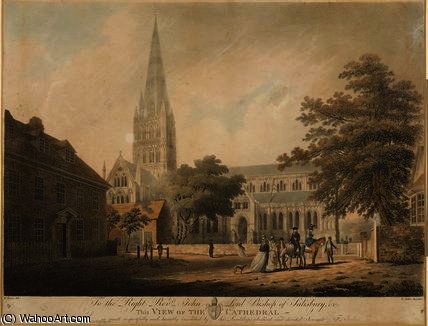
Salisbury cathedral,

 Read More
Purchase a high-resolution, enhanced digital image, far superior to the online preview.
Each file is meticulously prepared by our in-house specialists using advanced tools and expert manual retouching. We ensure every image has exceptional clarity, precise color accuracy, and fine detail.
The final file is delivered via email within 72 hours, optimized for immediate use in professional, editorial, and print environments. This is the same quality trusted by top-tier design studios, publishers, and galleries.
Digital Image
Download a high-resolution file for personal display, printing, and creative projects. ( Buy Print Buy Hand Made Painting)
Included in Every Digital Image Order
Expert Digital Delivery, Guaranteed
When you choose ArtsDot.com, you're not just getting an image - you're receiving a professionally enhanced digital artwork, crafted with precision and backed by a satisfaction guarantee. Here's everything that comes with your order, automatically:

Fast Email Delivery
Your high-resolution digital image file will be emailed to you within 72 hours of ordering - ready for immediate use.

AI-Enhanced Digital File
Your artwork is professionally optimized using advanced AI tools and manual editing, ensuring maximum detail, clarity, and color accuracy.

Free Lifetime Re-Delivery
Accidentally deleted or lost your file? No worries - we'll resend it to you anytime, free of charge.

No Import Fees - Ever
Enjoy your artwork instantly with zero customs, duties, or delivery fees - digital downloads are always tax-free.

Color Accuracy Guarantee
We ensure your digital image reflects the original colors as closely as possible using professional tools and color management.

60-Day Satisfaction Guarantee
If you're not satisfied with your digital image, we'll revise it or refund 100% within 60 days - no questions asked.

100% Money-Back Guarantee
Not satisfied? Get a full refund within 60 days of receiving your digital file - no questions asked.

Bulk Order Discounts
Buy 3 images, save 10% - Buy 5, save 15% - Buy 10+, save 20%. Great for creative projects, galleries, and agencies.
Related Artworks
Artist Biography
The Transitional Vision of Edward Dayes
In the shifting landscape of late eighteenth-century British art, few figures capture the delicate bridge between eras as poignantly as Edward Dayes. Born in London in 1763, Dayes emerged during a period of profound aesthetic metamorphosis, standing at the crossroads where the refined, structured elegance of the Rococo began to yield to the emotive, untamed spirit of Romanticism. His life and work serve as a vital link in the evolution of English landscape painting, embodying a transition from topographical precision toward an atmospheric exploration of mood and light that would eventually pave the way for masters like J.M.W. Turner.
Dayes’s artistic journey began under the tutelage of William Pether, a mentorship that deeply imprinted upon him a mastery of tonal gradation and meticulous observation. This early training allowed him to excel not only as a watercolorist but also as a skilled engraver specializing in the mezzotint technique. Through this medium, Dayes possessed the unique ability to disseminate his vision far beyond the walls of private collections, using the rich, velvety textures of mezzotint to capture nuanced details and deep shadows. His versatility was remarkable; while he is most celebrated for his landscapes, his prolific output also encompassed intimate portraits and grand biblical subjects, demonstrating a breadth of talent that commanded respect across the London art scene.
Atmospheric Landscapes and the Beauty of Decay
The true soul of Dayes’s oeuvre lies in his ability to transform the English countryside into a stage for emotional resonance. He did not merely seek to document the terrain; rather, he sought to capture its essence through a palette of subtle blues, soft greens, and misty grays. His landscapes often functioned as meditations on the passage of time, particularly through his fascination with ruin studies. By meticulously documenting crumbling churches and ancient, weathered castles, Dayes imbued his compositions with a sense of historical weight and melancholy beauty. These works were far more than topographical records; they were atmospheric explorations where texture and light took precedence over mere accuracy.
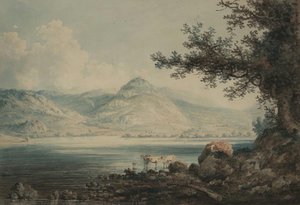
This preoccupation with the picturesque and the decaying served as a profound precursor to the Romantic movement. In his depictions of sites like Dryburgh Abbey or the serene vistas of Grasmere Lake, one can sense the burgeoning interest in the sublime—the idea that nature possesses a power both beautiful and terrifying. His ability to manipulate light to suggest depth and weather foreshadowed the groundbreaking innovations of later artists, making his work an essential study for anyone tracing the lineage of British watercolor painting.
Legacy and Artistic Significance
Throughout his career, Dayes maintained a significant presence within the prestigious institutions of his time. He was a regular and respected exhibitor at both the Royal Academy and the Society of Artists, contributing approximately sixty-four works to these venerable halls. His success was bolstered by the patronage of influential figures, including the Duke of York and Albany, which secured his status within the upper echelons of British society. Even as he navigated the complexities of a changing art market, his commitment to capturing the natural world remained steadfast.
The historical significance of Edward Dayes extends beyond his individual achievements to his role as an artistic catalyst. His influence can be traced through several key elements of his legacy:
- Technical Mastery: His sophisticated use of watercolor and mezzotint provided a blueprint for tonal excellence in British printmaking and painting.
- Stylistic Transition: He acted as a vital conduit, moving the English aesthetic from the orderly compositions of the mid-eighteenth century toward the atmospheric drama of the nineteenth.
- Inspiration to Greatness: His focus on light, shadow, and the evocative power of ruins provided an early foundation for the Romantic landscapes of John Constable and J.M.W. Turner.
Though his life was tragically short, ending in May 1804, the impact of Edward Dayes remains etched in the history of British art. He remains a painter of profound sensitivity, a man who looked upon the ruins of the past and saw not just decay, but the dawn of a new, more expressive way of seeing the world.
Edward Dayes
1763 - 1804 , United Kingdom
Quick Facts
- Artistic Movement Or Style: Romanticism
- Artists Or Movements Influenced By This Artist: ['John M.W. Turner']
- Artists Who Influenced This Artist: ['William Pether']
- Date Of Birth: 1763
- Full Name: Edward Dayes
- Nationality: English
- Notable Artworks:
- Grasmere Lake
- Magdalen College, Oxford
- A Waterfall At Corwen
- Place Of Birth: London, United Kingdom

