 Preview
 Send
Send Share
Share
 Details

 Download
 Similars
 X-Ray
X-Ray Diaporama
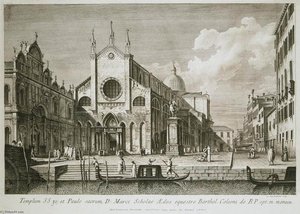
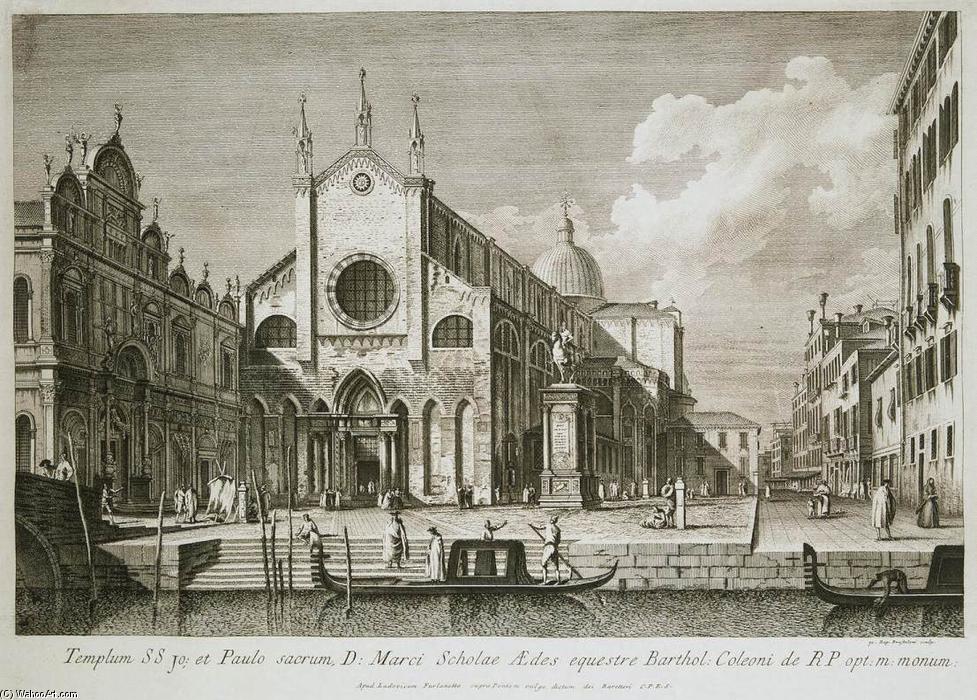
Piazza Santi Giovanni e Paolo
 Etching
- WallArt
- Baroque
 251.0 x 421.0 cm
 Hermitage Museum
 Read More
Hand Made Oil Reproduction
Hand-painted oil on canvas in your size and frame, made to order by our artists. ( Buy Print Buy Image)




P118B $10

P118H $10

P118W $10

P438Z $10

P508JH $12

P508YH $12

P805H $10

P805Z $10

P919BZ $10

P919G $10

P919XJ $10

P959ZH $10

P968JZ $12

W106C $8

W218G $10

W218JH $8

W218Y $10

W307PJ $10

W316G $10

W316PJ $8

W316Y $10

W398PJ $8

W4111J $10

W500HY $15

W500JH $15

W692G $12

W849H $8

W940BG $15

W953PJ $8




Pick from our preset sizes that match the artwork's original proportions.

You may enter your own dimensions to fit a specific frame or space. If your selected size does not match the original image's proportions, we will either crop the artwork or extend the painting with additional hand-painted elements. A digital mockup will be sent for your approval before production begins.
Please note that the on-screen preview does not reflect the actual cropping or extension. Only the mockup will accurately show the final composition.
While custom sizes are available, we recommend selecting a dimension from the predefined list to preserve the original proportions.
After order, ArtsDot.com team will email client for instructions and provide a mockup preview
Worldwide Delivery () in 3/4 weeks instead of standard 5 weeks. (16 August). No compromise on quality.

Free Worldwide Express Shipping

High-Quality Linen Canvas

Full Shipping Insurance

Customs Tax Refund Guarantee

True Color Matching Guarantee

60-Day Return Policy (Defects Only)

100% Money-Back Guarantee

Bulk Discount Offer
 Glass option is only available in size under 110 CM

Piazza Santi Giovanni e Paolo
Reproduction Medium
Reproduction Size
-


Total Price
$ 263
Artwork Description
Antonio Visentini’s Piazza Santi Giovanni e Paolo: A Venetian Vision of Harmony
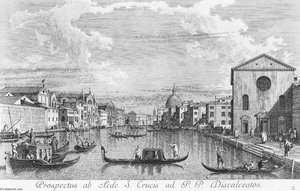
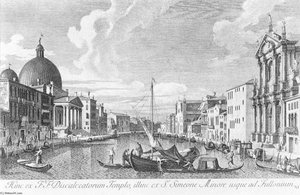
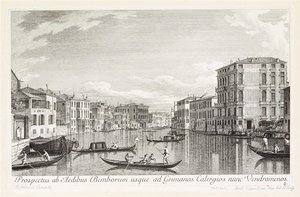
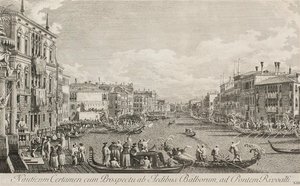
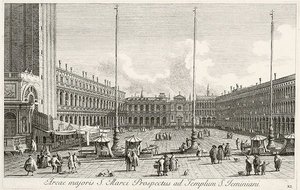
Piazza Santi Giovanni e Paolo stands as one of Venice's most enduring emblems—a testament to the city’s architectural grandeur and its connection to the spiritual heart of Christendom. But it is Antonio Visentini’s etching, completed around 1735, that captures not merely a snapshot of this iconic space but embodies a profound philosophical contemplation on beauty and order. Produced during the Baroque era's twilight years, Visentini’s artwork transcends mere topographical representation; it aspires to elevate Piazza Santi Giovanni e Paolo into an idealized vision of Venetian civic life—a harmonious blend of human presence and architectural majesty.- Subject Matter: The etching depicts the Piazza itself, dominated by the imposing Basilica di San Giorgio Maggiore and its soaring campanile (bell tower). Surrounding figures – merchants, citizens, and pilgrims – engage in everyday activities, yet they are rendered with a remarkable degree of grace and dignity. Visentini skillfully captures the bustling atmosphere of the square without sacrificing compositional balance.
- Style & Technique: Visentini’s etching exemplifies Venetian printmaking at its finest—a technique characterized by meticulous detail and tonal subtlety. The artist employed drypoint engraving, a method that produces fine lines with exceptional sharpness and depth. This painstaking process allowed him to achieve an astonishing level of realism, faithfully reproducing the textures of stone, fabric, and human skin.
- Historical Context: Visentini’s work emerged from Venice's flourishing artistic milieu during the reign of Carlo III—a period marked by a renewed interest in classical ideals and a desire for architectural grandeur. The etching reflects the Baroque tradition's preoccupation with illusionistic perspective and dramatic chiaroscuro, albeit tempered by a Venetian sensibility that prioritizes harmony and restraint.
- Symbolism: Piazza Santi Giovanni e Paolo itself holds symbolic significance—representing Venice’s spiritual heritage and its role as a center of pilgrimage. Visentini’s depiction reinforces this notion through the careful positioning of figures within the square, creating a sense of reverence and contemplation. The campanile serves as a visual anchor, symbolizing faith and aspiration towards divine transcendence.
- Emotional Impact: Viewing Visentini's etching evokes a feeling of serene beauty—a quiet appreciation for the elegance of Venetian architecture and the dignity of human life. The artist’s masterful rendering of light and shadow contributes to this emotional resonance, inviting viewers to immerse themselves in the tranquil atmosphere of Piazza Santi Giovanni e Paolo.
The Artist's Vision: Giuseppe Castiglione & Baroque Influence
Giuseppe Castiglione’s contribution to Venetian art is inextricably linked to Antonio Visentini’s etching, representing a pivotal moment in the dialogue between European and Chinese artistic traditions. Castiglione, a Jesuit missionary stationed in Qing Dynasty China, achieved renown for his ability to synthesize Western techniques with Eastern aesthetics—a feat that cemented his place as one of the era's most innovative artists. His fascination with Venetian architecture mirrored Visentini’s own dedication to capturing the essence of Venetian civic life, demonstrating a shared commitment to portraying beauty and harmony. Castiglione’s stylistic choices – particularly his use of perspective and atmospheric shading—were directly informed by Baroque principles, reflecting the broader artistic currents shaping Europe at the time.Detailed Examination: Printmaking Precision & Illusionistic Depth
The etching's remarkable fidelity to reality stems from Visentini’s mastery of printmaking techniques—specifically drypoint engraving. This method involved scratching a burin (steel stylus) into a copper plate, creating minute grooves that would hold ink and produce exceptionally sharp lines upon printing. The resulting image possesses an astonishing level of detail—capturing the subtle nuances of stone texture, fabric folds, and human facial expressions with breathtaking accuracy. Furthermore, Visentini skillfully employed illusionistic perspective to create a convincing sense of depth—a hallmark of Baroque art that aimed to transport viewers into the depicted space.A Legacy of Venetian Harmony: Piazza Santi Giovanni e Paolo Revisited
Today, Antonio Visentini’s etching remains an enduring symbol of Venetian artistic excellence—a testament to the city's ability to inspire beauty and contemplation. Its meticulous rendering of Piazza Santi Giovanni e Paolo serves as a poignant reminder of Venice’s rich cultural heritage and its enduring fascination with architectural grandeur. Reproductions of this masterpiece continue to captivate audiences worldwide, offering a glimpse into Visentini’s visionary aesthetic and his profound understanding of the human spirit.Related Artworks
Artist Biography
Giuseppe Castiglione: Bridging East and West in Qing Dynasty Art
Giuseppe Castiglione, a name perhaps less familiar than many of his contemporaries, stands as a pivotal figure in the history of Western art’s encounter with China. Born in Milan in 1688, Castiglione's life was one of extraordinary circumstance – a Jesuit missionary who spent over half a century immersed within the opulent and complex world of the Qing court. His unique position allowed him to become not just an artist, but a cultural translator, meticulously blending European artistic techniques with the established traditions of Chinese painting and sculpture. This synthesis resulted in a body of work that remains both strikingly beautiful and profoundly revealing about the dynamics of intercultural exchange during a crucial period of Chinese history.
Castiglione’s early life was marked by a rigorous Jesuit education, a common path for young men of his social standing. He entered the Society of Jesus in Genoa at the age of nineteen, an institution that would profoundly shape his worldview and ultimately lead him to China. Initially assigned to work in the palace enameling workshop, Castiglione’s talent quickly caught the eye of the Kangxi Emperor, who recognized his potential as a court artist. This marked a dramatic shift in his career, propelling him into a role of immense prestige and influence. His journey was not without its challenges; he faced the difficulties inherent in adapting to a vastly different culture, navigating complex social hierarchies, and mastering the nuances of Chinese artistic conventions.
A Master of Illusion: Style and Technique
Castiglione’s distinctive style is perhaps his most enduring legacy. He didn't simply replicate Chinese art; he actively engaged with it, transforming European techniques to suit the aesthetic sensibilities of the Qing court. His paintings are characterized by a remarkable degree of naturalism – an unprecedented level of detail and realism for a Western artist working within a Chinese context. He meticulously rendered textures, capturing the sheen of silk robes, the weight of jade ornaments, and the intricate details of animal fur with astonishing accuracy. However, this realism was always tempered by a deliberate illusionistic quality.
Castiglione’s approach to composition often drew upon Western principles of perspective and spatial arrangement, but he skillfully integrated these elements with traditional Chinese techniques of layering and atmospheric perspective. He frequently employed a technique known as “bianiao,” or ‘scroll painting,’ creating monumental handscrolls that unfolded across entire walls, allowing for a panoramic view of the subject matter. His use of color was equally innovative, incorporating vibrant pigments alongside more subdued earth tones to create a dynamic and engaging visual experience. Notably, he moved away from the stark contrasts of chiaroscuro favored by European painters, opting instead for softer gradations of light and shadow, reflecting the Chinese preference for subtlety and harmony.
The Emperor’s Horses: A Defining Work
Perhaps Castiglione's most celebrated achievement is his monumental handscroll, *Láng Shìníng* (Painting of One Hundred Horses), commissioned by the Yongzheng Emperor in 1735. This vast work, measuring nearly eight meters in length, depicts a cavalry charge – a subject rarely represented in Chinese imperial art. The painting’s creation represents a watershed moment in Castiglione's career and a testament to his ability to bridge artistic traditions. The horses themselves are rendered with an astonishing level of detail, capturing their musculature, movement, and individual personalities. Beyond the technical mastery, *Láng Shìníng* embodies Castiglione’s broader project of cultural synthesis – a deliberate attempt to translate European artistic principles into a distinctly Chinese idiom.
The preparatory drawing for *Láng Shìníng*, recently rediscovered, offers invaluable insight into Castiglione's working methods. It reveals the meticulous planning and experimentation that went into creating this ambitious masterpiece. The drawing is executed in a Western style, with figures sketched in charcoal and rendered in bold ink outlines – a stark contrast to the loose brushstrokes and calligraphic flourishes characteristic of traditional Chinese drawings. This demonstrates Castiglione’s conscious effort to adapt his techniques while retaining a distinctly European sensibility.
A Lasting Legacy: Influence and Significance
Giuseppe Castiglione's impact on Qing Dynasty art was profound and enduring. He not only revolutionized the depiction of animals, particularly horses, but also influenced the style of portraiture and landscape painting. His work served as a model for subsequent court artists, shaping the aesthetic standards of the Qianlong era and beyond. Furthermore, Castiglione’s career highlights the complex dynamics of cultural exchange during the 18th century – a period marked by both cooperation and competition between East and West.
Castiglione's legacy extends far beyond the confines of China. His story serves as a compelling reminder of the transformative power of art, and the ability of an individual to transcend cultural boundaries through creativity and dedication. His paintings continue to be studied and admired by scholars and art enthusiasts alike, offering a unique window into a fascinating chapter in world art history.
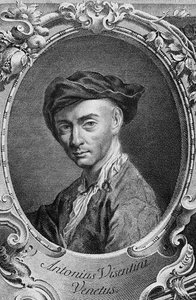
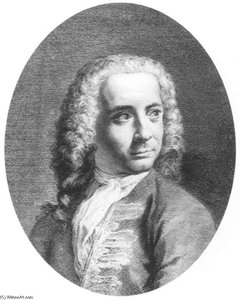
antonio visentini
1688 - 1782 , Italy
Quick Facts
- Artistic Movement Or Style: European/Chinese fusion
- Artists Or Movements Influenced By This Artist: ['Qing Dynasty art']
- Artists Who Influenced This Artist: ['John Smibert']
- Date Of Birth: 19 July 1688
- Date Of Death: 17 July 1766
- Full Name: Giuseppe Castiglione
- Nationality: Italian
- Notable Artworks:
- Láng Shìníng
- Circumcision of Jesus
- Place Of Birth: Milan, Italy
Related Articles

Etching: A Historical Survey of Technique, Aesthetic Qualities & Enduring Artistic Significance
Explore the rich history of etching, from its origins to Rembrandt's masterful innovations. Discover the technique, aesthetic qualities & enduring legacy of this captivating art form. Expert insights for collectors and enthusiasts.
Etching Masters: 10 Legendary Prints That Revolutionized Art | ArtsDot
Journey through 10 legendary etching masterpieces by Rembrandt, Dürer & Goya. Explore the history of printmaking and discover timeless art for your home. Find museum-quality reproductions at ArtsDot.com.

The Intricate World of Etching: A Historical Survey of Technique, Aesthetic Evolution, and Enduring Artistic Impact
Explore the rich history of etching, from its origins to modern practice. Discover techniques, key artists like Rembrandt, and insights for collectors. A comprehensive guide by ArtsDot.

Giclée Prints: Archival Quality & Aesthetic Nuances for the Discerning Collector
Explore the world of giclée prints with ArtsDot. Learn about archival quality, aesthetic nuances & investment potential. Expert guidance for discerning art collectors seeking museum-quality reproductions and lasting value.

The Enduring Legacy of Fine Art Prints: Technique, History & Aesthetic Impact
Explore the rich history & techniques of fine art prints. Discover investment potential, assess authenticity, and learn how to preserve your collection with expert guidance. Trusted insights for discerning collectors.