 Preview
 Send
Send Share
Share
 Details

 Download
 Similars
 X-Ray
X-Ray Diaporama
 Stats
StatsLA LUTTE ENTRE L'ALLEMAGNE ET LA FRANCE POUR LA CONQUETE DU RHIN


 Read More
Hand Made Oil Reproduction
Hand-painted oil on canvas in your size and frame, made to order by our artists. ( Switch to Print Switch to Digital Image)




P118B $10

P118H $10

P118W $10

P438Z $10

P508JH $12

P508YH $12

P805H $10

P805Z $10

P919BZ $10

P919G $10

P919XJ $10

P959ZH $10

P968JZ $12

W106C $8

W218G $10

W218JH $8

W218Y $10

W307PJ $10

W316G $10

W316PJ $8

W316Y $10

W398PJ $8

W4111J $10

W500HY $15

W500JH $15

W692G $12

W849H $8

W940BG $15

W953PJ $8




Pick from our preset sizes that match the artwork's original proportions.

You may enter your own dimensions to fit a specific frame or space. If your selected size does not match the original image's proportions, we will either crop the artwork or extend the painting with additional hand-painted elements. A digital mockup will be sent for your approval before production begins.
Please note that the on-screen preview does not reflect the actual cropping or extension. Only the mockup will accurately show the final composition.
While custom sizes are available, we recommend selecting a dimension from the predefined list to preserve the original proportions.
After order, ArtsDot.com team will email client for instructions and provide a mockup preview
Worldwide Delivery () in 3/4 weeks instead of standard 5 weeks. (9 September). No compromise on quality.

Free Worldwide Express Shipping

High-Quality Linen Canvas

Full Shipping Insurance

Customs Tax Refund Guarantee

True Color Matching Guarantee

100-Day Return Policy (Defects Only)

100% Money-Back Guarantee

Bulk Discount Offer
 Glass option is only available in size under 110 CM

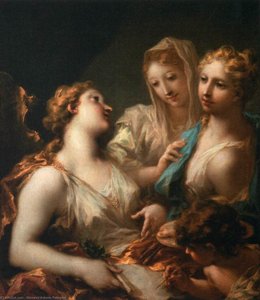
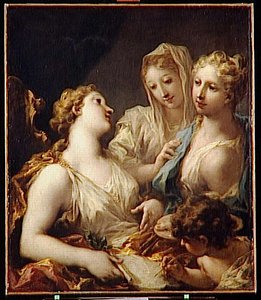
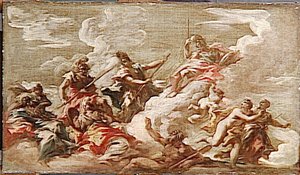
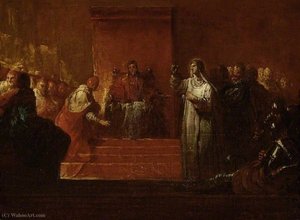
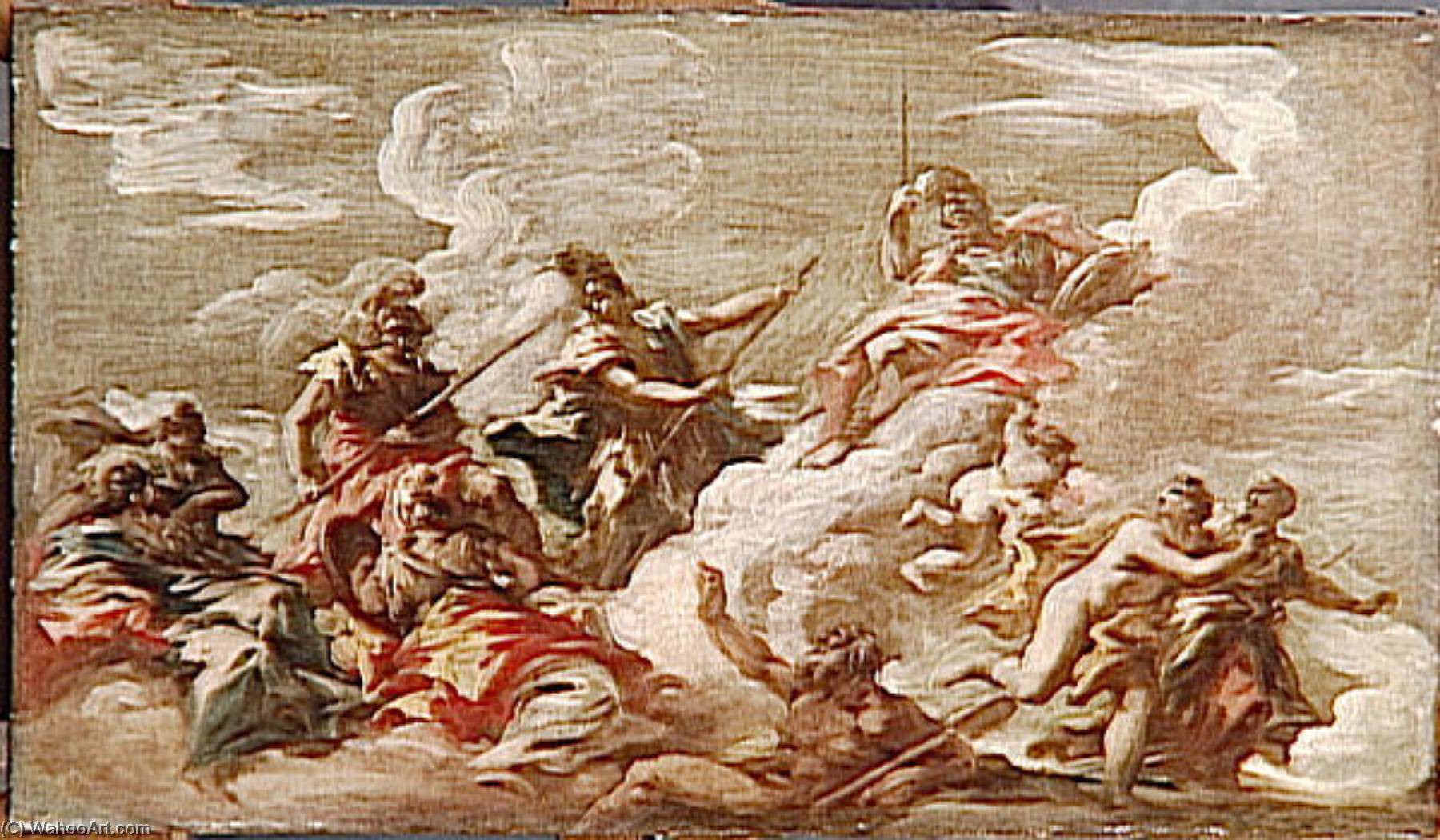
LA LUTTE ENTRE L'ALLEMAGNE ET LA FRANCE POUR LA CONQUETE DU RHIN
Reproduction Medium
Reproduction Size
-


Total Price
$ 388
Giovanni Antonio Pellegrini: Venetian Baroque’s Elegant Innovator
Giovanni Antonio Pellegrini (1675-1741) stands as a pivotal figure in the artistic landscape of Venice and Europe during the early 18th century. He wasn't merely a painter; he was a conduit between the grandeur of Renaissance ideals and the dramatic fervor of Baroque aesthetics, forging a distinctive style that cemented his place among Venetian masters and profoundly impacted subsequent generations of artists. Born in Venice to a shoemaker father, Pellegrini’s artistic journey began under the tutelage of Paolo Pagani, establishing him firmly within the influential Milanese tradition. This formative influence quickly propelled him eastward, embarking on extensive travels commissioned by royal courts across Europe – England, the Netherlands, Germany, Austria and France – where he achieved considerable renown. Early Influences & Training: Pellegrini’s artistic sensibilities were deeply shaped by Sebastiano Ricci, whose masterful handling of light and shadow established a precedent for dramatic compositions that would characterize his own oeuvre. Ricci's emphasis on theatricality instilled in Pellegrini a desire to capture emotion and grandeur—a hallmark of Venetian Baroque. This influence extended beyond mere technique; it fostered an understanding of how visual art could communicate complex ideas and evoke powerful responses from viewers.- Subject Matter: Pellegrini’s paintings frequently tackled monumental themes, reflecting the intellectual currents of his time. He excelled in depicting religious narratives—particularly those celebrating saints—and mythological scenes imbued with moral lessons.
- Style: Pellegrini's style blended Renaissance elegance with Baroque dynamism. Like Ricci, he embraced a pyramidal composition, prioritizing visual stability while simultaneously creating a sense of movement and grandeur.
- Technique: He skillfully employed oil paint on canvas, utilizing layering techniques—glazing—to achieve luminous colors and subtle gradations of tone. This meticulous approach demanded considerable patience and precision, resulting in paintings that possessed remarkable depth and realism.
LA LUTTE ENTRE L'ALLEMAGNE ET LA FRANCE POUR LA CONQUETE DU RHIN
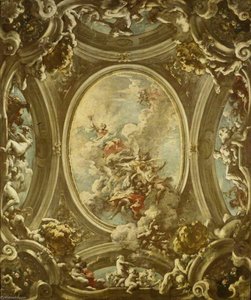
“La Lutte entre l’Allemagne et la France pour la conquête du Rhin” exemplifies Pellegrini’s Baroque style perfectly. Executed around 1736-1737, this monumental ceiling fresco—now housed in the Louvre—depicts a dramatic confrontation between German and French forces vying for control of the Rhineland region during the War of Succession. The artwork is rendered in a Baroque style characterized by dynamic composition, strong contrasts of light and shadow (chiaroscuro), and an allegorical approach to representing conflict. The scene unfolds within a swirling cloudscape, suggesting a battle taking place not only on earth but also in the heavens—a deliberate symbolic gesture intended to elevate the subject matter beyond mere political dispute.- Composition: The artwork is dominated by a central pyramidal structure, drawing the eye upwards towards a figure representing divine intervention or leadership—likely Saint Peter—who oversees the unfolding drama.
- Color Palette: Predominantly warm earth tones – ochres, browns, reds, and golds – create a rich, aged appearance that conveys both solemnity and grandeur.
- Lighting: Dramatic chiaroscuro emphasizes key figures and contributes to the overall sense of intensity, mirroring the theatrical conventions of Baroque art.
Symbolism & Emotional Impact
Beyond its formal elements, “La Lutte entre l’Allemagne et la France pour la conquête du Rhin” resonates with profound symbolic meaning. The figures themselves embody allegorical representations of nations—Germany and France—engaged in a struggle for dominance. Furthermore, the swirling cloudscape symbolizes the turbulent forces shaping European history, underscoring the importance of faith and divine providence in resolving earthly conflicts. Pellegrini’s masterful execution evokes a palpable sense of drama and urgency, inviting viewers to contemplate the weighty consequences of political ambition and the enduring power of spiritual conviction. The artwork's emotional impact is undeniable—a testament to Pellegrini’s ability to transform historical events into timeless expressions of human experience.Concluding Remarks
Giovanni Antonio Pellegrini’s legacy extends far beyond his individual paintings. He served as a crucial link between artistic traditions, shaping the aesthetic sensibilities of subsequent Venetian artists and establishing himself as one of the foremost figures in Baroque painting. His innovative technique—particularly his masterful use of glazing—influenced generations of painters who sought to achieve luminous colors and textural depth. “La Lutte entre l’Allemagne et la France pour la conquête du Rhin” stands as a compelling demonstration of Pellegrini's artistic genius, embodying the grandeur, drama, and symbolic richness that define Venetian Baroque at its zenith.Related Artworks






Artist Biography
The Venetian Master of Light and Motion
In the vibrant, water-bound splendor of 18th-century Venice, a new era of painterly elegance was being forged by the brush of Giovanni Antonio Pellegrini. Born in 1675 to a humble shoemaker, Pellegrini’s ascent from the streets of Venice to the royal courts of Europe is a testament to a singular talent that bridged the gap between the structured grandeur of the Renaissance and the emotive, swirling energy of the Baroque. His work does not merely sit upon a surface; it breathes with an atmospheric lightness, capturing a sense of spontaneous movement that would later inspire the great Giambattista Tiepolo. To look upon a Pellegrini is to witness the transition of an era, where the heavy shadows of the past began to dissolve into the luminous, airy compositions of a new age.
The foundations of his mastery were laid under the guidance of Paolo Pagani, a mentor who rooted him in the disciplined Milanese tradition. However, it was his encounter with the expressive brilliance of Sebastiano Ricci that truly ignited his creative spirit. From Ricci, Pellegrini inherited a sophisticated command of color and a penchant for dynamic, sweeping compositions. This stylistic evolution was further refined during his travels through Rome, where the whispers of emerging Neoclassical currents prompted him to experiment with more structured principles, creating a unique tension between classical order and Baroque theatricality.
A European Odyssey of Grandeur
Pellegrini was not a painter confined by borders; he was a true cosmopolitan of the arts. His reputation for capturing light and atmosphere propelled him across the continent, earning him prestigious commissions from the most influential patrons of his time. His journey took him through the Netherlands, Germany, Austria, and France, but it was in England where his legacy left an indelible mark on the architectural landscape. At magnificent estates such as Kimbolton Castle and Castle Howard, Pellegrini’s murals transformed ceilings into celestial gateways, utilizing a technique that mimicked the effortless grace of fresco painting to create vast, illusionistic vistas.
These international endeavors showcased his unparalleled ability to manipulate light, making heavy stone surfaces appear as weightless as clouds. His work in England served as a bridge, bringing the sophisticated aesthetic of the Venetian school to the British aristocracy and influencing the development of decorative painting in Northern Europe. Each commission was an opportunity for him to showcase his signature spontaneity—a quality that allowed his figures to dance across the canvas with a lifelike vitality that felt both monumental and intimately human.
Legacy and Artistic Significance
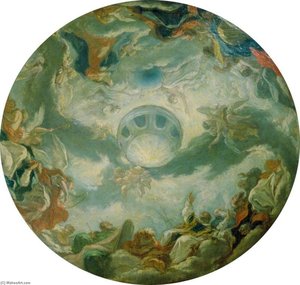
The historical significance of Giovanni Antonio Pellegrini lies in his role as a pivotal evolutionary link. He stood at the crossroads of history, synthesizing the perspectival depth of the Renaissance with the dramatic, emotive fervor of the Baroque. His mastery of the fresco technique and his ability to decorate massive architectural spaces—most notably the breathtaking dome above the staircase at San Rocco in Venice—demonstrated a technical prowess that few could match.
Ultimately, Pellegrini’s influence can be traced through the lineage of great Venetian masters. By softening the edges of the Baroque and introducing a luminous, airy quality to his compositions, he paved the way for the Rococo movement and provided the essential stylistic groundwork for Tiepolo. His life's work remains a celebration of movement, light, and the enduring power of the Venetian spirit, marking him as one of the most innovative and influential painters of the early 18th century.
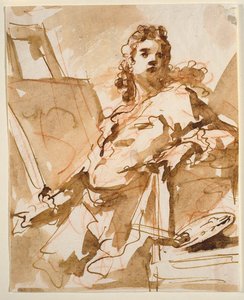
Giovanni Antonio Pellegrini
1675 - 1741 , Italy
Quick Facts
- Artistic Movement Or Style: Baroque & Renaissance
- Artists Or Movements Influenced By This Artist: ['Giovanni Battista Tiepolo']
- Artists Who Influenced This Artist:
- Paolo Veronese
- Luca Giordano
- Date Of Birth: Venice, Italy (1675)
- Date Of Death: 1741
- Full Name: Giovanni Antonio Pellegrini
- Nationality: Italian
- Notable Artworks:
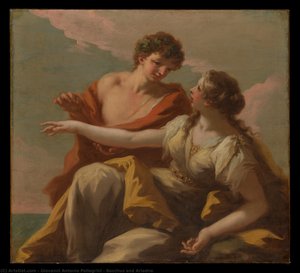
- Bacchus and Ariadne
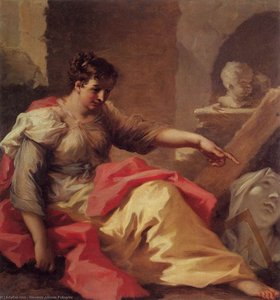
- Allegory of Sculpture
- Place Of Birth: Venice
Related Articles

The Enduring Legacy of Fine Art Prints: Technique, History & Aesthetic Impact
Explore the rich history & techniques of fine art prints. Discover investment potential, assess authenticity, and learn how to preserve your collection with expert guidance. Trusted insights for discerning collectors.

Baroque Drama: Bringing Opulence & Emotion into Contemporary Interiors
Explore the opulent world of Baroque interior design! Discover key elements, modern applications & how to bring dramatic elegance into your home with ArtsDot.com's authentic reproductions.

Jacopo Tintoretto's Masterpieces: 25 Paintings That Define Venetian Drama | ArtsDot
Explore 25 breathtaking masterpieces by Jacopo Tintoretto, the Venetian master of drama and light. Discover the stories behind iconic Renaissance paintings & find museum-quality art reproductions to elevate your home decor on ArtsDot.com.

Echoes of Time: Exploring the Enduring Appeal & Historical Context of Vintage Art Prints
Explore the captivating world of vintage art prints! Discover their history, collecting tips & enduring appeal. Expert insights on chromolithography and building a legacy collection with ArtsDot.

Giclée Prints: Archival Quality & Aesthetic Nuances for the Discerning Collector
Explore the world of giclée prints with ArtsDot. Learn about archival quality, aesthetic nuances & investment potential. Expert guidance for discerning art collectors seeking museum-quality reproductions and lasting value.