


 Preview
 Send
Send Share
Share
 Details

 Download
 Similars
 X-Ray
X-Ray Diaporama
Artists who do books

 Read More
Purchase a high-resolution, enhanced digital image, far superior to the online preview.
Each file is meticulously prepared by our in-house specialists using advanced tools and expert manual retouching. We ensure every image has exceptional clarity, precise color accuracy, and fine detail.
The final file is delivered via email within 72 hours, optimized for immediate use in professional, editorial, and print environments. This is the same quality trusted by top-tier design studios, publishers, and galleries.
Digital Image
Download a high-resolution file for personal display, printing, and creative projects. ( Buy Print Buy Hand Made Painting)
Included in Every Digital Image Order
Expert Digital Delivery, Guaranteed
When you choose ArtsDot.com, you're not just getting an image - you're receiving a professionally enhanced digital artwork, crafted with precision and backed by a satisfaction guarantee. Here's everything that comes with your order, automatically:

Fast Email Delivery
Your high-resolution digital image file will be emailed to you within 72 hours of ordering - ready for immediate use.

AI-Enhanced Digital File
Your artwork is professionally optimized using advanced AI tools and manual editing, ensuring maximum detail, clarity, and color accuracy.

Free Lifetime Re-Delivery
Accidentally deleted or lost your file? No worries - we'll resend it to you anytime, free of charge.

No Import Fees - Ever
Enjoy your artwork instantly with zero customs, duties, or delivery fees - digital downloads are always tax-free.

Color Accuracy Guarantee
We ensure your digital image reflects the original colors as closely as possible using professional tools and color management.

60-Day Satisfaction Guarantee
If you're not satisfied with your digital image, we'll revise it or refund 100% within 60 days - no questions asked.

100% Money-Back Guarantee
Not satisfied? Get a full refund within 60 days of receiving your digital file - no questions asked.

Bulk Order Discounts
Buy 3 images, save 10% - Buy 5, save 15% - Buy 10+, save 20%. Great for creative projects, galleries, and agencies.
Collectible Description
A Minimalist Statement: Edward Ruscha's "Artists Who Do Books"
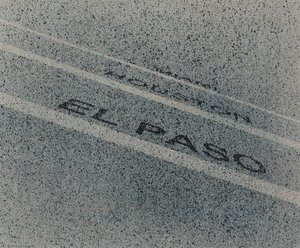
Edward Ruscha’s “Artists Who Do Books” is a striking example of Conceptual Art and Pop Art sensibilities, offering a deceptively simple yet profoundly layered visual statement. Created in 1970, this artwork transcends traditional artistic representation by focusing solely on language as its primary medium. It's not about depicting a scene or object; it’s about the power and presence of words themselves.
Conceptual Roots & Pop Art Influence
The piece emerged during a pivotal period in art history, when Conceptual Art was challenging established notions of what constituted "art." Artists began prioritizing ideas and concepts over traditional aesthetic concerns. Simultaneously, Ruscha’s work reflects the Pop Art movement's embrace of everyday imagery and mass culture. Ruscha, alongside figures like Andy Warhol and Ed Moses, helped redefine artistic boundaries by incorporating commonplace elements—in this case, a straightforward phrase—into high art.
- Historical Context: The late 1960s and early 1970s saw a shift away from Abstract Expressionism's emotional intensity towards a more detached, intellectual approach to art.
- Pop Art Connection: Ruscha’s use of bold typography and graphic design echoes Pop Art’s fascination with commercial aesthetics and popular culture.
- Conceptual Emphasis: The work prioritizes the *idea*—the relationship between artists and books—over any representational imagery, a hallmark of Conceptualism.
Composition & Technique
The artwork's visual impact stems from its stark simplicity. “Artists Who Do Books” presents the phrase centered on a dark gray background in three lines of capital letters. The composition is rigorously symmetrical and balanced, creating a sense of order and clarity. Ruscha’s technique likely involved screen printing, a process well-suited to producing clean, graphic images with flat colors. This method aligns with his broader artistic practice, which often incorporates photography, printmaking, and book arts.
- Color Palette: The limited palette of grays emphasizes the text itself, preventing visual distractions.
- Typography: The use of a clean, sans-serif typeface contributes to the work’s modern and impersonal feel.
- Screen Printing: This technique allows for precise application of ink, resulting in sharp lines and uniform color coverage.
Emotional Resonance & Symbolic Meaning
Despite its minimalist aesthetic, “Artists Who Do Books” evokes a quiet contemplation and intellectual engagement. The work’s simplicity can be interpreted as a rejection of traditional artistic conventions, emphasizing language and concept over visual representation. It prompts viewers to consider the role of books in artistic creation—a reflection on the intersection of art, literature, and creative process. The phrase itself is open-ended, inviting interpretation about the diverse ways artists engage with books, whether through illustration, design, or simply as a source of inspiration.
This piece isn't merely a visual statement; it’s an invitation to reflect on the nature of art and its relationship to language. It is a testament to Ruscha's ability to transform ordinary elements into profound artistic statements.
Artist Biography
Edward Joseph Ruscha IV: A Pioneer of Pop Art
Early Life and Education
- Born on December 16, 1937, in Omaha, Nebraska, Edward Joseph Ruscha IV grew up in a Roman Catholic family.
- He showed an early interest in art, particularly cartooning, nurtured by his mother’s support.
- Ruscha moved to Los Angeles in 1956 and studied at the Chouinard Art Institute (now CalArts) from 1956-1960 under Robert Irwin and Emerson Woelffer.
- During his time at Chouinard, he co-edited the journal *Orb*, a precursor to alternative newspapers.
Artistic Development and Influences
- Ruscha’s artistic journey began in the early 1960s, aligning him with the Ferus Gallery group in Los Angeles.
- He was influenced by a diverse range of artists including Jasper Johns, John McLaughlin, H.C. Westermann, Arthur Dove, Alvin Lustig, and Marcel Duchamp.
- The work of Edward Hopper, particularly his painting *Gas* (1940), also resonated with Ruscha’s developing style.
- His early works explored the visual language of commercialism and everyday American life.
Key Themes and Style
- Ruscha is renowned for his incorporation of text and phrases into paintings, often presented in a flat, deadpan aesthetic.
- He frequently depicted commonplace subjects like gas stations, motels, and landscapes of Southern California.
- His photographic books, such as Every Building on the Sunset Strip (1966), are iconic examples of his conceptual approach to art.
- A key theme in Ruscha’s work is the exploration of vernacular language and the visual culture of Los Angeles.
Major Achievements and Notable Works
- Some of his most celebrated works include:
- Standard Station (1966): A quintessential representation of American roadside architecture.
- Large Trademark (1962): An early example of his word-based paintings.
- Hollywood (1982): Reflecting the iconic imagery of Los Angeles.
- Every Building on the Sunset Strip (1966): A groundbreaking photographic book documenting a stretch of Sunset Boulevard.
- Ruscha’s work challenged traditional notions of painting and photography, blurring the boundaries between art forms.
Historical Significance and Legacy
- Ruscha is considered a pivotal figure in the Pop Art movement, though his style often transcends easy categorization.
- His influence extends to contemporary artists working with language, photography, and conceptual art.
- He helped establish Los Angeles as a significant center for artistic innovation during the 1960s.
- Ruscha continues to live and work in Culver City, California, remaining an active and influential force in the art world.
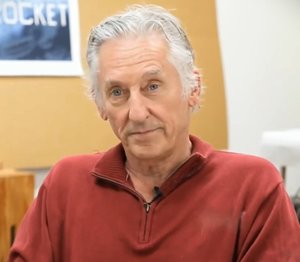
edward joseph ruscha iv
1937 - , United States of America
Quick Facts
- Birth Date: December 16, 1937
- Birth Place: Omaha, Nebraska, United States
- Influenced By:
- Jasper Johns
- John McLaughlin
- H.C. Westermann
- Arthur Dove
- Alvin Lustig
- Marcel Duchamp
- Edward Hopper
- Movement: Pop Art
- Name: Edward Joseph Ruscha IV
- Nationality: American
- Notable Works:
- Standard Station (1966)
- Large Trademark (1962)
- Hollywood (1982)
- Every Building on the Sunset Strip (1966)

