 Preview
 Send
Send Share
Share
 Details

 Download
 Similars
 X-Ray
X-Ray Diaporama
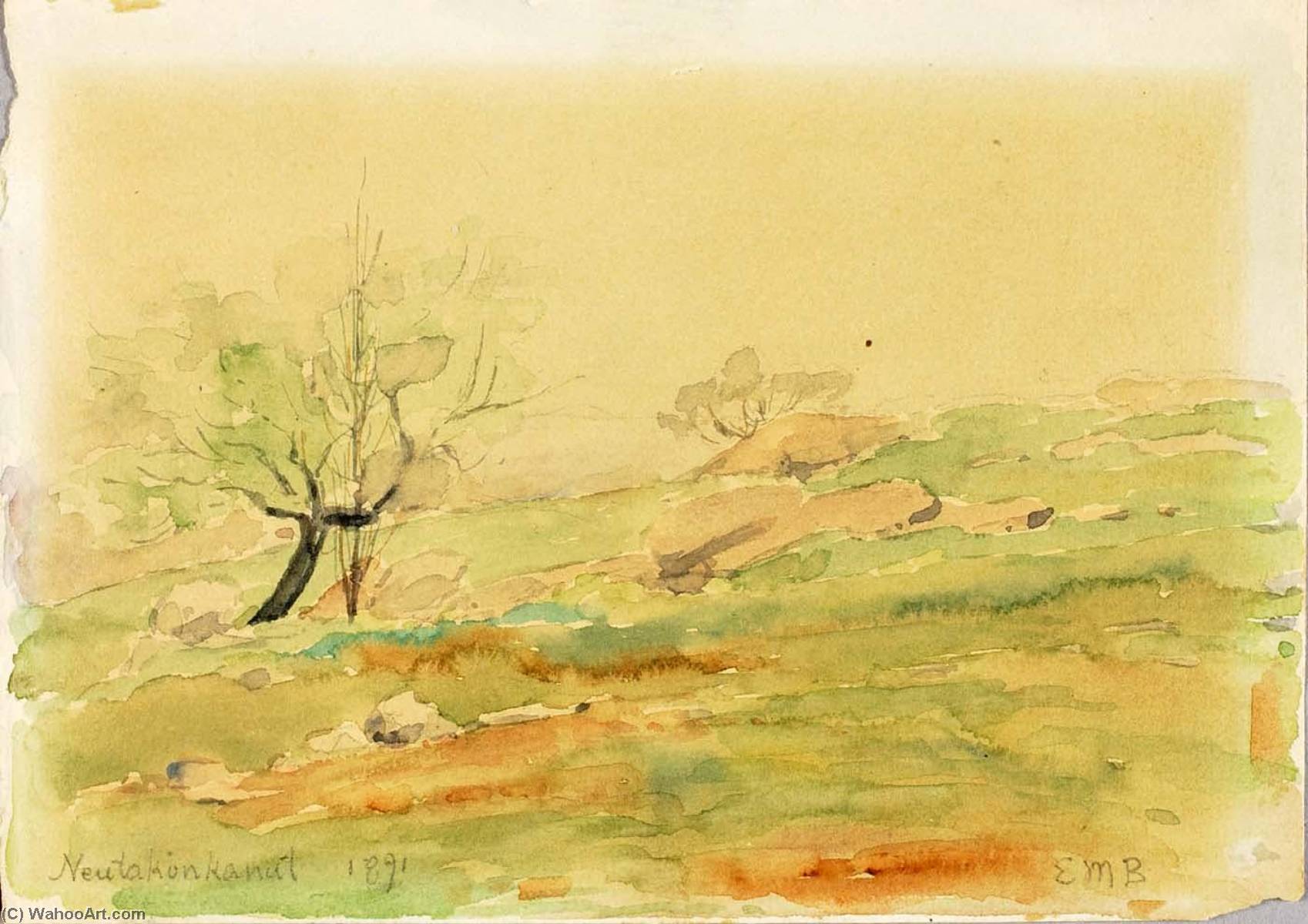
Neutakonkanut


 Read More
Hand Made Oil Reproduction
Hand-painted oil on canvas in your size and frame, made to order by our artists. ( Buy Print Buy Image)




































Pick from our preset sizes that match the artwork's original proportions.

You may enter your own dimensions to fit a specific frame or space. If your selected size does not match the original image's proportions, we will either crop the artwork or extend the painting with additional hand-painted elements. A digital mockup will be sent for your approval before production begins.
Please note that the on-screen preview does not reflect the actual cropping or extension. Only the mockup will accurately show the final composition.
While custom sizes are available, we recommend selecting a dimension from the predefined list to preserve the original proportions.
After order, ArtsDot.com team will email client for instructions and provide a mockup preview
Worldwide Delivery () in 3/4 weeks instead of standard 5 weeks. (16 August). No compromise on quality.

Free Worldwide Express Shipping

High-Quality Linen Canvas

Full Shipping Insurance

Customs Tax Refund Guarantee

True Color Matching Guarantee

60-Day Return Policy (Defects Only)

100% Money-Back Guarantee

Bulk Discount Offer
 Glass option is only available in size under 110 CM

Neutakonkanut
Reproduction Medium
Reproduction Size
-


Total Price
$ 263
Artwork Description
The Artist and His Style
Edward Mitchell Bannister was a Black Canadian-American Tonalist painter, known for his idealized landscapes and seascapes. His style was influenced by the Barbizon school and the French Barbizon School, which is evident in his use of soft colors and delicate brushstrokes. Bannister's work is characterized by its sense of harmony and liberty, reflecting his spiritual philosophy and individually expressive style.The Painting
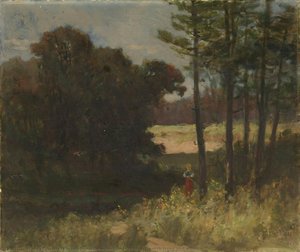
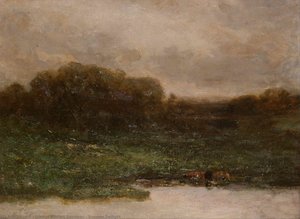
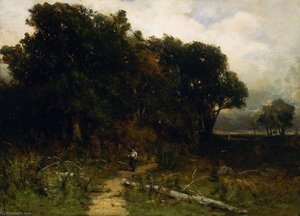
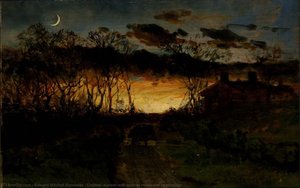
Neutakonkanut is a watercolor painting created in 1891, measuring 13 x 18 cm. The piece depicts a barren tree standing alone in an empty field, surrounded by rocks and a sense of desolation. Despite its simplicity, the painting exudes a sense of beauty and tranquility, inviting the viewer to contemplate the beauty of nature.- Watercolor technique: Bannister's use of watercolor in Neutakonkanut is exemplary, showcasing his mastery of the medium.
- Composition: The composition of the painting is balanced and harmonious, with the tree standing as a central figure in the empty landscape.
- Emotional resonance: The painting evokes a sense of melancholy and contemplation, inviting the viewer to reflect on the beauty of nature and the passage of time.
Experience the beauty of Neutakonkanut and other masterpieces by Edward Mitchell Bannister on ArtsDot.com, where art meets passion and creativity.
Related Artworks
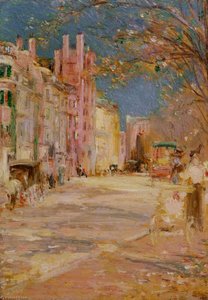
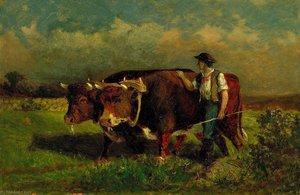
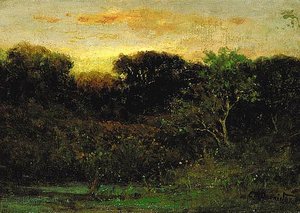
Artist Biography
A Life Forged in Resilience: The Story of Edward Mitchell Bannister
The story of Edward Mitchell Bannister is one of quiet determination, artistic passion blossoming against a backdrop of societal constraints, and ultimately, rediscovery. Born around 1828 in St. Andrews, New Brunswick, Canada, his early life was marked by the hardships that often shadowed those of African descent in the 19th century. Orphaned at a young age, Bannister navigated a world demanding resilience, working various jobs – including a stint as a cook on a merchant ship – before finding his way to Boston in the late 1840s. This journey wasn’t merely geographical; it was a quest for artistic expression, a calling that would define his life despite the formidable obstacles he faced. His heritage itself was complex, a blend of Barbadian ancestry through his father and European roots via his mother, shaping a unique perspective that would later infuse his canvases with both sensitivity and strength.The Embrace of Landscape and Tonalist Sensibilities
Largely self-taught, Bannister’s dedication to honing his craft was remarkable. He briefly studied sculpture and anatomy under Dr. William Rimmer in Boston, a foundational experience that undoubtedly informed his understanding of form and composition. However, it was the allure of landscape painting, specifically the principles espoused by the French Barbizon school, that truly captured his artistic imagination. Artists like Jean-François Millet, with their focus on rural life and naturalistic depictions, resonated deeply with Bannister’s own sensibilities. He absorbed their emphasis on capturing mood and atmosphere, a characteristic that would become central to his signature style – Tonalism. Bannister's paintings weren’t about meticulous detail or vibrant color; they were about evoking a feeling, a sense of serenity and quiet contemplation through subtle tonal values and soft, muted hues. He sought not to replicate nature exactly, but to distill its essence, presenting landscapes imbued with poetic grace.Breaking Barriers: Recognition and Notable Works
Bannister’s talent didn't go unnoticed, though recognition was often fraught with the prejudices of the time. A pivotal moment arrived in 1876 at the Philadelphia Centennial Exposition. His painting, Under the Oaks, earned a bronze medal, a significant achievement for any artist, but particularly groundbreaking for an African American painter in that era. The award initially sparked controversy, with some questioning its validity based on his race, yet fellow artists ultimately upheld the decision, affirming Bannister’s skill and artistic merit. This victory was more than just personal triumph; it was a symbolic crack in the wall of racial discrimination within the art world. Beyond Under the Oaks, works like Boston Street Scene (Boston Common), now housed at the Walters Art Museum, demonstrate his ability to capture everyday life with dignity and quiet observation. Paintings such as Newspaper Boy, held by the Smithsonian American Art Museum, offer glimpses into 19th-century urban existence, while pieces like Tree Landscape, Sunset, Untitled (Woman Walking with Cow), and Untitled (Man with Two Oxen) consistently showcase his affinity for pastoral themes.A Legacy Rediscovered: From Obscurity to Acclaim
Despite achieving recognition during his lifetime, Bannister’s work largely faded from public view after his death in 1901. For decades, he remained a forgotten figure, overshadowed by the dominant narratives of art history. However, the Civil Rights Movement and the growing awareness of African American contributions to all fields sparked a renewed interest in his artistry during the 1970s. In 1978, Rhode Island College dedicated its art gallery in his name, accompanied by an exhibition titled “Four from Providence ~ Alston, Bannister, Jennings & Prophet,” marking a significant step towards reclaiming his place in American art history. Today, Bannister’s paintings are represented in major museums and collections, including the Smithsonian American Art Museum and the Walters Art Museum. He is increasingly celebrated not only as a skilled landscape painter but also as a pioneering figure who challenged racial barriers and paved the way for future generations of African American artists. His story serves as a powerful reminder that artistic brilliance can flourish even amidst adversity, and that true talent will ultimately find its rightful recognition.Enduring Influence
- Barbizon School: Deeply influenced by the French Barbizon school of painting, particularly artists like Jean-François Millet.
- Tonalism: His style aligns with Tonalism, emphasizing mood, atmosphere, and subtle tonal values.
- Pioneering Spirit: Bannister broke racial barriers in the art world, achieving recognition during a time of significant discrimination.
- Rediscovery: His work was rediscovered during the Civil Rights Movement, leading to renewed appreciation and inclusion in major museums.
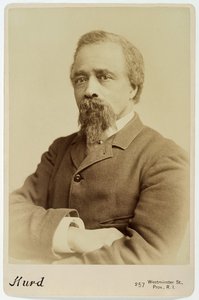
Edward Mitchell Bannister
1828 - 1901 , Canada
Quick Facts
- Artistic Movement Or Style: Tonalism, Barbizon school
- Artists Who Influenced This Artist: ['Jean-François Millet']
- Date Of Birth: c. 1828
- Date Of Death: January 9, 1901
- Full Name: Edward Mitchell Bannister
- Nationality: Canadian-American
- Notable Artworks:
- Under the Oaks
- Boston Street Scene
- Newspaper Boy
- Sunset
- Place Of Birth: St. Andrews, Canada
Related Articles

Edward Mitchell Bannister: A Pioneer of American Landscape Painting & Artistic Recognition
Discover the remarkable life & art of Edward Mitchell Bannister, a pioneering African American landscape painter. Explore his journey overcoming barriers to achieve recognition and lasting impact on 19th-century American art.
Edward Hopper's Masterpieces: 25 Iconic Paintings & Their Enduring Legacy | ArtsDot
Explore 25 iconic Edward Hopper paintings & their stories. Discover American realism, urban loneliness, and timeless beauty through his masterpieces. Find museum-quality art reproductions & curated decor ideas at ArtsDot.com.

Watercolor Wonders: 10 Masterpieces That Redefined Art History | ArtsDot
Journey through 10 legendary watercolor masterpieces by Sargent, Turner & Homer! Explore iconic landscapes, portraits & floral art that redefined history. Find museum-quality reproductions and curated decor ideas at ArtsDot.com.

Ephemeral Visions: Exploring the Artistic Legacy & Contemporary Practice of Watercolor Painting
Explore the captivating world of watercolor painting! Discover its rich history, essential techniques, influential artists & collecting tips. A comprehensive guide for art enthusiasts from ArtsDot.

Ephemeral Visions: Exploring the Artistic Legacy & Nuances of Watercolor Painting
Explore the captivating world of watercolor painting! Discover its rich history, essential techniques, influential artists & collecting tips from art experts. A comprehensive guide for enthusiasts.