 Preview
 Send
Send Share
Share
 Details

 Download
 Similars
 X-Ray
X-Ray Diaporama
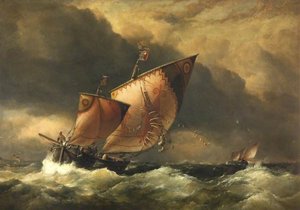
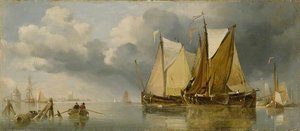
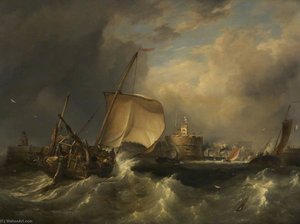
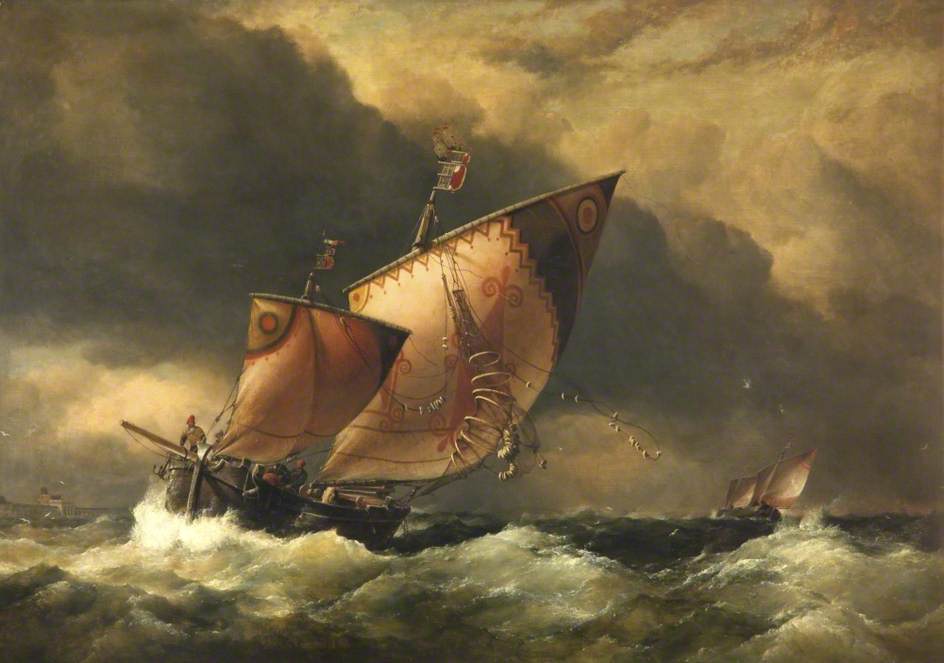
Venetian Fishing Craft Caught in a 'Borasca'
 Oil On Canvas
- WallArt
- Romanticism
 1873
1873 88.0 x 139.0 cm
 Walker Art Gallery
 Read More
Giclée / Art Print
Museum-quality giclée or canvas print with fast production and flexible finish options. ( Buy Hand Made Painting Buy Image)




P118B $10

P118H $10

P118W $10

P438Z $10

P508JH $12

P508YH $12

P805H $10

P805Z $10

P919BZ $10

P919G $10

P919XJ $10

P959ZH $10

P968JZ $12

W106C $8

W218G $10

W218JH $8

W218Y $10

W307PJ $10

W316G $10

W316PJ $8

W316Y $10

W398PJ $8

W4111J $10

W500HY $15

W500JH $15

W692G $12

W849H $8

W940BG $15

W953PJ $8




Pick from our preset sizes that match the artwork's original proportions.

You may enter your own dimensions to fit a specific frame or space. If your selected size does not match the original image's proportions, we will either crop the artwork or extend the image with a mirrored or solid-fill edge. A digital mockup will be sent for your approval before production begins.
Please note that the on-screen preview does not reflect the actual cropping or extension. Only the mockup will accurately show the final composition.
While custom sizes are available, we recommend selecting a dimension from the predefined list to preserve the original proportions.
Worldwide Delivery () in 2 weeks instead of standard 4/5 weeks. (28 August)

Free Worldwide Express Shipping

High-Quality Linen Canvas

Full Shipping Insurance

Customs Tax Refund Guarantee

True Color Matching Guarantee

60-Day Return Policy (Defects Only)

100% Money-Back Guarantee

Bulk Discount Offer
 Glass option is only available in size under 110 CM

Venetian Fishing Craft Caught in a 'Borasca'
Giclée / Art Print
Reproduction Size
-


Total Price
$ 63
A Venetian Dream Captured on Canvas: Edward William Cooke’s “Venetian Fishing Craft Caught in a ‘Borasca’”
Edward William Cooke's "Venetian Fishing Craft Caught in a 'Borasca'," painted in 1873, isn’t merely a depiction of a coastal scene; it’s an immersion into the very soul of Venice. This captivating work, now residing within the Walker Art Gallery in Liverpool, transports us to the shimmering waters of the Adriatic, where light dances upon the waves and the echoes of Venetian life resonate through the air. The painting immediately draws the eye with its vibrant palette – a masterful blend of cerulean blues, ochre yellows, and delicate pinks that mimic the hues of the Venetian sky and the weathered hulls of the fishing boats.
Cooke’s artistic lineage is deeply rooted in the traditions of 17th-century Dutch Masters, particularly Nicolaes Berchem and Karel Dujardin. This influence is evident in his meticulous attention to detail, the atmospheric perspective, and the overall sense of tranquility he achieves. However, Cooke wasn't simply a follower; he skillfully absorbed these influences and adapted them to his own unique vision, imbuing his work with a distinctly British sensibility. The composition itself—two boats, one larger and more imposing than the other—creates a subtle narrative tension, inviting contemplation on themes of scale, ambition, and perhaps even the fleeting nature of human endeavor against the backdrop of timeless beauty.
The ‘Borasca’ – A Symbol of Venetian Life
The title itself offers a crucial key to understanding the painting's significance. The “borasca” was a unique Venetian phenomenon—a sudden, violent wind that would sweep across the lagoon, dramatically altering the appearance of the waterways and disrupting the daily routines of the city’s inhabitants. Cooke captures this moment with remarkable precision, depicting the boats struggling against the gusts, their sails billowing and their timbers creaking under the strain. This isn't a romanticized view of Venice; it’s an honest portrayal of the challenges faced by those who relied on the sea for their livelihood.
The ‘borasca,’ therefore, becomes more than just a weather event; it symbolizes the unpredictable nature of life in Venice – its beauty intertwined with hardship, its prosperity balanced by vulnerability. Cooke masterfully uses light and shadow to heighten this sense of drama, casting dramatic highlights on the sails and creating an almost palpable feeling of movement within the scene. The artist’s brushwork is loose yet controlled, conveying both the texture of the water and the solidity of the boats themselves.
Technique and Artistic Flourishes
Cooke was a highly skilled engraver from a young age, inheriting his talent from his father and uncle. This early training instilled in him an exceptional eye for detail and a deep appreciation for line and form. These skills are brilliantly showcased in the painting’s meticulous rendering of the boats' rigging, the reflections on the water, and the subtle nuances of color. The use of glazing—applying thin layers of translucent paint over dried underlayers—creates a luminous quality that imbues the scene with an ethereal glow.
Furthermore, Cooke’s background in landscape painting is evident in his masterful depiction of atmospheric perspective – the way distant objects appear paler and less distinct. This technique draws the viewer's eye into the heart of the composition, creating a sense of depth and spaciousness that belies the relatively small scale of the canvas. The overall effect is one of breathtaking realism combined with an undeniable artistic sensibility.
A Window to Venice – Emotion and Legacy
"Venetian Fishing Craft Caught in a ‘Borasca’" transcends its subject matter, offering a profound meditation on beauty, resilience, and the enduring spirit of Venice. It's a painting that invites us to slow down, to appreciate the fleeting moments of light and color, and to contemplate the challenges faced by those who call this unique city home. Cooke’s legacy extends beyond his individual works; he helped shape the British art scene with his dedication to capturing the beauty of the sea and sky, a pursuit that continues to inspire artists today. Reproductions of this stunning work offer a remarkable opportunity to bring a piece of Venetian charm into any space, evoking memories of sun-drenched waters and timeless artistry.
Related Artworks
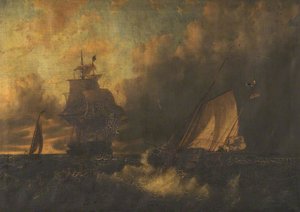
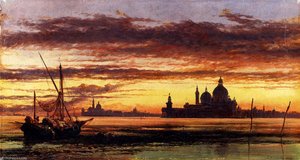
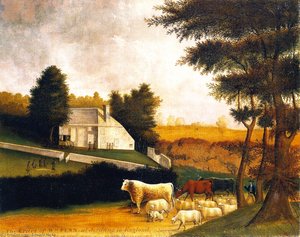
Artist Biography
A Life Immersed in Light and Water
Edward William Cooke, born in Pentonville, London, in 1811, was destined to become a pivotal figure in 19th-century British art. His artistic lineage was firmly established from the outset; his father, George Cooke, was a respected line engraver, and his uncle, William Bernard Cooke, followed a similar path. This familial environment wasn’t merely professional—it fostered an atmosphere where artistry was woven into the very fabric of life. Even as a child, Edward exhibited remarkable talent, demonstrating advanced engraving skills by the age of nine, particularly in depictions of ships. But his early inclinations weren't solely maritime; pastoral landscapes and animal studies also captured his attention, revealing a nascent aesthetic deeply influenced by the serene beauty of 17th-century Dutch masters like Nicolaes Berchem, Paulus Potter, and Karel Dujardin. This initial exposure to their work would become a defining characteristic of his mature style—a commitment to capturing atmosphere and nuanced detail. His formal training began with botanical illustrations for John Loudon’s *Encyclopaedia of Plants*, followed by extensive work at George Loddiges’ *Botanical Cabinet*. These years honed his meticulous observation skills and instilled in him an appreciation for the natural world, qualities that would permeate all his subsequent endeavors.From Botanical Precision to Marine Mastery
Despite early success with botanical illustration—producing hundreds of wood engravings and around 400 watercolors within the vibrant ecosystem of Hackney nursery grounds—Cooke’s true passion lay with ships and the sea. Recognizing this inclination, he sought practical knowledge by studying under Captain Burton of the West-Indiaman *Thetis*. This experience proved invaluable, providing firsthand insight into the intricacies of vessels and maritime life – details he meticulously documented in his sketchbooks. He began painting in oils in 1833, formally studying under James Stark in 1834, and by 1835 had already exhibited at both the Royal Academy and the British Institution, marking a significant step in his artistic career. Even at this early stage, his style was clearly defined: detailed depictions of marine scenes and landscapes rendered with remarkable precision. He quickly gained recognition as a principal follower of Clarkson Stanfield, benefiting immensely from the older artist’s advice and guidance. Stanfield's influence is evident in Cooke’s ability to capture not just the physical appearance of ships and seascapes but also their atmosphere—the play of light on water, the drama of changing weather conditions, and the sense of vastness that characterizes the marine environment. He wasn’t simply recording what he saw; he was conveying a feeling, an experience.A Wanderer's Palette: Travels and Artistic Development
Cooke’s artistic development was profoundly shaped by his extensive travels throughout Europe and North Africa. A pivotal journey to the Netherlands in 1837 ignited a lifelong fascination with Dutch marine art, which became a cornerstone of his style. He returned repeatedly over the next two decades, immersing himself in the coastal landscapes and studying the unique quality of light that defined the region. These trips weren’t merely about replication; they were about understanding the underlying principles of composition, color, and atmosphere that made Dutch marine painting so compelling. Beyond Holland, his travels took him to Normandy, Belgium, France, Scotland, Ireland, Scandinavia, Spain, and Venice. Each location offered new subject matter and broadened his artistic horizons. He masterfully captured the dramatic effects of weather—turbulent storms, tranquil sunsets, misty mornings—and the diverse topography of each region, demonstrating a remarkable ability to convey both the power and the beauty of nature. His sketches from these journeys weren’t just preparatory studies; they were works of art in their own right, imbued with a sense of immediacy and observation.Recognition, Scholarship, and Enduring Legacy
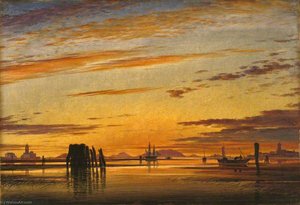
Edward William Cooke achieved considerable recognition during his lifetime, solidifying his position as a leading figure in 19th-century British art. He was elected an Associate of the Royal Academy in 1851 and became a full Royal Academician in 1863—a testament to his artistic skill and standing within the art world. His international acclaim extended beyond Britain, with his election as an honorary academician to the National Academy of Design in 1858. Throughout his career, Cooke exhibited over 120 works at the Royal Academy, consistently receiving critical praise for his technical mastery and evocative depictions of marine scenes and landscapes. However, his achievements weren’t limited to the realm of art; he was also a respected scientist, elected as a Fellow of the Royal Society in 1863, alongside memberships in the Geological, Linnean, and other learned societies. This intellectual breadth distinguished him from many artists of his time, highlighting his curiosity and dedication to understanding the world around him. Hay Barge off Greenwich (1835), *Venetian Lagoons – Sunset*, *Salerno, Italy* (1849), and *Brighton Sands* (1837) continue to captivate audiences today. Edward William Cooke died on January 4, 1880, leaving behind a substantial body of work that stands as a testament to his skill, vision, and enduring legacy as both an accomplished painter and a respected scholar. He is remembered for his meticulous attention to detail, combined with his ability to capture the atmosphere of coastal scenes—a master of light, water, and the subtle nuances of the natural world.A Lasting Influence
- Technical Mastery: Cooke’s skill in rendering detail and capturing atmospheric effects remains highly admired.
- Dutch Inspiration: His embrace of Dutch marine painting traditions enriched British art with a new sensibility.
- Scientific Curiosity: His scientific pursuits informed his artistic vision, adding depth and accuracy to his work.
- Broad Appeal: Cooke’s paintings continue to resonate with audiences today, offering glimpses into a bygone era of maritime life and coastal beauty.
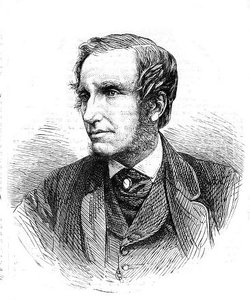
Edward William Cooke
1811 - 1880 , United Kingdom
Quick Facts
- Artistic Movement Or Style: Marine & Landscape
- Artists Who Influenced This Artist:
- Clarkson Stanfield
- Dutch Masters
- Date Of Birth: March 27, 1811
- Date Of Death: January 4, 1880
- Full Name: Edward William Cooke
- Nationality: British
- Notable Artworks:
- Hay Barge off Greenwich
- Venetian Lagoons - Sunset
- Salerno, Italy
- Brighton Sands
- Place Of Birth: Pentonville, UK
Related Articles
Edward Hopper's Masterpieces: 25 Iconic Paintings & Their Enduring Legacy | ArtsDot
Explore 25 iconic Edward Hopper paintings & their stories. Discover American realism, urban loneliness, and timeless beauty through his masterpieces. Find museum-quality art reproductions & curated decor ideas at ArtsDot.com.
Boats on Canvas: 10 Masterpieces of Maritime Art for Your Home Decor
Sail away with 10 iconic boat paintings! Explore masterpieces by Monet, Van Gogh & Turner. Discover the stories behind these timeless seascapes and find museum-quality art reproductions for your home decor at ArtsDot.com.

Jacopo Tintoretto's Masterpieces: 25 Paintings That Define Venetian Drama | ArtsDot
Explore 25 breathtaking masterpieces by Jacopo Tintoretto, the Venetian master of drama and light. Discover the stories behind iconic Renaissance paintings & find museum-quality art reproductions to elevate your home decor on ArtsDot.com.
Navigating Symbolism & Sentiment: A Comprehensive Exploration of Boats in Art History
Explore the rich history of boats in art! Discover symbolism & style from ancient myths to Impressionist masterpieces. Expert insights for collectors at ArtsDot.
Francis Ferdinand Maurice Cook: A Study in Victorian Aestheticism & Landscape Evolution
Explore the captivating art of Sir Francis Ferdinand Maurice Cook – a British artist bridging Victorian traditions & Aestheticism. Discover his landscapes, collection history, and unique style. Expert analysis for collectors.