 Preview
 Send
Send Share
Share
 Details

 Download
 Similars
 X-Ray
X-Ray Diaporama
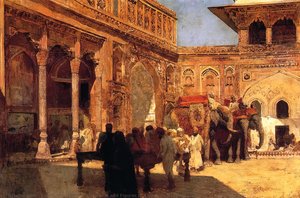
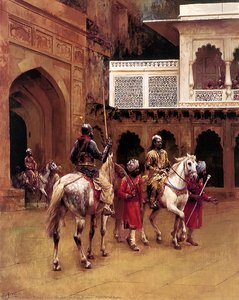
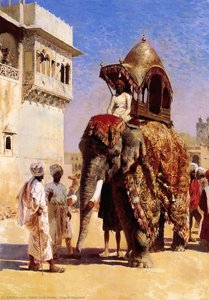
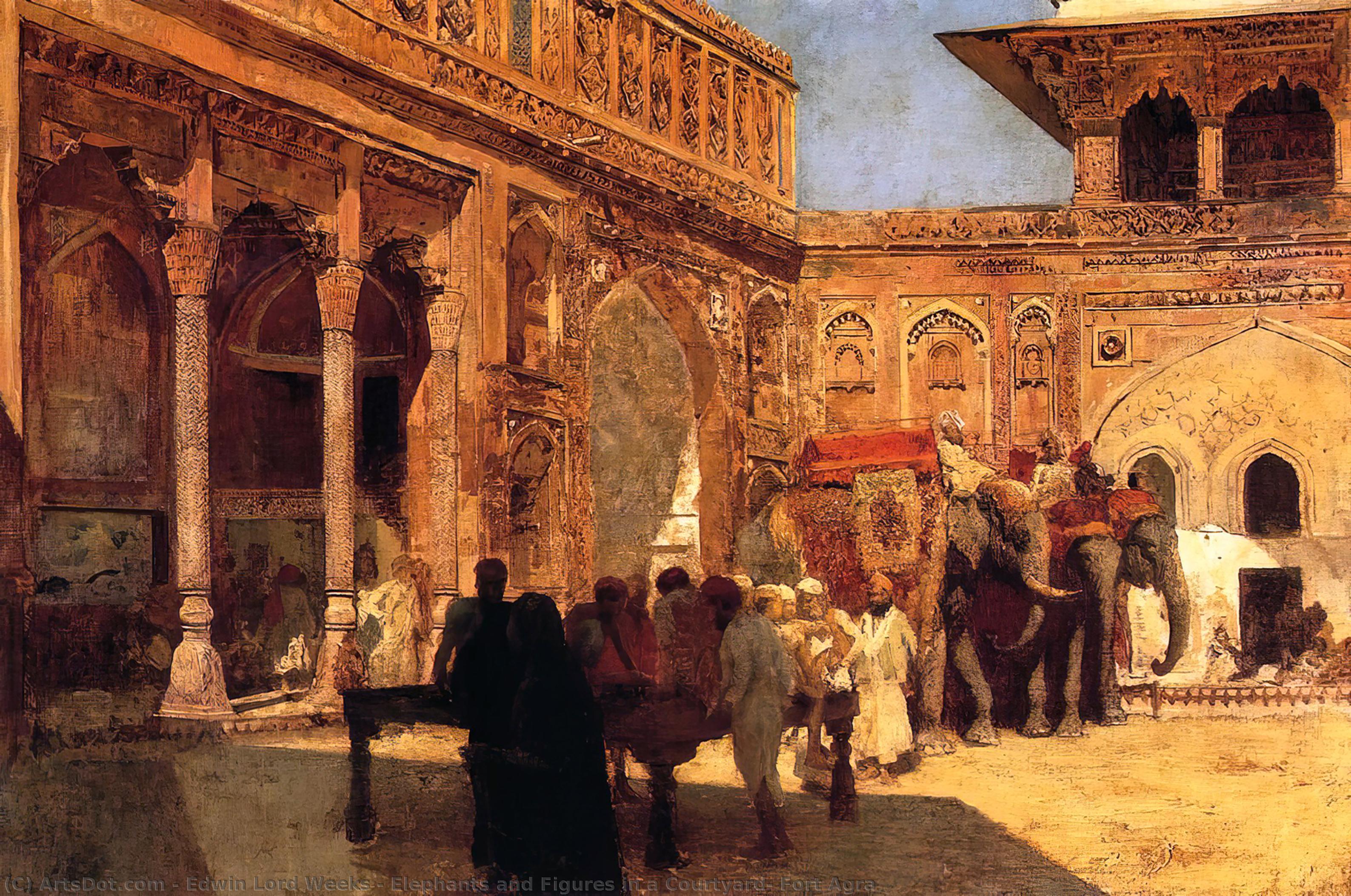
Elephants and Figures in a Courtyard, Fort Agra


 Read More
Giclée / Art Print
Museum-quality giclée or canvas print with fast production and flexible finish options. ( Buy Hand Made Painting Buy Image)




P118B $10

P118H $10

P118W $10

P438Z $10

P508JH $12

P508YH $12

P805H $10

P805Z $10

P919BZ $10

P919G $10

P919XJ $10

P959ZH $10

P968JZ $12

W106C $8

W218G $10

W218JH $8

W218Y $10

W307PJ $10

W316G $10

W316PJ $8

W316Y $10

W398PJ $8

W4111J $10

W500HY $15

W500JH $15

W692G $12

W849H $8

W940BG $15

W953PJ $8




Pick from our preset sizes that match the artwork's original proportions.

You may enter your own dimensions to fit a specific frame or space. If your selected size does not match the original image's proportions, we will either crop the artwork or extend the image with a mirrored or solid-fill edge. A digital mockup will be sent for your approval before production begins.
Please note that the on-screen preview does not reflect the actual cropping or extension. Only the mockup will accurately show the final composition.
While custom sizes are available, we recommend selecting a dimension from the predefined list to preserve the original proportions.
Worldwide Delivery () in 2 weeks instead of standard 4/5 weeks. (16 August)

Free Worldwide Express Shipping

High-Quality Linen Canvas

Full Shipping Insurance

Customs Tax Refund Guarantee

True Color Matching Guarantee

60-Day Return Policy (Defects Only)

100% Money-Back Guarantee

Bulk Discount Offer
 Glass option is only available in size under 110 CM

Elephants and Figures in a Courtyard, Fort Agra
Giclée / Art Print
Reproduction Size
-


Total Price
$ 63
Collectible Description
A Moment Frozen in Time: Exploring Edwin Lord Weeks’ “Elephants and Figures in a Courtyard, Fort Agra”
“Elephants and Figures in a Courtyard, Fort Agra,” painted circa 1899 by American artist Edwin Lord Weeks, stands as a captivating testament to the Orientalist movement and Weeks' masterful command of artistic technique. More than just a depiction of an exotic locale—the Fort Agra courtyard in India—the painting delves into themes of power, contemplation, and the interplay between humanity and nature, offering viewers a glimpse into the Victorian fascination with distant lands and their symbolic representations.The Painter’s Vision: Style and Technique
Weeks belonged to a generation deeply influenced by Impressionism and Japonisme, blending these stylistic currents to create his distinctive visual language. The painting exemplifies a meticulous approach to composition—a central elephant dominates the scene, balanced by figures positioned strategically around its base. Weeks employed oil paints on canvas with remarkable detail, capturing subtle tonal variations that imbue the courtyard with an atmosphere of diffused light and palpable stillness. His brushstrokes are deliberate yet fluid, conveying both precision and expressive energy – a hallmark of his oeuvre. The artist’s keen observation of natural forms is evident in the rendering of the elephant’s skin texture and the foliage surrounding it, demonstrating Weeks' commitment to realism informed by artistic innovation.Historical Context: Victorian Exoticism
The painting emerged during the height of the Victorian era, a period characterized by imperial expansion and an intense desire for sensory experiences beyond the confines of British society. Orientalist art flourished as artists sought inspiration from cultures perceived as “primitive” or “mysterious,” often portraying idealized visions of landscapes and peoples—a practice that has since been scrutinized for its problematic representations of colonized populations. However, "Elephants and Figures in a Courtyard" transcends mere exotic spectacle; it reflects the Victorian preoccupation with grandeur, spirituality, and the pursuit of knowledge through observation. The courtyard itself symbolizes serenity and contemplation, inviting viewers to consider the relationship between man and the natural world—a concept central to Victorian philosophical thought.Symbolism: Elephants and Human Presence
The elephant serves as a potent symbol of majesty and strength – qualities frequently associated with rulers and empires during the Victorian period. Its imposing stature underscores the dominance of power, yet it is juxtaposed with the presence of human figures engaged in quiet contemplation. These individuals represent humanity's capacity for introspection and spiritual awareness—a counterpoint to the outward displays of imperial ambition. The positioning of the figures around the elephant suggests a hierarchy of influence, mirroring social structures prevalent at the time. Furthermore, the courtyard’s lush vegetation symbolizes fertility and renewal, reinforcing the painting’s overarching message about harmony between humankind and the environment.Emotional Resonance: Capturing Tranquility
Ultimately, “Elephants and Figures in a Courtyard” succeeds in conveying a profound sense of tranquility—a rare achievement in art history given its subject matter. Weeks skillfully captures the stillness of the scene, inviting viewers to linger on the canvas and absorb its contemplative mood. The muted color palette contributes to this effect, fostering an atmosphere of serenity and understated beauty. More than just aesthetically pleasing, the painting prompts reflection on themes of power, spirituality, and human connection—leaving a lasting impression on those who encounter it. It remains a remarkable example of Victorian artistic vision and Weeks’ enduring legacy as one of America's foremost Orientalist painters.Related Artworks
Artist Biography
a life of artistic exploration
edwin lord weeks, an american artist, left an indelible mark on the art world with his captivating works. born in 1849 in boston, massachusetts, weeks' life was a testament to his family's affluence, which enabled him to pursue his passion for painting and traveling.early years and artistic development
as a young man, weeks visited the florida keys to draw, further solidifying his artistic foundation. his earliest known paintings date from 1867, when he was eighteen years old. notably, it wasn't until his landscape with blue heron, dated 1871 and painted in the everglades, that weeks began to exhibit a dexterity of technique and eye for composition.parisian sojourn and orientalist subjects
in 1872, weeks relocated to paris, becoming a pupil of léon bonnat and jean-léon gérôme. this marked the beginning of his emergence as one of america's major painters of orientalist subjects. throughout his adult life, he was an inveterate traveler, journeying to south america (1869), egypt and persia (1870), morocco (frequently between 1872 and 1878), and india (1882–83).notable works and publications
some of weeks' most notable works include:- a maratha, leaving for hunting from gwalior fort
- maratha king of gwalior at his palace
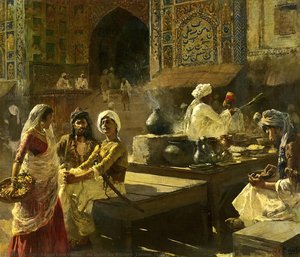
- an open-air restaurant near wazir khan mosque, lahore
- royal elephant at the gateway to the jama masjid, mathura
awards and legacy
weeks earned numerous accolades, including a medal of honor in 1884, a third class medal in 1889, a gold medal at the 1889 international exhibition, and the legion of honor in 1896. he was also a member of the légion d'honneur, france, an officer of the order of saint michael (bavaria), and a member of the munich secession. view edwin lord weeks' artworks on ArtsDot: [https://ArtsDot.com/@/edwinlordweeks](https://ArtsDot.com/@/edwinlordweeks) explore more about orientalist subjects on ArtsDot: /en/art/list/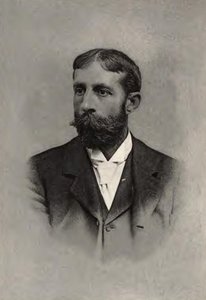
Edwin Lord Weeks
1849 - 1903 , United States of America
Quick Facts
- Artistic Movement Or Style: Orientalist
- Artists Who Influenced This Artist:
- Jean-Léon Gérôme
- Léon Bonnat
- Date Of Birth: 1849
- Date Of Death: November 1903
- Full Name: Edwin Lord Weeks
- Nationality: American
- Notable Artworks:
- A Maratha
- An Open-Air Kitchen, Lahore, India
- Moguls Elephant
- Place Of Birth: Boston, United States of America
Related Articles
Thomas Daniell: Navigating Light, Landscape & Cultural Exchange in Early 19th-Century India
Explore the captivating landscapes of Thomas Daniell, a pioneering artist who documented India's beauty in the 19th century. Discover his 'Oriental Scenery,' aquatint technique & lasting legacy. Hand-painted reproductions available at ArtsDot.
Marianne North's Masterpieces: 25 Botanical Paintings That Bloom With Adventure | ArtsDot
Journey through the vibrant world of Marianne North’s botanical paintings! Explore 25 iconic artworks from this Victorian artist, celebrating exotic flora & travel. Find museum-quality reproductions and curated decor ideas at ArtsDot.com.
The Alluring Gaze: Orientalism in 19th-Century Art – Representation, Reception & Construction of the 'Orient'
Explore the complex history of Orientalism in 19th-century art. Discover how Western artists depicted the 'Orient,' its cultural impact, and Edward Said's critical analysis. A deep dive for art lovers & historians.
Fast Global Shipping for Hotel Designers: Receive Framed Art in Just 3–4 Weeks (Unframed in 3 Weeks) – Cut Delivery Time from 5 to 3 Weeks
Discover how ArtsDot’s expert hand‑painted reproductions reach hotel designers in just 3–4 weeks—framed or unframed—cutting delivery from 5 to 3 weeks. Trust our global logistics, quality guarantee, and bespoke art consultation for flawless hospitality spaces.
Panoramic Visions of Empire: The Daniells’ Artistic Collaboration & Legacy
Explore the captivating 'Oriental Scenery' by Thomas & William Daniell. Discover their pioneering aquatint prints of India, imperial context, artistic collaboration, and lasting legacy. A deep dive for history lovers.