 Preview
 Send
Send Share
Share
 Details

 Download
 Similars
 X-Ray
X-Ray Diaporama
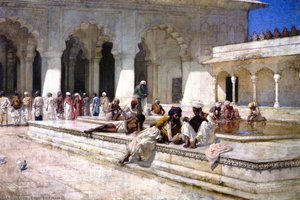
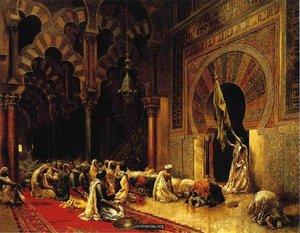
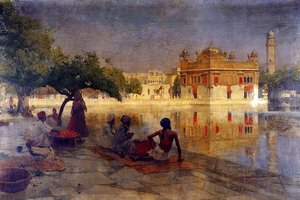
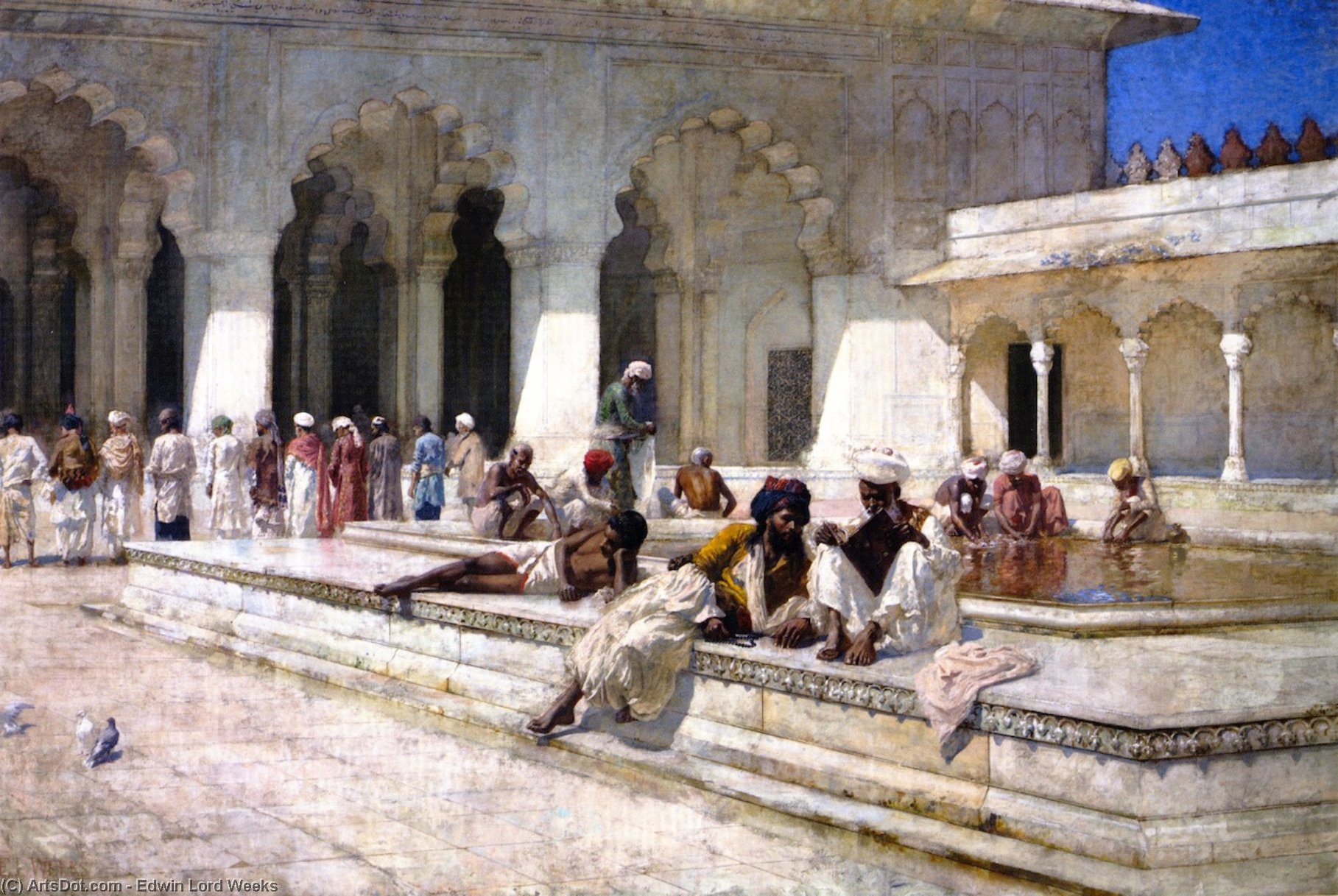
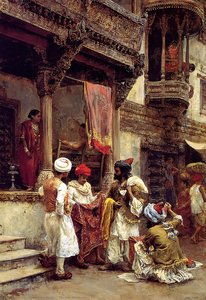
The Hour of Prayer at Moti Mushid (The Pearl Mosque), Agra


 Read More
Hand Made Oil Reproduction
Hand-painted oil on canvas in your size and frame, made to order by our artists. ( Buy Print Buy Image)




P118B $10

P118H $10

P118W $10

P438Z $10

P508JH $12

P508YH $12

P805H $10

P805Z $10

P919BZ $10

P919G $10

P919XJ $10

P959ZH $10

P968JZ $12

W106C $8

W218G $10

W218JH $8

W218Y $10

W307PJ $10

W316G $10

W316PJ $8

W316Y $10

W398PJ $8

W4111J $10

W500HY $15

W500JH $15

W692G $12

W849H $8

W940BG $15

W953PJ $8




Pick from our preset sizes that match the artwork's original proportions.

You may enter your own dimensions to fit a specific frame or space. If your selected size does not match the original image's proportions, we will either crop the artwork or extend the painting with additional hand-painted elements. A digital mockup will be sent for your approval before production begins.
Please note that the on-screen preview does not reflect the actual cropping or extension. Only the mockup will accurately show the final composition.
While custom sizes are available, we recommend selecting a dimension from the predefined list to preserve the original proportions.
After order, ArtsDot.com team will email client for instructions and provide a mockup preview
Worldwide Delivery () in 3/4 weeks instead of standard 5 weeks. (16 August). No compromise on quality.

Free Worldwide Express Shipping

High-Quality Linen Canvas

Full Shipping Insurance

Customs Tax Refund Guarantee

True Color Matching Guarantee

60-Day Return Policy (Defects Only)

100% Money-Back Guarantee

Bulk Discount Offer
 Glass option is only available in size under 110 CM

The Hour of Prayer at Moti Mushid (The Pearl Mosque), Agra
Reproduction Medium
Reproduction Size
-


Total Price
$ 263
Artwork Description
A Moment Frozen in Time: Edwin Lord Weeks' Reverie at Moti Mushid
The Hour of Prayer at Moti Mushid (The Pearl Mosque), Agra, painted by American artist Edwin Lord Weeks in 1888, transcends mere depiction; it embodies a profound connection to Eastern spirituality and artistic mastery. Now residing within the Virginia Museum of Fine Arts’ impressive collection of American Art, this monumental canvas offers viewers an unparalleled glimpse into the Victorian fascination with Orientalism – a movement that sought to capture exotic landscapes and cultures through idealized representations. Weeks' ambition wasn't simply to record what he saw; it was to distill the essence of faith and community within the serene confines of India’s most revered mosque.The Artist's Vision: Weeks and Orientalist Art
Edwin Lord Weeks (1849-1903) emerged as a prominent figure in late 19th-century American art, largely thanks to his unwavering dedication to exploring distant lands and translating their beauty onto canvas. Influenced by luminaries like Jean-Léon Gérôme and Gustave Dore, Weeks embraced the Orientalist style—characterized by lush colors, meticulous detail, and narratives rooted in Middle Eastern folklore and religious traditions. Unlike many of his contemporaries who prioritized spectacle, Weeks possessed a remarkable sensitivity to capturing subtle emotions and conveying spiritual contemplation. His travels throughout Persia, Egypt, and India fueled his artistic imagination and cemented his reputation as America’s foremost Orientalist painter.A Symphony of Color and Composition
Weeks' technique is immediately striking—a masterful blend of realism and expressive brushwork. He employed oil paints on canvas with exceptional precision, layering pigments to achieve luminous hues that capture the diffused light filtering through the mosque’s arched windows. Diagonal lines dominate the composition, guiding the eye across the scene and creating a dynamic sense of movement despite the stillness of prayer. The artist skillfully utilizes perspective to convey depth, emphasizing the grandeur of the building and highlighting the figures gathered before it. Vibrant reds, golds, and blues—colors traditionally associated with piety and royalty—are interwoven throughout the painting, reinforcing its symbolic significance.Symbolism Within Serenity: Capturing the Spirit of Prayer
The scene depicts a congregation of men kneeling in prayer at Moti Mushid, Agra’s iconic Pearl Mosque. The mosque itself stands as a testament to Mughal architectural prowess, symbolizing power and divine grace. Weeks' depiction isn't merely visual; it aims to evoke a feeling of reverence and tranquility. The figures are rendered with careful attention to anatomical accuracy, yet imbued with an aura of solemn contemplation—a reflection of the spiritual devotion central to Islamic faith. Furthermore, the inclusion of handbags adds a subtle element of everyday life juxtaposed against the sacred ritual, prompting viewers to consider the intersection between spirituality and human experience.A Legacy Enduring Through Reproduction
The Virginia Museum of Fine Arts recognizes Weeks’ contribution to American Art history. You can delve deeper into this masterpiece's story at ArtsDot.com and Wikipedia. If you aspire to own a stunning reproduction of “The Hour of Prayer at Moti Mushid,” ArtsDot.com offers exceptional handcrafted oil paintings that faithfully recreate Weeks’ vision, allowing you to experience the beauty and serenity of this unforgettable artwork firsthand.Related Artworks

Artist Biography
a life of artistic exploration
edwin lord weeks, an american artist, left an indelible mark on the art world with his captivating works. born in 1849 in boston, massachusetts, weeks' life was a testament to his family's affluence, which enabled him to pursue his passion for painting and traveling.early years and artistic development
as a young man, weeks visited the florida keys to draw, further solidifying his artistic foundation. his earliest known paintings date from 1867, when he was eighteen years old. notably, it wasn't until his landscape with blue heron, dated 1871 and painted in the everglades, that weeks began to exhibit a dexterity of technique and eye for composition.parisian sojourn and orientalist subjects
in 1872, weeks relocated to paris, becoming a pupil of léon bonnat and jean-léon gérôme. this marked the beginning of his emergence as one of america's major painters of orientalist subjects. throughout his adult life, he was an inveterate traveler, journeying to south america (1869), egypt and persia (1870), morocco (frequently between 1872 and 1878), and india (1882–83).notable works and publications
some of weeks' most notable works include:- a maratha, leaving for hunting from gwalior fort
- maratha king of gwalior at his palace
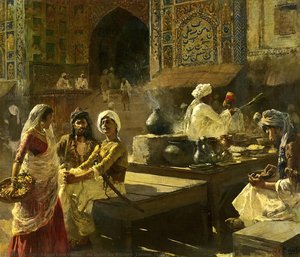
- an open-air restaurant near wazir khan mosque, lahore
- royal elephant at the gateway to the jama masjid, mathura
awards and legacy
weeks earned numerous accolades, including a medal of honor in 1884, a third class medal in 1889, a gold medal at the 1889 international exhibition, and the legion of honor in 1896. he was also a member of the légion d'honneur, france, an officer of the order of saint michael (bavaria), and a member of the munich secession. view edwin lord weeks' artworks on ArtsDot: [https://ArtsDot.com/@/edwinlordweeks](https://ArtsDot.com/@/edwinlordweeks) explore more about orientalist subjects on ArtsDot: /en/art/list/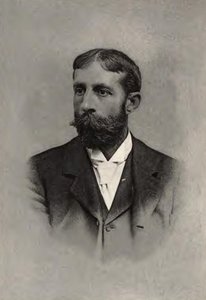
Edwin Lord Weeks
1849 - 1903 , United States of America
Quick Facts
- Artistic Movement Or Style: Orientalist
- Artists Who Influenced This Artist:
- Jean-Léon Gérôme
- Léon Bonnat
- Date Of Birth: 1849
- Date Of Death: November 1903
- Full Name: Edwin Lord Weeks
- Nationality: American
- Notable Artworks:
- A Maratha
- An Open-Air Kitchen, Lahore, India
- Moguls Elephant
- Place Of Birth: Boston, United States of America
Related Articles
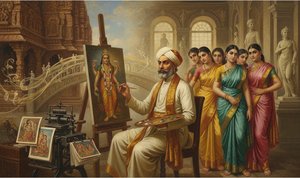
Raja Ravi Varma: Bridging Tradition & Modernity in 19th-Century Indian Art
Explore the life & art of Raja Ravi Varma, a pioneer who fused European techniques with Indian iconography. Discover his iconic paintings, lasting legacy, and influence on modern Indian art at ArtsDot.

19th Century Masterpieces: 10 Paintings That Defined an Era | ArtsDot
Journey through 19th century art with ArtsDot! Explore 10 iconic paintings – from Monet & Renoir to Courbet – and discover the stories behind Romanticism, Realism & Impressionism. Find museum-quality reproductions for your home decor. Explore the full collection online!
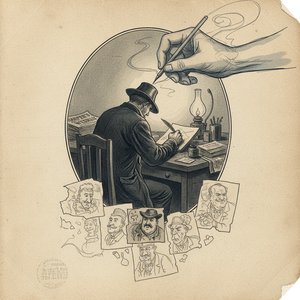
Harper's Weekly & the Anonymous Hand: Artistic Identity in 19th-Century America
Explore the fascinating world of Harper's Weekly & its often-anonymous artists! Discover Winslow Homer, Thomas Nast, and the impact of 19th-century illustration on American visual culture. A deep dive for art history enthusiasts.
Fast Global Shipping for Hotel Designers: Receive Framed Art in Just 3–4 Weeks (Unframed in 3 Weeks) – Cut Delivery Time from 5 to 3 Weeks
Discover how ArtsDot’s expert hand‑painted reproductions reach hotel designers in just 3–4 weeks—framed or unframed—cutting delivery from 5 to 3 weeks. Trust our global logistics, quality guarantee, and bespoke art consultation for flawless hospitality spaces.
The Allure of the Exotic: Orientalism in 19th-Century Art
Explore the captivating world of 19th-century Orientalist art! Discover iconic painters like Gérôme & Benjamin-Constant, key themes, and collecting insights. Expert analysis at ArtsDot.