 Preview
 Send
Send Share
Share
 Details

 Download
 Similars
 X-Ray
X-Ray Diaporama
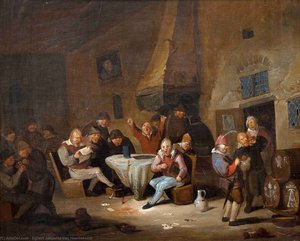
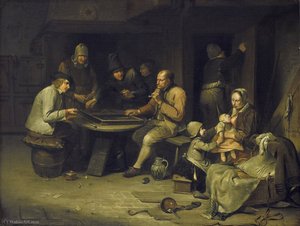
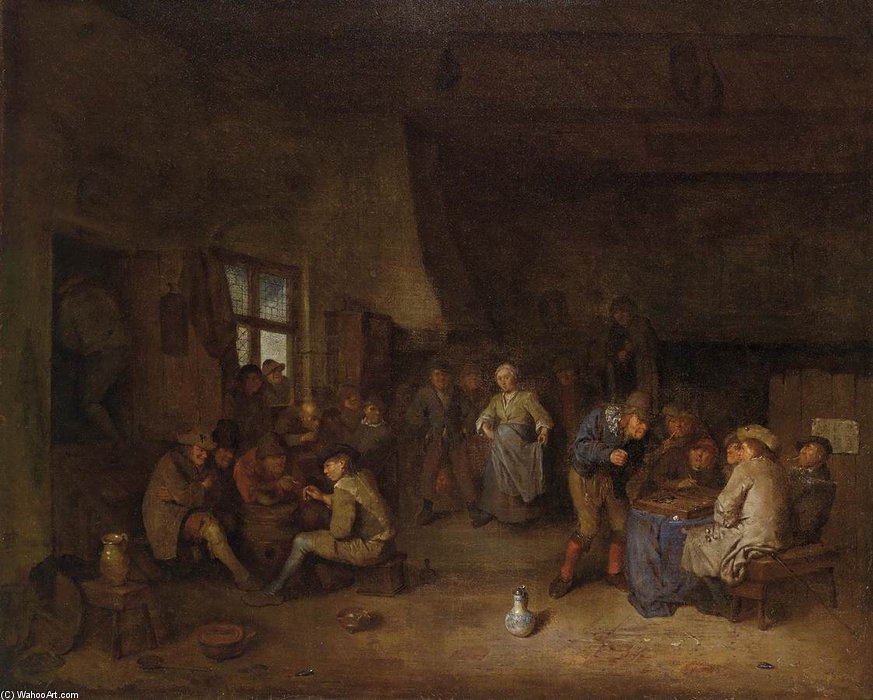
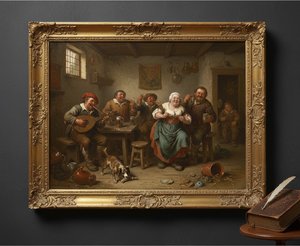
Tavern Interior With Chess Players

 Read More
Hand Made Oil Reproduction
Hand-painted oil on canvas in your size and frame, made to order by our artists. ( Buy Print Buy Image)




































Pick from our preset sizes that match the artwork's original proportions.

You may enter your own dimensions to fit a specific frame or space. If your selected size does not match the original image's proportions, we will either crop the artwork or extend the painting with additional hand-painted elements. A digital mockup will be sent for your approval before production begins.
Please note that the on-screen preview does not reflect the actual cropping or extension. Only the mockup will accurately show the final composition.
While custom sizes are available, we recommend selecting a dimension from the predefined list to preserve the original proportions.
After order, ArtsDot.com team will email client for instructions and provide a mockup preview
Worldwide Delivery () in 3/4 weeks instead of standard 5 weeks. (17 August). No compromise on quality.

Free Worldwide Express Shipping

High-Quality Linen Canvas

Full Shipping Insurance

Customs Tax Refund Guarantee

True Color Matching Guarantee

60-Day Return Policy (Defects Only)

100% Money-Back Guarantee

Bulk Discount Offer
 Glass option is only available in size under 110 CM

Tavern Interior With Chess Players
Reproduction Medium
Reproduction Size
-


Total Price
$ 438
Related Artworks
Artist Biography
A Master of Satire and the Human Condition
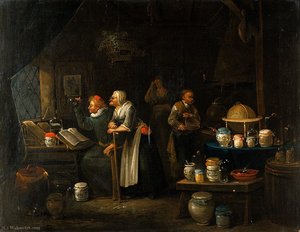
In the vibrant, bustling atmosphere of the Dutch Golden Age, few artists possessed a gaze as sharp or as irreverently humorous as Egbert Jaspersz van Heemskerck. Born in Haarlem in 1634, Heemskerck emerged from a lineage deeply rooted in the scientific and medical disciplines, being the son of a physician. This early exposure to the anatomical and the clinical would later manifest in his work not merely as technical precision, but as a profound, often biting, observational tool. While many of his contemporaries sought to capture the serene landscapes or the dignified portraits of the Dutch elite, Heemskerck found his muse in the gritty, the comical, and the profoundly human. His brush possessed a unique ability to navigate the thin line between genre painting and social critique, turning everyday scenes into mirrors of societal absurdity.
His artistic journey was shaped by the rigorous traditions of the Haarlem school. Having likely studied under the esteemed Pieter de Grebber, Heemskerck mastered the ability to render texture and light with a realism that grounded his more fantastical or satirical subjects in a palpable reality. His early years saw him navigating the professional structures of the Haarlem Guild of St. Luke, where he began to develop a reputation for capturing the "low-life" scenes—taverns, apothecary shops, and cluttered interiors—that were becoming increasingly popular among collectors. There is a certain tension in his work; even when depicting a simple scene of a monk drinking or a physician at work, there is an underlying psychological depth that suggests a much larger, often more chaotic, world operating just beyond the frame.
The Wit of the Brush and the London Years
As his career progressed, Heemskerck’s reputation for wit and subversion grew alongside his technical prowess. He became particularly renowned for his depictions of medical practices, where he blended his inherited anatomical knowledge with a sharp sense of irony. His paintings of surgeons, pharmacists, and patients are celebrated not just for their meticulous detail, but for their ability to poke fun at the pretensions of the medical profession. This penchant for the provocative occasionally led him into significant peril; it is recorded that a painting featuring King Charles II was seized by authorities due to its perceived subversive undertones, proving that Heemskerck was an artist who dared to challenge the very foundations of power through his art.
The later chapter of his life saw a transition from the familiar streets of Haarlem to the cosmopolitan energy of London. Moving to England in the early 1680s, he found himself within the orbit of influential figures such as John Wilmot, Earl of Rochester. This period of relocation exposed him to the burgeoning Baroque influences of the English court and provided a new stage for his satirical talents. In London, his works were often engraved and printed, allowing his biting social commentaries to reach a much wider audience. His ability to adapt his Dutch realism to the tastes of an international clientele ensured that his legacy was not confined to the Netherlands but echoed through the cultural corridors of Europe.
Legacy of a Provocateur
Though history occasionally struggles to distinguish him from other artists of similar names, the singular impact of Egbert Jaspersz van Heemskerck remains undeniable. He stands as a vital link in the evolution of genre painting, moving the medium away from mere decoration toward a sophisticated form of social commentary. His life, marked by both professional achievement and the risks of political dissent, reflects the turbulent spirit of the 17th century. When we look upon his works today, we see more than just historical artifacts; we encounter a master who used the canvas to dissect the human comedy, reminding us that even in the most mundane moments of life, there is a profound—and often hilarious—truth waiting to be uncovered.
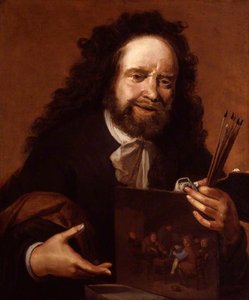
egbert jaspersz van heemskerck
1635 - 1704 , Netherlands
Quick Facts
- Artistic Movement Or Style: Dutch Golden Age
- Artists Or Movements Influenced By This Artist: ['']
- Artists Who Influenced This Artist: ['Pieter de Grebber']
- Date Of Birth: 1634
- Date Of Death: 1704
- Full Name: Egbert Jaspersz van Heemskerck
- Nationality: Dutch
- Notable Artworks:
- An old man consulting a book...
- A philosopher in his study
- Jacob Franszn and family...
- Place Of Birth: Haarlem, Netherlands
Related Articles
Van Gogh's Masterpieces: Explore 25 Iconic Paintings & Art for Your Home
Journey through Vincent van Gogh's 25 most iconic paintings! Explore 'Starry Night', 'Sunflowers,' and more—discover the stories, techniques & emotions behind these Post-Impressionist masterpieces. Find museum-quality art reproductions for your home at ArtsDot.com.

Dutch Masters: 10 Golden Age Paintings That Still Inspire |
Journey into the Dutch Golden Age! Explore 10 iconic paintings by Rembrandt, Vermeer & Hals. Discover the stories behind these Baroque masterpieces and find museum-quality art reproductions to elevate your home decor on .

Rembrandt's Masterpieces: Explore 25 Iconic Paintings & Prints | ArtsDot
Journey through Rembrandt van Rijn's 25 most iconic paintings & etchings. Explore Dutch Golden Age masterpieces, dramatic chiaroscuro, and timeless portraits. Find museum-quality art reproductions to elevate your home decor on ArtsDot.com.
Adriaen van Ostade: A Master of Dutch Genre Painting & Social Commentary
Explore the life & work of Adriaen van Ostade, a leading Dutch Golden Age painter. Discover his realistic genre scenes, social commentary, and lasting influence on art history. Learn more at ArtsDot.

Golden Age Reflections: Dutch Baroque Painting & Cultural Innovation
Explore the Dutch Golden Age of painting! Discover key artists like Vermeer & ter Borch, their innovative techniques, and the rich cultural context behind these Baroque masterpieces. Learn about collecting & appreciating this iconic art period.