 Preview
 Send
Send Share
Share
 Details

 Download
 Similars
 X-Ray
X-Ray Diaporama
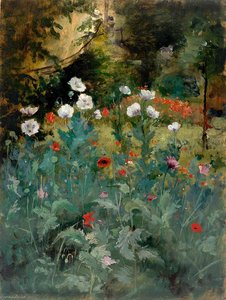
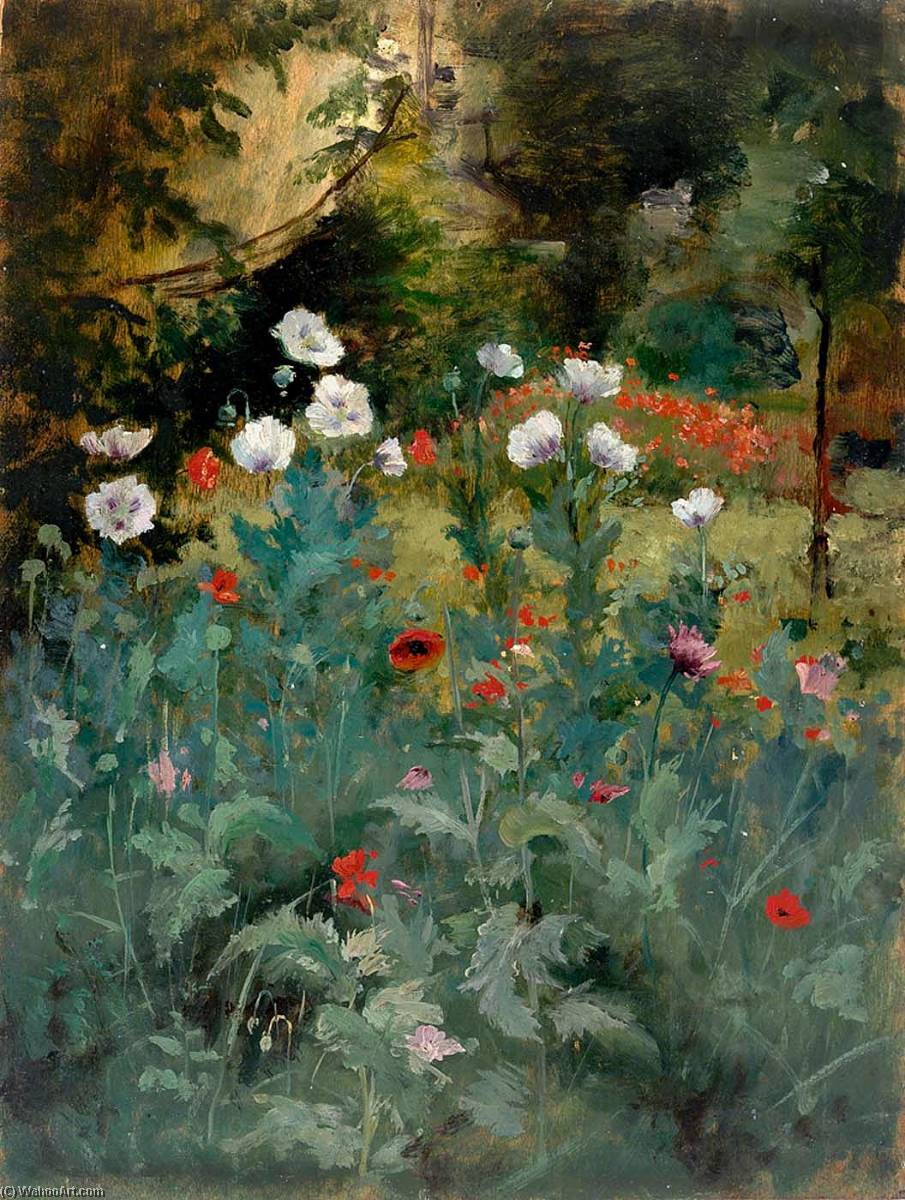
Poppies
 35.0 x 27.0 cm
 Read More
Hand Made Oil Reproduction
Hand-painted oil on canvas in your size and frame, made to order by our artists. ( Buy Print Buy Image)




































Pick from our preset sizes that match the artwork's original proportions.

You may enter your own dimensions to fit a specific frame or space. If your selected size does not match the original image's proportions, we will either crop the artwork or extend the painting with additional hand-painted elements. A digital mockup will be sent for your approval before production begins.
Please note that the on-screen preview does not reflect the actual cropping or extension. Only the mockup will accurately show the final composition.
While custom sizes are available, we recommend selecting a dimension from the predefined list to preserve the original proportions.
After order, ArtsDot.com team will email client for instructions and provide a mockup preview
Worldwide Delivery () in 3/4 weeks instead of standard 5 weeks. (17 August). No compromise on quality.

Free Worldwide Express Shipping

High-Quality Linen Canvas

Full Shipping Insurance

Customs Tax Refund Guarantee

True Color Matching Guarantee

60-Day Return Policy (Defects Only)

100% Money-Back Guarantee

Bulk Discount Offer
 Glass option is only available in size under 110 CM

Poppies
Reproduction Medium
Reproduction Size
-


Total Price
$ 263
Artwork Description
The Artist and His Style
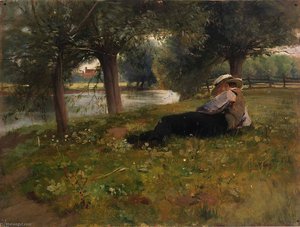
Eliphalet Frazer Andrews was a prominent figure in American art, particularly in the realm of portraiture. With a career spanning several decades, he established himself as a skilled painter, receiving numerous commissions for portraits of notable Americans. His style is characterized by attention to detail, use of vibrant colors, and an ability to capture the essence of his subjects. Poppies, one of his notable works, showcases Andrews' skill in depicting natural beauty. The painting features a serene garden scene with poppies as the central theme, executed in oil on canvas. This piece is not only a testament to Andrews' technical prowess but also reflects his appreciation for nature's splendor.Significance and Legacy
The Poppies painting is housed at the Smithsonian American Art Museum, a prestigious institution dedicated to preserving and showcasing American art. This museum, part of the Smithsonian Institution, is home to a vast collection of artworks, including pieces by Claude Monet and Claude Buck. The inclusion of Poppies in this esteemed collection underscores its importance in the American art landscape. For art enthusiasts and collectors, reproductions of such masterpieces are a great way to appreciate and own a piece of history. Websites like https://ArtsDot.com offer handmade oil painting reproductions, including works by Eliphalet Frazer Andrews. These reproductions are crafted with precision, ensuring that every detail and color is meticulously replicated.- View the original Poppies by Eliphalet Frazer Andrews at the Smithsonian American Art Museum.
- Explore more artworks by Andrews and other notable artists on https://ArtsDot.com.
- Learn more about Eliphalet Frazer Andrews on Wikipedia.
In conclusion, the Poppies painting by Eliphalet Frazer Andrews is a captivating piece that showcases the artist's skill and appreciation for nature. Its inclusion in the Smithsonian American Art Museum collection highlights its significance, making it a must-see for anyone interested in American art.
Related Artworks





Artist Biography
The Master of Light and Legacy: The Life of Eliphalet Frazer Andrews
In the grand tapestry of nineteenth-century American art, few threads are woven as intricately as those left by Eliphalet Frazer Andrews. Born in June 1835 in Steubenville, Ohio, Andrews emerged as a painter who possessed a rare duality of vision: the ability to capture the monumental weight of history and the quiet, breathing intimacy of a domestic corner. His journey was one of constant refinement, beginning with his academic foundations at Marietta College before venturing into the heart of the European art world. By immersing himself in the prestigious studios of Düsseldorf and Paris, studying under luminaries such as Lüdwig Knaus, Heinrich Mücke, and Léon Bonnat, Andrews absorbed a sophisticated mastery of light, shadow, and form that would later define his uniquely American sensibility.
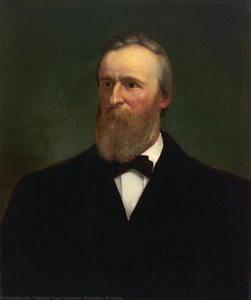
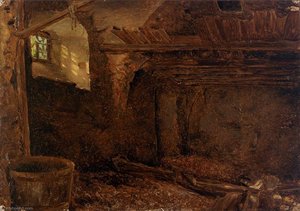
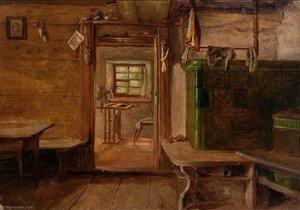
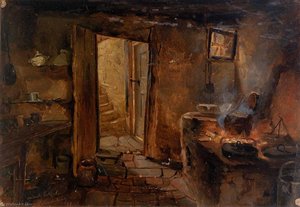
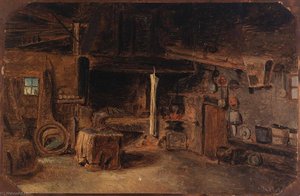
The essence of Andrews’s artistry lies in his profound command over the atmosphere of a space. While he was widely celebrated as a premier portraitist—earning prestigious commissions to capture the dignity of figures like Rutherford B. Hayes—his true genius often revealed itself in his interior scenes. In works such as Interior and Interior of a Kitchen, one does not merely see a room; one feels the passage of time. Through the meticulous use of oil on canvas and delicate glazing techniques, he achieved a luminous quality that allowed light to dance across stone walls and weathered wood, imbuing even abandoned or neglected spaces with a haunting, palpable soul. His landscapes, too, such as the serene Edge of a Stream, demonstrate an ability to blend the pastoral charm of the American countryside with a sophisticated, almost Impressionistic touch.
A Pillar of American Artistic Institution
Beyond the canvas, Andrews’s influence on the American cultural landscape was structural and enduring. He was not merely a creator of images but a builder of institutions. His most significant contribution to the future of American art was his pivotal role in the establishment of the Corcoran School of Art in Washington D.C. Serving as its director from 1877 to 1902, he crafted an instructional curriculum that would shape generations of artists, fostering a standard of excellence that bridged European tradition with New World innovation. This commitment to pedagogy ensured that his devotion to technical precision and observational truth would outlive his own brushstrokes.
The historical significance of Andrews is further cemented by the locations where his work resides today. His paintings serve as visual chronicles of American power and heritage, with notable pieces adorning the White House and being preserved within the Smithsonian American Art Museum. Whether he was recreating the likenesses of deceased American icons or capturing the quiet dignity of a sunlit room, Andrews remained a visionary who understood that the smallest detail—a glint of light on a windowpane or the texture of a stone wall—could tell the grandest story of a nation’s spirit.
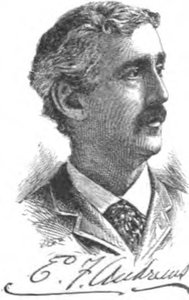
eliphalet frazer andrews
1835 - 1915
Quick Facts
- Artistic Movement Or Style: Genre painting
- Artists Or Movements Influenced By This Artist: ['Corcoran School of Art']
- Artists Who Influenced This Artist:
- Heinrich Mücke
- Léon Bonnat
- Date Of Birth: 1835
- Date Of Death: 1915
- Full Name: Eliphalet Frazer Andrews
- Nationality: American
- Notable Artworks:
- Poppies
- Interior
- Interior of a Stable
- Place Of Birth: Steubenville, Ohio