 Preview
 Send
Send Share
Share
 Details

 Download
 Similars
 X-Ray
X-Ray Diaporama
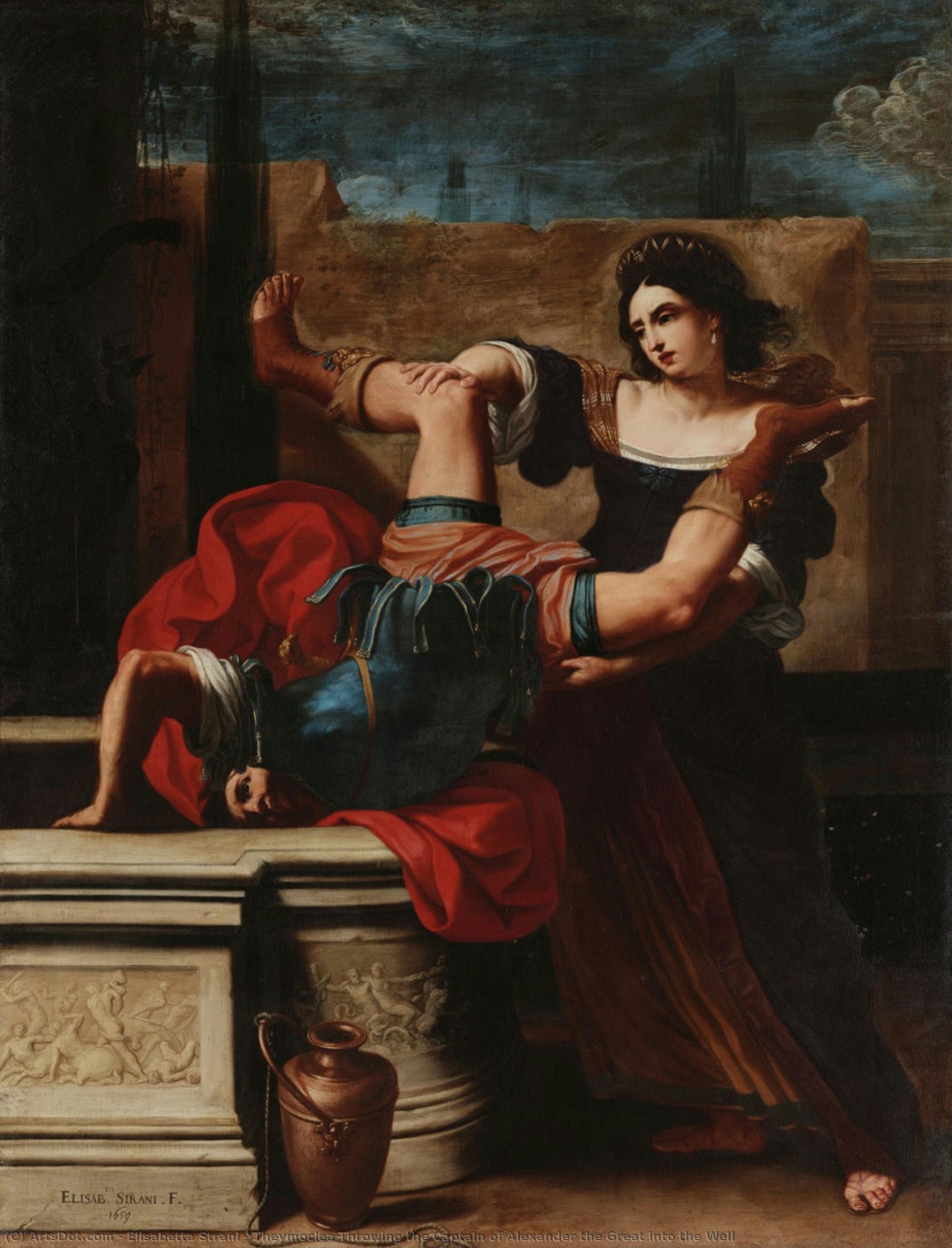
Theymoclea Throwing the Captain of Alexander the Great into the Well


 Read More
Hand Made Oil Reproduction
Hand-painted oil on canvas in your size and frame, made to order by our artists. ( Buy Print Buy Image)




P118B $10

P118H $10

P118W $10

P438Z $10

P508JH $12

P508YH $12

P805H $10

P805Z $10

P919BZ $10

P919G $10

P919XJ $10

P959ZH $10

P968JZ $12

W106C $8

W218G $10

W218JH $8

W218Y $10

W307PJ $10

W316G $10

W316PJ $8

W316Y $10

W398PJ $8

W4111J $10

W500HY $15

W500JH $15

W692G $12

W849H $8

W940BG $15

W953PJ $8




Pick from our preset sizes that match the artwork's original proportions.

You may enter your own dimensions to fit a specific frame or space. If your selected size does not match the original image's proportions, we will either crop the artwork or extend the painting with additional hand-painted elements. A digital mockup will be sent for your approval before production begins.
Please note that the on-screen preview does not reflect the actual cropping or extension. Only the mockup will accurately show the final composition.
While custom sizes are available, we recommend selecting a dimension from the predefined list to preserve the original proportions.
After order, ArtsDot.com team will email client for instructions and provide a mockup preview
Worldwide Delivery () in 3/4 weeks instead of standard 5 weeks. (26 August). No compromise on quality.

Free Worldwide Express Shipping

High-Quality Linen Canvas

Full Shipping Insurance

Customs Tax Refund Guarantee

True Color Matching Guarantee

60-Day Return Policy (Defects Only)

100% Money-Back Guarantee

Bulk Discount Offer
 Glass option is only available in size under 110 CM

Theymoclea Throwing the Captain of Alexander the Great into the Well
Reproduction Medium
Reproduction Size
-


Total Price
$ 263
Artwork Description
The Enigmatic Figure of Elisabetta Sirani’s “Theymoclea Throwing the Captain of Alexander the Great into the Well”
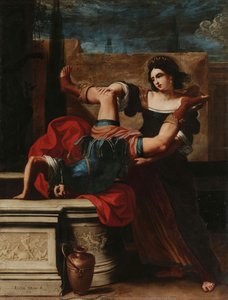
Elisabetta Sirani's "Theymoclea Throwing the Captain of Alexander the Great into the Well," painted in 1659, is a captivating portrait that transcends mere visual representation—it embodies a complex tapestry of Baroque drama and psychological insight. Executed during a period marked by religious fervor and artistic innovation in Rome, this artwork stands as a testament to Sirani’s mastery of chiaroscuro and her ability to convey profound emotion through subtle gestures and expressive faces. The painting depicts a woman, identified as Timoclea, dramatically lifting the leg of another man—presumably Alexander the Great—who lies prone on the ground within a well. This arresting scene immediately draws the viewer into a narrative brimming with tension and unspoken anxieties.A Baroque Masterpiece: Technique and Style
Sirani’s technique exemplifies the hallmarks of Baroque art. She skillfully employs chiaroscuro – the dramatic interplay between light and shadow – to sculpt the figures, creating an illusionistic depth that enhances the emotional impact. The meticulous rendering of textures—the woman's crimson dress, the man’s skin—demonstrates a dedication to realism informed by scientific observation, yet infused with artistic license. The composition is carefully balanced, guiding the eye across the canvas and emphasizing the central action. Notice how Sirani utilizes pyramidal structure to create stability while simultaneously conveying movement and dynamism. This masterful control of form contributes significantly to the painting’s overall grandeur and theatrical quality.Historical Context: Intrigue and Religious Conflict
“Theymoclea Throwing the Captain of Alexander the Great into the Well” emerged from a turbulent era in European history—the aftermath of the St. Bartholomew's Day Massacre, a horrific episode of religious persecution that shook France. While the precise narrative underpinning Sirani’s depiction remains debated by scholars, it likely reflects anxieties surrounding power dynamics and moral dilemmas prevalent during the period. The woman’s assertive posture speaks to themes of defiance and control, juxtaposed against the vulnerability of the fallen man—a potent symbol of subjugation and defeat. Such symbolism aligns with broader Baroque artistic conventions that frequently explored moral allegories and psychological complexities.Symbolism: Beyond Appearances
The well itself serves as a powerful visual metaphor – representing both confinement and purification. Timoclea’s act of lifting Alexander suggests an attempt to elevate him, perhaps signifying redemption or aspiration for spiritual enlightenment. However, the man's position on the ground underscores his helplessness and vulnerability. The woman’s gaze directs attention upwards, hinting at contemplation and judgment—a subtle commentary on ethical considerations within a context rife with religious fervor. These symbolic elements enrich the painting’s narrative depth and invite viewers to ponder questions of morality and human ambition.Emotional Resonance: Capturing Human Vulnerability
Ultimately, “Theymoclea Throwing the Captain of Alexander the Great into the Well” succeeds in conveying an intense emotional experience. Sirani captures a moment of dramatic confrontation—a clash between strength and weakness—that resonates with viewers across centuries. The woman’s expression conveys determination mingled with compassion, while the man's posture embodies despair. Through her masterful use of light and shadow, Sirani elevates this seemingly simple scene into an unforgettable portrayal of human psychology and artistic brilliance. It remains a compelling reminder of Baroque art’s capacity to explore profound themes of morality and vulnerability.Related Artworks

Artist Biography
Jacques Callot: The Chronicler of a Turbulent Age
Jacques Callot, born around 1592 in Nancy, Duchy of Lorraine, and tragically dying in 1635, stands as a pivotal figure in the history of printmaking. More than simply an engraver, he was a chronicler—a visual recorder of his time, capturing the anxieties, entertainments, and stark realities of 17th-century Europe with unparalleled detail and emotional resonance. His work, particularly his series of images depicting the St. Bartholomew’s Day Massacre, remains profoundly unsettling and offers a rare glimpse into a period of intense religious conflict and social upheaval. Callot's legacy isn’t one of grand, idealized compositions; rather, it lies in his ability to distill complex narratives into powerfully evocative prints that continue to resonate with viewers today.Early Life and Training: From Goldsmith to Master Engraver
Callot’s early life was steeped in the artisan traditions of Lorraine. His father, a master of ceremonies at the court of the Duke, instilled in him an appreciation for craftsmanship and meticulous detail. Initially apprenticed to a goldsmith, Callot's artistic inclinations quickly led him towards engraving. A pivotal moment in his development came with his journey to Rome around 1612, where he studied under Philippe Thomassin, a French expatriate engraver. This immersion in the Roman art world exposed him to classical antiquity and established a foundation for his later stylistic choices. He then spent time in Florence, working for the Medici court and honing his skills alongside Antonio Tempesta, a master of etching known for his dramatic lighting and expressive figures. Crucially, Callot’s training wasn't solely focused on technique; he developed innovative methods that would revolutionize printmaking, including the *échoppe*, a specialized engraving needle with a slanting oval section, allowing for greater control over line thickness and creating a swelling effect reminiscent of brushstrokes – a significant departure from traditional engraving. He also refined etching ground recipes, reducing the risk of “foul-biting” and extending the lifespan of his plates.The St. Bartholomew’s Day Massacre: A Graphic Testimony
Callot's most famous series, *Les Moeurs Nouveaux* (New Customs), produced between 1632 and 1635, is a harrowing depiction of the St. Bartholomew’s Day Massacre in Paris in 1572 – an event that shocked Europe and remains a potent symbol of religious violence. Rather than presenting a heroic narrative, Callot unflinchingly documented the brutality of the massacre, depicting scenes of indiscriminate slaughter, looting, and terror with stark realism. These prints weren't intended as propaganda; instead, they served as a graphic record of a horrific event, forcing viewers to confront the consequences of religious fanaticism. The series comprised over 140 individual plates, each meticulously engraved and often printed in multiple states, allowing Callot to refine his compositions and explore different interpretations of the events. The prints are characterized by their unsettling detail—the faces of victims frozen in expressions of agony, the chaotic scenes of violence, and the casual cruelty of the perpetrators – creating a deeply disturbing and unforgettable experience for the viewer.Beyond Massacre: A Diverse Portfolio
While *Les Moeurs Nouveaux* cemented Callot’s reputation, his artistic output extended far beyond this single series. He produced a vast array of prints exploring diverse themes—from scenes of circus life and wandering performers to depictions of beggars, soldiers, and the Romani people (often referred to as “Gypsies”). These works offer a fascinating glimpse into the social fabric of 17th-century Europe, revealing both its pleasures and its hardships. He also created numerous religious prints, often infused with a sense of dramatic intensity and moral urgency. Notably, Callot’s landscapes frequently feature prominently in his compositions, providing a backdrop for his narratives and contributing to the overall atmosphere of each print. His work demonstrates an impressive versatility and a keen eye for detail, reflecting a deep understanding of human nature and the complexities of the world around him.Legacy and Influence
Jacques Callot’s impact on the development of printmaking is undeniable. He pushed the boundaries of engraving technique, introducing innovations that would be adopted by subsequent generations of artists. His unflinching realism and his willingness to confront difficult subjects—particularly in *Les Moeurs Nouveaux*—established a new standard for graphic art. Rembrandt van Rijn, a devoted collector of Callot’s prints, recognized the artist's genius and profoundly influenced Rembrandt’s own work, particularly in his use of etching techniques. While Callot himself remained largely unknown during his lifetime, his legacy has been secured through the enduring power of his images—testaments to a turbulent era and a remarkable artist who dared to document it with unflinching honesty. His prints continue to be studied and admired for their technical brilliance, emotional depth, and historical significance.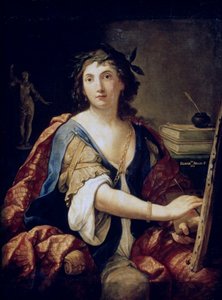
elisabetta strani
1635 - 1665 , Italy
Quick Facts
- Artistic Movement Or Style: Baroque printmaker
- Artists Or Movements Influenced By This Artist: ['Rembrandt']
- Artists Who Influenced This Artist: ['Philippe Thomassin']
- Date Of Death: 1635
- Full Name: Jacques Callot
- Nationality: French
- Notable Artworks:
- The Triumph of Pan
- The Triumph of Bacchus
- Place Of Birth: Nancy, France
Related Articles

Baroque Drama: Bringing Opulence & Emotion into Contemporary Interiors
Explore the opulent world of Baroque interior design! Discover key elements, modern applications & how to bring dramatic elegance into your home with 's authentic reproductions.

The Dramatic Flourish: Exploring the Baroque Movement's Enduring Legacy in Art History
Explore the dramatic world of Baroque art! Discover iconic artists like Caravaggio & Rubens, defining techniques, and its lasting impact on art history. Expert insights for collectors & enthusiasts at ArtsDot.

Baroque Masterpieces: 10 Paintings That Defined an Era |
Journey through the drama & grandeur of Baroque art! Explore 10 masterpieces by Caravaggio, Rembrandt, Rubens & more. Discover stunning oil paintings, rich colors & timeless stories. Find museum-quality reproductions at .

The Visceral Stage: Exploring Dramatic Narratives & Emotional Intensity in Baroque Art
Explore the dramatic world of Baroque art! Discover iconic masters like Caravaggio & Rembrandt, their techniques, and the movement's lasting impact. Expert insights for collectors & enthusiasts at ArtsDot.

Theatricality & Triumph: Baroque Drama in Painting & Sculpture
Explore the dramatic world of Baroque art! Discover its history, defining characteristics, & lasting influence on painting & sculpture. Expert insights into Caravaggio, Zurbarán, and Bernini – plus high-quality reproductions at ArtsDot.