

 Preview
 Send
Send Share
Share
 Details

 Download
 Similars
 X-Ray
X-Ray Diaporama
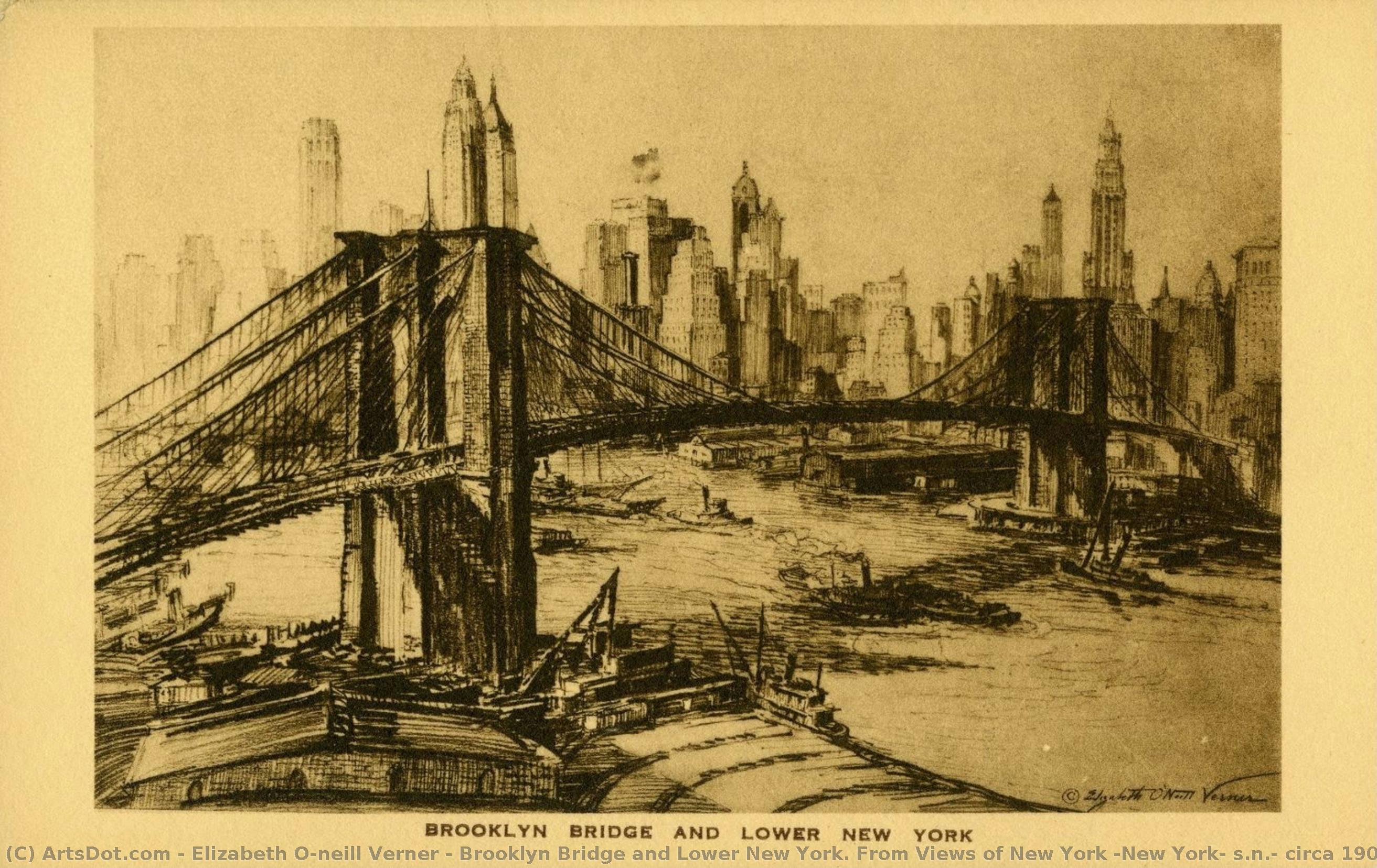
Brooklyn Bridge and Lower New York. From Views of New York (New York: s.n., circa 1900)


 Read More
Purchase a high-resolution, enhanced digital image, far superior to the online preview.
Each file is meticulously prepared by our in-house specialists using advanced tools and expert manual retouching. We ensure every image has exceptional clarity, precise color accuracy, and fine detail.
The final file is delivered via email within 72 hours, optimized for immediate use in professional, editorial, and print environments. This is the same quality trusted by top-tier design studios, publishers, and galleries.
Digital Image
Download a high-resolution file for personal display, printing, and creative projects. ( Buy Print Buy Hand Made Painting)
Included in Every Digital Image Order
Expert Digital Delivery, Guaranteed
When you choose ArtsDot.com, you're not just getting an image - you're receiving a professionally enhanced digital artwork, crafted with precision and backed by a satisfaction guarantee. Here's everything that comes with your order, automatically:

Fast Email Delivery
Your high-resolution digital image file will be emailed to you within 72 hours of ordering - ready for immediate use.

AI-Enhanced Digital File
Your artwork is professionally optimized using advanced AI tools and manual editing, ensuring maximum detail, clarity, and color accuracy.

Free Lifetime Re-Delivery
Accidentally deleted or lost your file? No worries - we'll resend it to you anytime, free of charge.

No Import Fees - Ever
Enjoy your artwork instantly with zero customs, duties, or delivery fees - digital downloads are always tax-free.

Color Accuracy Guarantee
We ensure your digital image reflects the original colors as closely as possible using professional tools and color management.

60-Day Satisfaction Guarantee
If you're not satisfied with your digital image, we'll revise it or refund 100% within 60 days - no questions asked.

100% Money-Back Guarantee
Not satisfied? Get a full refund within 60 days of receiving your digital file - no questions asked.

Bulk Order Discounts
Buy 3 images, save 10% - Buy 5, save 15% - Buy 10+, save 20%. Great for creative projects, galleries, and agencies.
Elizabeth O'Neill Verner: Capturing Charleston’s Soul Through Delicate Line
Elizabeth O’Neill Verner (1883-1979), an American artist, author, lecturer, and preservationist, stands as a cornerstone of Charleston Renaissance art. Revered as “the best-known woman artist of South Carolina of the twentieth century,” Verner dedicated her life to documenting the beauty and heritage of her beloved city—a mission beautifully realized in works like “Brooklyn Bridge and Lower New York. From Views of New York (New York: s.n., circa 1900),” a postcard that transcends its humble format to embody the spirit of an era.
Verner’s artistic journey began with formative studies under Alice Ravenel Huger Smith, establishing her connection to Charleston's burgeoning art circles and fostering a lifelong passion for capturing the essence of Southern landscapes. Her formal training extended beyond local influences; she pursued advanced education in Philadelphia, honing her skills alongside prominent artists like Thomas Anshutz.
A Visionary’s Technique: Etching and Pastel
“Brooklyn Bridge and Lower New York” exemplifies Verner's masterful technique—primarily etching combined with pastel. The etching process allowed for precise detail and tonal gradation, capturing the architectural grandeur of the bridge against the muted hues of the cityscape. However, Verner skillfully augmented this foundational method with pastel, layering soft colors to imbue the image with warmth and luminosity. This dual approach created a visual experience that is both technically sophisticated and emotionally resonant.
Historical Context: Charleston’s Transformation
Created around 1900, “Brooklyn Bridge and Lower New York” reflects Charleston's rapid transformation during the Gilded Age—a period marked by industrial expansion and burgeoning tourism. The bridge itself symbolizes progress and connectivity, juxtaposed against the traditional buildings of downtown Charleston, representing a dialogue between past and present. Verner’s depiction captures this dynamic interplay, offering viewers a glimpse into a pivotal moment in Charleston's cultural history.
Symbolism: Light and Atmosphere
Beyond its architectural representation, “Brooklyn Bridge and Lower New York” communicates deeper symbolic meanings. The artist skillfully employs light—particularly diffused sunlight—to illuminate the bridge and surrounding buildings, creating an atmosphere of serenity and contemplation. This deliberate use of illumination underscores Verner’s desire to convey not merely what she saw but also how she felt about Charleston—a city brimming with beauty and imbued with a sense of timelessness.
Emotional Impact: A Legacy of Observation
"Brooklyn Bridge and Lower New York" isn't just an image; it's a testament to Verner’s unwavering dedication to observation and artistic expression. Her meticulous attention to detail—the reflections in the water, the subtle variations in color—invite viewers to immerse themselves in the scene and experience its emotional depth. This enduring artwork continues to inspire admiration for Verner’s artistry and her profound connection to Charleston's cultural heritage.
A reproduction of this captivating piece would bring a touch of Charleston Renaissance elegance into any interior space, reminding us of the power of art to preserve memory and convey emotion.
Related Artworks
Artist Biography
A Charleston Renaissance Luminary
Elizabeth O’Neill Verner, often celebrated as “the best-known woman artist of South Carolina of the twentieth century,” was a pivotal figure in the flourishing artistic landscape of the Charleston Renaissance. Born December 21, 1883, into a prominent Charleston family, her life became an eloquent testament to dedication, adaptation, and a profound love for her city’s heritage. From her earliest explorations with brush and etching needle, Verner demonstrated a remarkable talent nurtured by supportive parents who recognized the spark within her. This early encouragement led her to initial studies under Alice Ravenel Huger Smith, a foundational influence in Charleston's burgeoning art circles, setting the stage for a career that would intertwine artistic expression with historical preservation.Formative Years and Artistic Development
Verner’s formal training extended beyond Charleston’s vibrant local scene. She ventured north to Philadelphia, honing her skills at the prestigious Pennsylvania Academy of Fine Arts between 1901 and 1903 under the tutelage of Thomas Anshutz. This period provided a crucial grounding in classical techniques, shaping her observational abilities and understanding of form. Upon returning to Charleston, she continued her artistic journey with Gabrielle D. Clements and Ellen Day Hale, expanding her repertoire into printmaking – etching and drypoint becoming early specialties. These formative experiences weren’t merely about mastering technique; they fostered a spirit of collaboration and community engagement. Verner became a founding member of the Charleston Etchers Club and played an instrumental role in establishing the Southern States Art League, demonstrating a commitment to fostering a thriving artistic ecosystem within the region. Marriage to E. Pettigrew Verner in 1907 brought domestic happiness and two children, but it was the tragic loss of her husband in 1925 that dramatically reshaped her path, compelling her to embrace a professional art career to provide for her family.Adaptation, Preservation, and a Unique Pastel Vision
The necessity of self-support spurred Verner to adapt her artistic style to meet the demands of the market while remaining true to her aesthetic sensibilities. She skillfully balanced creating prints and illustrations appealing to tourists captivated by Charleston’s history and architecture with securing commissions that allowed her to contribute meaningfully to preservation efforts. Her work documenting historic buildings became particularly significant, earning recognition from institutions like the Williamsburg Historic District, Harvard Medical School, Princeton University, and the University of South Carolina. However, it was her sensitive portraits of African American flower vendors that truly distinguished her oeuvre. These depictions weren’t simply representations; they were glimpses into Charleston's social fabric, capturing the dignity and character of individuals often overlooked. In the 1930s, inspired by Laura Coombs Hills, Verner embarked on a fascinating exploration of pastels, developing a unique technique using oil pastels on raw silk mounted to wood – a method that allowed for an extraordinary richness of texture and color. This innovative approach became a hallmark of her later work, further solidifying her reputation as a versatile and experimental artist. Her literary contributions, including *Prints and Impressions of Charleston* and *Other Places*, showcased her ability to translate her artistic vision into accessible narratives, broadening her audience and sharing her experiences with the world.Legacy and Enduring Influence
Elizabeth O’Neill Verner's influence extends far beyond the canvases and prints she created. She was a vital force in shaping the Charleston Renaissance, a cultural movement that revitalized the city’s artistic spirit during the early 20th century. Her dedication to documenting historic architecture played an undeniable role in preserving Charleston’s unique architectural heritage for future generations. Her work serves as both a historical record and a testament to the power of art to inspire preservation. The Elizabeth O'Neill Verner Governor's Award for the Arts, established in her honor, continues to recognize artistic excellence within South Carolina each year, ensuring that her legacy endures. Today, her works are held in prestigious collections including the Harvard Art Museums, the Charleston Museum, the Smithsonian American Art Museum, and the Delaware Art Museum – a testament to her lasting impact on the art world. Verner’s story is one of resilience, artistic innovation, and unwavering commitment to her community, solidifying her place as a true icon of Southern art history.
Elizabeth O'Neill Verner
1883 - 1979 , United States of America
Quick Facts
- Artistic Movement Or Style: Charleston Renaissance
- Artists Who Influenced This Artist:
- Alice Ravenel Huger Smith
- Thomas Anshutz
- Date Of Birth: December 21, 1883
- Date Of Death: April 17, 1979
- Full Name: Elizabeth O'Neill Verner
- Nationality: American
- Notable Artworks:
- Flower Vendor Portraits
- Historic Charleston Buildings
- Place Of Birth: Charleston, USA

