

 Preview
 Send
Send Share
Share
 Details

 Download
 Similars
 X-Ray
X-Ray Diaporama
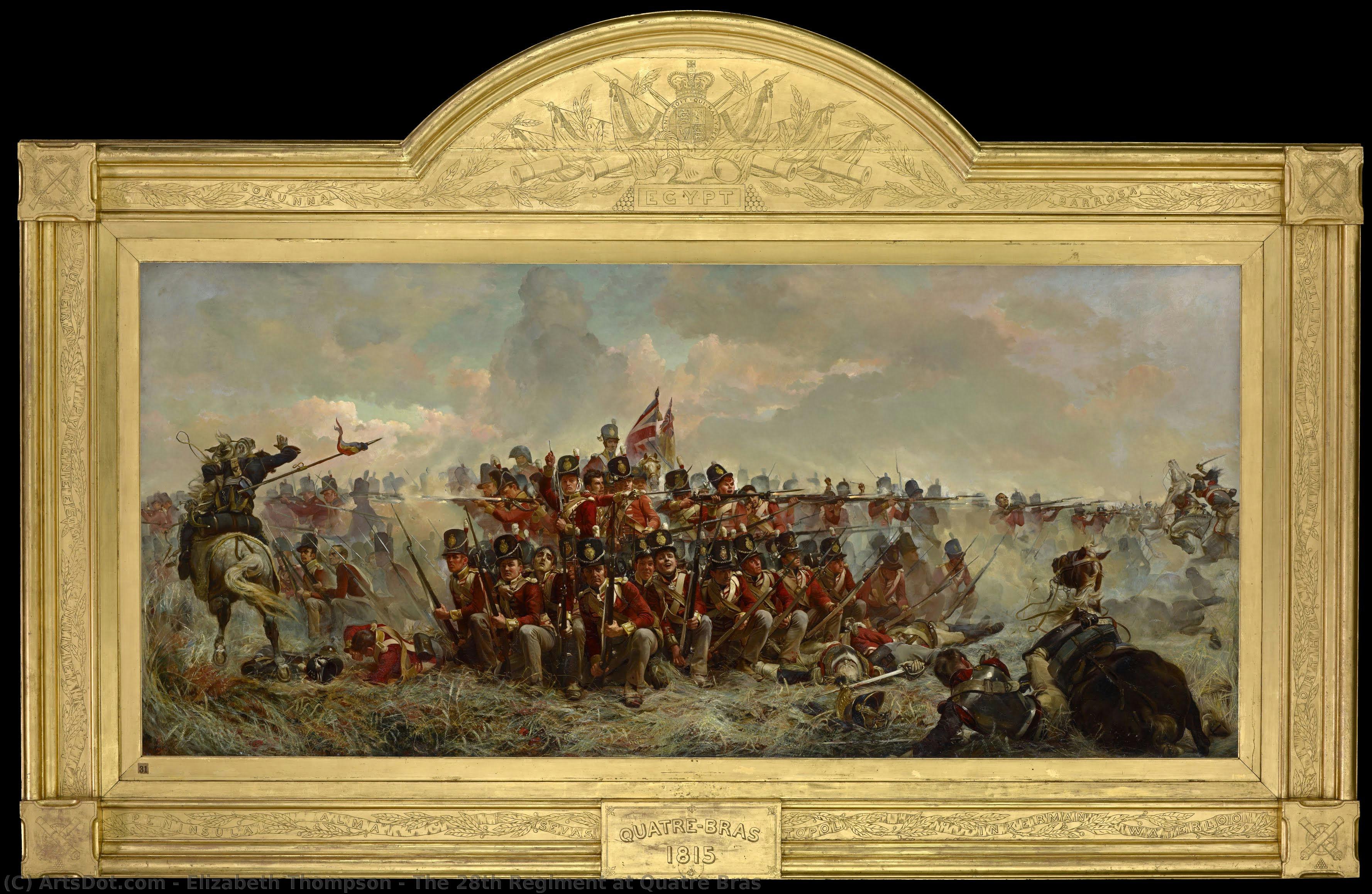
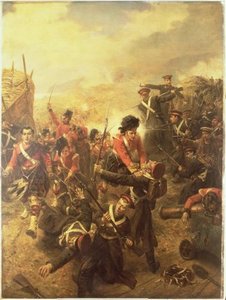
The 28th Regiment at Quatre Bras
 Oil On Canvas
- WallArt
- Historical Painting
 1875
1875 97.0 x 216.0 cm
 National Gallery of Victoria
 Read More
Purchase a high-resolution, enhanced digital image, far superior to the online preview.
Each file is meticulously prepared by our in-house specialists using advanced tools and expert manual retouching. We ensure every image has exceptional clarity, precise color accuracy, and fine detail.
The final file is delivered via email within 72 hours, optimized for immediate use in professional, editorial, and print environments. This is the same quality trusted by top-tier design studios, publishers, and galleries.
Digital Image
Download a high-resolution file for personal display, printing, and creative projects. ( Buy Print Buy Hand Made Painting)
Included in Every Digital Image Order
Expert Digital Delivery, Guaranteed
When you choose ArtsDot.com, you're not just getting an image - you're receiving a professionally enhanced digital artwork, crafted with precision and backed by a satisfaction guarantee. Here's everything that comes with your order, automatically:

Fast Email Delivery
Your high-resolution digital image file will be emailed to you within 72 hours of ordering - ready for immediate use.

AI-Enhanced Digital File
Your artwork is professionally optimized using advanced AI tools and manual editing, ensuring maximum detail, clarity, and color accuracy.

Free Lifetime Re-Delivery
Accidentally deleted or lost your file? No worries - we'll resend it to you anytime, free of charge.

No Import Fees - Ever
Enjoy your artwork instantly with zero customs, duties, or delivery fees - digital downloads are always tax-free.

Color Accuracy Guarantee
We ensure your digital image reflects the original colors as closely as possible using professional tools and color management.

60-Day Satisfaction Guarantee
If you're not satisfied with your digital image, we'll revise it or refund 100% within 60 days - no questions asked.

100% Money-Back Guarantee
Not satisfied? Get a full refund within 60 days of receiving your digital file - no questions asked.

Bulk Order Discounts
Buy 3 images, save 10% - Buy 5, save 15% - Buy 10+, save 20%. Great for creative projects, galleries, and agencies.
Collectible Description
A Frozen Moment of Valor: The Story Behind Elizabeth Thompson’s Masterpiece
Elizabeth Thompson's “The 28th Regiment at Quatre Bras,” a monumental oil painting completed in 1875, isn’t merely a depiction of a battle; it’s a visceral immersion into the heart of a pivotal moment in European history. Housed within the hallowed halls of the National Gallery of Victoria in Melbourne, Australia, this artwork transcends its canvas to become a testament to British military prowess and the enduring spirit of those who faced unimaginable odds. The painting captures the chaotic energy of the Battle of Quatre Bras, fought on June 16th, 1815, just two days before the decisive Battle of Waterloo – an engagement that shaped the destiny of Europe.
Thompson’s meticulous research and dedication to historical accuracy are immediately apparent. She didn't simply sketch a battlefield; she painstakingly reconstructed the scene based on Captain William Siborne’s detailed account, published in 1844. This commitment is evident in every brushstroke, from the meticulously rendered uniforms of the 28th (North Gloucestershire) Regiment of Foot to the muddy terrain and the smoke-filled sky – a deliberate attempt to convey the gritty reality of war. The painting isn’t romanticized; it's raw, honest, and profoundly moving.
The Regiment in Formation: Technique and Detail
Thompson’s technical skill is breathtaking. She masterfully employs layering techniques—glazes of oil paint built upon each other—to achieve a remarkable sense of depth and luminosity. The composition is broadly horizontal, emphasizing the length of the line of troops and creating an illusion of vastness, mirroring the scale of the battlefield. The artist’s attention to detail is astonishing; you can almost feel the weight of the muskets, hear the clash of steel, and smell the gunpowder. Note the careful rendering of textures – the rough wool of the uniforms, the damp earth beneath their feet, and the billowing smoke that obscures the horizon.
- Color Palette: A muted palette dominated by browns, grays, and ochres reflects the grim conditions of battle.
- Perspective: Strategic use of perspective draws the viewer into the scene, creating a sense of immediacy and involvement.
- Brushwork: Visible brushstrokes contribute to the painting’s textured surface, conveying a feeling of energy and movement.
A Historical Echo: The Battle of Quatre Bras
The Battle of Quatre Bras itself was a crucial, albeit often overlooked, engagement in Napoleon's disastrous invasion of England. Wellington, commanding the Anglo-allied forces, skillfully defended the crossroads at Quatre Bras against Marshal Ney’s French cavalry, buying precious time for Blücher’s Prussian army to arrive and ultimately defeat Napoleon at Waterloo. Thompson doesn’t simply depict a military event; she captures the strategic importance of this battle – a vital link in the chain that led to Napoleon's downfall.
Thompson went to extraordinary lengths to ensure the accuracy of her work, employing hundreds of British soldiers from the Royal Engineers as models. She meticulously recreated the uniforms, even commissioning replicas from the government clothing factory in Pimlico. She studied horse movements at Sanger’s Circus and the Horse Guards riding school, ensuring the charge of Napoleon's cavalry was rendered with stunning realism. The inclusion of a musketry instructor to demonstrate the loading procedure for the period’s flintlock ‘Brown Bess’ musket further underscores Thompson’s commitment to authenticity.
Symbolism and Emotional Resonance
Beyond its historical accuracy, “The 28th Regiment at Quatre Bras” resonates deeply with viewers on an emotional level. The painting isn't a glorification of war; it’s a poignant portrayal of courage in the face of adversity, highlighting the sacrifice and resilience of ordinary soldiers. The fallen figures in the foreground serve as stark reminders of the human cost of conflict, while the determined faces of the remaining troops convey a sense of unwavering resolve. The image speaks to themes of duty, honor, and the enduring spirit of humanity – qualities that continue to inspire awe and reflection today.
Related Artworks





Artist Biography
a swiss artist's enduring impact on military art
elizabeth southerden thompson, later known as lady butler, was a british painter, but often mistakenly attributed to being from switzerland. her work, however, had a profound impact on the world of military art, leaving an indelible mark on the genre.early life and artistic pursuits
born in 1846, thompson's artistic inclinations were evident from an early age. she specialized in painting scenes from british military campaigns and battles, including the crimean war and the napoleonic wars. her notable works include the roll call, the defence of rorke's drift, and scotland forever!.artistic style and notable works
thompson's style was characterized by her attention to detail and ability to capture the pathos and heroism of war. her autobiography, published in 1922, reveals her motivation for painting: "i never painted for the glory of war, but to portray its pathos and heroism."- the roll call - a poignant depiction of military life, showcasing thompson's mastery of capturing emotional depth.
- the defence of rorke's drift - a testament to her ability to recreate pivotal moments in british military history.
- scotland forever! - a celebration of scottish heritage, highlighting thompson's versatility as an artist.
legacy and marriage
thompson's marriage to british army officer william butler, who was later knighted, led to her being known as lady butler. her legacy endures through her artwork, which continues to inspire and educate. explore more of elizabeth thompson's work on ArtsDot.com: * [https://ArtsDot.com/@/elizabeth-thompson](https://ArtsDot.com/@/elizabeth-thompson) - discover the artist's extensive collection. * /en/art/show/art-d3cl2x-en/ - learn about ArtsDot's vast collection spanning from the 12th to the 20th century. uncover the stories behind her notable works: * the roll call - /en/art/show/the-roll-callhttpsArtsDotcomartnsfart-enopen/ * the defence of rorke's drift - /en/art/show/the-defence-of-rorke27s-drifthttpsArtsDotcomartnsfart-enopen/ * scotland forever! - /en/art/show/scotland-foreverhttpsArtsDotcomartnsfart-enopen/
elizabeth thompson
1846 - 1933 , Switzerland
Quick Facts
- Artistic Movement Or Style: Victorian Painting
- Date Of Birth: 1846
- Full Name: Elizabeth Southerden Thompson Butler
- Nationality: Swiss
- Notable Artworks:
- The Roll Call
- Defence of Rokr's Drift
- Scotland Forever!
- Place Of Birth: Lausanne, Switzerland

