

 Preview
 Send
Send Share
Share
 Details

 Download
 Similars
 X-Ray
X-Ray Diaporama
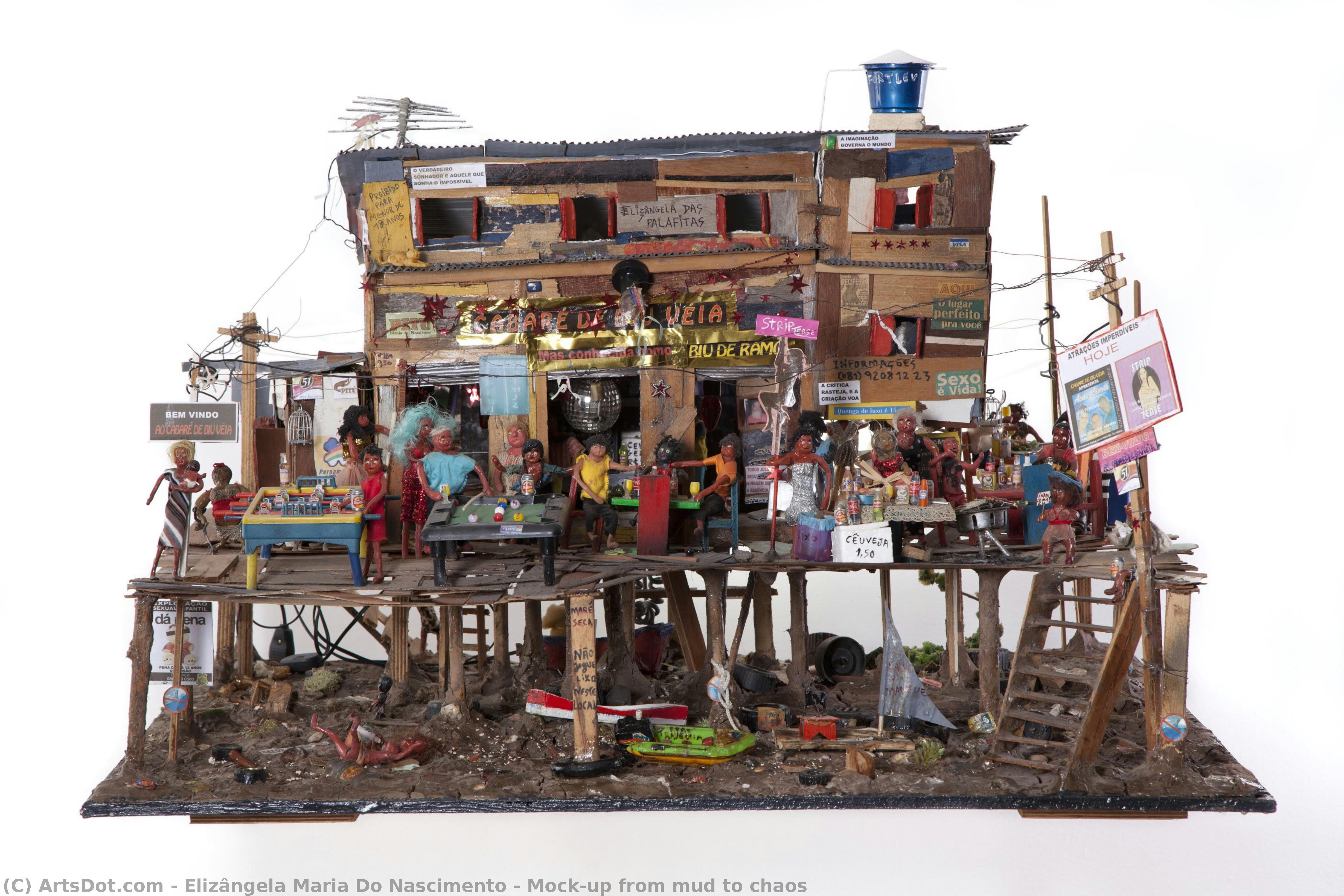
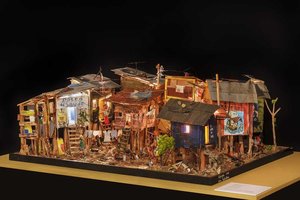
Mock-up from mud to chaos
 2000
2000 46.0 x 103.0 cm
 Museum of the Man of the Northeast
 Read More
Purchase a high-resolution, enhanced digital image, far superior to the online preview.
Each file is meticulously prepared by our in-house specialists using advanced tools and expert manual retouching. We ensure every image has exceptional clarity, precise color accuracy, and fine detail.
The final file is delivered via email within 72 hours, optimized for immediate use in professional, editorial, and print environments. This is the same quality trusted by top-tier design studios, publishers, and galleries.
Digital Image
Download a high-resolution file for personal display, printing, and creative projects. ( Buy Print Buy Hand Made Painting)
Included in Every Digital Image Order
Expert Digital Delivery, Guaranteed
When you choose ArtsDot.com, you're not just getting an image - you're receiving a professionally enhanced digital artwork, crafted with precision and backed by a satisfaction guarantee. Here's everything that comes with your order, automatically:

Fast Email Delivery
Your high-resolution digital image file will be emailed to you within 72 hours of ordering - ready for immediate use.

AI-Enhanced Digital File
Your artwork is professionally optimized using advanced AI tools and manual editing, ensuring maximum detail, clarity, and color accuracy.

Free Lifetime Re-Delivery
Accidentally deleted or lost your file? No worries - we'll resend it to you anytime, free of charge.

No Import Fees - Ever
Enjoy your artwork instantly with zero customs, duties, or delivery fees - digital downloads are always tax-free.

Color Accuracy Guarantee
We ensure your digital image reflects the original colors as closely as possible using professional tools and color management.

60-Day Satisfaction Guarantee
If you're not satisfied with your digital image, we'll revise it or refund 100% within 60 days - no questions asked.

100% Money-Back Guarantee
Not satisfied? Get a full refund within 60 days of receiving your digital file - no questions asked.

Bulk Order Discounts
Buy 3 images, save 10% - Buy 5, save 15% - Buy 10+, save 20%. Great for creative projects, galleries, and agencies.
Related Artworks





Artist Biography
Henri Matisse: A Life Painted in Color
Born Henri Émile Benoît Matisse on December 31, 1869, in Cateau-Cambrésis, France, Matisse’s journey to becoming one of the most influential artists of the 20th century was marked by a relentless pursuit of beauty and a profound understanding of color. His life spanned nearly nine decades, witnessing and profoundly shaping the evolution of modern art from its nascent stages through to its diverse expressions. Initially trained as an architect, Matisse’s artistic inclinations soon took precedence, leading him to abandon his architectural studies in favor of pursuing painting. This pivotal decision set him on a path that would ultimately redefine how artists approached color, form, and composition.
Matisse's early work reflected the influence of Impressionism and Post-Impressionism, particularly the bold brushstrokes and vibrant palettes championed by figures like Vincent van Gogh and Paul Gauguin. However, it was during his time in Paris around 1905 that he became a central figure in the Fauvist movement – a revolutionary artistic group characterized by its use of intense, non-naturalistic colors. This period saw him create iconic works such as *Woman with a Hat* (1905) and *The Joy of Life* (1906), paintings that immediately drew both admiration and criticism for their audacious color choices and simplified forms. Matisse’s approach wasn't merely decorative; he sought to evoke emotion and experience through the manipulation of hues, creating a visual language that prioritized feeling over strict representation.
Following the Fauvist phase, Matisse continued to experiment with various styles, developing a more disciplined and controlled technique while retaining his fascination with color. The 1920s marked a significant shift in his work, as he moved towards a style often described as “decorative” or “classical.” He explored themes of order, balance, and harmony, drawing inspiration from classical art and Japanese prints. This period produced masterpieces like *The Red Studio* (1913), a bold exploration of color and form that challenged conventional notions of representation. His relocation to Nice in 1917 provided a new environment and perspective, influencing his later work with its softer colors and more relaxed composition.
Despite the challenges posed by World War I and subsequent health issues, Matisse remained an incredibly productive artist throughout his life. In his final years, he turned to paper collage, creating intricate compositions using cut-out colored papers – a technique that allowed him to explore new possibilities for texture, pattern, and spatial relationships. These collages, such as *The Snail* (1953), demonstrate a remarkable capacity for innovation even in his later years. His work during this period is characterized by a quiet intensity and a profound sense of serenity, reflecting a lifetime dedicated to the pursuit of beauty and harmony.
Key Influences and Artistic Development
Matisse’s artistic development was shaped by a diverse range of influences. Early exposure to Impressionism instilled in him an appreciation for capturing fleeting moments of light and color. The bold experimentation of Post-Impressionists like Van Gogh and Gauguin provided a crucial foundation for his own exploration of expressive color. Japanese prints, particularly those featuring flat planes of color and simplified forms, exerted a significant impact on his compositions, influencing his use of decorative patterns and his rejection of detailed realism.
Furthermore, Matisse’s engagement with the Fauvist movement was pivotal in shaping his artistic identity. While he initially embraced the radicalism of this group, he ultimately developed a more refined and controlled approach to color, using it not merely as a descriptive tool but as a means of conveying emotion and creating visual harmony. His interest in classical art – particularly sculpture – informed his later work’s emphasis on balance, proportion, and formal clarity. The influence of artists like Cézanne, with his focus on geometric forms and underlying structure, can also be discerned in Matisse's mature style.
Major Works and Achievements
Matisse’s oeuvre is remarkably extensive, encompassing paintings, prints, sculptures, drawings, and paper cutouts. Some of his most celebrated works include *Woman with a Hat* (1905), *The Joy of Life* (1906), *Blue Nude* (1908), *Dance* (1910), *Red Studio* (1913), and *The Snail* (1953). These works represent a remarkable range of styles and techniques, reflecting Matisse’s constant experimentation and his unwavering commitment to exploring the possibilities of art. His influence extends far beyond these individual pieces; he fundamentally altered the way artists approached color, composition, and form, paving the way for subsequent generations of modern painters.
Matisse's contributions were recognized throughout his career with numerous awards and accolades, including the prestigious Archibauld Prize in 1954. His work is now held in major museums around the world, testament to its enduring appeal and artistic significance.
Legacy and Historical Significance
Henri Matisse’s legacy as one of the most important artists of the 20th century is undeniable. He not only pioneered new approaches to color and composition but also profoundly influenced subsequent generations of artists across a wide range of disciplines. His emphasis on formal clarity, decorative patterns, and emotional expression continues to resonate with contemporary artists today.
Furthermore, Matisse’s work played a crucial role in the development of modern art theory. His writings on color – particularly his influential book *Color and Harmony* (1917) – provided a theoretical framework for understanding and utilizing color as an expressive tool. His commitment to creating works that were both aesthetically pleasing and emotionally engaging helped to redefine the purpose of art, shifting the focus from mere representation to subjective experience.
Matisse’s life and work serve as a powerful reminder of the transformative potential of art – its ability to challenge conventions, evoke emotion, and enrich our understanding of the world around us. He died on November 3, 1954, leaving behind a vast and enduring body of work that continues to inspire and captivate audiences worldwide.
elizângela maria do nascimento
1954 - 2023 , Brazil
Quick Facts
- Artistic Movement Or Style: Fauvism, Modernism, Post-Impressionism
- Artists Or Movements Influenced By This Artist:
- André Derain
- Maurice de Vlaminck
- Artists Who Influenced This Artist:
- Paul Gauguin
- Vincent van Gogh
- Date Of Birth: December 31, 1869
- Date Of Death: November 3, 1954
- Full Name: Henri Matisse
- Nationality: French
- Notable Artworks:
- Woman with a Hat
- The Joy of Life
- Blue Nude
- Dance
- Red Studio
- Place Of Birth: Le Cateau-Cambrésis, France

