

 Preview
 Send
Send Share
Share
 Details

 Download
 Similars
 X-Ray
X-Ray Diaporama
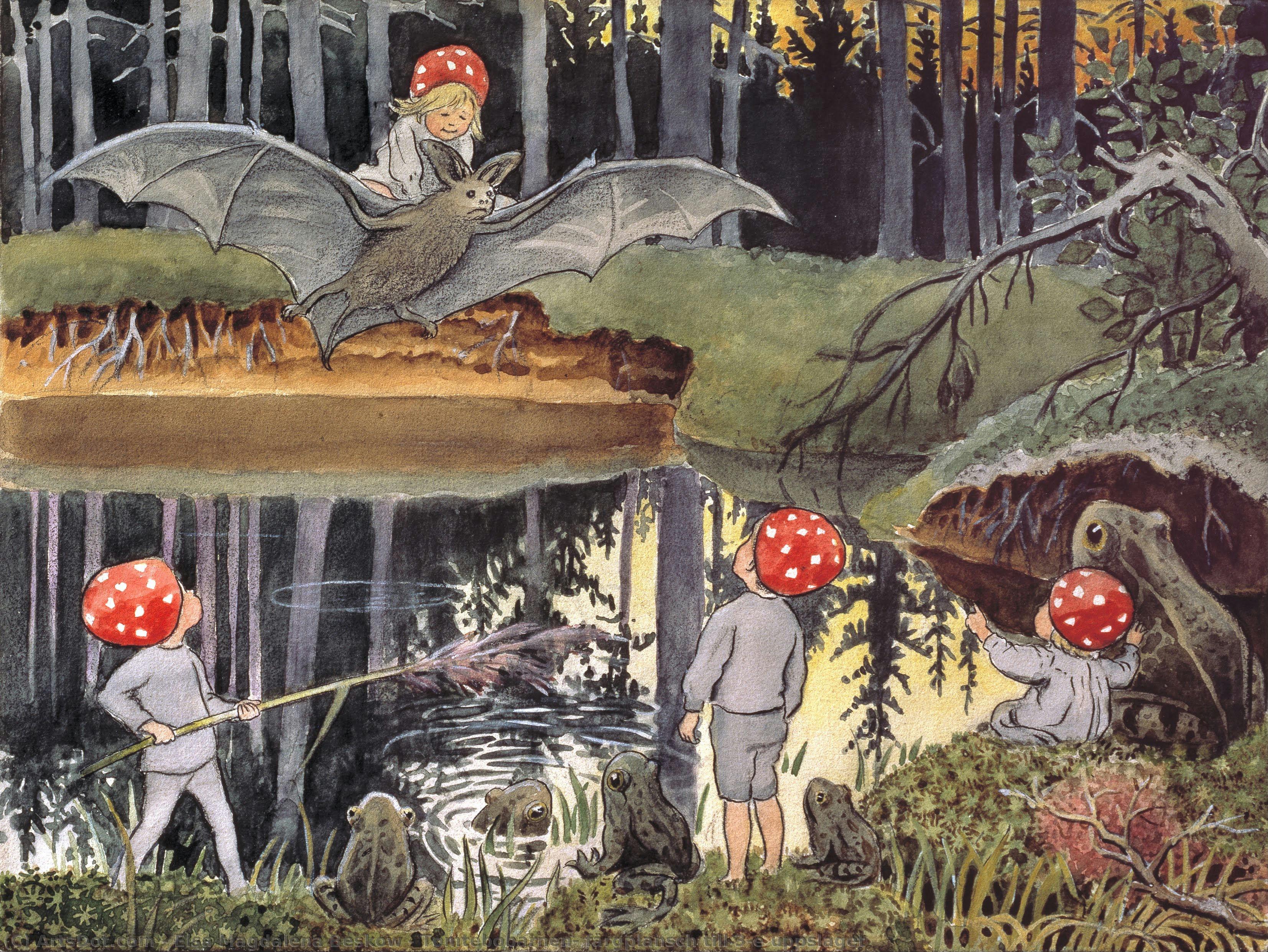
Tomtebobarnen, färgplansch till 3:e uppslaget
 Painting
- National Romantic
 1900
1900- 19th Century
 310.0 x 230.0 cm
 Nationalmuseum
 Read More
Purchase a high-resolution, enhanced digital image, far superior to the online preview.
Each file is meticulously prepared by our in-house specialists using advanced tools and expert manual retouching. We ensure every image has exceptional clarity, precise color accuracy, and fine detail.
The final file is delivered via email within 72 hours, optimized for immediate use in professional, editorial, and print environments. This is the same quality trusted by top-tier design studios, publishers, and galleries.
Digital Image
Download a high-resolution file for personal display, printing, and creative projects. ( Buy Print Buy Hand Made Painting)
Included in Every Digital Image Order
Expert Digital Delivery, Guaranteed
When you choose ArtsDot.com, you're not just getting an image - you're receiving a professionally enhanced digital artwork, crafted with precision and backed by a satisfaction guarantee. Here's everything that comes with your order, automatically:

Fast Email Delivery
Your high-resolution digital image file will be emailed to you within 72 hours of ordering - ready for immediate use.

AI-Enhanced Digital File
Your artwork is professionally optimized using advanced AI tools and manual editing, ensuring maximum detail, clarity, and color accuracy.

Free Lifetime Re-Delivery
Accidentally deleted or lost your file? No worries - we'll resend it to you anytime, free of charge.

No Import Fees - Ever
Enjoy your artwork instantly with zero customs, duties, or delivery fees - digital downloads are always tax-free.

Color Accuracy Guarantee
We ensure your digital image reflects the original colors as closely as possible using professional tools and color management.

60-Day Satisfaction Guarantee
If you're not satisfied with your digital image, we'll revise it or refund 100% within 60 days - no questions asked.

100% Money-Back Guarantee
Not satisfied? Get a full refund within 60 days of receiving your digital file - no questions asked.

Bulk Order Discounts
Buy 3 images, save 10% - Buy 5, save 15% - Buy 10+, save 20%. Great for creative projects, galleries, and agencies.
A Tapestry Woven from Childhood Wonder and Nordic Nature
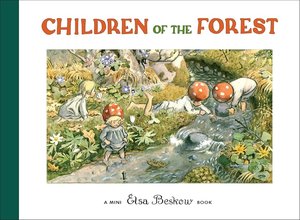
To gaze upon this magnificent scene is to step directly into the heart of a Swedish pastoral dream, a world rendered with the luminous touch characteristic of Elsa Magdalena Beskow. This painting, dating from the turn of the 20th century, transcends mere depiction; it is an immersion into the collective memory of childhood itself. The setting—a vibrant forest floor dappled with life—is not just background scenery but an active participant in the narrative. One senses the damp earth beneath the moss and the sweet scent of unseen blossoms mingling with the crisp air filtering through towering, verdant trees. It speaks to a time when nature was viewed not as a resource, but as a boundless, magical companion.
The Allure of the Forest Idyl: Symbolism in Bloom
Beskow masterfully populates this woodland tableau with figures and fauna that resonate with deep symbolic meaning. The scattered mushrooms dotting the ground are emblems of mystery and the hidden life beneath the surface—the secrets nature keeps close. Observe the gentle coexistence between humanity and the wild inhabitants: a curious bat flitting near, a serene turtle resting beside the pond's edge, and the watchful eye of a bird overhead. These elements suggest a harmonious relationship, one that was deeply cherished in the National Romantic movement from which Beskow emerged. The people within the scene—engaged in simple pleasures like fishing or simply observing—are portrayed as attuned to this natural rhythm, suggesting that true contentment lies in quiet communion with the environment.
Technique and Evocative Light
The technique employed here is rich and narrative, characteristic of the illustrative art popular during Beskow's time. While the subject matter evokes the delicate quality of a picture book, the execution possesses an academic depth that belies its whimsical theme. The handling of light is particularly noteworthy; it seems to filter through the canopy in soft, golden shafts, illuminating key moments and lending an almost ethereal glow to the water and foliage. This careful attention to atmospheric detail ensures that even the most mundane elements—a patch of grass, a ripple on the pond—are imbued with visual poetry.
A Legacy for the Modern Collector
For the contemporary collector or designer seeking to infuse a space with warmth, history, and an undeniable sense of enchantment, this piece offers profound resonance. It captures that quintessential Swedish spirit—a deep reverence for the natural world filtered through the lens of innocent wonder. Owning a reproduction allows one to bring home not just paint on canvas, but a tangible echo of a cherished cultural moment. It is art that invites storytelling, prompting viewers to imagine their own adventures within its leafy embrace.
Related Artworks

Artist Biography
Claude Monet: Capturing the Ephemeral Light
Oscar-Claude Monet, born in Le Havre, Normandy, on November 14, 1840, wasn’t simply a painter; he was a revolutionary. He didn't seek to replicate reality with meticulous detail but rather to capture its fleeting essence – the way light dances across surfaces, the subtle shifts of color in a single moment. His life and work are inextricably linked to his relentless pursuit of this ephemeral beauty, a philosophy that fundamentally altered the course of art history and birthed the Impressionist movement.
Monet’s early years were shaped by a complex family dynamic. His father, a grocery store owner, envisioned a practical career for him, but Monet's passion lay in the world of color and light. His mother’s untimely death at the age of sixteen profoundly impacted him, fueling a deep sense of melancholy that often permeated his later works. He found an early mentor in Eugène Boudin, a landscape painter who introduced him to the crucial concept of *plein air* painting – working outdoors directly from nature. This practice became central to Monet’s artistic approach, allowing him to observe and translate the immediate effects of light with unprecedented accuracy.
Monet's formal training at the École des Beaux-Arts in Paris proved largely unfulfilling. He found the rigid academic standards stifling his creative spirit. Instead, he immersed himself in the vibrant Parisian art scene, encountering artists like Camille Pissarro and Pierre-Auguste Renoir. It was during this period that he developed a close relationship with Camille Doncieux, whom he married in 1877. She became his primary model and muse for many years, though their marriage was marked by periods of emotional turmoil. The tragic loss of her health and subsequent death in 1879 deeply affected Monet’s artistic output.
The Birth of Impressionism
The year 1874 proved pivotal in the development of Impressionism. A memorial exhibition honoring Viktor Hartmann, a friend and fellow artist, at the Imperial Academy of Arts in Saint Petersburg sparked a chain of events that would forever change the art world. Monet, along with Renoir, Pissarro, Sisley, and others, organized their own independent exhibition – the first Impressionist show – outside the established confines of the official Salon. This bold move was directly inspired by the critical dismissal of Claude Monet’s painting *Impression, Sunrise* (1872) by art critic Louis Leroy, who derisively labeled it “impressionistic.” Leroy's sarcastic remark inadvertently coined the term that would define the movement.
The Impressionist exhibition showcased a radical departure from traditional academic painting. Artists focused on capturing fleeting moments of light and color, using broken brushstrokes and vibrant palettes to convey their subjective impressions rather than striving for photographic realism. Monet’s *Impression, Sunrise*, with its hazy depiction of the Le Havre harbor at dawn, became the defining image of this revolutionary movement.
Developing a Unique Style: Series and Light
Monet's artistic journey was characterized by an obsessive dedication to studying light and color. He began experimenting with painting the same subject matter repeatedly under different lighting conditions – a technique he termed “series.” These series, including his iconic paintings of haystacks, Rouen Cathedral, and water lilies at Giverny, demonstrate his meticulous observation and his desire to capture the subtle variations in light and atmosphere over time.
His garden at Giverny became an integral part of his artistic practice. He created a meticulously designed landscape featuring Japanese bridges, water gardens, and a vast expanse of water lilies – a constant source of inspiration for his paintings. Monet’s later works are often characterized by their luminous colors, soft brushstrokes, and a sense of tranquility, reflecting the beauty and serenity he found in this idyllic setting.
Legacy and Influence
Claude Monet's impact on art is immeasurable. He liberated painting from the constraints of academic tradition, paving the way for modernism and influencing generations of artists. His emphasis on capturing subjective experience, his innovative use of color and light, and his pioneering approach to series painting continue to resonate with contemporary artists today.
Monet’s work is now celebrated in major museums around the world, including the Musée d'Orsay in Paris and the Metropolitan Museum of Art in New York. His paintings are not merely beautiful images; they are windows into a unique way of seeing and experiencing the world – a testament to the power of observation, intuition, and an unwavering commitment to capturing the fleeting beauty of light.
He died on December 5, 1926, leaving behind a vast body of work that continues to captivate and inspire audiences worldwide. His legacy as one of the most influential artists in history is firmly secured.
elsa magdalena beskow
1874 - 1953 , Sweden
Quick Facts
- Artistic Movement Or Style: Impressionism
- Artists Or Movements Influenced By This Artist: ['Post-Impressionism']
- Artists Who Influenced This Artist:
- Eugène Boudin
- John Constable
- Date Of Birth: November 14, 1840
- Date Of Death: December 5, 1926
- Full Name: Claude Oscar Monet
- Nationality: French
- Notable Artworks:
- Impression, Sunrise
- Water Lilies series
- Rouen Cathedral series
- Place Of Birth: Le Havre, France

