 Preview
 Send
Send Share
Share
 Details

 Download
 Similars
 X-Ray
X-Ray Diaporama
Title in Swedish: Prinsessan och trollen (En kväll vid midsommartid gingo de med Bianca Maria djupt in i skogen)
 Acrylic On Canvas
- WallArt
- Art Nouveau
 1913
1913- 19th Century
 250.0 x 250.0 cm
 Nationalmuseum
 Read More
Hand Made Oil Reproduction
Hand-painted oil on canvas in your size and frame, made to order by our artists. ( Buy Print Buy Image)




P118B $10

P118H $10

P118W $10

P438Z $10

P508JH $12

P508YH $12

P805H $10

P805Z $10

P919BZ $10

P919G $10

P919XJ $10

P959ZH $10

P968JZ $12

W106C $8

W218G $10

W218JH $8

W218Y $10

W307PJ $10

W316G $10

W316PJ $8

W316Y $10

W398PJ $8

W4111J $10

W500HY $15

W500JH $15

W692G $12

W849H $8

W940BG $15

W953PJ $8




Pick from our preset sizes that match the artwork's original proportions.

You may enter your own dimensions to fit a specific frame or space. If your selected size does not match the original image's proportions, we will either crop the artwork or extend the painting with additional hand-painted elements. A digital mockup will be sent for your approval before production begins.
Please note that the on-screen preview does not reflect the actual cropping or extension. Only the mockup will accurately show the final composition.
While custom sizes are available, we recommend selecting a dimension from the predefined list to preserve the original proportions.
After order, ArtsDot.com team will email client for instructions and provide a mockup preview
Worldwide Delivery () in 3/4 weeks instead of standard 5 weeks. (16 August). No compromise on quality.

Free Worldwide Express Shipping

High-Quality Linen Canvas

Full Shipping Insurance

Customs Tax Refund Guarantee

True Color Matching Guarantee

60-Day Return Policy (Defects Only)

100% Money-Back Guarantee

Bulk Discount Offer
 Glass option is only available in size under 110 CM

Title in Swedish: Prinsessan och trollen (En kväll vid midsommartid gingo de med Bianca Maria djupt in i skogen)
Reproduction Medium
Reproduction Size
-


Total Price
$ 263
Artwork Description
A Vision of Nordic Folklore: John Bauer’s “The Princess and the Trolls”
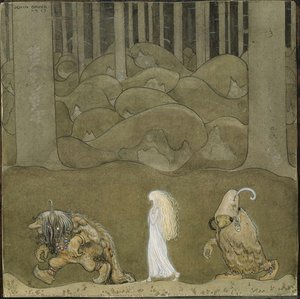
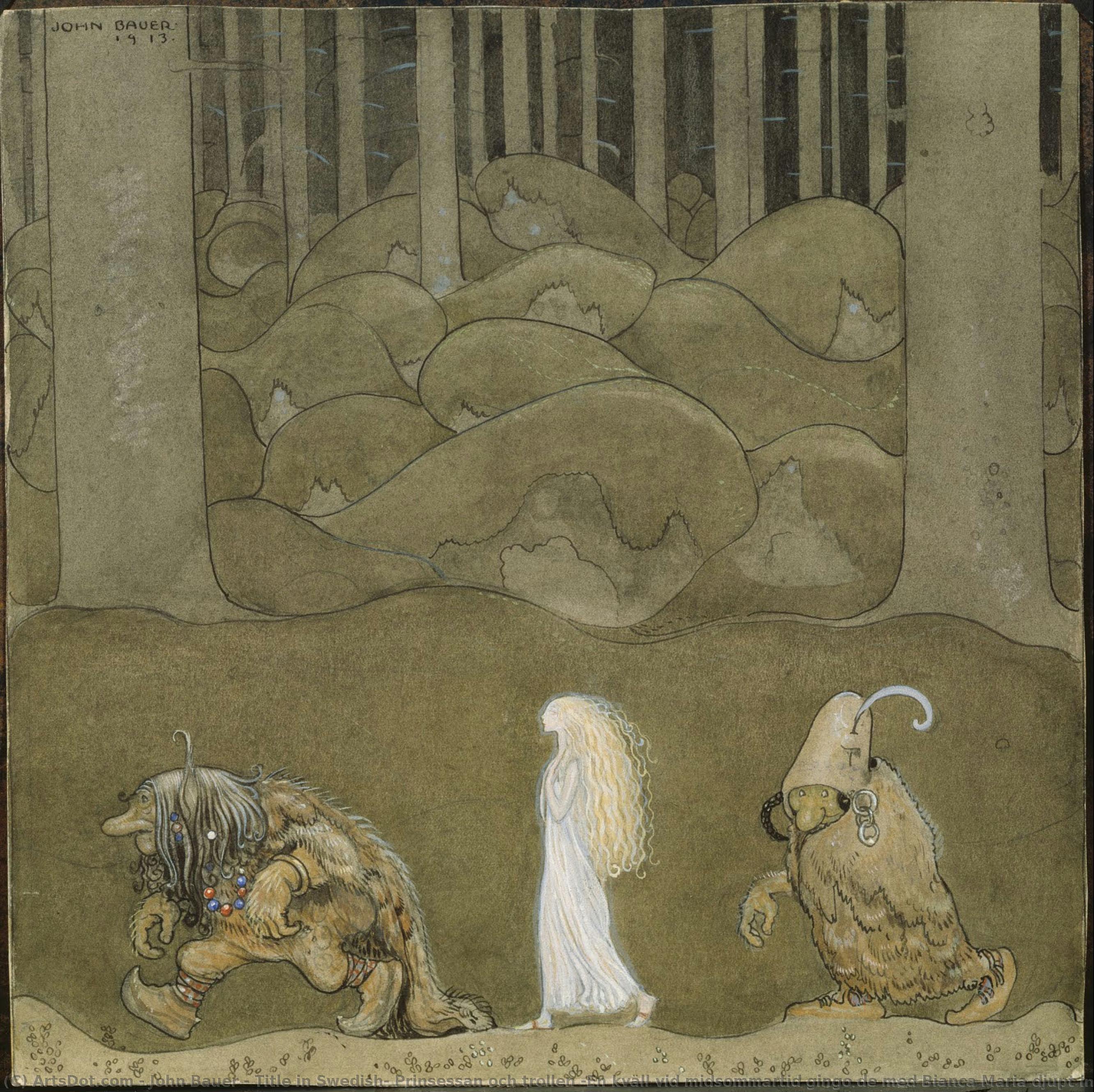
John Bauer's "The Princess and the Trolls," painted in 1913, transcends mere illustration; it embodies a pivotal moment in Swedish artistic expression—a masterful distillation of Art Nouveau aesthetics interwoven with the timeless narratives of Scandinavian folklore. This captivating image, destined for Helena Nyblom’s fairytale anthology “Bland tomtar och troll,” showcases Bauer's unparalleled ability to translate myth into visual splendor, securing his legacy as one of Sweden’s most beloved artists and shaping perceptions of fantasy art for generations to come.The Enchanting Landscape: Technique and Atmosphere
Bauer skillfully employs a muted color palette dominated by greens and browns—a deliberate choice that reflects the shadowy depths of the forest setting. The artist's technique is characterized by meticulous linework, outlining the towering trees and expansive boulders with remarkable precision. These contours aren’t merely descriptive; they actively contribute to the artwork’s ethereal atmosphere, guiding the viewer’s eye into a realm where reality blends seamlessly with imagination. Unlike many contemporary illustrators who prioritized narrative clarity, Bauer prioritizes mood—creating an immersive experience that anticipates the fantastical tale it accompanies. The diffuse lighting enhances this effect, casting soft shadows and emphasizing textures like moss and lichen, mirroring the organic beauty of the natural world.Symbolism Rooted in Nordic Mythology
“The Princess and the Trolls” is rich in symbolic representation. Bauer’s depiction of the forest itself symbolizes the unknown—the realm of magic and primal forces that underpin Scandinavian folklore. The trolls, rendered as formidable yet strangely sympathetic figures, embody both fear and fascination – representing the darker side of nature alongside its inherent grandeur. Contrasting sharply with their rough exterior is the princess Bianca Maria, portrayed in luminous colors, symbolizing purity and grace. This juxtaposition underscores the central theme of the story: the reconciliation between opposing forces—the civilized versus the wild, the beautiful versus the grotesque. Bauer’s masterful use of visual language elevates the illustration beyond a simple depiction of characters; it communicates profound ideas about transformation and acceptance.A Legacy of Imagination
John Bauer's contribution to “Bland tomtar och troll” solidified his reputation as Sweden’s foremost storyteller through art. His illustrations for the annual fairytale book captivated audiences, establishing him as an icon of Art Nouveau and influencing countless artists who followed. The enduring appeal of "The Princess and the Trolls" lies not only in its aesthetic beauty but also in its ability to evoke a visceral connection with the primal narratives that define Swedish cultural heritage. It remains a testament to Bauer’s visionary talent—a timeless masterpiece that continues to inspire awe and wonder.Further Exploration
For more information about John Bauer and his artistic achievements, please visit:Related Artworks
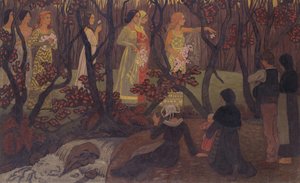
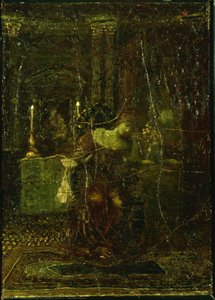
Artist Biography
The Enchanting Visionary of Swedish Folklore
John Albert Bauer stands as a singular figure in the annals of Swedish art history, a painter and illustrator whose evocative landscapes and fantastical imagery captured the very soul of Nordic mythology. Born in Jönköping, Sweden, in 1882, Bauer’s artistic journey was defined by a profound connection to the mystical textures of his homeland. His early years were marked by a move to Stockholm at the age of sixteen, where he entered the prestigious Royal Swedish Academy of Arts. It was within these hallowed halls that he honed his technical mastery, absorbing the flowing lines and organic elegance of the Art Nouveau movement while developing a style that would eventually become synonymous with the magic of the Scandinavian wilderness.
Bauer’s work is characterized by a seamless blend of realism and imaginative embellishment. He possessed a rare ability to render the natural world—its dense forests, misty lakes, and rugged terrains—with such meticulous detail that they felt tangibly real, yet he infused these scenes with an ethereal light that suggested something far more ancient and supernatural. His palette often utilized soft, atmospheric tones that evoked the quiet mystery of a twilight forest, creating a sense of wonder that drew viewers into realms of myth and legend. This mastery of atmosphere allowed him to bridge the gap between the physical landscape of Sweden and the spiritual landscape of its folklore.
A Legacy of Gnomes and Trolls
The most enduring and beloved contribution to Swedish cultural heritage remains Bauer’s mesmerizing illustrations for Bland Tomtar och Troll (Among Gnomes and Trolls). This anthology of Swedish folklore, compiled by Sven Hedin, found its perfect visual voice through Bauer’s pen. He did not merely draw creatures; he breathed life into them. His depictions of gnomes, trolls, and elves were rendered with a palpable sense of character and weight, making these beings feel like integral inhabitants of the Swedish woods rather than mere fairy-tale abstractions. Through his work, the creatures of legend became recognizable symbols of national identity, deeply embedded in the collective imagination of the Swedish people.
Beyond his legendary illustrations, Bauer’s artistic development was enriched by his travels through Lappland, Germany, and Italy. These journeys exposed him to a diverse array of cultural aesthetics, from the rugged beauty of Sami traditions to the classical influences of the Renaissance. This eclectic background allowed him to infuse his Romantic Nationalist style with a depth that transcended simple illustration. His work often explored themes of human emotion and the relationship between humanity and the untamed natural world, occasionally venturing into portraiture that captured the quiet dignity and introspection of his subjects.
A Life Cut Short, A Legend Sustained
Tragically, the brilliance of John Albert Bauer was extinguished far too soon. His life was cut short in 1918 by a shipwreck, leaving behind a body of work that, while relatively small due to his brief career, remains immensely impactful. Despite the suddenness of his passing, his influence did not fade; instead, it solidified into a lasting legacy that continues to inspire artists, scholars, and dreamers alike. His ability to capture the essence of Romantic Nationalism through the lens of the supernatural ensured that his vision would remain a cornerstone of Scandinavian art.
Today, Bauer’s work is celebrated not just as historical illustration, but as a profound exploration of the human psyche's connection to myth. His ability to weave together the tangible and the fantastic continues to resonate in contemporary art, serving as a reminder of the power of storytelling through imagery. The enchantment he brought to the page remains as potent today as it was over a century ago, ensuring that the gnomes, trolls, and misty landscapes of his imagination will forever haunt and delight the hearts of those who seek the magic within the mundane.
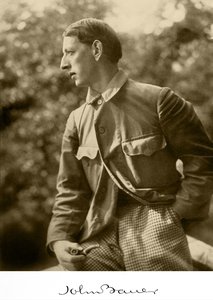
john albert bauer
1882 - 1918 , Sweden
Quick Facts
- Artistic Movement Or Style: Art Nouveau
- Artists Or Movements Influenced By This Artist: ['Scandinavian Romanticism']
- Artists Who Influenced This Artist: ['Gustav Klimt']
- Date Of Birth: June 4, 1882
- Date Of Death: November 20, 1918
- Full Name: John Albert Bauer
- Nationality: Swedish
- Notable Artworks:
- Among Gnomes and Trolls
- Swedish Folklore
- Mythological Landscapes
- Place Of Birth: Jönköping, Sweden
Related Articles

Giclée Prints: Archival Quality & Aesthetic Nuances for the Discerning Collector
Explore the world of giclée prints with ArtsDot. Learn about archival quality, aesthetic nuances & investment potential. Expert guidance for discerning art collectors seeking museum-quality reproductions and lasting value.

The Enduring Legacy of Fine Art Prints: Technique, History & Aesthetic Impact
Explore the rich history & techniques of fine art prints. Discover investment potential, assess authenticity, and learn how to preserve your collection with expert guidance. Trusted insights for discerning collectors.

Echoes of Time: Exploring the Enduring Appeal & Historical Context of Vintage Art Prints
Explore the captivating world of vintage art prints! Discover their history, collecting tips & enduring appeal. Expert insights on chromolithography and building a legacy collection with ArtsDot.
The Enduring Legacy of Printmaking: Techniques, Themes & Artistic Innovation Across Centuries
Explore the rich history of printmaking with ArtsDot. Discover techniques from intaglio to lithography, learn about collecting valuable prints & find museum-quality reproductions. Expert insights for art enthusiasts and collectors.
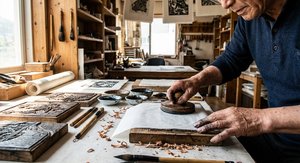
The Enduring Legacy of Woodblock Printmaking: Technique, History & Artistic Expression
Explore the rich history of woodblock printmaking – from ancient techniques to Ukiyo-e masterpieces. Discover expert insights on collecting, preserving & appreciating this enduring art form.