 Preview
 Send
Send Share
Share
 Details

 Download
 Similars
 X-Ray
X-Ray Diaporama
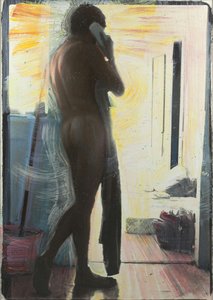
Carlos Soho, 1980
 Oil On Canvas
- WallArt
- Contemporary Realism
 1997
1997- Contemporary
 48.0 x 34.0 cm
 USC Fisher Museum of Art
 Read More
Giclée / Art Print
Museum-quality giclée or canvas print with fast production and flexible finish options. ( Buy Hand Made Painting Buy Image)




P118B $10

P118H $10

P118W $10

P438Z $10

P508JH $12

P508YH $12

P805H $10

P805Z $10

P919BZ $10

P919G $10

P919XJ $10

P959ZH $10

P968JZ $12

W106C $8

W218G $10

W218JH $8

W218Y $10

W307PJ $10

W316G $10

W316PJ $8

W316Y $10

W398PJ $8

W4111J $10

W500HY $15

W500JH $15

W692G $12

W849H $8

W940BG $15

W953PJ $8




Pick from our preset sizes that match the artwork's original proportions.

You may enter your own dimensions to fit a specific frame or space. If your selected size does not match the original image's proportions, we will either crop the artwork or extend the image with a mirrored or solid-fill edge. A digital mockup will be sent for your approval before production begins.
Please note that the on-screen preview does not reflect the actual cropping or extension. Only the mockup will accurately show the final composition.
While custom sizes are available, we recommend selecting a dimension from the predefined list to preserve the original proportions.
Worldwide Delivery () in 2 weeks instead of standard 4/5 weeks. (18 August)

Free Worldwide Express Shipping

High-Quality Linen Canvas

Full Shipping Insurance

Customs Tax Refund Guarantee

True Color Matching Guarantee

60-Day Return Policy (Defects Only)

100% Money-Back Guarantee

Bulk Discount Offer
 Glass option is only available in size under 110 CM

Carlos Soho, 1980
Giclée / Art Print
Reproduction Size
-


Total Price
$ 63
Collectible Description
A Poignant Intersection of Memory and Form
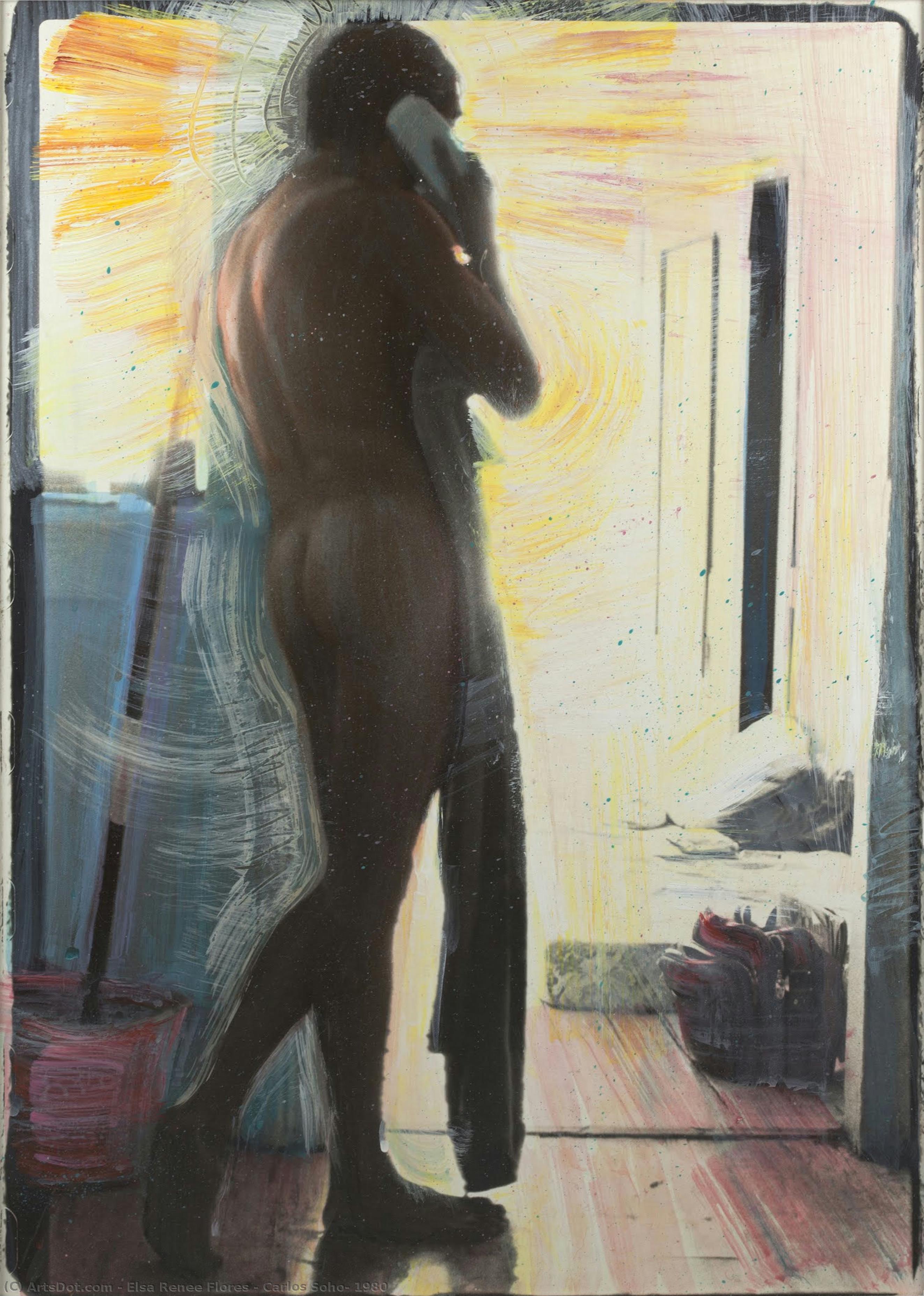
In the evocative oil painting Carlos Soho, 1980, Elsa Renee Flores invites the viewer into a deeply personal and mythologized space where photography meets the visceral touch of paint. The work serves as a transformative reimagining of an original photograph taken by the artist seventeen years prior, capturing her late husband, the renowned artist Carlos Almaraz. Through this layered approach, Flores does not merely replicate a moment in time; she breathes new life into it, using color and texture to elevate a documentary snapshot into a hauntingly beautiful study of human presence and absence. The composition is anchored by a nude male figure, whose elongated form stands as a silent protagonist within an interior that feels both intimate and vast.
The atmosphere of the piece is thick with a sense of melancholic contemplation. As the eye wanders across the canvas, one encounters a dramatic interplay of light and shadow that defines the very soul of the work. A strong, directional light source emerges from the upper right, casting deep, velvety shadows that cling to the contours of the figure, while simultaneously illuminating the edges of the form with a golden warmth. This chiaroscuro effect creates a profound sense of depth, pulling the viewer into a space where the boundaries between the physical body and the surrounding architectural elements—blurred windows and shadowy doorways—begin to dissolve.
Technique and the Texture of Emotion
Flores employs a masterful technique that leans toward realism while embracing the expressive freedom of modern brushwork. The surface of the canvas is remarkably tactile, characterized by visible, gestural strokes and the use of impasto to create a rugged, layered texture. This physical depth mirrors the emotional complexity of the subject matter; the heavy application of paint suggests a sense of movement and struggle, as if the figure is emerging from or receding into the darkness. The palette is dominated by somber tones of deep brown and midnight black, yet these are punctuated by sudden, brilliant flashes of yellow and orange in the background, creating a visual tension that keeps the viewer’s gaze perpetually engaged.
Beyond its aesthetic brilliance, the painting functions as a symbolic bridge between eras. The organic curves of the human body provide a soft contrast to the more rigid, geometric shadows of the interior, representing the vulnerability of life amidst the structured world. For collectors and enthusiasts of Chicana art, this piece offers a profound connection to the Los Angeles art scene of the late twentieth century, acting as a tribute to a shared history and a lost companion. It is a work that transcends simple portraiture, offering instead a meditation on isolation, revelation, and the enduring power of memory through the transformative medium of oil on canvas.
Related Artworks

Artist Biography
Elsa Renee Flores: A Tapestry of Heritage and Vision
Born in Las Vegas, Nevada, in 1955, Elsa Renee Flores’s artistic journey is deeply rooted in the vibrant cultural landscape of her upbringing. Her mother, Maria Valenzuela, a woman hailing from the small village of San Javier in Sinaloa, Mexico – a region steeped in rich traditions and agricultural heritage – instilled within her daughter a profound appreciation for family history, Mexican folklore, and the beauty of the natural world. This early exposure to both American and Mexican influences would become the bedrock upon which Flores’s distinctive artistic style was built, creating a unique visual language that seamlessly blends ancestral memory with contemporary expression.
Flores's childhood wasn't without its challenges; growing up in poverty shaped her perspective and fueled an unwavering determination. Despite these hardships, she found solace and inspiration in the arts, nurtured by a supportive family and a burgeoning passion for creative exploration. Her formal artistic education included studies at California State University of Los Angeles, Art Center College in Pasadena, and Idyllwild School of Music and the Arts – institutions that provided her with foundational skills while simultaneously exposing her to diverse artistic approaches. It was during high school that Flores truly discovered her calling, captivated by the talent of other artists and recognizing a powerful desire to translate her own experiences onto canvas.
A Fusion of Cultures: Style and Technique
Flores’s work is characterized by an extraordinary ability to synthesize disparate elements – a testament to her multicultural background. Her paintings are not simply representations of subjects; they are layered narratives, imbued with symbolism and emotion. She masterfully employs a range of techniques, often blending traditional Mexican painting styles with modern approaches, resulting in a dynamic and visually arresting aesthetic. The use of bold colors, reminiscent of the vibrant hues found in Sinaloan landscapes and textiles, is particularly striking. Her signature style frequently incorporates intricate patterns, geometric designs, and stylized figures that draw upon both Mexican folk art traditions and contemporary graphic design.
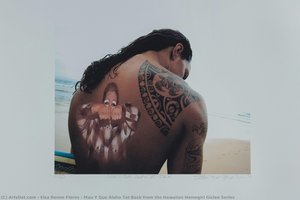
Series like “Mau” and “Que Aloha Tat Back from the Hawaiian Homegirl Giclee” exemplify this skillful integration. These works demonstrate her talent for weaving together cultural references – in this case, elements of Hawaiian imagery with traditional Mexican motifs – to create pieces that are both deeply personal and universally resonant. The artist’s deliberate layering of textures and her use of mixed media further enhance the tactile quality of her paintings, inviting viewers to engage with the artwork on a sensory level.
Recognition and Legacy
Elsa Renee Flores's artistic achievements have been widely recognized within the art world. Her work has been exhibited at prestigious venues such as the Laguna Art Museum in Laguna Beach, where it garnered significant attention, and included in important collections including the McNay Art Museum, the USC Fisher Museum of Art in Los Angeles, and the collection of Dr. Richard A. Simms. These inclusions serve as a powerful validation of her talent and dedication to her craft.
Furthermore, Flores’s connection to Carlos Almaraz, another prominent Chicano artist, adds another layer to her legacy. Their collaborative spirit and shared artistic vision are evident in their combined body of work, which continues to inspire and resonate with audiences today. The documentary film she is currently producing about Almaraz serves as a poignant tribute to his life and art, ensuring that his contributions to the Chicano movement will not be forgotten.
Themes of Identity and Remembrance
At its core, Elsa Renee Flores’s work explores themes of identity, heritage, and remembrance. Her paintings often depict scenes from her childhood in Sinaloa, portraits of family members, and evocative representations of Mexican folklore. She frequently incorporates elements of the natural world – landscapes, animals, and plants – to create a sense of connection to the land and its traditions. The recurring motif of the female figure—often depicted as strong, resilient, and deeply connected to her roots—underscores the importance of women’s roles within both Mexican culture and the broader narrative of identity.
Her exploration of mortality, particularly evident in works like “Deer Dancer,” reflects a deep engagement with the cyclical nature of life and death. The imagery draws upon indigenous beliefs about the afterlife, suggesting that art can serve as a bridge between the living and the departed, preserving memories and honoring those who have passed on. Elsa Renee Flores’s art is not merely decorative; it's a powerful testament to her personal history, cultural heritage, and enduring vision.

elsa renee flores
1955 - , United States of America
Quick Facts
- Artistic Movement Or Style: Chicana art, murals
- Artists Or Movements Influenced By This Artist:
- Los Four
- Carlos Almaraz
- Artists Who Influenced This Artist: ['Maria Valenzuela']
- Date Of Birth: 1955-06-05
- Full Name: Elsa Renee Flores
- Nationality: American
- Notable Artworks:
- Mau
- Que Aloha Tat Back...
- Place Of Birth: Las Vegas, USA
Related Articles
René Magritte's Masterpieces: 25 Surrealist Paintings for Art Lovers | ArtsDot
Explore 25 iconic René Magritte paintings & delve into the world of surrealism. Discover the stories behind 'The Son of Man', 'Golconda' & more. Find museum-quality art reproductions and elevate your home decor with ArtsDot.com.
La Biennale's Masterpieces: 25 Artworks to Inspire Your Home | ArtsDot
Explore 25 iconic artworks from La Biennale di Venezia! Discover the stories behind masterpieces of Italian art, modernism & Renaissance paintings. Find museum-quality reproductions and elevate your home decor with ArtsDot.com. Explore the full collection online.
Roger de la Fresnaye: Cubism, Tradition & the Search for Order in Early 20th-Century French Painting
Explore the captivating world of Roger de la Fresnaye, a pivotal French Cubist painter. Discover his unique blend of tradition & modernity, influences, and lasting legacy with ArtsDot.
John La Farge: Pioneering American Colorism & Japonisme's Influence
Explore the groundbreaking work of John La Farge, a pioneer of American colorism and stained glass. Discover his captivating Japonisme-inspired murals & lasting legacy in 19th-century art. Expert insights for collectors.
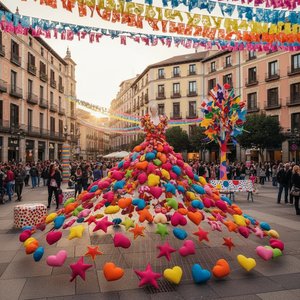
Águeda Ruiz de la Prada: A Study of Eclecticism & Emotional Resonance in Contemporary Spanish Painting
Discover the vibrant world of Ágatha Ruiz de la Prada, a leading figure in contemporary Spanish art. Explore her eclectic style, emotional depth & legacy – a must-read for discerning collectors.