 Preview
 Send
Send Share
Share
 Details

 Download
 Similars
 X-Ray
X-Ray Diaporama
Anuncio publicitario. Van Raalte.
 Oil
Oil- WallArt
- Contemporary Realism
 1946
1946- Modern
 27.0 x 35.0 cm
 Museum of the Purpose of the Object
 Read More
Hand Made Oil Reproduction
Hand-painted oil on canvas in your size and frame, made to order by our artists. ( Buy Print Buy Image)




P118B $10

P118H $10

P118W $10

P438Z $10

P508JH $12

P508YH $12

P805H $10

P805Z $10

P919BZ $10

P919G $10

P919XJ $10

P959ZH $10

P968JZ $12

W106C $8

W218G $10

W218JH $8

W218Y $10

W307PJ $10

W316G $10

W316PJ $8

W316Y $10

W398PJ $8

W4111J $10

W500HY $15

W500JH $15

W692G $12

W849H $8

W940BG $15

W953PJ $8




Pick from our preset sizes that match the artwork's original proportions.

You may enter your own dimensions to fit a specific frame or space. If your selected size does not match the original image's proportions, we will either crop the artwork or extend the painting with additional hand-painted elements. A digital mockup will be sent for your approval before production begins.
Please note that the on-screen preview does not reflect the actual cropping or extension. Only the mockup will accurately show the final composition.
While custom sizes are available, we recommend selecting a dimension from the predefined list to preserve the original proportions.
After order, ArtsDot.com team will email client for instructions and provide a mockup preview
Worldwide Delivery () in 3/4 weeks instead of standard 5 weeks. (21 August). No compromise on quality.

Free Worldwide Express Shipping

High-Quality Linen Canvas

Full Shipping Insurance

Customs Tax Refund Guarantee

True Color Matching Guarantee

60-Day Return Policy (Defects Only)

100% Money-Back Guarantee

Bulk Discount Offer
 Glass option is only available in size under 110 CM

Anuncio publicitario. Van Raalte.
Reproduction Medium
Reproduction Size
-


Total Price
$ 263
Artwork Description
A Moment Frozen in Time: The Intimacy of Vidović’s Vision
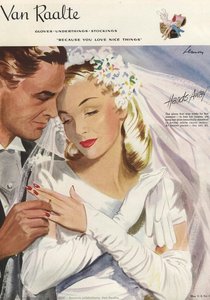
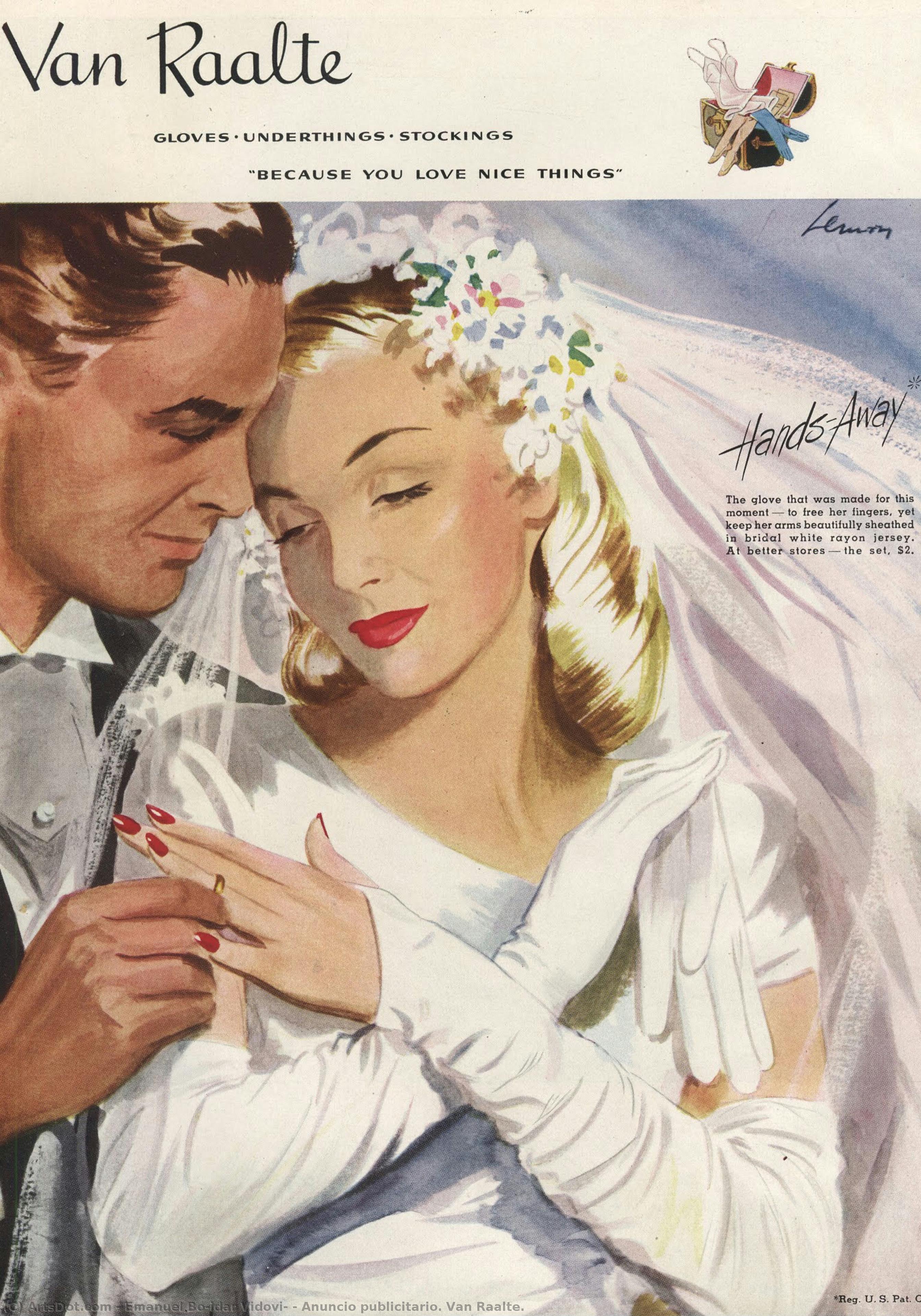
In the delicate brushstrokes of Emanuel Božidar Vidović’s 1946 work, Anuncio publicitario. Van Raalte, we are invited into a private sanctuary of affection amidst the bustling backdrop of mid-century life. The painting captures a profound sense of tenderness, centered on a man and a woman locked in a gentle embrace. As they stand close, their arms entwined, there is an unmistakable aura of celebration surrounding them; the presence of a wedding veil suggests a moment of newlywed bliss or perhaps a poignant anniversary. This is not merely a portrait of two individuals, but a window into a shared soul, where the warmth of their connection serves as the emotional heartbeat of the composition.
The setting provides a fascinating layer of narrative depth, blending personal intimacy with the commercial reality of the era. Positioned in front of what appears to be a store advertisement, the couple exists at the intersection of private emotion and public life. The subtle inclusion of a clock on the wall and a nearby handbag grounds the scene in a specific, tangible reality, reminding the viewer of the passage of time that continues even as this singular moment of love feels eternal. For the collector, this piece offers a masterful study in how the mundane elements of daily existence—a shop sign, a timepiece—can be elevated to serve as a stage for the most sacred of human emotions.
Mastery of Light and the Croatian Impressionist Legacy
To understand the technical brilliance of this work, one must look to the lineage of Vidović himself. A pivotal figure in the evolution of modern Croatian art, Vidović brought a sophisticated understanding of light and atmosphere to his canvases. In Anuncio publicitario. Van Raalte, we see the echoes of his training in Venice and his deep connection to the Dalmatian landscape. His technique allows for a soft, almost ethereal quality that wraps around the subjects, blurring the lines between the figures and their environment just enough to evoke a dreamlike state.
The artist employs a delicate touch that leans into the nuances of Impressionism, focusing on how light interacts with the textures of the wedding veil and the skin of the lovers. This mastery of light does more than provide visibility; it creates a mood of nostalgia and warmth. For interior designers seeking to infuse a space with character, this reproduction offers a sophisticated balance of classical composition and emotive modernism. It is a piece that commands attention not through loud colors, but through the quiet, rhythmic beauty of its execution, making it an ideal centerpiece for a room designed for reflection and elegance.
A Timeless Addition to the Discerning Collection
Beyond its aesthetic merits, this painting serves as a historical artifact from 1946, a period of reconstruction and renewed hope following the global upheavals of the era. The choice of subject matter—love and togetherness—resonates with a universal longing for stability and joy. This emotional resonance makes the artwork particularly compelling for those looking to decorate with pieces that possess "soul." It is an investment in a narrative that transcends borders, speaking to anyone who has ever found sanctuary in the arms of another.
Whether displayed in a contemporary gallery-style living room or a classic study, this hand-painted reproduction brings with it the prestige of Croatian modernism. It invites conversation, prompting viewers to wonder about the story behind the advertisement and the lives of the lovers depicted. Owning such a piece is an opportunity to preserve a fragment of 20th-century romanticism, ensuring that the tender light of Vidović’s vision continues to illuminate modern interiors for generations to come.
Related Artworks
Artist Biography
A Dalmatian Light: The Life and Art of Emanuel Božidar Vidović
Emanuel Božidar Vidović, born on Christmas Eve in 1870 in the ancient city of Split, Croatia, stands as a pivotal figure in the evolution of modern Croatian art. His life was a compelling journey from academic training to independent exploration, ultimately culminating in a unique artistic voice that captured the essence of Dalmatian landscapes and culture while embracing the currents of European modernism. The son of Ivan Vidović and Paškva (née Grubić), young Emanuel’s early education included attendance at the Imperial Royal High School in Split, but a burgeoning passion for drawing led him to private tutelage under Emil Vecchietti in 1885. This marked a decisive turn away from formal schooling and towards a life dedicated to artistic pursuit. In 1887, driven by ambition and a thirst for knowledge, he ventured to Venice and enrolled at the Accademia di Belle Arti, initially focusing on sculpture before gravitating toward painting. However, Vidović soon found himself disillusioned with the Academy’s conservative approach, choosing instead to forge his own path through independent study and immersion in the vibrant Venetian art scene.From Venice to Dalmatia: Forging an Artistic Identity
Vidović's time in Venice proved formative, exposing him to a wealth of artistic influences and techniques. He absorbed the lessons of Italian Divisionism, experimented with plein-air painting, and developed a keen eye for light and color. His travels extended to Milan and Chioggia, each location contributing to his evolving style. It was in Chioggia, a picturesque fishing town, that he met his future wife, Amalia Baffo, and found inspiration in the shimmering lagoons and canals. Returning to Split in 1895, Vidović became a catalyst for artistic change in Dalmatia. He didn’t simply import European styles; he synthesized them with local traditions and literary allusions to South Slavic history and legends, creating an Art Nouveau-infused aesthetic that was distinctly Croatian. His early works often hinted at narratives rooted in the region's rich cultural heritage, rendered with a delicate sensibility and a growing mastery of technique. This period saw him actively engaging with the burgeoning artistic community, participating in exhibitions and laying the groundwork for a modern art movement within Croatia. He became an alternate drawing master at the high school, beginning a long career nurturing young talent.Evolution of Style and Major Achievements
Vidović's artistic style underwent a significant transformation over time. While his early works were characterized by lighter tones and Art Nouveau flourishes, he gradually embraced darker palettes punctuated by vibrant accents. This shift reflected a growing interest in Expressionism, manifested in the bold black outlines that began to define his forms. His landscapes, particularly those depicting church interiors in Split and Trogir, became highly regarded for their atmospheric depth and emotional resonance. Angelus (1906), often considered his landmark work, is a testament to this evolution—a powerful depiction of rural life imbued with symbolic meaning and marking the beginning of Croatian Modern Art. In 1907, alongside Ivan Meštrović, he co-founded the Medulić Society, an organization dedicated to promoting Croatian modern art and providing a platform for emerging artists. This act solidified his position as a leader within the artistic community and helped shape the direction of Croatian art in the early 20th century. He also contributed portrait caricatures to the comic paper *Duje Balavac* in 1908, showcasing another facet of his creative talent.Legacy and Enduring Influence
Emanuel Vidović’s contribution to Croatian art extends far beyond his individual paintings. He was a pioneer who bridged the gap between tradition and modernity, introducing new ideas and techniques while remaining deeply connected to his Dalmatian roots. His influence can be seen in the work of subsequent generations of Croatian artists, and his legacy is preserved through the Emanuel Vidović Gallery established in Split in 1986. In 1949, he was rightfully recognized with election as a corresponding member of the Yugoslav Academy of Sciences and Arts, acknowledging his significant contributions to Croatian culture. His paintings continue to captivate viewers with their unique blend of styles, capturing not only the physical beauty of Dalmatian landscapes but also the spirit and soul of its people. He was influenced by Italian “macchiaioli” and Venetian landscape painters like Guardi and Canaletto, yet he forged a style that was uniquely his own—a testament to his artistic vision and unwavering dedication to his craft. Vidović’s work remains an enduring symbol of Croatian artistic identity, inspiring artists and art lovers alike with its beauty, depth, and emotional power.Key Characteristics of His Work
- Plein-air Painting: A dedication to capturing the immediacy of light and atmosphere by painting outdoors.
- Divisionism & Symbolism: Experimentation with color theory and symbolic representation, adding layers of meaning to his compositions.
- Dalmatian Subject Matter: A focus on scenes from Dalmatian life, landscapes, and architectural landmarks, reflecting a deep connection to his homeland.
- Expressionist Elements: The use of bold outlines and dramatic contrasts to convey emotion and create visual impact.
- Literary Allusions: Incorporation of references to South Slavic history and legends, enriching the narrative depth of his paintings.
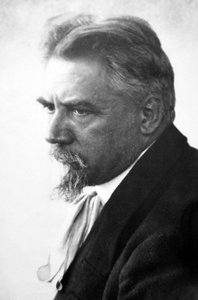
Emanuel Božidar Vidović
1870 - 1953 , Croatia
Quick Facts
- Artistic Movement Or Style:
- Impressionism
- Art Nouveau
- Expressionism
- Artists Or Movements Influenced By This Artist: ['Croatian Modern Art']
- Artists Who Influenced This Artist:
- Guardi
- Canaletto
- Date Of Birth: December 24, 1870
- Date Of Death: June 1, 1953
- Full Name: Emanuel Božidar Vidović
- Nationality: Croatian
- Notable Artworks:
- Angelus
- Giudecca
- Place Of Birth: Split, Croatia
Related Articles
Romantic Realism's Finest: 10 Masterpieces for Your Home | ArtsDot
Explore 10 defining masterpieces of Romantic Realism! Discover Courbet, Millet & Daumier's powerful paintings—capturing emotion and social realities. Find museum-quality reproductions for your home at ArtsDot.com.
Echoes of Time: Nostalgia, Technique & Cultural Significance in Vintage Paintings
Explore the captivating world of vintage paintings! Discover key styles, cultural significance & collecting tips from art experts at ArtsDot. Find authentic reproductions and elevate your home décor.

Romantic Landscapes: 10 Masterpieces for Your Home | ArtsDot
Journey through 10 Romantic landscape masterpieces by Friedrich, Turner & Cole. Explore emotional art, sublime nature scenes & iconic 19th-century paintings. Find museum-quality reproductions for your home at ArtsDot.com – discover the full collection online!
Romantic Masterpieces: 10 Artworks for a Timeless Home Decor Aesthetic
Fall in love with art! Explore 10 iconic romantic paintings – from Monet & Bouguereau to Fragonard. Discover the stories behind these masterpieces and find museum-quality reproductions for your home decor at .
The Evocative Embrace of Reality: Exploring Romantic Realism in 19th-Century Painting
Explore the captivating world of Romantic Realism! Discover key artists like Courbet & Millet, masterpieces, and the social context behind this influential art movement. Expert insights for collectors at ArtsDot.