

 Preview
 Send
Send Share
Share
 Details

 Download
 Similars
 X-Ray
X-Ray Diaporama
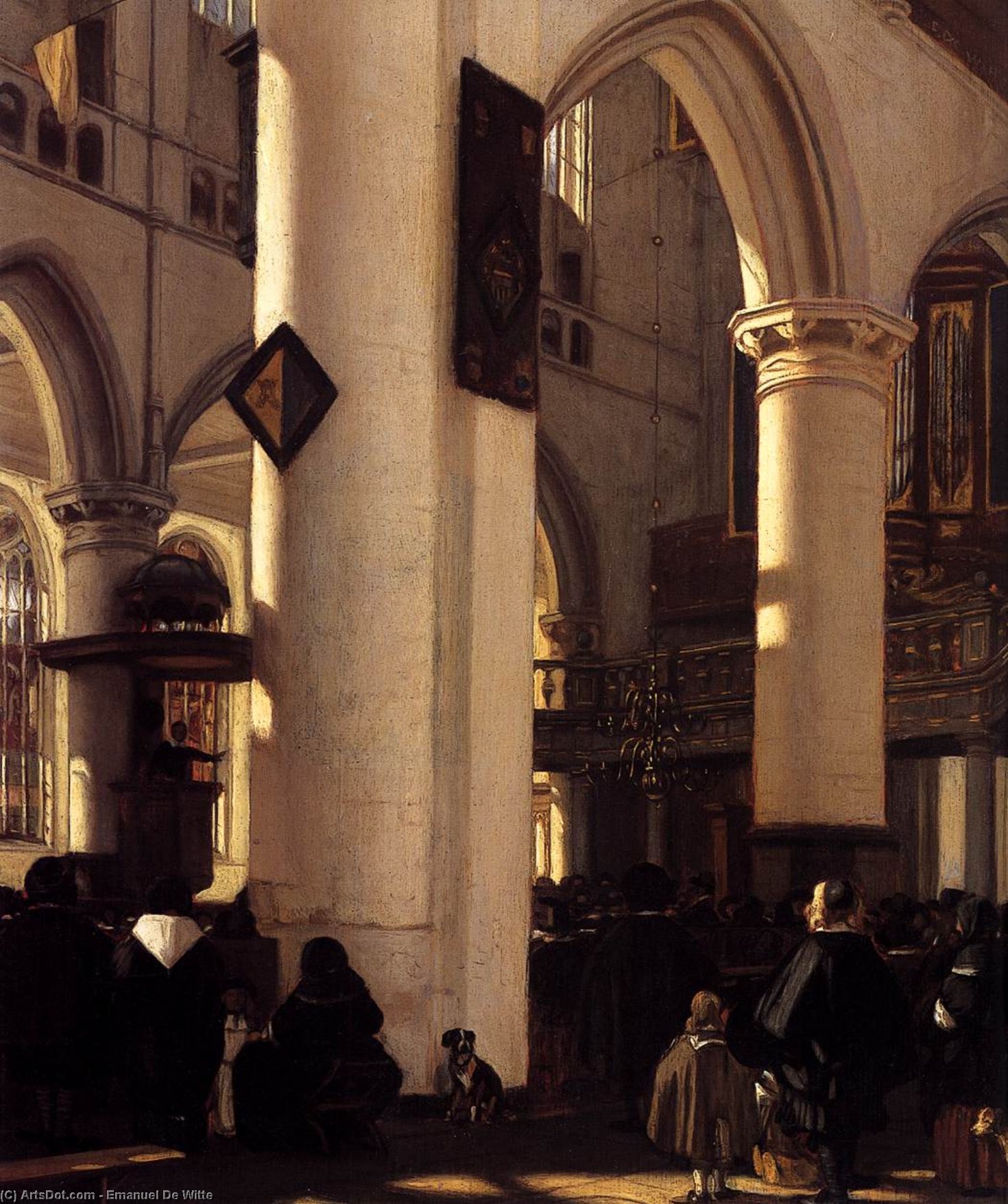
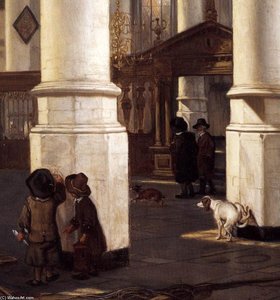
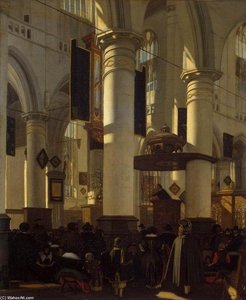
Interior of a Protestant Gothic Church (detail)


 Read More
Purchase a high-resolution, enhanced digital image, far superior to the online preview.
Each file is meticulously prepared by our in-house specialists using advanced tools and expert manual retouching. We ensure every image has exceptional clarity, precise color accuracy, and fine detail.
The final file is delivered via email within 72 hours, optimized for immediate use in professional, editorial, and print environments. This is the same quality trusted by top-tier design studios, publishers, and galleries.
Digital Image
Download a high-resolution file for personal display, printing, and creative projects. ( Buy Print Buy Hand Made Painting)
Included in Every Digital Image Order
Expert Digital Delivery, Guaranteed
When you choose ArtsDot.com, you're not just getting an image - you're receiving a professionally enhanced digital artwork, crafted with precision and backed by a satisfaction guarantee. Here's everything that comes with your order, automatically:

Fast Email Delivery
Your high-resolution digital image file will be emailed to you within 72 hours of ordering - ready for immediate use.

AI-Enhanced Digital File
Your artwork is professionally optimized using advanced AI tools and manual editing, ensuring maximum detail, clarity, and color accuracy.

Free Lifetime Re-Delivery
Accidentally deleted or lost your file? No worries - we'll resend it to you anytime, free of charge.

No Import Fees - Ever
Enjoy your artwork instantly with zero customs, duties, or delivery fees - digital downloads are always tax-free.

Color Accuracy Guarantee
We ensure your digital image reflects the original colors as closely as possible using professional tools and color management.

60-Day Satisfaction Guarantee
If you're not satisfied with your digital image, we'll revise it or refund 100% within 60 days - no questions asked.

100% Money-Back Guarantee
Not satisfied? Get a full refund within 60 days of receiving your digital file - no questions asked.

Bulk Order Discounts
Buy 3 images, save 10% - Buy 5, save 15% - Buy 10+, save 20%. Great for creative projects, galleries, and agencies.
Collectible Description
A Sanctuary Illuminated: Emanuel de Witte’s “Interior of a Protestant Gothic Church”
Emanuel de Witte's "Interior of a Protestant Gothic Church (detail)" is not merely a depiction of a sacred space; it’s an immersive experience, a carefully constructed evocation of atmosphere and spiritual resonance. Painted around 1669, this remarkable work transcends the limitations of simple architectural representation, offering instead a profound meditation on light, perspective, and the very essence of enclosed devotion. De Witte, a lesser-known yet profoundly insightful figure within the Dutch Golden Age, deliberately eschewed the meticulous documentation favored by contemporaries like Pieter Saenredam, choosing instead to capture the *feeling* of being within such a space – its quiet grandeur, its sense of hushed reverence, and the subtle drama of light filtering through stained glass.
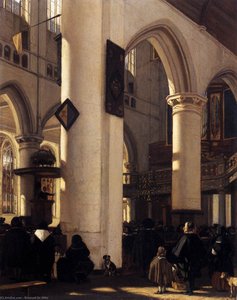
The painting’s subject is instantly recognizable: a classic Protestant Gothic church interior, brimming with the details of everyday worship. A sizable congregation fills the space, their postures suggesting contemplation and prayer. A dog accompanies one of the attendees, adding a touch of domesticity to this solemn setting. Potted plants punctuate the room, softening the architectural lines and hinting at a connection between the sacred and the natural world. Two chairs stand ready for those who might seek respite during services or gatherings. However, it’s not the literal accuracy of these elements that commands attention; rather, it's De Witte’s masterful manipulation of light and perspective that truly elevates the work.
The Art of Atmospheric Perspective
De Witte’s genius lies in his ability to create a convincing illusion of depth without relying on traditional linear perspective. He achieves this through a sophisticated interplay of color, shadow, and carefully positioned light sources. The foreground is deliberately shrouded in soft shadows, drawing the viewer's eye towards the brighter, more distant areas of the church. A strong ray of sunlight streams in from the upper windows, illuminating patches of the floor and columns with an ethereal glow. This directional lighting not only creates a sense of volume but also imbues the scene with a palpable warmth and spiritual intensity. The use of muted browns and greys in the foreground contrasts sharply with the warmer yellows and golds of the background, further enhancing the illusion of recession.
The composition itself is carefully orchestrated. A diagonal line, created by the arches and columns, guides the viewer’s eye through the space, reinforcing the sense of depth. The placement of chandeliers hanging from ropes adds a dynamic element to the scene, their reflections dancing across the surfaces below. De Witte's technique demonstrates an understanding of how light interacts with architectural elements, transforming a simple church interior into a richly layered and emotionally resonant tableau.
Historical Context and Artistic Influences
Born in Alkmaar in 1617, Emanuel de Witte’s artistic journey was shaped by his early training under Evert van Aelst in Delft. While he initially produced portraits and mythological scenes, he later gravitated towards the depiction of church interiors – a genre largely pioneered by Pieter Saenredam. However, De Witte diverged significantly from Saenredam's approach, prioritizing atmosphere and emotional impact over strict architectural accuracy. His work reflects a broader trend within Dutch art during this period, characterized by a growing interest in capturing fleeting moments of light and shadow, and exploring the psychological effects of space.
Interestingly, De Witte’s focus on interior spaces can be linked to the religious climate of the time. The 17th century was a period of intense religious fervor in the Netherlands, with Protestantism gaining prominence. Churches served as central hubs for community life and spiritual reflection, and artists like De Witte sought to capture the essence of these sacred spaces for posterity. His work offers a poignant glimpse into the daily rituals and communal experiences of Protestants during this era.
Symbolic Resonance and Emotional Impact
Beyond its technical brilliance, “Interior of a Protestant Gothic Church” resonates with profound symbolic meaning. The gathering congregation represents the collective faith of the community, while the quiet atmosphere evokes a sense of peace and contemplation. The light streaming through the windows symbolizes divine grace, illuminating the space and guiding the souls of those within. De Witte’s masterful use of color and composition creates an emotional experience that transcends mere representation – it invites viewers to step inside the church and feel the spirit of devotion.
Reproductions of this work capture only a fraction of its original power, but they nonetheless offer a valuable opportunity to appreciate the artistry of Emanuel de Witte. His ability to transform a simple architectural scene into a deeply evocative meditation on faith and light remains a testament to his exceptional talent and artistic vision.
Related Artworks
Artist Biography
A Life in Perspective: The World of Emanuel de Witte
Emanuel de Witte, a name perhaps less instantly recognizable than some of his Dutch Golden Age contemporaries, nevertheless occupies a significant and fascinating niche within the pantheon of 17th-century masters. Born in Alkmaar in 1617, De Witte’s artistic journey was one marked by both remarkable talent and considerable personal turmoil – a duality that seems to subtly infuse itself into the very atmosphere of his paintings. He wasn't driven by meticulous architectural documentation like Pieter Saenredam; instead, he sought to capture the *feeling* of space, the quality of light, and the subtle drama unfolding within sacred interiors. His canvases aren’t merely representations of churches; they are immersive experiences, inviting viewers into a world of quiet contemplation and spiritual resonance.From Delft Training to Amsterdam's Embrace
De Witte’s early life provided a solid foundation for his artistic pursuits. His father, a schoolmaster, instilled in him an appreciation for learning and intellectual curiosity – qualities that would later manifest in his careful observation of perspective and light. He formally entered the art world by joining the Guild of St Luke in Alkmaar in 1636, but it was his subsequent apprenticeship with Evert van Aelst in Delft that proved particularly formative. Van Aelst, a renowned still-life painter, imparted to De Witte a keen eye for detail and a masterful command of light and shadow – skills that would become hallmarks of his mature style. Initially, De Witte explored various genres—portraits, mythological scenes, religious narratives—but it was upon relocating to Amsterdam in 1651 that he truly found his calling. The city’s wealth of magnificent churches provided an inexhaustible source of inspiration, and he began to specialize in depicting their awe-inspiring interiors.Master of Atmosphere and Imaginary Spaces
Amsterdam proved pivotal for De Witte's artistic development. He didn’t simply replicate existing church spaces; rather, he skillfully synthesized elements from different buildings, creating idealized interiors that felt both familiar and subtly otherworldly. The Oude Kerk in Amsterdam became a frequent subject, appearing repeatedly on his canvases from various vantage points. But these weren’t straightforward depictions. De Witte manipulated perspective, played with light and shadow, and populated the spaces with carefully arranged figures to evoke a specific mood or atmosphere. As Walter Liedtke observed, his primary interest lay not in the architecture itself but in “the space itself – its light, color, sheer extent, and mood.” This emphasis on atmospheric effect distinguishes him from more rigidly topographical painters of the era. He wasn’t concerned with precise accuracy; he was interested in creating a *feeling* of grandeur, reverence, and spiritual depth.A Life Marked by Shadows
Despite his artistic success, De Witte's personal life was plagued by hardship. The death of his first wife brought profound grief, and subsequent legal troubles involving his second wife and daughter cast a long shadow over his later years. Financial difficulties led him to the humiliating position of indentured servitude to an art dealer, Joris de Wijs, a situation he ultimately breached, leading to further complications. Contemporary accounts paint a picture of a volatile temperament – a man prone to shouting at clients and engaging in disputes. This inner turmoil perhaps contributed to the unevenness of his later work, but it also adds another layer of complexity to our understanding of the artist and his creations. Tragically, De Witte’s life came to a devastating end in 1692 when he reportedly attempted suicide by hanging himself from a canal bridge; the rope broke, and he drowned. It was a grim finale for a man who had dedicated his life to capturing the beauty and serenity of sacred spaces.Legacy and Enduring Influence
Emanuel de Witte stands as an important figure in the last phase of architectural painting in the Netherlands, bridging the gap between meticulous documentation and atmospheric interpretation. His innovative use of light and perspective influenced subsequent generations of artists, and his paintings continue to offer valuable insights into 17th-century Dutch religious life and social customs. Today, works by De Witte are held in prestigious collections worldwide – at the Metropolitan Museum of Art, the National Gallery of Art, and the Rijksmuseum, among others—testifying to his enduring legacy as a master of perspective, atmosphere, and emotional resonance. He reminds us that art is not merely about what we see but how we *feel* when we look.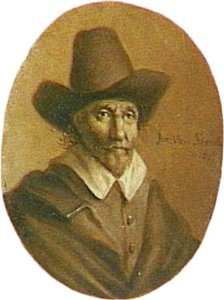
Emanuel de Witte
1617 - 1692 , Netherlands
Quick Facts
- Artistic Movement Or Style: Baroque art
- Artists Or Movements Influenced By This Artist: ['Later artists']
- Artists Who Influenced This Artist: ['Evert van Aelst']
- Date Of Birth: 1617
- Date Of Death: 1692
- Full Name: Emanuel de Witte
- Nationality: Dutch
- Notable Artworks:
- Oude Kerk in Amsterdam...
- Interior of the Oude Kerk
- Protestant Gothic Church
- Place Of Birth: Alkmaar, Netherlands

